
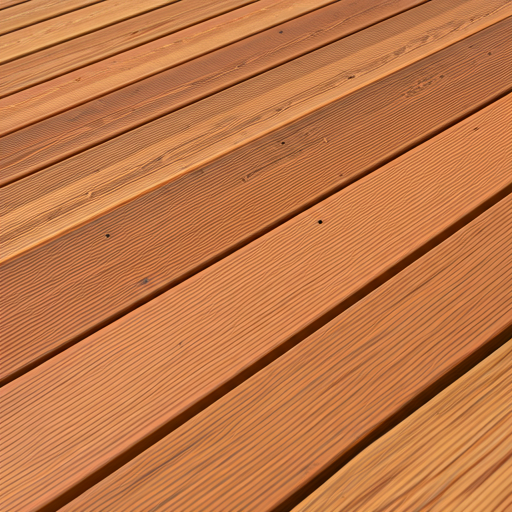
Every homeowner researching ipe decking in Seattle has done their homework. You've read that ipe is a dense Brazilian hardwood that outlasts everything, looks like a luxury yacht, and justifies its significant premium. You've also read that premium composite delivers low maintenance and a 25-year warranty at meaningfully lower installed cost. Both characterizations are accurate. Neither tells you which one makes sense for a King County backyard in Seattle's specific climate, on your specific lot, for your specific maintenance tolerance.
This is the honest comparison — one written by builders who have installed both materials across hundreds of projects in King County over 15 years, not by a marketing team working from national talking points. We cover cost, maintenance reality, PNW performance in 38 inches of annual rain, sourcing and sustainability considerations, and the one factor that shifts the decision for most homeowners who actually live here.
There's no agenda here. We install both materials. The right answer depends on your property, your priorities, and your honest assessment of your own maintenance habits.
What Makes Ipe Genuinely Impressive
Ipe (pronounced ee-PAY) is a tropical hardwood from South America — principally Brazil, with some sourcing from Bolivia and Peru — with material properties that are difficult to overstate. The Janka hardness rating of 3,680 lbf puts it in a different category than anything else commonly used for residential decking. For comparison:
| Material | Janka Hardness (lbf) |
|---|---|
| Ipe (Brazilian walnut) | 3,680 |
| Cumaru (teak alternative) | 3,540 |
| Garapa (Brazilian ash) | 1,650 |
| White oak | 1,360 |
| Teak | 1,070 |
| Western red cedar | 350 |
| Douglas fir | 660 |
That density produces several performance characteristics that matter for a residential deck:
Hardness means scratch and dent resistance. On a deck that gets furniture dragged across it, grills rolled around, and dogs running on it, ipe resists surface damage that would mar softwoods and even some composite products. It doesn't dent from dropped tools or gouge from deck furniture.
Natural oil content means water resistance. Ipe's internal oil content — similar to teak — causes water to bead on the surface rather than penetrating the grain. This is the property that produces ipe's extraordinary performance in high-rainfall climates. Boards don't swell, check at the joints, or absorb enough moisture to support mold growth the way lower-density woods do.
Density means structural performance. An ipe board spanning between framing joists deflects less under load than any softwood or composite alternative. For high-traffic decks, this contributes to a "solid" feel underfoot that composite products have improved on significantly in recent years, but haven't fully replicated.
Natural fire resistance. Ipe has a Class A fire rating without chemical treatment — the same rating as concrete and steel. This is relevant in King County neighborhoods with fire risk overlays and for homeowners whose insurance carrier asks about deck material specifications.
What ipe is not: domestic, readily available in most King County lumberyards, or easy to install. It's a dense, heavy, imported hardwood that requires sharp carbide tooling, pre-drilling for every fastener, and sourcing through specialty distributors rather than standard building supply chains.
How Each Material Actually Performs in Seattle's Rain
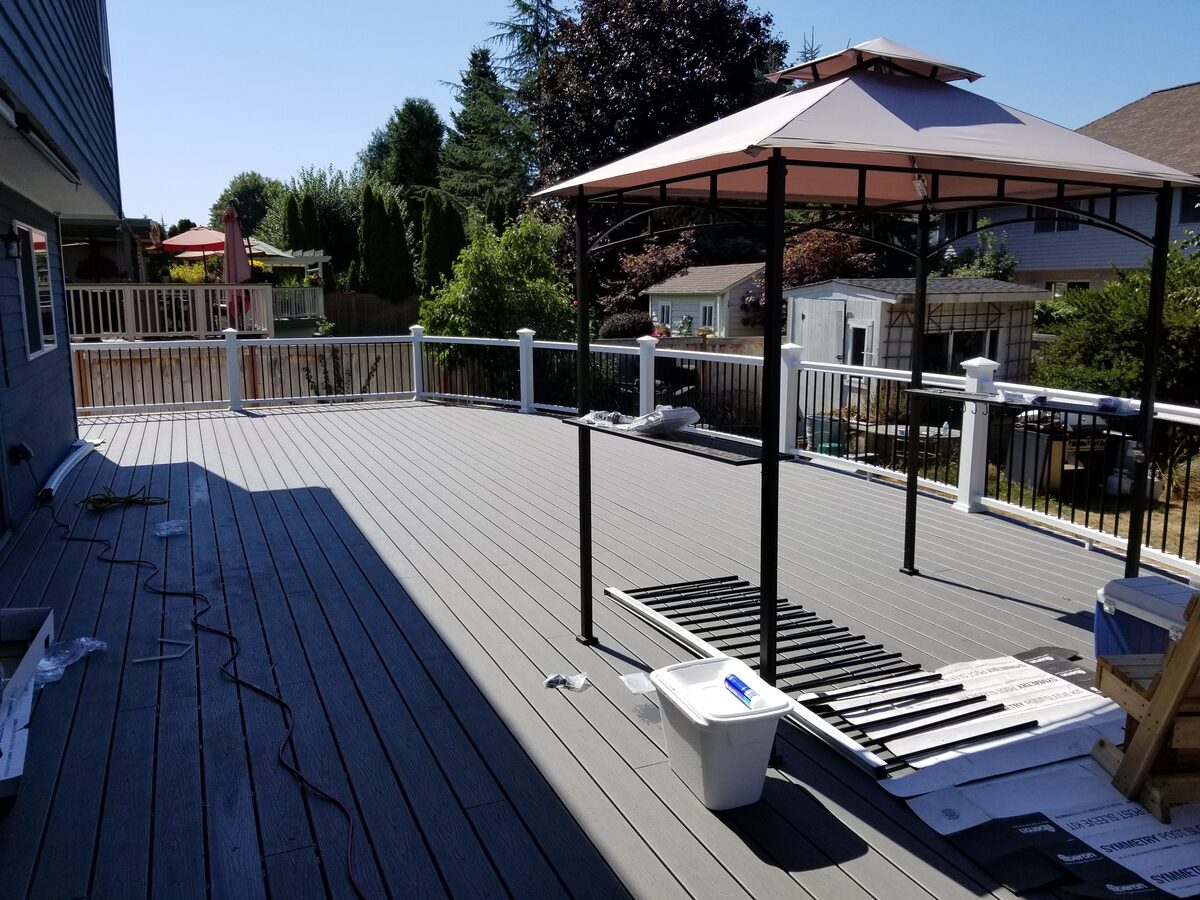
King County averages 37–38 inches of rainfall annually — more than New York, Boston, or Chicago. But the distribution pattern matters more than the annual total. Seattle's rain arrives as persistent, low-intensity precipitation during an October-through-April stretch that keeps surfaces wet for seven consecutive months. Decks on north-facing or shaded lots in Bellevue, Kirkland, and Seattle's hillside neighborhoods stay wet longer between dry periods, which is the specific condition that most aggressively tests decking materials.
Ipe Performance in PNW Conditions
Ipe's natural oil content performs exactly as advertised in Seattle's persistent moisture. Water beads on the surface. The density prevents the moisture absorption-and-cycling that causes softer woods to check (develop surface cracks along the grain) and cup. Moss and mildew establish much more slowly on ipe's dense, oily surface than on cedar or pressure-treated wood — the dry-feeling surface simply doesn't offer the same foothold.
In shaded conditions — which many King County lots have for part of the day — ipe still outperforms softwoods dramatically. The honest caveat: shaded ipe in Seattle does develop some mildew in the grooves between boards over time. An annual cleaning addresses it.
The most commonly misrepresented aspect of ipe performance: color retention. Ipe's rich chocolate-brown color comes from its natural oil content and UV-active compounds. In Seattle's UV — which is lower than southern climates but still present in summer — untreated ipe surfaces weather to a silver-gray patina over 2–3 seasons. That patina is photochemical UV protection; it's not structural degradation. Many Seattle homeowners discover they prefer the gray. If you want to maintain the warm brown, plan for oiling once or twice per year.
Capped Composite Performance in PNW Conditions
"Composite" has to mean "fully capped composite" in Seattle. This distinction is not marketing — it's functional.
Uncapped composite has a wood fiber core exposed at the board side edges. In Seattle's 7-month wet season, those exposed edges absorb moisture, which migrates into the core and creates the conditions for mold growth in the board grooves. We've seen uncapped composite boards showing visible mold within 18 months on north-facing Seattle decks. We don't install uncapped composite.
Three-sided capped composite — polymer shell on the top and two long sides, but not the cut ends — is better but still not the right call for Seattle. The exposed end grain at cut lengths absorbs moisture in PNW conditions. On long boards with infrequent cuts, this is a minor concern. On decks with many cut pieces or complex layouts with lots of trimming, those exposed ends become moisture pathways.
Fully capped composite — continuous polymer shell on all four sides including cut ends — is genuinely moisture-resistant. Trex Transcend, TimberTech Legacy, and Fiberon Paramount are all fully capped with 25–50 year manufacturer warranties. In Seattle's wet climate, these products perform very well — the main maintenance task is preventing moss from establishing in the grooves on shaded surfaces, managed with annual soft-washing.
The composite performance caveat: PVC composite boards can feel slightly softer underfoot than ipe, particularly in summer when surface temperatures rise. Hollow-profile composite also transmits vibration differently than a solid hardwood board — the underfoot "feel" is different even if structural performance is adequate. This is a subjective consideration, but some homeowners with experience on both materials notice it.
Cost Comparison: What Seattle Projects Actually Cost
Seattle deck prices run 15–25% above national averages due to labor rates, permit costs, and in the case of ipe, import logistics through Pacific Northwest distributors.
| Material | Installed Cost/Sqft (Seattle 2026) | Annual Maintenance Cost | Notes |
|---|---|---|---|
| Ipe hardwood | $110–$180 | $30–$120 (oiling optional) | Premium substructure required; specialist installer |
| Capped composite (Trex/TT/Fiberon) | $75–$130 | $0–$50 (cleaning only) | No oiling, staining, or sealing ever |
| PVC (AZEK/Zuri) | $90–$150 | $0–$30 (cleaning only) | No wood fiber; maximum moisture resistance |
| Cedar (Western red) | $35–$55 | $400–$700/yr (sealing + repairs) | Requires full replacement at year 15–20 in Seattle |
For a 300 square foot deck in King County:
- Ipe installed: $33,000–$54,000
- Capped composite installed: $22,500–$39,000
- Upfront gap: $10,500–$15,000 in favor of composite
That upfront gap doesn't disappear over time, though it narrows somewhat due to maintenance costs. The honest math:
Ipe's higher upfront cost is partially offset by lower maintenance relative to cedar, but does not 'pay for itself' through maintenance savings compared to composite. The true premium is for longevity and aesthetics.
| Category | Value |
|---|---|
| Ipe (oiling 2x/yr) | $58,000 |
| Capped composite | $36,000 |
| PVC (AZEK) | $41,000 |
| Cedar (w/ replacement) | $32,000 |
The cedar total includes one full deck replacement at year 15–18 for most Seattle installations — Seattle's persistent moisture and limited sun exposure means cedar decks that aren't maintained diligently deteriorate within 15–20 years. The composite total assumes basic annual cleaning only. The ipe total includes oiling twice per year (optional but recommended for color maintenance) at an estimated $75/year in materials.
The Maintenance Reality for Ipe in Seattle
The claim that ipe is "maintenance-free" is a simplification that gets homeowners into trouble. What's accurate: ipe requires far less maintenance than cedar and different maintenance than composite — not zero maintenance.
What Ipe Requires in King County
Annual or biannual oiling (if you want to maintain color). A penetrating hardwood oil — Penofin Hardwood, Ipe Oil by Armstrong Clark, or Cutek CD50 — is applied once or twice per year to maintain the warm brown. This is a DIY task for most residential decks: clean the surface, apply the oil with a rag or pad applicator, let it penetrate. Materials cost $30–$80 for a typical 300 sqft deck. Labor cost if you hire out: $200–$400.
Without oiling, ipe weathers to silver-gray. This is not rot, not failure, and not a warranty issue. It's a photochemical change driven by UV exposure. The gray patina is actually UV protection. Many Seattle homeowners oiled their ipe deck for the first two years, stopped, and prefer the weathered look. That's a legitimate choice.
Annual fastener hardware inspection. Ipe must be fastened with stainless steel. Galvanized fasteners rust-streak on ipe's oily surface within 2–3 years in Seattle's humidity, producing brown staining at every fastener location. 304 or 316 stainless steel screws or hidden fasteners are the only acceptable hardware. Annual inspection for any loose or compromised hardware is appropriate — ipe's density means screws that aren't driven correctly can work loose over time.
Occasional soft-washing. Shaded surfaces develop light mildew growth in grooves, particularly on north-facing ipe decks in Seattle's winter months. Annual soft-washing (low-pressure water and a mild soap or mildewcide solution) addresses it before it establishes.
What Ipe Does NOT Require
- Re-sealing or staining
- Sanding
- Board replacement (ipe does not rot, cup significantly, or check destructively in PNW conditions)
- Refinishing or major restoration work
What Capped Composite Requires
- Annual cleaning to prevent moss in grooves — soft-wash or composite-approved cleaner
- No sealing, staining, oiling, or sanding, ever
- Board profile inspection for any physical damage from heavy impact
- Manufacturer warranty covers fading and staining for 25–30 years
The true maintenance difference between quality ipe and quality capped composite is smaller than most people expect. Ipe requires oiling to maintain color (optional) and stainless fastener use (mandatory) — that's essentially the list. The historic maintenance comparison that favored composite dramatically was always most accurate when comparing composite to cedar — not to ipe.
Note
Lifespan: Where Ipe's Advantage Is Real
Ipe's longevity argument is genuinely compelling and not marketing exaggeration. The U.S. Navy uses ipe on docks and boardwalks specifically because its service life in salt water and marine conditions exceeds treated wood products. The Manhattan waterfront has ipe boardwalk sections installed in the 1970s still in service. The realistic ceiling for a correctly installed ipe deck with a treated substructure is 60–75+ years.
Capped composite carries 25–30 year manufacturer warranties, and real-world longevity for quality products in Seattle's climate legitimately exceeds that — 30–35 years is a reasonable expectation for well-maintained premium composite in PNW conditions. That's a long time. But it's not 60 years.
For the homeowner building what they want to be the last deck they ever install — replacing a 22-year-old cedar deck for the final time, or building the outdoor living space on a Mercer Island property they plan to hold for 30 years — ipe's lifespan argument becomes financially meaningful. One ipe deck installation may outlast two capped composite installations. Over 60 years, the math changes. Over 25 years, composite wins on total cost.
Key insight
FSC Certification and the Sustainability Question
Ipe's sustainability profile is a legitimate concern that deserves honest treatment rather than dismissal or exaggeration. Old-growth tropical deforestation is real. Brazilian rainforest logging — including logging under the cover of "managed forestry" claims that don't hold up — is documented.
The standard to require: FSC certification (Forest Stewardship Council). FSC-certified ipe comes from forests where harvest rates are managed sustainably, chain of custody is documented and audited, and biodiversity is protected within the managed area. FSC certification doesn't mean "no harvest" — it means verified sustainable harvest with documented management practices.
What FSC certification requires from a Seattle supplier:
- Traceable chain of custody documentation from forest to lumber yard
- Annual auditing by an FSC-accredited certifier
- Ability to provide the FSC certificate number for verification
If a supplier can't provide FSC documentation on request, that's a sourcing red flag. "We only buy from responsible suppliers" without documentation is not FSC certification. Insist on the certificate number and verify it at the FSC database at fsc.org.
The composite counterargument: composite decking is made partially from recycled materials — wood fiber from sawmill waste and reclaimed plastics. Trex products incorporate significant recycled content. This is a genuine sustainability point in composite's favor, though composite boards are not recyclable at end-of-life in most markets and contribute to landfill volume when replaced.
Neither choice is perfectly "green." FSC-certified ipe from a documented supply chain is a responsible choice. Composite from manufacturers with verifiable recycled content programs is also a responsible choice. Both are meaningfully better than non-certified tropical hardwood or virgin-plastic products.
Ipe vs. Composite: The Side-by-Side Comparison
| Factor | Ipe | Trex Transcend (Capped Composite) | TimberTech Legacy (Capped Composite) |
|---|---|---|---|
| Installed cost (Seattle) | $110–$180/sqft | $80–$130/sqft | $85–$135/sqft |
| Annual maintenance | Oiling (optional), cleaning | Cleaning only | Cleaning only |
| Realistic lifespan | 60–75+ years | 30–35 years | 30–35 years |
| Warranty | No manufacturer warranty | 25-yr fade/stain | 30-yr fade/stain |
| Fire rating | Class A (inherent) | Class A | Class A |
| Moisture resistance (PNW) | Excellent (natural oils) | Excellent (full cap) | Excellent (full cap) |
| Color stability | Weathers gray without oiling | 25-yr warranty | 30-yr warranty |
| Availability in King County | Specialty distributors | Standard distributors | Standard distributors |
| Lead time | 2–6 weeks typically | 1–2 weeks typically | 1–2 weeks typically |
| Environmental sourcing | FSC-cert required | Recycled content | Recycled content |
| Underfoot feel | Solid, warm, firm | Good; hollow-profile models vary | Good; AZEK PVC is most solid-feeling |
| Weight | Heavy (68 lbs/cubic ft) | Light-medium | Light-medium |
When Ipe Makes Sense in Seattle
We recommend ipe for specific project profiles, not universally:
Long-term ownership on a high-visibility property. If you're building the deck on a Mercer Island or Bellevue property that you plan to own for 30+ years and want the outdoor space to still look exceptional in 40 years, ipe's longevity and aesthetic justifies its premium. On a property with a 10-year horizon, composite is almost certainly the better financial decision.
Covered or partially covered decks. Under a pergola or covered porch overhang, ipe's UV-weathering characteristic is essentially eliminated — the deck doesn't see the direct UV that drives color change. In these conditions, ipe maintains its color without oiling and requires only occasional cleaning. Covered deck applications are where ipe's maintenance picture is most favorable.
Homeowners who genuinely prefer natural wood and will maintain it. Some clients simply want wood. They prefer the warmth, the grain variation, the authenticity. If that's your aesthetic preference and you're committed to the maintenance (annual oiling), ipe delivers. If the preference is for wood but the maintenance habit isn't reliably there, composite products with wood-grain embossed textures have improved substantially — they're not wood, but the gap has narrowed.
Marine and waterfront properties. On West Seattle properties near Puget Sound, on Bainbridge Island, and on Mercer Island waterfront, ipe's Class A fire rating and salt air performance are relevant factors. Composite products also perform well in these conditions, but ipe's natural oil content provides inherent protection that composite relies on its polymer shell to achieve.
When Composite Makes More Sense
Standard residential applications on most King County lots. For the majority of decks we build in Seattle, Bellevue, Kirkland, Kirkland, and Sammamish — a 300–500 sqft deck at or near door height, open or partially shaded, no special fire or marine considerations — fully capped composite delivers excellent performance at a meaningfully lower installed cost.
Projects with a 10–20 year horizon. A homeowner who bought a first home in Beacon Hill, plans to be there for 10–15 years, and wants a great outdoor space during that window is better served by composite. The upfront cost savings are real, the performance over that timeframe is excellent, and composite doesn't require the biannual attention that color-maintenance on ipe does.
Where budget matters. The $10,000–$15,000 premium for ipe over composite on a mid-size Seattle project is real money. If that's the difference between doing the project now versus waiting another year, composite is the right answer.
Decks with complex layouts. Ipe is dense and heavy — it works installed contractors hard and requires carbide tooling, pre-drilling for every fastener, and careful handling to avoid board damage. On projects with complex compound cuts, multiple curves, or very intricate layouts, ipe's installation demands increase the labor line significantly. For the same complex layout in composite, labor is lower and the finished result is comparable.
Tip
Sourcing Ipe in King County: Availability and Lead Times
Ipe is not a standard stocking item at most King County building supply locations. It's distributed through specialty hardwood dealers and some premium deck material distributors in the region. Lead times from order to delivery typically run 2–6 weeks for standard widths and lengths. Wider boards or custom lengths can take longer.
The sourcing logistics matter for project scheduling. A composite deck project can typically begin material procurement within 1–2 weeks of contract signing. An ipe project needs a longer lead-in, which affects the start date and needs to be reflected in the project timeline. If a contractor quotes an ipe deck and promises a start date that doesn't account for sourcing lead time, that's a planning problem that will manifest as delays.
We coordinate ipe sourcing through established specialty distributors with documented FSC supply chains. If you're working with another contractor on an ipe project, ask specifically: who is the wood supplier, do they have FSC certification on file, and what is the realistic lead time from order to delivery?
The Weight Consideration for Ipe Framing
One factor that doesn't come up often enough in ipe discussions: the boards are significantly heavier than composite or cedar. Ipe runs approximately 68 pounds per cubic foot — roughly twice the weight of cedar and meaningfully heavier than composite. A 20-foot ipe deck board is a two-person lift. On a hillside lot without direct truck access, the labor time for material handling on an ipe project is substantially higher.
The more structural implication: the combined dead load of an ipe deck surface is higher than a composite deck. For standard framing designs this is within code for residential construction — but on elevated structures, hillside lots, or designs where framing was originally specified for a lighter composite surface, this should be explicitly verified in the structural engineering. We assess this at the site visit and specify framing to match the planned surface material.
Ipe's weight affects both material handling during installation and dead load calculations on elevated structures. On hillside lots without truck access, material handling time is a meaningful labor cost factor.
| Category | Value |
|---|---|
| Ipe | lbs680 |
| Cedar | lbs320 |
| Capped composite | lbs380 |
| PVC (AZEK) | lbs290 |
The Environmental Argument for Each Choice
For ipe (FSC-certified): Ipe's 60–75 year lifespan means one installation may replace multiple composite installations over the same period, with correspondingly lower manufacturing impact over time. FSC-certified ipe comes from managed forests where harvest is designed to be sustainable. Ipe doesn't require chemical treatment during installation. At end-of-life, ipe boards are natural wood that breaks down organically.
For composite: Major composite manufacturers have made verifiable recycled-content commitments. Trex uses 95% recycled or reclaimed material in its products, diverting significant waste from landfills in the manufacturing process. The lifecycle impact of composite — including the energy for manufacturing — is increasingly documented and improving with each product generation. Composite's 30-year lifespan means replacement eventually, with the associated manufacturing impact.
The honest answer: If FSC-certified ipe sourcing is verifiable and the project lifespan argument applies, ipe has a legitimate environmental case to make alongside its performance case. If composite is from manufacturers with documented recycled content programs, composite's manufacturing story is positive. The worst environmental choice is non-certified tropical hardwood from undocumented supply chains — which is why FSC certification is non-negotiable if you're building with ipe.
Ipe Decking and Building Permits in King County
Ipe decking doesn't change the permit requirements for a deck project compared to composite — the permit triggers are based on deck height, footprint, and attachment to the building, not the surface material. In the City of Seattle, any deck with a walking surface more than 18 inches above grade requires a permit. In unincorporated King County, the threshold is 30 inches. These thresholds apply regardless of what the deck is surfaced with.
What ipe does change is the permit's material specification. A permit application for an ipe deck must list the decking material, and the installed material must match the permitted specification. Seattle SDCI and King County permits both require the permit to reflect what's actually being built. A contractor who permits a "composite deck" and installs ipe — or vice versa — is installing without permit approval for the actual material, which creates a disclosure and compliance issue.
For the structural side: ipe's weight (approximately 68 lbs/cubic foot) is meaningfully higher than composite (approximately 35–40 lbs/cubic foot), which affects the dead load calculations on the permit drawings. On elevated decks, particularly hillside projects with structural engineering, the permit's structural drawings must reflect the planned surface material. If the engineering was done for composite and ipe is installed instead, the dead load assumption in the structural calculations doesn't match the installed condition — a potential code compliance issue that matters for inspection and insurance.
We specify the surface material accurately in every permit application and verify that structural calculations reflect the planned decking choice. For ipe projects on elevated decks, we confirm framing specifications with our structural engineering partners before permit submission.
Ipe Installation Details Specific to PNW Projects
Ipe installation in Seattle's climate requires attention to several details that don't apply to composite installation — or that apply differently.
Acclimation
Ipe boards need to acclimate to site conditions before installation. Boards delivered directly from storage to installation can expand or contract after fastening if the moisture content of the delivered boards differs significantly from equilibrium moisture content at the project site. In Seattle's high-humidity conditions, ipe boards at standard kiln-dried moisture content (typically 9–12%) will gain moisture after installation in the wet season. Standard practice is to store boards at the site for 3–7 days before installation, ideally with cross-stacked spacing to allow air circulation.
Spacing Between Boards
Ipe's density means it doesn't expand and contract as much as softer woods with moisture cycling, but it still moves. Standard board spacing of 3/16-inch between boards allows for minor seasonal movement and provides drainage channels for surface water. Tighter spacing — particularly butted joints — can close completely under high moisture conditions and trap debris. We specify and verify spacing during installation, not just at project completion.
End Sealing
Cut board ends are the most moisture-vulnerable point on any wood decking installation, including ipe. Applying a penetrating end sealer to all cut ends immediately after cutting is standard professional practice. End sealers reduce the rate of moisture exchange at the end grain, which in Seattle's climate reduces the checking (surface cracking along the grain at board ends) that can develop in the first season after installation.
Pre-Drilling
Every fastener into ipe requires a pre-drilled pilot hole — the board density is too high for self-tapping screws to seat correctly without pre-drilling. Attempting to drive fasteners into ipe without pre-drilling results in split boards or fasteners that strip out, both of which are difficult to repair on a finished deck. Pre-drilling adds approximately 20–30% to the surface installation time compared to face-screwing composite, which is correctly reflected in a higher labor line in the estimate.
Matching Board Lengths to Joist Layout
Ipe boards should be butt-jointed at joist centers (not between joists) to maintain structural support at board ends. On a deck with non-standard joist spacing or a joist layout that doesn't align cleanly with standard board lengths, this requires careful layout planning before cutting. Composite boards with some products allow cantilevered ends; ipe requires support at both ends.
Comparing Care Programs: Year 1 Through Year 25
What does caring for ipe versus composite actually look like across the first 25 years of ownership? Here's an honest year-by-year maintenance reality for each material in Seattle's climate:
Ipe Care Timeline (25 Years)
Year 1: Install deck. Apply first coat of penetrating hardwood oil (Penofin, Cutek CD50, or equivalent) after the wood has dried following installation (typically 4–6 weeks in Seattle's climate). Cost: $40–$80 in materials, 2–3 hours of work.
Year 2: Apply oil again — first full year of weathering. This is when the oil application has the most visual impact. Cost: $40–$80 materials, 2–3 hours.
Years 3–5: Annual soft-wash to remove mildew and debris. Oil only if you want to maintain the brown color — many Seattle homeowners begin to prefer the developing gray patina and stop oiling at this point. If you stop oiling, the color transitions to silver-gray over 1–2 additional seasons.
Years 6–15: Annual soft-wash. Inspect fasteners for any that have worked loose (rare with correct installation). Replace any damaged boards — unlikely with ipe but possible from physical damage. Re-oil any sections where color has faded more than desired.
Years 16–25: Continue annual cleaning. By this point, boards are well-seasoned. The deck structure is the maintenance concern, not the boards — inspect post bases and beam-to-post connections for any corrosion or movement. Any fastener hardware upgrades or structural repairs address the framing, not the ipe surface.
Year 25: Structural assessment. The ipe surface is still in sound condition and likely has another 30–50 years of service life. Structural framing condition determines whether repairs to the structure are warranted.
Capped Composite Care Timeline (25 Years)
Year 1: Install deck. No additional work in year 1 beyond enjoying it.
Years 1–5: Annual soft-wash in spring to remove mildew that develops in board grooves over Seattle's wet season. 30 minutes to 1 hour per cleaning with appropriate composite-approved cleaner.
Years 6–15: Continue annual soft-wash. Minor spot-cleaning for any staining from leaves, berries, or food spills. Annual inspection for any board damage (impacts, heavy furniture loads). No re-sealing, oiling, or sanding.
Years 16–25: Continue annual cleaning. Material manufacturer warranty covers fade and stain. Inspect fasteners and railing connections. By year 25, you are at or near the end of the standard warranty period — assess condition and plan for eventual replacement at some point in the next 5–10 years.
Year 25+: Replacement planning begins. The deck structure may be sound while the surface boards approach end of useful cosmetic life. Surface-only replacement (new composite boards on existing sound framing) is a lower-cost option than full deck replacement.
Ipe maintenance cost is driven primarily by optional oiling (color maintenance). If the owner accepts the natural gray patina, ongoing ipe maintenance costs are similar to composite. The key variable is whether oiling is maintained.
| Category | Value |
|---|---|
| Ipe (oiling every 2 yrs) | $2,800 |
| Ipe (natural gray — no oiling) | $800 |
| Capped composite | $700 |
| Cedar (full maintenance) | $9,500 |
The Covered Deck Advantage for Ipe
One specific scenario where ipe's value proposition is strongest: covered or semi-covered deck applications. Under a pergola, a solid roof extension, or a significant overhang that blocks direct sun and most rain, ipe's key maintenance requirement — oiling to prevent UV-driven color change — essentially disappears.
Direct UV is what drives ipe's weathering to silver-gray. Under a roof or solid cover, UV exposure is minimal. The boards maintain their rich brown color for extended periods without oiling, narrowing the maintenance difference between ipe and composite dramatically.
In this application:
- Ipe color maintenance: minimal — no regular oiling required
- Composite: same cleaning protocol as an uncovered deck
- Both: require annual cleaning to manage mildew in Seattle's persistent humidity
For homeowners building a covered deck over a garage or second-floor covered porch — where membrane waterproofing is already required for the structure below — ipe on that covered surface makes the most practical sense in Seattle. The oiling requirement is eliminated, the longevity argument is fully realized, and the aesthetic of natural wood on a covered high-use surface is at its best.
Frequently Asked Questions
Is ipe decking worth the premium in Seattle?
Does ipe really need to be oiled every year in Seattle?
How does ipe hold up to Seattle's moss and mildew?
Can I source FSC-certified ipe in King County?
What fasteners are required for ipe decking?
How much heavier is ipe than composite decking?
What's the realistic lifespan of capped composite in Seattle's climate?
Does ipe require a different framing system than composite?
Is ipe available in hidden fastener profiles?
What composite products are most comparable to ipe in appearance?
Can ipe be installed over an existing deck frame?
Which is better for resale value — ipe or composite?
Making the Decision for Your Seattle Project
The decision between ipe and composite for a Seattle deck project usually comes down to a direct question: what do you actually want from this deck over time?
If you want the longest possible service life, the warmth of natural wood grain, and are genuinely willing to oil the deck once or twice per year, ipe is an exceptional choice and the premium is earned. If you want excellent performance with essentially zero maintenance beyond annual cleaning, and want the cost savings applied elsewhere in the project, fully capped composite from a quality manufacturer is an equally excellent choice that will serve you well for 30+ years.
We build both material types across King County and can show you examples of each in our portfolio. The right answer for your project depends on your property, your ownership horizon, and your honest assessment of how you want to maintain an outdoor space over time.
Call us at (425) 675-6259 or request a free consultation to talk through the options for your specific project. We'll bring material samples to the site visit, walk through the cost and maintenance comparison in your context, and help you make the decision with real information rather than marketing claims.
Planning a deck in the Seattle area?
Get an onsite design review and a clear, itemized quote from a licensed local builder.
Request a Free Quote