Membrane Decking Seattle
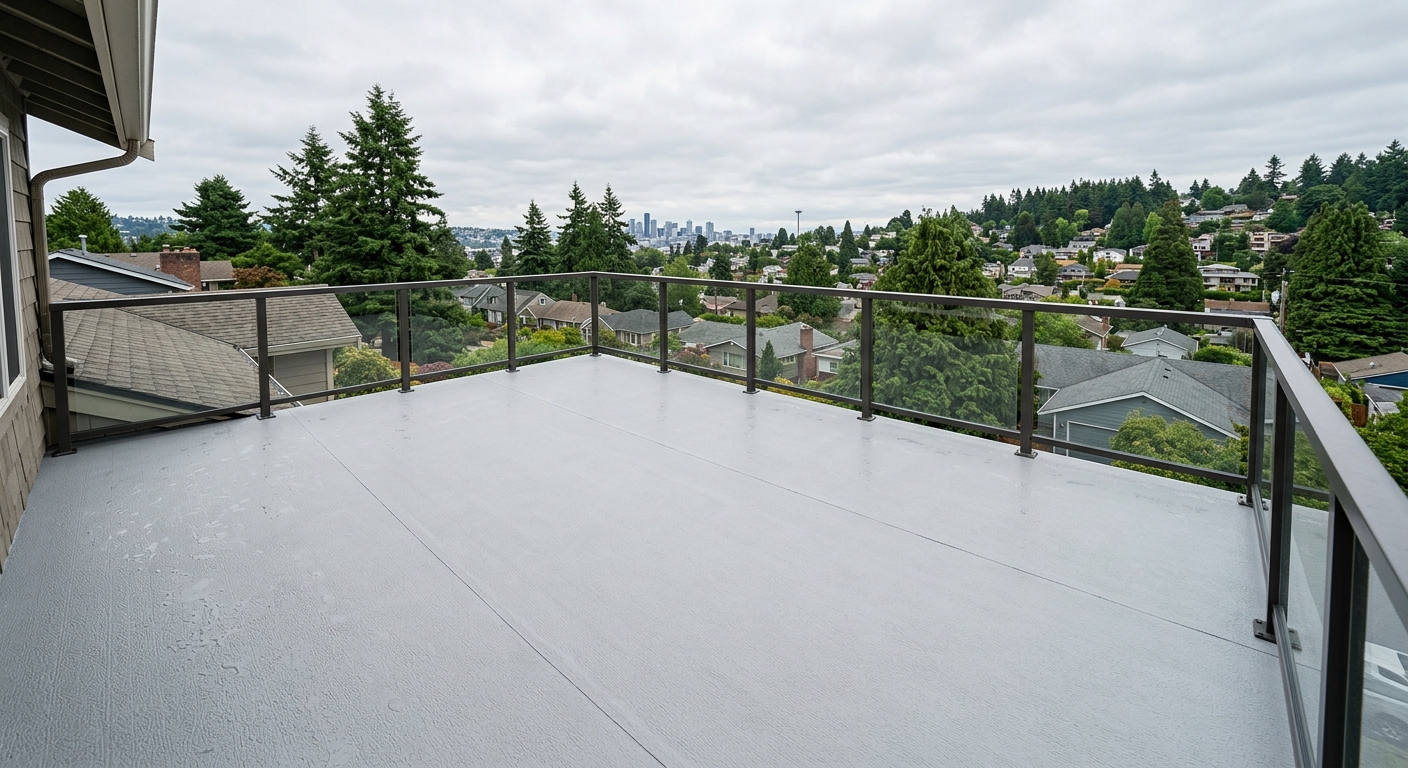
Membrane decking is the right solution when the space below your deck must stay dry. We install hot-applied rubberized membrane systems — Duradek and Sikalastic — on rooftop decks, over-garage structures, and elevated decks throughout King County. With 38 inches of annual rainfall, half-measures don't hold up here.
When the Space Below Has to Stay Dry
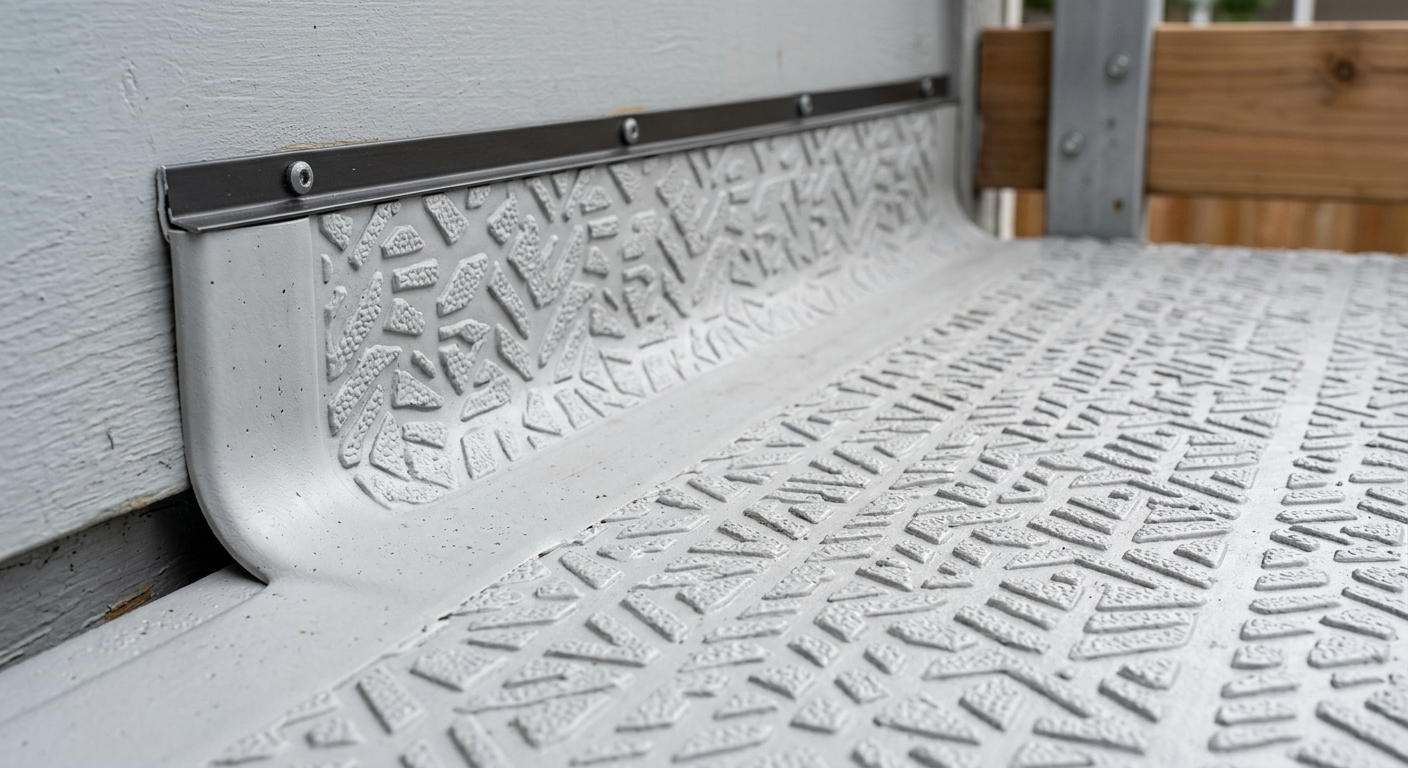
The Cove Base — Where Most Membrane Jobs Fail
The most common membrane failure point isn't the field surface — it's the cove base where the membrane transitions up the wall. Properly installed, the membrane wraps up the vertical surface at least 4 inches and is mechanically terminated with a metal bar sealed with compatible caulk. Shortcuts here allow water to travel behind the membrane and cause substrate rot that's expensive to discover later.
100% Waterproof
Continuous vinyl membrane creates a seamless waterproof barrier — perfect for creating dry space beneath elevated decks.
Rooftop & Balcony Ready
Ideal for condo balconies, rooftop patios, and second-story decks where waterproofing is essential.
Multiple Colors & Textures
Choose from a wide range of colors and textures to match your home's exterior and personal style.
Membrane decking uses a hot-applied or heat-welded rubberized sheet system — most commonly Duradek or Sikalastic — to create a continuous, seam-managed waterproof layer across the entire deck surface. It's the correct specification for any elevated structure where the space below must stay dry: rooftop patios, upper-floor decks over garages, and waterfront properties on Mercer Island and Lake Washington where exposure is constant. Cost typically runs $25–$45 per square foot installed, depending on deck configuration and flashing complexity.
- homeRooftop and over-garage applications: Standard board-gap drainage isn't sufficient when the space below needs protection. Membrane creates a structural waterproof barrier — not just drainage management — that performs under Seattle's persistent wet seasons.
- constructionProfessional seam integrity is everything: DIY membrane installs almost always fail at seams. Heat-welding and chemical fusion require professional equipment and training — a compromised seam allows water to track under the entire membrane and defeat the installation.
- verified10–15 year warranty typical: Duradek and Sikalastic back their products with manufacturer warranties covering material defects. Our workmanship warranty covers installation quality separately.
- paletteColors and textures available: Modern membrane systems come in multiple colorways and embossed surface textures that provide slip resistance without sacrificing the aesthetics of a finished outdoor space.
Membrane Decking Cost Guide — King County
| System | Installed Cost | Best For |
|---|---|---|
| TPO Single-Ply | ~$18/sq ft installed | Flat rooftop decks, hot tub surrounds |
| EPDM Rubber | $15–$20/sq ft installed | Garages, low-slope residential |
| Duradek / Fibertex Vinyl | $22–$28/sq ft installed | Residential decks, foot traffic areas |
| Tufdek Vinyl w/ Texture | $24–$30/sq ft installed | High-traffic, HOA-visible areas |
| Note: All systems include waterproof perimeter flashing, drain rough-in, and substrate prep. Drain sizing calculated for Seattle's 37+ inches annual rainfall. | ||
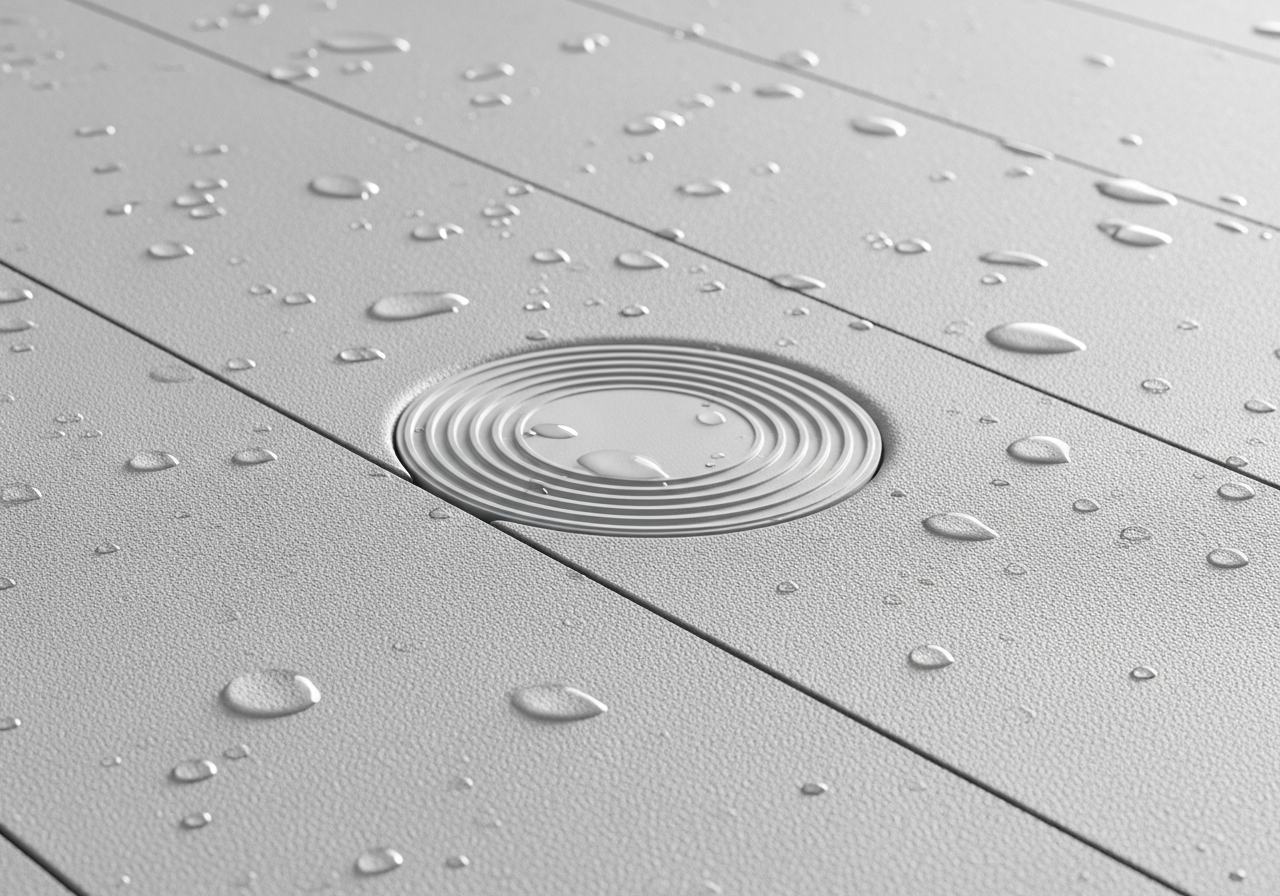
Slope and Drainage — Engineered In, Not Added After
A membrane deck must slope a minimum of 1/8" per foot toward the drain or edge — no exceptions. We set this slope in the subfloor framing before the membrane goes down. The drain is positioned at the low point of the field, not wherever is convenient. A membrane deck with standing water after rain is a failed installation — the water finds a path through seams and cove base eventually. Slope and drain position are non-negotiable spec items.
Where Membrane Decking Is Used in King County
Rooftop Decks & Over-Garage Applications
Many King County homes have garages with flat or near-flat roofs. Membrane decking turns these roofs into usable outdoor space — a deck that sits directly over living space. TPO or EPDM waterproofing membrane plus a Duradek vinyl walking surface is the standard spec. The waterproofing membrane and the walking surface are two separate layers — both must be correctly specified and installed. We size drains for Seattle's 37+ inches of annual rainfall and design perimeter flashing to divert water away from the structure below.
Covered Walkways & Balconies
Attached walkways and balconies that cover living space below require membrane-level waterproofing. Standard deck boards leave gaps that allow water to penetrate to the space below. Vinyl membrane over a solid substrate (1" T&G fir or plywood) creates a fully waterproof walking surface. Drains must be sized for King County's rainfall intensity — undersized drains back up and force water through seams. We design the drainage system before specifying the membrane product.
Under-Deck Waterproofing Systems
Some homeowners want to use the space below an elevated deck — patio, storage, workshop. Under-deck drainage systems plus membrane panels create a weather-proof ceiling below while the deck above remains usable. We install Trex RainEscape and TimberTech DrySpace systems. These can be retrofitted on existing deck frames without removing the deck surface — a 1–2 day install on most 300–500 sq ft decks.
Hot Tub Surround Decks
Hot tubs on elevated decks require membrane-level structural waterproofing around the surround area. Water from the tub constantly wets the adjacent deck boards and sub-framing — persistent saturation accelerates structural decay even on composite decks. We use a 24" waterproofed surround zone (vinyl membrane) at every hot tub installation regardless of deck material choice. This prevents moisture wicking into the framing at the highest-risk point of the deck.
Recent Membrane Decking Projects
Mercer Island — $11,800
420 sq ft Duradek Elite Rooftop Deck over Garage
TPO waterproofing base layer + Duradek Elite vinyl walking surface. Custom linear drain sized for Island rainfall. Perimeter flashing integrated with garage parapet. Slip-resistant embossed texture surface. Project completed in 4 days.
Renton — $4,200
180 sq ft Vinyl Membrane Covered Walkway
Connecting house to detached garage over a storage area below. Tufdek textured vinyl with heat-welded seams. Single drain with 4" downspout to existing drainage system. Substrate: 1" T&G fir. Zero water penetration through 2 wet seasons.
Bellevue — $7,400
380 sq ft TimberTech DrySpace Under-Deck System
DrySpace panels installed on existing elevated deck frame — no deck board removal required. Creates weather-proof outdoor storage area below. Downspout extensions tied to existing drainage. 2-day installation. Homeowner now uses space as year-round outdoor workshop.
Kent — $3,100 add-on
Hot Tub Surround Waterproofing on 520 sq ft Composite Deck
24" waterproofed surround zone using EPDM membrane and Duradek vinyl overlay around the hot tub installation on an otherwise standard composite deck. Prevents framing saturation at the highest-risk moisture point. Added to deck project cost; 1-day additional installation.
Capitol Hill, Seattle — $9,200
320 sq ft Vinyl Membrane Rooftop Deck — Townhome Rooftop
Flat rooftop deck over the top floor of a Capitol Hill townhome. Duradek Ultra vinyl membrane over new plywood substrate. Two linear drains sized for Seattle rainfall intensity. Perimeter parapet flashing with counterflashing integrated to existing roofline. Slip-resistant charcoal texture. Project completed in 3 days. Now used as primary outdoor entertaining space.
Bellevue — $6,800
240 sq ft Balcony Waterproofing over Living Room
Second-story balcony directly above a living room in a Bellevue Newport Hills home. Previous composite deck install had allowed moisture intrusion — drywall damage to the interior ceiling below. Full removal of decking and substrate, corrected slope-to-drain, EPDM waterproof base membrane, Tufdek vinyl walking surface with heat-welded seams. Leak-free through three wet seasons.
Q: Can I install membrane decking myself?
Technically, some membrane systems are sold for DIY installation — but the failure rate is high. The seam is where every DIY membrane install eventually fails. Heat welding requires a professional-grade heat gun and consistent technique; chemical fusion requires precise surface prep and product compatibility. A seam failure allows water to track under the full membrane, defeating the entire installation. For a rooftop deck or over-garage structure, the cost of a failed DIY install — water damage to the space below — far exceeds the cost of professional installation upfront.
Q: What's the difference between membrane decking and regular composite or PVC decking?
Regular composite and PVC decking boards are laid with gaps between boards — rainwater drains through to the ground below. Membrane decking creates a fully waterproof, gapless walking surface by bonding a vinyl or rubber membrane to a solid substrate (plywood or T&G fir). This is required when the deck covers living space below (rooftop decks, garage roof decks, covered balconies) or when watertight containment is essential (hot tub surrounds, planter areas). If water getting through to the space below is acceptable, composite or PVC is the right choice. If it needs to be waterproof, membrane is the specification.
Q: How long does a vinyl membrane deck last in Seattle?
Quality vinyl membrane products (Duradek, Tufdek) are rated for 15–20 years of service life in Seattle's climate when properly installed. The membrane itself is UV-stabilized and handles freeze-thaw cycling. The critical factor is the perimeter flashing and seam quality at installation — improperly sealed edges are where membrane failures start. We warranty all membrane installations for 5 years against defects and provide manufacturer-backed product warranties of 10–15 years on the vinyl surface.
Q: Does membrane decking require a permit?
The permit requirement depends on the scope. Adding a membrane system to an existing permitted deck structure typically does not require a new permit (it's a surface material change, not a structural change). Installing a new rooftop deck or balcony over living space — which requires the membrane system — requires a full building permit including structural engineering for the roof-to-deck load. We identify permit requirements at your estimate appointment.
Q: Can I add under-deck waterproofing to my existing elevated deck?
Yes. Under-deck drainage panel systems (Trex RainEscape, TimberTech DrySpace) can be installed on existing deck frames without removing the deck boards. The panels attach between the joists and collect and channel water to a downspout. Installation on an existing deck typically takes 1–2 days for 300–500 sq ft. The result is a dry outdoor area below the deck — usable as patio space, storage, or workshop. We assess your existing framing to confirm joist spacing compatibility before recommending a system.
Q: Does vinyl membrane get too hot in summer to walk on barefoot?
In Seattle's climate, heat retention is rarely a significant issue — we average fewer than 10 days per year above 85°F. On those warm summer days, dark-colored vinyl membrane surfaces can reach 90–100°F surface temperature in direct sun, which is warm but not unsafe for brief barefoot use. Light-colored membranes (sand, slate gray) stay noticeably cooler than dark charcoal or black options. For rooftop decks with prolonged sun exposure, we recommend lighter colorways. In practice, the opposite concern — Seattle's cold and damp — is far more relevant to membrane selection than heat retention.
Q: Can I put patio furniture and planters directly on membrane decking?
Yes. Vinyl membrane surfaces are designed to support normal outdoor furniture loads — chairs, tables, lounges, and planters. Use furniture with wide feet or rubber foot caps rather than narrow metal tips, which can puncture or abrade the membrane surface over time. Heavy planters should be placed on planter feet or casters that distribute the load. Avoid dragging metal furniture across the surface. For hot tub installations on membrane decks, we use a dedicated reinforced surround zone with a thicker membrane grade specifically rated for point-load applications. Standard vinyl membrane is rated for 250+ lbs per square foot distributed load.
Q: Is vinyl membrane decking slippery when wet?
Modern embossed vinyl membrane products are designed specifically for slip resistance in wet conditions — the textured surface pattern increases friction even when saturated. Duradek, Tufdek, and Fibertex all offer multiple texture grades from light emboss (aesthetic, moderate traction) to heavy aggregate (maximum traction for high-traffic or commercial applications). In Seattle's climate, we default to medium-texture embossed finishes on all residential installs — sufficient traction for wet conditions without the rough feel of commercial aggregate surfaces. Algae growth in shaded areas can reduce slip resistance over time; annual cleaning with a deck cleaner maintains the original traction rating.
We install membrane decking throughout King County. Mercer Island, Sammamish, and Bellevue waterfront and hillside properties account for a large share of our membrane deck work — drainage and waterproofing are critical in these areas. Renton, Kent, and Federal Way homeowners with covered lower-level spaces often choose membrane over composite for the waterproofing layer.
Why the Pacific Northwest Demands Membrane Decking
38"
Annual Rainfall
Seattle averages 38 inches of rain per year — concentrated October through April. Elevated surfaces without proper waterproofing saturate structural framing within 2–3 wet seasons.
150+
Rainy Days Per Year
Over 150 days with measurable precipitation means constant moisture exposure for deck surfaces, framing, and the structures below throughout King County.
15+
Year Lifespan
Professional vinyl membrane installations in King County regularly achieve 15–20 years of service life with proper maintenance — a sound long-term waterproofing investment.
Flat and Low-Slope Surfaces Are Standard in Modern King County Homes
Modern construction in Bellevue, Kirkland, and Seattle's Capitol Hill neighborhood frequently features flat-roof garages, rooftop terraces, and second-story balconies. These flat or near-flat surfaces cannot drain the way a sloped roof can — they require a fully bonded waterproof membrane to prevent ponding and moisture intrusion into the space below. Composite or PVC deck boards on a flat surface simply do not perform the same waterproofing function.
Rooftop Decks and Elevated Balconies: Protecting the Space Below
In Seattle's Capitol Hill and First Hill neighborhoods, rooftop decks over condos and townhomes are common — and require watertight membrane systems. On the Eastside, Bellevue balconies over living rooms and garages represent the highest-risk waterproofing application: water that gets through the deck surface lands directly on a finished interior space. Membrane decking is not optional in these applications — it is the correct specification.
Freeze-Thaw Cycling Accelerates Seam Failure
Seattle's winters feature regular freeze-thaw cycling — temperatures hover around 32°F and dip below it dozens of times per winter. Water that enters a compromised seam or edge flashing expands when it freezes and works the seam open over successive cycles. Professional heat-welded seams resist this cycling; improperly fused seams fail progressively over 2–3 winters. This is the primary reason DIY membrane installations fail in the Seattle climate.