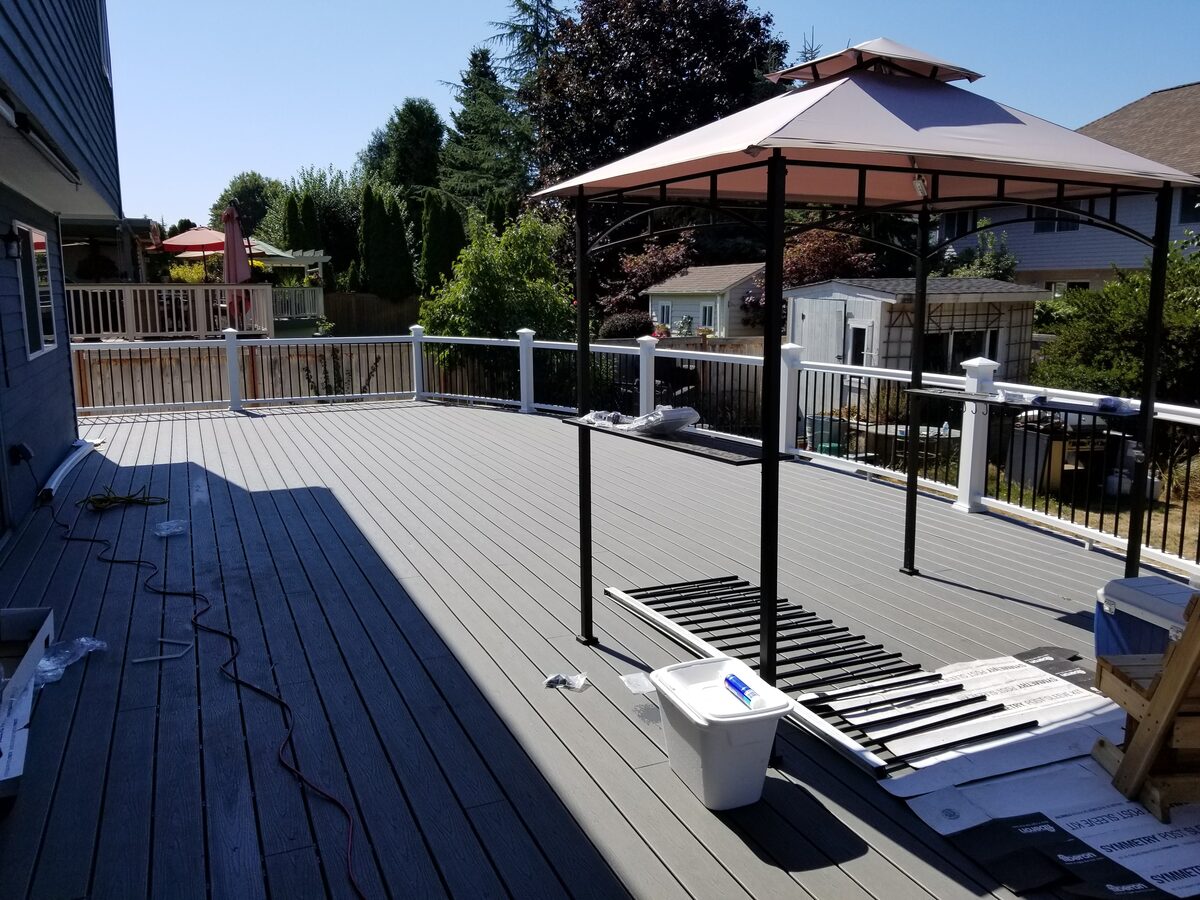
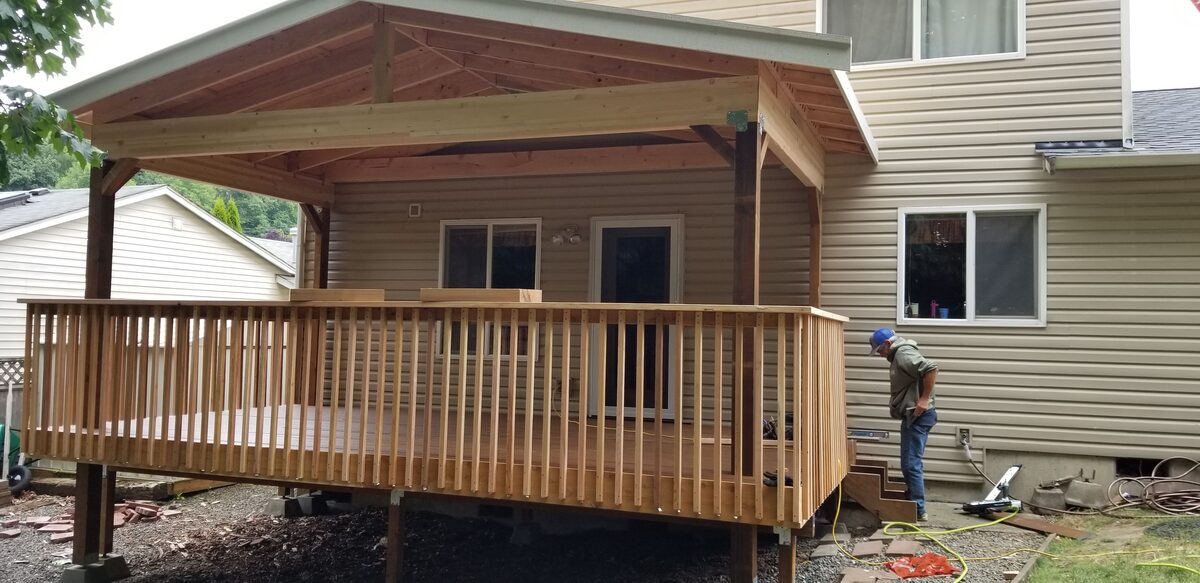
Cedar vs. Aluminum — Two Very Different Pergola Decisions
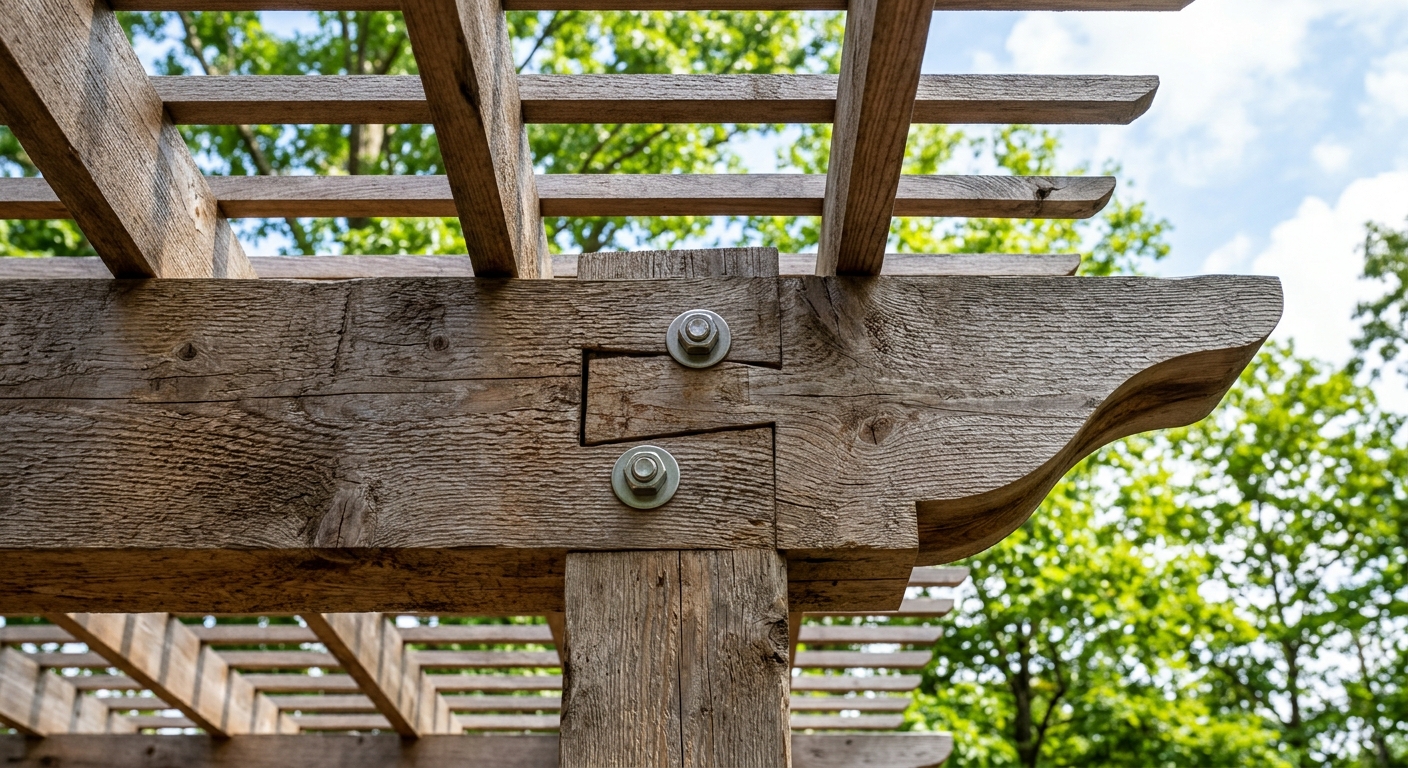
Built to Last — Mortise Joints, Not Joist Hangers
Our pergola posts and beams are connected with notched mortise joints and through-bolted with galvanized or stainless hardware — not metal joist hangers. The notched joint distributes load across the full beam width; the through-bolt prevents any movement even under heavy snow load. Western Red Cedar framing is specified throughout for its natural rot resistance and dimensional stability in Seattle's wet climate.
Shade & Comfort
A well-designed pergola provides filtered shade for comfortable outdoor entertaining during Seattle's sunny summer months.
Cedar Pergolas
Western Red Cedar pergolas offer natural beauty and durability that complements any deck material and style.
Custom Design
Every pergola is designed to complement your existing deck, home architecture, and personal style preferences.
In King County, the pergola decision comes down to two very different products: traditional open-beam Western Red Cedar (beautiful natural look, requires staining every 2–3 years) and modern powder-coated aluminum systems (zero maintenance, 30+ year structural life, HOA-friendly consistent color finish). Most homeowners don't realize these are apples and oranges until they get into the details. We build both, and we'll give you an honest side-by-side comparison at your estimate.
Aluminum systems — AFCO, TimberTech Pergola, and Structurally Integrated Pergola Systems (SIPS) — are increasingly popular in Sammamish, Bellevue, and Kirkland HOA communities because their factory powder-coat finish satisfies architectural standards that natural cedar cannot consistently meet over time.
The third major decision — one many homeowners don't fully consider until they're standing in their backyard in October — is rain coverage. Seattle averages 38 inches of rain per year, most of it between October and April. An open pergola in Seattle is a summer-only structure. A covered pergola — polycarbonate panels, solid roof, or louvered system — is a year-round outdoor room. That choice shapes the entire budget and permit conversation, and it's the first thing we discuss at every estimate.
- forestCedar pergolas ($8K–$18K freestanding): Western Red Cedar open-beam pergolas offer warmth and natural aesthetics no aluminum system replicates. They require staining or oiling every 2–3 years in the PNW climate. Best for homeowners who value the natural look and are comfortable with periodic maintenance.
- settingsAluminum systems (zero maintenance, 30+ yr life): Powder-coated aluminum pergola systems are structurally engineered, warranty-backed, and require nothing beyond an annual rinse. Popular in HOA communities where consistent color finish is required. We install AFCO, TimberTech, and SIPS systems.
- roofingAttached with polycarbonate roof ($15K–$30K): Adding polycarbonate roofing panels to an attached pergola turns it into a rain-proof outdoor room — extending usable outdoor time by 3–4 months in the Seattle climate. Requires its own permit alongside the deck permit, which we handle.
- lightbulbMost popular add-on — ceiling fan rough-in + LED lighting: Most of our pergola builds include a ceiling fan electrical rough-in and LED strip lighting in the beam structure. Cost to add during construction: $400–$800. Cost to retrofit after construction: significantly more. We always recommend roughing it in even if you don't install the fan immediately.
- thermostatOverhead heating — extends the season by 2 more months: Electric patio heaters (infrared or radiant) roughed in during construction add $600–$1,200 per heater location to the project cost and require a 240V dedicated circuit. Most clients add 1–2 heater rough-ins. Combined with a covered roof, overhead heating effectively turns a Seattle outdoor space into a 3-season room.
Price note: All ranges above are for King County installed pricing including permit fees. Louvered systems are priced from national manufacturers (StruXure, Sunroom, Four Seasons) and include local installation by our crew. Material cost alone for a louvered system is $12,000–$30,000 before installation — always get a full installed quote, not a materials-only quote from a manufacturer. We provide fully itemized quotes for every pergola project so you know exactly what you're comparing.
Seattle Pergola Considerations: It Rains Here 9 Months a Year
Most pergola content online comes from Southern California and Arizona — open lattice looks great in a dry climate. In Seattle, an open lattice pergola is largely unusable from October through June. The decision about roof coverage is the most important design choice you'll make for a King County pergola. Here's the honest breakdown of your options:
Open Lattice (Classic Look, Minimal Protection)
Traditional open-beam pergola with no roof panels. Provides filtered shade and structure — no rain protection whatsoever.
- ✓ Classic visual appeal — vines, string lights, timeless look
- ✓ Most affordable entry point ($6K–$12K for basic wood build)
- ✗ Unusable October–June in Seattle's climate
- ✗ Best only if you have a covered fallback indoor/outdoor space nearby
Louvered Pergola (Adjustable — Best for Seattle)
Motorized or manual louvers that open for sun and close for rain. The gold standard for Seattle year-round outdoor rooms. Premium cost: $8K–$15K more than open lattice equivalent.
- ✓ Best of both worlds — open for sun, fully closed for rain
- ✓ Extends outdoor season to near year-round usability
- ✗ Premium price range: $15K–$30K for louvered systems
- ✗ Motorized louvers require electrical rough-in
Polycarbonate Panels (Light + Rain Block)
Clear or tinted polycarbonate roof panels that allow natural light through while blocking rain. The most cost-effective covered solution in Seattle — popular upgrade on cedar and aluminum pergola builds.
- ✓ Allows natural light — feels open, not enclosed
- ✓ Full rain protection at moderate cost ($6K–$12K add-on)
- ✓ Most popular rain-coverage upgrade in our Seattle pergola builds
- ✗ Can be noisy in heavy rain — the drumming on panels is significant
Solid Patio Cover (Maximum Protection)
A solid roof structure — metal roofing, composite shingles, or TPO membrane — attached to the house. Maximum weather protection, closest to an enclosed outdoor room.
- ✓ Full rain and weather protection — usable every day of the year
- ✓ Can add recessed lighting, fans, overhead heaters
- ✗ Always requires permit — always attached to the structure
- ✗ Higher cost: $25K–$50K+ for a fully engineered covered structure
Pergola Cost Guide — King County
| Pergola Type | Typical Cost Range | Maintenance | Best For |
|---|---|---|---|
| Cedar freestanding | $8,000–$18,000 | Stain/oil every 2–3 yrs | Natural look — Mercer Island, Kirkland non-HOA |
| Cedar attached to deck | $10,000–$22,000 | Stain/oil every 2–3 yrs | Cedar deck integration, paired look |
| Aluminum powder-coat (open) | $12,000–$24,000 | Annual rinse only | HOA-compliant, Sammamish, Bellevue, Redmond Ridge |
| Aluminum + polycarbonate roof | $18,000–$34,000 | Annual rinse + panel inspection | Rain-proof outdoor room — extends use by 3-4 months |
| Louvered roof system | $28,000–$55,000 | Annual mechanism check | Premium — Bellevue, Clyde Hill, Mercer Island |
Pergola Projects We've Built
Every project below represents a real budget, a real King County permit, and a real decision about material and coverage. The range is wide — $11K for a simple freestanding cedar structure to $54K for a full covered deck-and-pergola room — because the right pergola depends entirely on how you live outdoors, your HOA situation, and how many months per year you want to use the space.
Redmond Education Hill — Cedar + Deck
420 sq ft composite deck with 14×18 ft attached cedar pergola with open beam overhead. Pre-stained CVG cedar. Ceiling fan rough-in and LED strip lighting in beam structure. Extends outdoor use by 3 months in shoulder seasons. $38,500 deck + pergola.
Sammamish Trossachs — Aluminum HOA
12×16 ft AFCO aluminum pergola in Textured Black powder-coat. Trossachs ARC required consistent color finish — aluminum satisfied the requirement, cedar would have been rejected. Ceiling fan installed at completion. $16,800 pergola only.
Bellevue Newport Hills — Covered Room
380 sq ft elevated deck + 14×20 ft attached aluminum pergola with corrugated polycarbonate roof panels. Creates a fully rain-proof outdoor dining area. Heated outdoor space with two overhead heaters roughed in. $54,000 deck + covered pergola.
Kirkland Juanita — Freestanding Cedar
Freestanding 12×14 ft cedar pergola at far end of yard — separate from the deck, creating a second outdoor living zone with afternoon shade. CVG cedar, pre-stained Cabot Australian Timber Oil. No permit required (freestanding, under 200 sq ft). $11,200.
Bellevue Backyard Transformation — Freestanding Louvered Pergola + Composite Patio Surface — $22,000 / 8 Days
The homeowners had a sound 360 sq ft concrete patio slab and an exposed backyard with no overhead coverage — perfectly usable in July, completely abandoned from September through May. The project goal: transform the existing concrete patio into a year-round outdoor room without demolishing the slab.
What we built: A freestanding 12×16 ft AFCO louvered aluminum pergola with four post footings drilled through the concrete into the subgrade — the slab was left in place. TimberTech Terrain composite boards were laid directly on the existing concrete using a hidden clip system and 1" composite sleepers, creating a warm wood-look surface over the cold concrete. String lights were pre-run through the louvered beam channels during framing — no retrofit needed. The louvered system closes fully via a wall-mounted switch when rain starts, keeping the space dry and usable.
Result: $22,000 total. 8 days on site. No demolition cost, no new deck framing — the concrete slab made this project significantly more affordable than a ground-up deck build. The homeowners now use the space from February through November. Permit: City of Bellevue accessory structure permit, approved in 3 weeks (freestanding but over 200 sq ft).
King County Pergola Permit Requirements
Permit requirements for pergolas in King County depend on three factors: size, attachment type, and whether a roof structure is included. Here's the quick-reference guide:
Usually No Permit
Freestanding pergola under 200 sq ft (open lattice, no roof). No electrical. Setback from property lines met. Check with your specific city — thresholds vary.
Always Requires Permit
Any structure 200 sq ft or more. Attached pergolas (to house or deck). Pergolas with a roof — polycarbonate, solid, or louvered. Any structure with electrical.
HOA Also Required
In planned communities (Sammamish, Issaquah, parts of Bellevue/Redmond), HOA Architectural Review approval must be obtained before the city permit is filed.
Permit fees for pergola-only permits in King County cities typically run $200–$600. We confirm requirements at your estimate and handle all permit documentation. Never start a pergola build without confirming permit status with your city — permit requirements have tightened in several King County cities since 2022, and the 200 sq ft exemption has exceptions (electrical, proximity to property lines) that can eliminate the exemption entirely.
Pergola FAQs
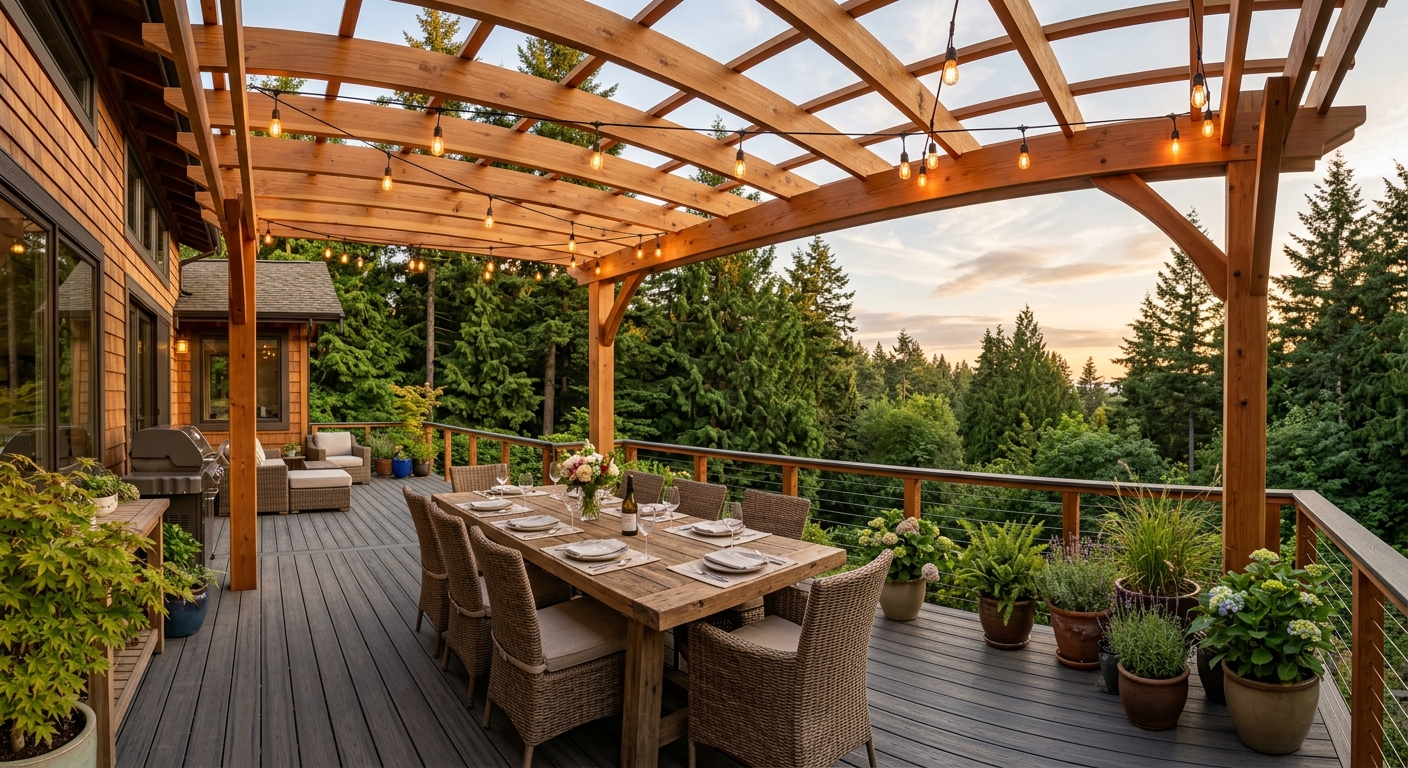
A finished cedar pergola over composite decking — string lights, dining setup, and a PNW evergreen backdrop.
Q: Should I choose cedar or aluminum for my King County pergola?
It depends on your maintenance tolerance and HOA situation. Cedar looks warmer and more natural — but in the PNW climate it needs staining or oiling every 2–3 years, or it will gray and check. Aluminum systems require nothing beyond an annual wash and carry 30-year structural warranties. If you're in a Sammamish, Bellevue, or Kirkland HOA that requires a consistent color finish on exterior structures, aluminum is typically the better fit — cedar weathers differently lot to lot, which HOA architectural committees sometimes flag. We'll walk you through both options at your free estimate and show you installed examples of each.
Q: Does a pergola require a permit in King County?
It depends on size and attachment type. Freestanding pergolas under 200 sq ft typically do not require permits in most King County cities. Attached pergolas (connected to the house or deck) always require permits because they affect the structural load on the ledger or deck framing. Pergolas with roof structures (polycarbonate, solid roof) require permits regardless of size. Permit fees run $200–$600 for pergola-only permits. We confirm permit requirements at your estimate appointment — never assume a pergola is permit-exempt without checking with the City.
Q: What's the difference between an open pergola and a covered pergola — which one do I need in Seattle?
An open pergola (no roof panels) provides shade and structure but not rain protection. In Seattle's climate, it creates usable outdoor space in summer but is largely unusable during the October-May wet season. A covered pergola (polycarbonate or solid roof panels) creates a true rain-proof outdoor room — extending usable outdoor time by 3–4 months per year. The cost difference is typically $6,000–$15,000 for the roof panels and modified framing. For homeowners who want year-round outdoor dining or entertaining, the covered version is almost always worth the additional investment in the PNW climate.
Q: Can I add lighting and a ceiling fan to my pergola?
Yes, and we strongly recommend roughing in the electrical during construction even if you don't install the fan immediately. The rough-in cost during construction is $400–$800. Retrofitting after construction costs $1,500–$3,000 because the beam structure needs to be partially disassembled for wiring access. Standard pergola electrical includes a weatherproof ceiling fan outlet in the center beam and LED strip lighting channels along the perimeter beams. We rough in outdoor-rated conduit and a dedicated circuit breaker — the finished installation is then a simple electrician visit to terminate and connect.
Q: How long does it take to build a pergola?
Freestanding cedar pergolas typically take 2–4 days of on-site work for 12×14 to 12×18 ft structures. Attached pergolas with permits take longer due to permit review: 3–5 weeks for permit approval (City-dependent), then 3–5 days of construction. If we're building the pergola with a new deck, we sequence the project so the pergola permits are in-hand before deck construction starts — you get one mobilization, one cleanup, and the whole outdoor living space delivered at once. We provide a specific timeline projection at every estimate appointment.
Q: Do I need HOA approval for a pergola in King County?
In most King County planned communities — particularly in Sammamish, Issaquah, Bellevue, and parts of Redmond — yes. HOA Architectural Review Committees typically require an Architectural Modification Request (AMR) before any exterior structure is installed, including pergolas. Common HOA restrictions on pergolas: required color match to existing exterior trim, prohibition on natural wood that will weather inconsistently, maximum height restrictions, and setback requirements from property lines. Aluminum systems with factory powder-coat finishes typically satisfy HOA color consistency requirements far more reliably than cedar, which weathers differently lot to lot over time. We review your HOA's architectural guidelines at the estimate appointment and prepare the AMR documentation if required — this process typically takes 2–4 weeks before a permit can be filed. Never start a pergola build without both city permit and HOA approval in hand.
Q: What maintenance does a pergola require in the Seattle climate?
Maintenance requirements vary significantly by material. Cedar pergolas in Seattle's wet climate require staining or oiling every 2–3 years — without it, cedar will gray, check (develop surface cracks), and eventually decay at exposed end grain within 8–12 years. A good PNW cedar stain (Cabot Australian Timber Oil, Defy Extreme, Armstrong Clark) applied on a dry day extends the life considerably. Aluminum powder-coated pergolas require only an annual rinse — the powder-coat finish is warranted for 20–30 years in residential exterior applications. Louvered roof systems require an annual mechanism check and lubrication of the louver pivots (about 30 minutes per year). Polycarbonate panels should be cleaned annually with a soft brush and mild detergent — avoid abrasive cleaners that scratch the UV coating. For any pergola with electrical (fans, lighting, heaters), check weatherproof outlet covers and connections every spring before the season starts.
Q: Should I attach my pergola to the deck or make it freestanding?
Attached pergolas integrate structurally with the deck or house ledger — they share the load path and typically look more intentional as part of the overall design. Freestanding pergolas are independent structures set on their own post footings — simpler permit process (or no permit for small freestanding structures under 200 sq ft), flexible positioning, and no ledger attachment concerns. In Seattle's climate, the attached configuration is more popular because it enables a contiguous covered area over the deck and house transition — keeping people dry as they move from inside to the covered deck. The trade-off: attached pergolas always require permits (they affect the building structural system), add ledger engineering requirements, and need to coordinate with the existing house roof drainage. Freestanding pergolas avoid all of that but can look disconnected if not carefully positioned. We discuss both options at every estimate and recommend based on the specific site, HOA requirements, and how the homeowners intend to use the space.
Q: Can I add a roof to my existing open pergola?
Yes — adding polycarbonate panels, solid roofing, or a louvered system to an existing open pergola is one of the most common upgrades we do in Seattle. The key question is whether the existing structure is engineered to carry the additional load. Open pergolas are typically framed for dead load (their own weight) plus minimal snow load — adding a solid roof or polycarbonate panels adds both dead load and significantly more snow and wind uplift load in Seattle's climate. We inspect the existing post footings, post size, beam span, and connection hardware before quoting a roof addition. Cedar pergolas under 10 years old with 6×6 or larger posts usually pass inspection. Older or undersized structures may need post reinforcement or footing upgrades before roofing can be added — we quote both the roofing and any required structural upgrades as a single package. Adding polycarbonate panels to an existing structure typically runs $4,000–$9,000 depending on span and panel grade. A louvered roof addition runs $10,000–$18,000. Both require a permit when the structure is attached to the house or deck.
Q: How do I prepare my pergola for Seattle's winter?
Preparation depends on material. For cedar pergolas: apply a penetrating oil stain before the wet season starts (September is ideal — the wood needs 48 hours of dry weather to absorb properly). Check for soft spots at beam ends, rafters, and post bases — these are the first places moisture penetrates in cedar. Clean moss and debris from beam tops where water accumulates. For aluminum pergolas: almost no prep needed — just rinse debris from gutters and check that drainage channels are clear before heavy rain season. For louvered systems: cycle the louvers fully open and closed twice before winter to check for motor and mechanism function; lubricate pivot points per manufacturer specification. For polycarbonate-roofed pergolas: clear debris from panel channels and ensure the gutter system drains correctly — standing water in channels accelerates panel clouding. Electrical items: check that all outdoor outlet covers are seated correctly and that GFCI outlets are functional. A quick once-over in late September takes 30–60 minutes and prevents the common issues we get called to repair every spring.
We build pergolas and covered outdoor structures throughout King County, most commonly in Redmond, Sammamish, Bellevue, and Bothell. HOA-approved aluminum systems available for planned communities throughout the Eastside.
Pergola and deck projects are frequently combined — building both in a single permit and mobilization saves significant cost versus sequencing them separately. If you're also considering a new or replacement deck, we quote the two together and sequence the permit so construction begins on the same day. See our composite decking and cedar decking pages for the materials we pair with pergola builds.