
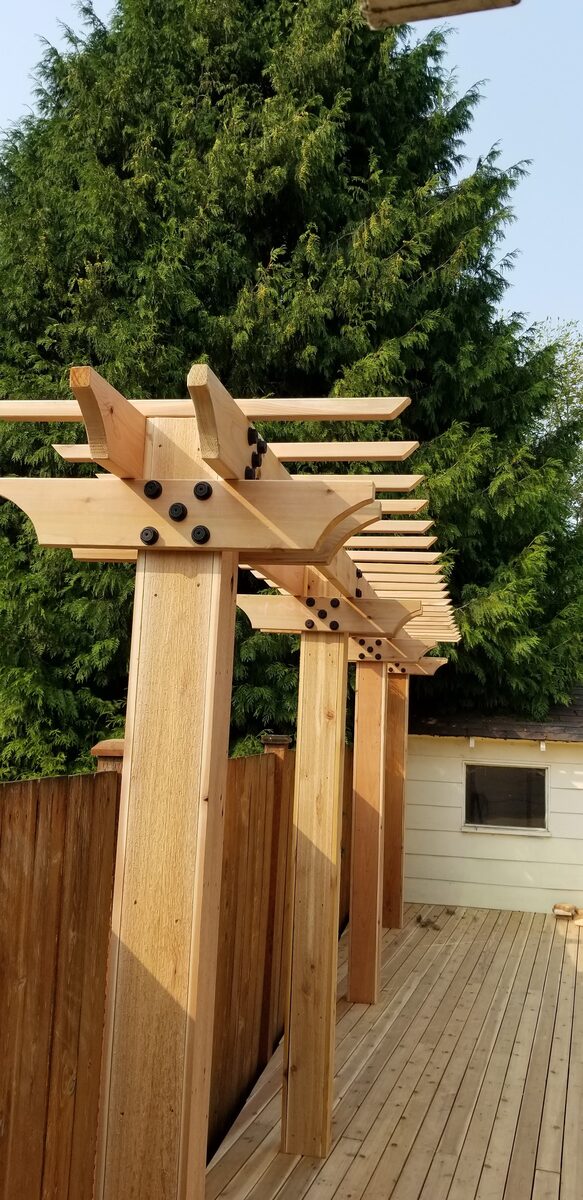
Hiring a deck contractor in Seattle is a $20,000 to $60,000 decision — and in King County's competitive contractor market, the difference between a smooth project and a costly dispute often comes down to the questions you ask before you sign anything. We've been building decks across King County for 15+ years, and we've heard the stories: the contractor who disappeared after the deposit cleared, the deck built without permits that had to be torn down before a house sale, the warranty dispute where the homeowner had nothing in writing. Every one of those situations had warning signs that direct, specific questions would have surfaced.
This isn't a guide to trick contractors or play gotcha. It's a guide to verifying the non-negotiables — license, insurance, permits, materials, warranties, payment terms — before a single board is ordered. A contractor who answers all of these confidently, specifically, and in writing is operating professionally. A contractor who hedges, redirects, or can't produce documentation is showing you how they'll handle problems when they arise on your job site.
Seattle's Department of Labor and Industries maintains public records on every contractor's license status. The Seattle SDCI publishes permit requirements for every project type. The information to protect yourself is publicly available — these questions help you use it.
Why the Right Questions Reveal Everything
Most homeowners walk into contractor interviews knowing very little about construction and feeling like the contractor holds all the cards. That's a misconception. You don't need to know how to build a deck to qualify the person who will. You need to know five verifiable things: that they're legally operating, that they'll handle permits correctly, that warranty coverage is documented, that scope changes follow a controlled process, and that their track record holds up to a direct reference call.
Every question in this guide produces an answer that is either verifiable and specific or it isn't. That distinction — not whether the contractor gave you a confident answer, but whether the answer can be confirmed — is how you separate legitimate contractors from the ones whose references never quite pan out.
The North American Deck and Railing Association (NADRA) maintains professional standards for the industry. Their member contractors have committed to operating to professional codes of conduct. It's a useful starting point, but membership is not a substitute for direct verification of the specifics below.
Question 1: Are You Licensed, Bonded, and Insured in Washington State — and Can I Verify It Right Now?
This is the first question because it's the one that eliminates the most risk in the least time. Washington State requires any person or company performing construction work for compensation to hold a current contractor's license issued by L&I. "Current" means all three components are simultaneously active: the license itself, the bond, and the general liability insurance.
Ask for the contractor's UBI number (Unified Business Identifier) or their specific contractor registration number. Then verify it yourself at the Washington L&I contractor lookup. The search takes about thirty seconds and produces a definitive answer: active, expired, or suspended.
What Each License Status Actually Means
| Category | Value |
|---|---|
| Active — licensed, bonded, insured | risk level (1=low, 3=high)1 |
| Expired — unlicensed, cannot pull permits legally | risk level (1=low, 3=high)3 |
| Suspended — bond or insurance lapsed | risk level (1=low, 3=high)3 |
| Pending renewal — currently unlicensed | risk level (1=low, 3=high)2 |
The bond is not simply a formality. It provides a financial backstop if the contractor fails to complete the work or causes damage and refuses to remediate. Washington's minimum bond amounts are modest — they're not a comprehensive guarantee against all losses — but the bonding requirement itself screens out contractors who can't obtain bonding due to prior claims, financial instability, or complaint history. L&I's contractor licensing requirements document the full legal framework.
General liability insurance is the separate protection that covers damage to your property during construction — a dropped beam that damages your siding, a piece of equipment that hits your fence, concrete that gets poured on a neighbor's landscaping. Without active GL insurance on the contractor doing the work, that damage is on you.
Workers' compensation is the third component. If an uninsured worker is injured on your property, your homeowner's insurance may be your only protection — and depending on your policy, coverage may be limited or disputed. Ask specifically for certificates of insurance for both GL and workers' comp, with current effective dates.
Important
A licensed contractor will hand you their registration number without hesitation. They've worked to maintain it and they're proud of it. Ask at the very first contact — phone or email — before you invest time in a site visit.
The Pre-Call Checklist: 10 Minutes That Protect $40,000
Before you schedule any site visits with any contractor:
- L&I license lookup: Confirm active status, not expired or suspended.
- L&I complaint history: Search the contractor's business name for infractions and complaints in the public record.
- BBB profile: BBB Northwest Pacific — look at complaint resolution patterns, not just the aggregate rating. One unresolved complaint about payment disputes tells you more than fifty five-star reviews.
- Google reviews pattern analysis: Look for repeated themes in negative reviews. A single complaint about communication could be an outlier; four complaints describing the same dynamic are a pattern.
- Washington AG consumer protection: Washington's Attorney General consumer protection page includes contractor-specific guidance and a complaint process if issues arise post-contract.
Question 2: Who Pulls the Permits — and Is That Included in Your Quote?
A building permit is required for most residential decks in the Seattle area. Specifically, any deck attached to the house, any deck elevated more than 30 inches above grade, and any deck over a certain square footage requires a permit from the relevant jurisdiction — whether that's SDCI in Seattle, King County DPER for unincorporated areas, or the building department in Bellevue, Kirkland, Sammamish, Redmond, or Renton.
Ask this question in two parts, and listen carefully to both answers:
- Does this specific project require a permit in this jurisdiction?
- If yes, is permit management — application, plan review coordination, inspection scheduling, and permit closeout — included in your written quote, or billed separately?
A reputable contractor handles permit management as a standard part of the project. They know the permit thresholds and processes for the jurisdictions they serve. They submit the application, respond to plan review comments, schedule and attend required inspections, and close out the permit when construction is complete. This is not optional extra service — it's part of building correctly.
What Skipping Permits Actually Costs You
If a contractor suggests permits aren't necessary when they are, or offers to reduce the project price by omitting them, stop the conversation. Building without a required permit creates an unpermitted structure — a documented code violation that attaches to the property record, not to the contractor who built it.
Important
The inspections required during construction — typically a footing inspection before concrete is poured, a framing inspection before decking goes down, and a final inspection — exist because these structural elements are the ones most likely to cause serious failure if done wrong. A contractor who skips permits is also skipping the independent verification that the structure is safe.
Permit Timelines by Jurisdiction
| Jurisdiction | STFI/Simple Track | Full Review |
|---|---|---|
| Seattle (SDCI) | 1–5 business days | 3–6 weeks |
| King County (unincorporated) | 5–10 business days | 3–5 weeks |
| Bellevue | 5–10 business days | 4–6 weeks |
| Sammamish | 1–2 weeks | 4–8 weeks |
| Kirkland | 3–7 business days | 3–5 weeks |
Question 3: What Are the Exact Materials — Brand, Product Line, and Why That Product for My Climate?
Material specification questions are where homeowners most often accept vague answers they shouldn't. "Composite decking" is not a specification — it's a category that includes products ranging from excellent to genuinely problematic for Seattle's climate, often at similar price points.
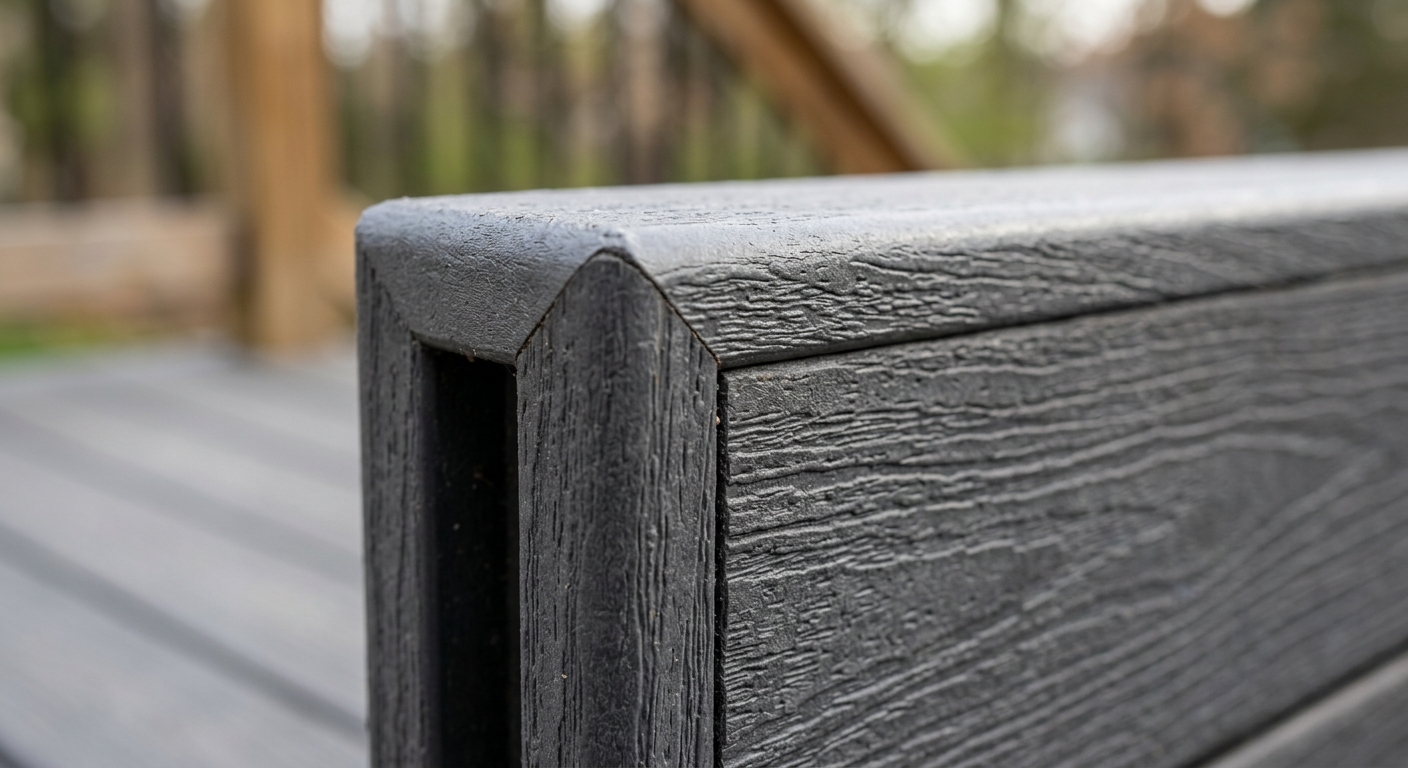
The critical distinction in the composite category is capping. A fully capped composite board has a continuous polymer shell on all four sides — top, bottom, and both edges. This shell prevents moisture from reaching the wood-fiber core. An uncapped or partially capped composite exposes wood fiber at the bottom face and edges. In Seattle's 37–38 inches of annual rainfall, that exposed fiber absorbs moisture, enables mold and mildew growth inside the board, and causes the visual degradation that gave early composites a bad reputation.
Key insight
Material Specification Questions to Ask
- What is the exact brand and product line of the decking boards?
- Is the decking fully capped on all four sides, including the bottom and both cut edges?
- What is the standard board gap specification for this product — and why is that the right gap for this climate?
- What joist spacing does this product require, and what's your framing plan?
- What fastener system do you use — hidden fasteners or face screws — and what's the manufacturer's approved system for this product?
- What species and treatment level is the structural framing — joists, beams, posts?
- What post base hardware do you use, and is it rated for the exposure condition?
Board Gap Specification: Why This Matters in Seattle
The standard board gap for composite decking in the Pacific Northwest is 1/4 inch — wider than the 1/8 inch spacing that manufacturers allow in drier climates. The reason: composite boards expand in heat and moisture. In Seattle, decks spend months in sustained high-humidity conditions. A board installed at 1/8 inch gap in April may have essentially zero gap by July as the boards expand. That contact can cause surface buckling, squeaking, and accelerated wear at board edges.
Experienced Seattle contractors know this. It's a specific, verifiable technical detail that demonstrates real-climate installation experience rather than following a manufacturer spec sheet written for the national average.
| Category | Value |
|---|---|
| Manufacturer minimum (dry climate) | inches0.125 |
| PNW standard (Seattle area) | inches0.25 |
| High-moisture / shaded exposure | inches0.3125 |
The Main Composite Brands — What We Specify for Seattle
| Brand | Top-tier Product | Fully Capped? | Seattle Recommendation |
|---|---|---|---|
| Trex | Transcend, Enhance | Yes (both) | Yes — Transcend is our primary specification |
| TimberTech/AZEK | Legacy, PRO | Yes | Yes — Legacy for composite; AZEK PVC for high-moisture |
| Fiberon | Symmetry, Horizon | Yes (both) | Yes — Symmetry is strong mid-market value |
| Trex | Select | Partial (top only) | No — avoid for full PNW exposure |
Question 4: What's Your Warranty — Materials AND Workmanship, Separately, In Writing?
Two separate warranties apply to every deck installation. Understanding the distinction is critical because a manufacturer warranty explicitly does not cover installation errors, and installation errors are what cause the majority of premature deck failures.
Manufacturer's warranty covers defects in the materials themselves. These warranties are issued by the material manufacturer, are transferable to subsequent homeowners, and remain in force regardless of whether the installing contractor is still in business.
| Brand | Product Line | Warranty Length | What's Covered |
|---|---|---|---|
| Trex | Transcend, Enhance | 25-year limited | Fade, stain, structural |
| TimberTech | Legacy, PRO | 25-30 year limited | Fade, stain |
| Fiberon | Symmetry, Horizon | 25-50 year limited | Varies by line |
| AZEK | All PVC lines | 50-year limited | Fade, stain |
| Cedar | Western Red Cedar | No manufacturer warranty | Performance per WRCLA specs |
Workmanship warranty covers installation errors — the failures that manufacturer warranties explicitly exclude. Ledger flashing that allows moisture infiltration into the house wall. Post bases installed in orientations that trap water rather than drain it. Fasteners installed at wrong spacing that allow boards to move. Footings set at insufficient depth that allow post settlement.
None of these failures appear in manufacturer warranty claims because the boards aren't defective — the installation is. The manufacturer warranty says so directly, and it is correct.
Tip
Critical Warranty Questions to Ask Before Signing
- How long is your workmanship warranty?
- Does the workmanship warranty cover structural components — footings, framing, ledger, post bases — or only the surface decking?
- What would void the workmanship warranty?
- Is the workmanship warranty transferable to a future buyer?
- Who administers warranty claims — your company directly, or a third party?
The ledger connection is the component where installation errors are most common and most consequential. The ledger is the horizontal beam bolted to your house that carries the entire deck load. Incorrect flashing at this connection is the single most common cause of serious moisture damage in Seattle-area homes — water gets behind the siding, into the rim joist, and potentially into the wall framing before it's ever visible. Ask specifically whether the ledger connection and flashing are covered under the workmanship warranty.
Question 5: What Is Your Change Order Process — and Can I See an Example?
Scope creep is the mechanism through which construction projects most commonly exceed budget. It starts with decisions that each seem minor in isolation: the homeowner asks to add two feet to one side of the deck after seeing the framing laid out. The contractor discovers the existing rim joist needs sistering before the ledger can be attached. A specified composite color is backordered and a substitution is offered. A buried utility line requires the footing layout to shift, increasing structural complexity.
Each change is manageable individually. Without a formal, documented change order process, they collectively add 20–30% to the final cost in disputes about what was agreed to.
The correct answer to "how do you handle change orders?" is: every change to the contracted scope, regardless of size, is documented in writing with a specific dollar amount and signed by both parties before the changed work is performed. Not after. Not at the final invoice. Before.
Note
What a Professional Change Order Contains
Ask to see a sample change order document before you sign the primary contract. A legitimate change order form includes:
- Reference to the original contract number and date
- Clear description of the specific scope change
- Dollar amount of the cost impact (addition, credit, or net zero)
- Explanation of why the change is necessary (owner request vs. unforeseen condition)
- Signatures of both the contractor and homeowner
- Date signed, before work proceeds
If the contractor says they "handle changes verbally" or "settle up at the end," that is your answer to how disputes will be managed if they arise.
Common Change Order Triggers on Seattle Deck Projects
Understanding the most common triggers helps you plan realistically:
Unforeseen site conditions: Existing ledger rot that requires rim joist repair before the new ledger can be attached. Buried utilities that require footing relocation. Rock hit at the required footing depth that requires alternative foundation solutions.
Owner-initiated scope changes: Deciding to extend the deck perimeter after seeing the framing. Adding a step or stair configuration not in the original plan. Upgrading from composite to PVC after seeing samples in person.
Material substitutions: A specified composite color discontinued or unavailable at the time of order. Hardware substitutions where the specified product is backordered.
Code-required additions: Inspection reveals that an adjacent structure requires modification for the permit to close. A drainage condition requires additional work to meet King County environmental standards.
Question 6: Can You Provide Three References From Similar Projects in the Last Two Years?
References are standard in the contracting industry, and a contractor with a strong track record provides them without hesitation. The request tells you as much as the references themselves: a contractor who deflects, says they "don't give out homeowner contact information," or produces references from projects more than three years ago is showing you something about their recent track record.
Ask specifically for two or three homeowner references from projects similar to yours in scope — comparable size, comparable materials, comparable site conditions — completed within the last two years. Recent is important because contractor quality can change: crew turnover, ownership transitions, and business growth all affect the quality of work, and references from five years ago don't tell you about the crew building your project in 2026.
What to Ask Reference Homeowners
When you call:
- Did the project complete on or near the quoted price?
- Were there change orders? How were they documented and communicated?
- How was the contractor's communication during the project — did they proactively update you, or did you have to chase for information?
- Were there any problems during or after the project? How were they resolved?
- What does the deck look like now, one or two years later?
- Would you hire this contractor again for a project of similar scope?
- Did the project finish on schedule or close to it? What caused any delays?
The last question — would you hire them again — is the most informative. Homeowners who had a good experience say yes without hesitation. Homeowners who experienced significant problems, even if they were eventually resolved, typically answer "probably" or pivot to caveats. Listen to the hesitation as much as the words.
Tip
Question 7: What Does Your Payment Schedule Look Like?
A professional contractor's payment schedule is structured around project milestones, not their cash flow needs. For a $30,000–$50,000 deck project, a typical professional payment structure looks like:
| Milestone | Typical Percentage |
|---|---|
| Contract signing / deposit | 10–20% |
| Permit issuance / materials ordered | 20–30% |
| Framing complete / rough inspection passed | 30–40% |
| Final completion / permit closed | 10–20% |
Important
The final payment should not be released until:
- All work is complete to your satisfaction
- The permit has been closed by the relevant inspection authority
- All manufacturer warranty registrations have been provided to you
- All required cleanup is complete and the site is restored
Question 8: How Are Footings Engineered for Seattle's Soil Conditions?
This question separates contractors who have genuinely built in King County from those who follow generic national spec sheets. Seattle's soil conditions — specifically the clay-heavy soils prevalent across Bellevue, Issaquah, the Sammamish Plateau, and large parts of South Seattle — behave very differently from the sandy or loam soils assumed in most decking installation guidelines.
Clay soil expands when wet and contracts when dry. In King County's climate, footings set in clay go through significant seasonal moisture cycling. A footing designed for stable dry-climate soil at the code-minimum depth of 12–18 inches can heave visibly in saturated King County clay during a wet February. On an elevated deck, any footing movement is amplified: a half-inch shift at the footing becomes visible motion at the deck surface 10 feet above.
Seattle-Specific Footing Questions
- What footing depth do you specify for my lot's soil conditions?
- How do you assess soil bearing capacity before finalizing the footing design?
- For post heights over 8 feet, do you work with a licensed structural engineer on the footing design?
- How do you handle lots with high water table or documented drainage issues?
For elevated or hillside deck projects, footing specifications should be reviewed by a licensed structural engineer. This isn't bureaucratic caution — it's the correct engineering process for a structure that will carry significant live load (people, furniture, snow) on an elevated structure in a seismically active region with challenging soil conditions.
Question 9: What Is Your Ledger Flashing Process?
The ledger is the horizontal beam bolted to your house that carries the deck load at the house attachment point. Incorrect flashing of this connection is the most common cause of serious moisture damage on Seattle-area homes — not from structural failure, but from water intrusion that goes undetected behind the siding for years.
A properly flashed ledger in Seattle requires:
- Removal of the siding in the ledger zone before installation
- Installation of a flashing membrane that directs water away from the house rim joist and wall framing
- Metal z-flashing or integrated step flashing above the ledger-siding interface
- Proper drainage path so that any moisture reaching the ledger plane can exit rather than pond
The answer to this question should be specific and technical. "We follow the code" is not a specific answer. "We remove the siding, install flashing membrane, and use a z-flashing at the top of the ledger" is specific and verifiable at rough framing inspection.
Key insight
Question 10: What Does Your Daily Site Cleanup Routine Look Like?
This is not a disqualifying question — any properly licensed contractor will build a code-compliant deck. But the answer reveals operational discipline that directly affects your daily experience during a 2–3 week construction project.
A contractor who describes a daily cleanup routine — cut material staged in a designated area, scrap disposed of regularly, tools stored off the deck surface overnight, debris not accumulating against the house — operates differently from one who works-as-is until project completion.
Your yard, your children's and pets' safety around the construction zone, and your neighbors' experience are all affected by how the site is managed daily. The answer to this question is also predictive: contractors who take daily cleanup seriously typically bring the same discipline to the hidden work — framing details, fastener schedules, and flashing installation — that you can't see once the decking boards go down.
How to Use These Questions as a Comparison Framework
Don't interview contractors sequentially and compare them from memory. Use a simple matrix:
| Question | Contractor A | Contractor B | Contractor C |
|---|---|---|---|
| License verified at L&I? | |||
| Permits included in quote? | |||
| Material fully capped? (confirm brand/line) | |||
| Workmanship warranty length and in writing? | |||
| Written change order process? | |||
| References provided and called? | |||
| Payment schedule reasonable? | |||
| Ledger flashing process described specifically? | |||
| Footing approach for Seattle soil? |
Three bids from licensed, reputable contractors gives you enough data to identify outliers. One bid is no comparison; six creates diminishing returns without adding meaningful information.
The outlier to investigate is not always the lowest bid. A quote that is 20–30% lower than two comparable quotes from licensed contractors may be pricing a lower-specification material, omitting permit costs, or relying on a crew structure that cannot deliver the warranty coverage being offered. Ask what specifically makes the lower price possible — the answer is as informative as the number.
What Happens When You Ask These Questions
A legitimate contractor answers every question specifically and completely. They welcome the process because it demonstrates that you're a serious buyer who will make a clean decision based on real information. They'll hand you their license number, reference their change order form, describe their flashing process in technical terms, and be able to name the exact product line being specified and why it's right for your project.
A contractor who hesitates, deflects, or gives vague answers to any of these questions is showing you their approach to accountability. That approach doesn't change after you sign — it gets applied to every decision made on your job site.
Frequently Asked Questions
How many bids should I get for a Seattle deck project?
Can I just trust a contractor's Google rating instead of checking their license?
What if the contractor wants 50% upfront before starting any work?
Is a workmanship warranty worth anything if the contractor goes out of business?
Do I need permits for a small deck under 200 square feet in Seattle?
What's the difference between 'bonded' and 'insured' for a contractor?
Can I ask a contractor to build without permits to save money?
What should a workmanship warranty actually cover?
How do I know if a composite product is fully capped or partially capped?
Is it a problem if a contractor subcontracts the framing work?
What's the best time to contact Seattle deck contractors to get a summer build?
Questions About PNW-Specific Construction Details
The questions above cover universals — licensing, permits, materials, warranties. Seattle's specific climate and terrain add a second layer of technical questions that separate contractors who have genuinely built in King County from those applying generic national practices to a climate that demands more.
Question 11: What Board Gap Do You Specify for Composite in the Pacific Northwest — and Why?
Fiberon, Trex, and TimberTech all publish minimum board gap specifications. Those minimums are written for the national average, not for a climate with 37+ inches of annual rain and sustained six-month wet seasons. An experienced Seattle contractor specifies a wider gap than the national minimum to account for the moisture expansion that composite boards undergo in King County's persistent humidity.
What the right answer sounds like: "We install at 3/16-inch minimum gap, typically 1/4 inch on shaded or north-facing lots. Boards expand as they absorb ambient humidity — you need more room than the manufacturer's minimum to prevent board contact in summer." A contractor who says "we follow the manufacturer spec" without adding any Seattle-specific context hasn't thought about this.
Why it matters in Seattle specifically: A board installed at 1/8-inch gap in January may reach board-to-board contact by September on a lot that doesn't fully dry out between rain cycles. That contact causes surface buckling, squeaking, and accelerated edge wear. We've assessed decks installed by other contractors with tight gaps and found visible surface distortion within two seasons.
Question 12: How Do You Flash the Ledger on This Site?
The ledger connection — where the deck attaches to your house — is the single most common source of serious moisture damage on Seattle-area homes. Correctly flashing this connection requires removing siding in the ledger zone, installing a moisture-diverting membrane, adding metal z-flashing at the top of the ledger-siding interface, and creating a drainage path so any moisture reaching the ledger plane can exit rather than pond behind the siding.
What the right answer sounds like: "We remove the siding in the ledger zone, install a flashing membrane behind the ledger, use a z-flashing at the top of the ledger, and re-install the siding against the flashing. We document this with photos for our records and the permit file." Technical and specific.
What a wrong answer sounds like: "We follow code" or "we always do it right." These are not answers — they're deflections. The correct process is specific and describable. Ask for photos of ledger connections from recent projects.
Why it matters in Seattle specifically: Water that infiltrates behind a poorly flashed ledger migrates into the wall framing. In Seattle's persistent rain, that moisture pathway is active much of the year. The damage doesn't show up for 3–7 years — long enough for a homeowner to assume the deck is fine — and by the time it's visible, structural remediation costs $8,000–$25,000.
Question 13: What Footing Depth Do You Specify for This Lot?
Seattle's clay-heavy soils — prevalent in Bellevue, Issaquah, the Sammamish Plateau, and large portions of South Seattle — expand when wet and contract when dry. Footings set at the prescriptive minimum depth (typically 12–18 inches) in clay soil can move seasonally as the clay saturates in winter and dries in summer. That movement is amplified at the deck surface: a half-inch footing shift at the base becomes visible motion at the top of an 8-foot post.
What the right answer sounds like: "For this lot's clay soil conditions, we spec footings at 24–30 inch depth minimum, with footing diameter sized for the post load above. The structural engineer will confirm the specific depth in the drawings." Even better: "We typically recommend helical piers on hillside lots with heavy clay — they anchor into stable bearing below the seasonal saturation zone."
What a wrong answer sounds like: "We use standard tube-form footings at 18 inches." That specification is appropriate for sandy loam soils in drier climates. It's often inadequate for King County's clay-dominant conditions under sustained loads.
Question 14: What Fastener Specification Do You Use for Composite — Stainless or Coated?
Not all fasteners are created equal in Seattle's moisture environment. Standard galvanized screws corrode in persistent Pacific Northwest conditions, creating visible rust staining at fastener heads and eventual fastener failure that allows boards to loosen. Stainless steel (305 or 316 grade) or composite-specific coated fasteners are the correct specification.
What the right answer sounds like: "We use [brand name] stainless-coated screws approved by the composite manufacturer for this product, or we use the hidden fastener system which puts no fasteners through the board surface." Specific to the product and to the installation method.
Why it matters in Seattle: Face-screwed composite in Seattle sees screw heads exposed to rainfall 150+ days per year. Galvanized coating fails faster in this application than in dry climates. Stainless-steel or approved composite-specific fasteners prevent corrosion staining and hold long-term. We default to hidden fasteners on all composite installations to eliminate the exposed fastener issue entirely.
Question 15: How Do You Prevent Moisture Intrusion at the Rim Board and Fascia?
The fascia board — the trim that wraps the perimeter of the deck frame — is one of the most moisture-exposed elements on any Seattle deck. Cedar fascia in persistent contact with rain and splash-back degrades visibly within 3–5 years on north-facing PNW exposures. The correct specification for a composite deck in this climate is matching composite fascia or cellular PVC trim board — not cedar painted to match.
What the right answer sounds like: "We use the manufacturer's matching composite fascia board, or cellular PVC trim board for the perimeter. No cedar fascia on composite decks — it doesn't hold up in this climate, and it looks inconsistent within a few seasons."
Question 16: What Species and Treatment Level Is the Structural Framing?
The deck's structural framing — joists, beams, posts — is typically pressure-treated lumber. But there are meaningful differences in treatment level and species that affect longevity in Seattle's conditions. ACQ (Alkaline Copper Quaternary) or CA (Copper Azole) treated lumber at UC4A or UC4B rating is appropriate for ground-contact or near-ground applications in King County.
What the right answer sounds like: "We use #2 Douglas Fir or Southern Yellow Pine pressure-treated to UC4B rating for any framing within 18 inches of grade, UC4A for elevated framing. Post bases are Simpson Strong-Tie products rated for the exposure condition." Specific and technically grounded.
Why it matters: Standard UC3B treated lumber (above-grade application) used in ground-contact or near-grade applications will degrade faster than properly specified UC4A/UC4B lumber. In Seattle's climate, where framing members see sustained moisture exposure and often sit in close proximity to soil, treatment level matters.
The Reference-Checking Script: Specific Questions for Previous Clients
Generic reference checks ("Did you like the contractor?") produce generic answers. These specific questions extract actionable information about how the contractor actually operates.
Before calling, ask the reference for: when the project was completed, what the approximate project size was, and what materials were used. Then:
On budget and cost:
- "Did the project complete within 10% of the original quoted price?"
- "Were there change orders? How many, and were they documented in writing before the work was done?"
- "Looking back, were there any costs that surprised you that you feel should have been disclosed upfront?"
On schedule:
- "What was the original projected completion date, and when did the project actually finish?"
- "Were there delays? What caused them, and how did the contractor communicate about them?"
- "Did the crew show up when they said they would?"
On communication:
- "How would you describe the contractor's communication during the project — did they update you proactively, or did you need to chase for information?"
- "When problems came up (and they always do on construction projects), how did the contractor handle them?"
- "Was it easy to reach the project manager when you had questions?"
On quality:
- "Are there any aspects of the finished work you're unhappy with?"
- "Has anything required warranty service since completion? How was that handled?"
- "What does the deck look like now, a year or two later? Any discoloration, movement, or fastener issues?"
The decisive question:
- "Knowing what you know now, would you hire this contractor again for a project of similar size and scope?"
Listen carefully to hesitation. Homeowners who had a clean experience say yes immediately. Homeowners who had problems — even if those problems were eventually resolved — often say "probably" or pause before answering. The quality of the hesitation tells you as much as the words.
A note on verification: Cross-reference the references you're given with the contractor's permit history. If a contractor gives you three references but has pulled permits for fifteen projects in the past two years, ask for references from projects that didn't make their "highlight reel." The contractor's choice of who to offer as references is a data point in itself.
Questions About Post-Construction and Long-Term Support
Question 17: What Is Your Process for Warranty Claims?
The workmanship warranty is only as valuable as the contractor's process for honoring it. Ask specifically how warranty claims are handled — who receives the claim, what the response time expectation is, and what documentation they need from you.
What the right answer sounds like: "Warranty claims come through our main office number. We schedule a site visit within two weeks of receiving a claim. If it's covered under our workmanship warranty, we repair at no cost. Here's what the warranty document says about the process." They should be able to hand you the warranty document as part of the contract.
What a wrong answer sounds like: "We'll take care of you" or "just call us." Verbal warranty promises without a documented process are unenforceable when the contractor has different recall of what was agreed.
Question 18: Do You Register the Material Warranty on My Behalf?
Composite and PVC decking warranties from manufacturers — Trex, TimberTech, Fiberon, AZEK — require registration to be fully effective. Some manufacturers require the homeowner to register within a specific window after installation. A professional contractor handles this registration as a standard part of project closeout.
What the right answer sounds like: "Yes, we register the manufacturer warranty in your name as part of project closeout. You'll receive confirmation documentation with your permit closeout package."
Question 19: What Maintenance Does This Deck Require, and When?
A professional contractor explains the maintenance requirements for the specific materials installed before you sign — not after. Composite decking has different maintenance requirements than cedar, and different composite lines have different protocols.
What the right answer looks like: Specific to the product specified. "Trex Transcend requires annual soft-washing with a composite deck cleaner. Here's what we recommend. It takes about an hour for a 300-square-foot deck. No sealing, no staining, no sanding."
Question 20: Who Should I Call If I Have a Code Question After the Project Is Complete?
A professional contractor who pulled your permit can explain who to contact for post-project code questions — particularly relevant if you want to add something to the deck later (pergola, hot tub, outdoor kitchen) and want to understand the permit implications.
What the right answer looks like: "For your jurisdiction (Seattle/Bellevue/etc.), contact [SDCI/city building department]. Your permit number is [X] — reference it when you call. Any structural additions will likely require a new permit."
We Answer All of These — Ask Us
Our Washington State contractor license is current and publicly verifiable at WA L&I. We include permit management in every project quote as a standard line item. Every project we build uses fully capped composite or PVC decking appropriate for King County's wet climate — we can name the exact product line and explain specifically why we specify it. Our workmanship warranty is five years, documented in every contract, covering structural components through to the decking surface. Every change order we process is in writing and signed before any changed work proceeds. We have homeowner references across King County who will speak directly with prospective clients.
Our quotes are itemized line by line, specify every material by exact brand and product line, include permits and all required inspections as named line items, and put warranty terms and the change order process in the contract before you sign.
Permit requirements for your project: Seattle SDCI for Seattle addresses, King County Permitting for Eastside cities and unincorporated areas. NADRA membership and manufacturer certifications for Trex, TimberTech, and Fiberon are current.
Ready to start comparing? Request a free quote or call us at (425) 675-6259. We'll answer every question in this guide — and welcome you to verify every answer.
Planning a deck in the Seattle area?
Get an onsite design review and a clear, itemized quote from a licensed local builder.
Request a Free Quote