
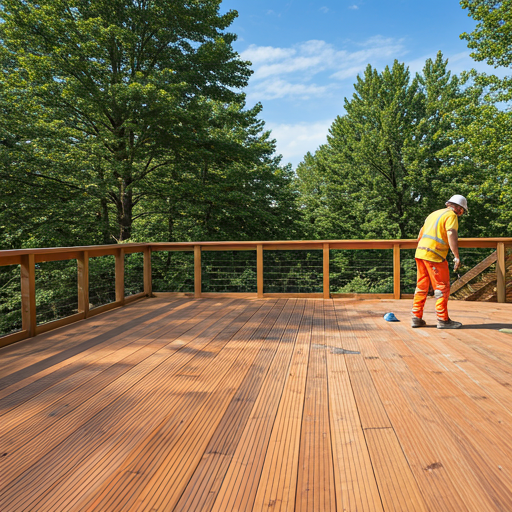
If your pressure-treated deck was built between 2000 and 2012, the clock is running. In Seattle's climate — 37 to 38 inches of annual rainfall, 150-plus overcast days per year, and minimal drying sun from October through April — pressure-treated wood follows a failure curve that's well understood by builders who work in King County year after year. The national marketing materials say PT decks last 25 to 30 years with proper maintenance. In the Pacific Northwest, on a shaded lot with clay-heavy soil and persistent moisture, the honest number is closer to 15 to 20 years — and that assumes the deck was sealed every year or two, which most aren't.
What we see when we assess aging PT decks across King County is a pattern: surface checking and gray weathering start at three to five years, accelerating in shaded locations. By year eight to twelve, board cupping and fastener corrosion become visible. By year fifteen to eighteen, structural concerns at the ledger, rim joist, and post bases are the real story — and by that point, the conversation shifts from whether to repair to how to rebuild correctly. The homeowners who get ahead of that curve spend significantly less than the ones who delay until the structure fails.
This guide is the honest framework for that decision: how to assess a Seattle PT deck at any stage of life, what you'll find under the surface boards when demo begins, the real math on repair versus replacement, and what a properly planned composite deck replacement looks like in King County in 2026.
Why Pressure-Treated Decks Fail Faster in the Pacific Northwest
Pressure-treated lumber was the default residential deck material from the 1980s through the mid-2000s, and tens of thousands of PT decks across King County are now entering the end of their serviceable lives. Understanding exactly why — not just "it got old" — helps you evaluate your own situation accurately.
The CCA to ACQ Transition and What It Means for Your Deck
In 2004, the EPA required the industry to phase out chromated copper arsenate (CCA), the original pressure treatment used on most decks built before 2004. CCA contained arsenic, which was the primary concern — but CCA also produced particularly stable, rot-resistant wood that performed well in wet climates. The replacement chemistry, alkaline copper quaternary (ACQ), is arsenic-free but has two specific vulnerabilities that matter greatly in Seattle:
ACQ is more moisture-absorbent than CCA. The chromium in CCA helped fix preservative compounds in the wood fiber more permanently. ACQ compounds leach more readily under sustained moisture exposure, meaning the preservation that's supposed to work for 25 years begins degrading faster in consistently wet conditions. For a King County deck where the wood stays wet for seven months a year, this is not a minor distinction.
ACQ is approximately 10× more corrosive to standard galvanized fasteners. This is the ACQ problem that creates the most danger in Seattle. The copper compounds in ACQ react with standard G90 galvanized hardware — the screws, joist hangers, and lag bolts installed in PT decks built between 2004 and approximately 2012. The corrosion happens at the interface between the copper-treated wood and the zinc coating of the hardware. Screws look intact at the surface; inside the wood, the galvanized coating has been consumed and the steel shaft may have lost 30–50% of its cross-section.
Decks built with ACQ lumber during the transition period (2004–2012) before hot-dip galvanized or stainless hardware became standard practice are the most structurally at-risk category in King County. If your deck was built or significantly repaired between 2004 and 2012, the hardware question is the first thing we assess.
How Seattle's Climate Compounds the Problem
Every PT lumber degradation issue is amplified in Seattle's specific climate:
Persistent ambient moisture. A PT deck in Nashville gets 50 inches of rain annually but in concentrated spring events with sunny intervals between. A King County deck gets 38 inches across 150+ wet days — the wood never fully dries from October through May. Proper moisture cycling (wet/dry alternation) is part of what helps PT lumber's preservative compounds work as intended. Seven months of persistent saturation without meaningful drying removes that mechanism.
Shaded lots and north-facing exposures. King County's mature tree canopy — Douglas firs, big-leaf maples, western red cedars — covers a significant percentage of residential backyard lots. North-facing back yards never receive meaningful solar drying during fall and winter. Moss colonizes untreated PT lumber within 2–3 seasons on shaded exposures. Moss retains moisture continuously against the wood surface, creating a year-round wet environment that even CCA-treated wood would struggle with.
Freeze-thaw acceleration. Seattle rarely sees hard freezes, but Sammamish, Issaquah, and Auburn areas experience 20–30 nights below 32°F each winter. Water that has infiltrated surface checking in PT lumber expands during freeze events, widening checks and creating additional moisture infiltration pathways for subsequent seasons. The process is slow — 5 to 10 years before checks become structurally significant — but it's steadily operating on every aging PT deck in East King County.
What's Failing Below the Surface
This is the most important thing to understand about an aging Seattle PT deck: what you see on the surface is rarely the most serious problem. Visible surface graying, weathering, and minor checking are cosmetic aging. What you can't see — the ledger connection, joist ends, post bases — is where the actual structural failure is developing.
NADRA's industry data is clear: approximately 90% of deck structural failures originate at the ledger board — the point where the deck frame bolts to the house. In Seattle's wet climate, ledger failure is moisture-driven: water infiltrates behind an inadequately flashed or aging-flashed ledger and begins rotting the house band joist. By the time this rot is visible from inside the garage or basement, it's been progressing for years.
The insidious nature of this failure mode is that the deck surface can feel and look reasonable — a few soft boards, some cosmetic weathering — while the ledger connection has lost significant structural integrity. This is precisely the scenario where "one more repair cycle" on the boards is the wrong decision.
The Five Structural Indicators: Assessment Framework
Before calling for a replacement estimate, inspect these five indicators on your PT deck. This is our internal assessment framework — the same five points we check at every King County PT deck consultation. If three or more are present, repair is almost never the economical choice.
Indicator 1: Board Surface Decay (Not Just Cosmetic Weathering)
The distinction between cosmetic weathering and actual decay is important — don't let surface appearance alone drive the decision.
Cosmetic weathering (normal, does not indicate replacement): Surface graying, slight color fading, minor surface checking (cracks under 1/4 inch depth, surface only). This is normal aging in PNW conditions and doesn't indicate structural failure.
Decay (structural concern): Run your thumbnail across board surfaces and probe end grain areas with a screwdriver or ice pick. Decay feels spongy or soft under hand pressure. The probe easily penetrates more than 1/4 inch without significant resistance. Wood fiber separates visibly when the surface is scratched — it pulls apart rather than remaining firm. Dark discoloration that doesn't rub off indicates embedded moisture damage.
Board decay at isolated spots can be addressed with selective replacement. If more than 15–20% of the deck surface area shows decay — particularly if it's distributed across multiple areas rather than isolated — selective replacement is no longer economical compared to full replacement.
Indicator 2: Ledger Rust Staining
Inspect the house siding and band joist trim at the ledger connection. Look specifically at the area immediately around and below the lag bolt heads that secure the ledger to the house.
Brown or orange streaking running from lag bolt locations downward — even faint staining — indicates active fastener corrosion at the most critical structural connection on the deck. The staining on the exterior represents corrosion product being washed outward by rain. The corrosion inside the wood, at the fastener shank, is typically much more advanced than the surface staining suggests.
This is the single indicator with the highest predictive value for structural replacement necessity. Visible ledger rust staining at a 15-year-old ACQ PT deck in King County almost always indicates that the ledger fasteners have lost significant cross-sectional strength and should not be relied upon for continued structural service.
Indicator 3: Post or Beam Checking and Sponginess
Vertical cracks (checking) in 4×4 or 6×6 posts are normal aging in PT lumber — checking happens as wood dries after treatment. Surface checking under 1/4 inch depth that doesn't encircle the post is cosmetic.
What to look for as a structural indicator: checking over 1/4 inch depth, multiple checks that collectively encircle the post cross-section (reducing effective structural area), and any sponginess when you grip the post and apply firm lateral pressure. Compare the post's resistance to a new post of similar size — sound PT lumber is rigid; degraded PT lumber has perceptible give.
Post bases — where the post contacts the concrete footing — are the highest-risk location. Probe here firmly. Any softness or darkening at the post-to-concrete interface, or any visible rot (dark, soft, or punky material) at the post base, indicates a structural foundation issue. Posts with base rot cannot be selectively addressed by sistering new material alongside; they require replacement.
Indicator 4: Joist End Rot
Look at the end cuts of deck joists at the ledger and rim board connections. If you have access from below the deck (typically on elevated decks), look at the joist ends from the underside. If the deck is low to grade, you may need to remove a board or use a flashlight and mirror.
Darkening at joist ends that goes beyond the natural color of PT lumber — brown-black discoloration with soft or fibrous texture — indicates moisture infiltration from the deck surface above, entering through the joist's end grain where it contacts the ledger and rim. This is joist end rot.
Individual joist ends can be sistered — a new full-length joist added alongside the failing one — when fewer than 3–4 joists show rot. When more than 20–25% of joist ends show rot, full frame replacement is more economical than sistering every compromised member and is the only approach that addresses the underlying moisture pathway.
Indicator 5: Stair Bounce and Handrail Lateral Movement
The stair and handrail system is often the first part of a PT deck to show functional degradation because it receives the most handling and load concentration. Test the stairs by stepping on each tread near the stringer with your full weight — any downward flex or bounce indicates stringer failure or attachment failure. Push the handrail laterally — any movement indicates post base degradation or rail-to-post connection failure.
Stair systems can be rebuilt independently if the main deck frame is otherwise sound ($2,500–$5,500 for a typical stair replacement). But a stair system that's failing on a 16-year-old King County deck is usually not failing in isolation — it's the visible indicator of broader degradation.
Note
The Real Math on Repair vs. Replacement
The most common conversation we have with Seattle homeowners: the deck is 17 years old, they've had it inspected, and the estimate for repair — replacing the worst boards, resealing, addressing visible issues — is $3,500–$6,000. That feels like the sensible economic choice compared to spending $40,000 on full replacement.
The problem: a repair estimate addresses what's visible today. A Seattle PT deck that has reached structural failure indicators at year 17 isn't stabilized by surface repair — it continues degrading, typically accelerating, because the moisture infiltration driving the visible symptoms is still operating on the remaining structure. The repair buys 2–4 years, after which the deck is worse and the replacement cost is the same or higher.
Here's the actual 10-year cost comparison we walk homeowners through in King County:
| Scenario | Year 1 | Year 3 | Year 6 | Year 9 | 10-Year Total |
|---|---|---|---|---|---|
| Repair & maintain aging PT deck | $5,000 repairs + seal | $1,500 reseal | $7,000 structural frame failure response | Full replacement forced | $40,000–$55,000 |
| New composite deck installed now | $38,000–$52,000 | $0 | $0 | $200/yr cleaning | $39,000–$54,000 |
The repair path doesn't save money over 10 years — it delays spending it. And it adds a 7–10 year period of declining deck condition, increasing safety risk, and worsening aesthetic that represents a real cost in livability and property value.
The inflection point: For PT decks older than 15 years showing three or more structural indicators, replacing now — in a planned, competitively-bid project — typically costs $8,000–$15,000 less than the repair-and-delay path that ends in emergency replacement when something actually fails.
| Category | Value |
|---|---|
| Repair & maintain aging PT deck (10-yr total) | $47,500 |
| Composite replacement installed now (10-yr total) | $46,000 |
Key insight
The Assessment Process: What We Check and Why
Our process for every PT deck replacement consultation is thorough and specific — not a visual estimate, but a physical assessment. Here's what we do:
Step 1: Full visual inspection above and below. We look at the deck from above (board condition, fastener condition visible at board surface, railing integrity, stair condition) and from below (joist end condition, post base condition, beam condition, footing condition). Critical note: many significant structural issues are only visible from below. A deck that looks serviceable from above can have significant joist end rot visible from beneath.
Step 2: Probe test. We use a probe tool (a sharpened awl or structural probe) to test wood fiber integrity at the ledger boards, joist ends, post bases, beam ends, and any location showing visual concern. Firm resistance indicates sound wood. Easy penetration (more than 1/4 inch without significant force) indicates rot. We probe in multiple locations per element, because rot is not always uniform.
Step 3: Ledger connection assessment. We specifically assess the ledger connection at the house — flashing condition (original, failed, or absent), fastener condition and corrosion level, and band joist condition behind the ledger. This is the most critical structural point on any deck and the most common location of hidden failure. On older Seattle decks, we sometimes find no original flashing at all — the ledger was bolted directly against the house sheathing without any waterproofing.
Step 4: Footing and post base assessment. We assess concrete footings (age, cracking, settlement, drainage conditions) and post bases (probe test at wood-to-concrete interface, visual condition, hardware corrosion). Footings that are structurally sound can often be reused.
Step 5: Written assessment. We provide a written summary of what we found, what can be salvaged, and a detailed line-item replacement quote. The written assessment documents what was discovered so you have a clear record of why replacement is or isn't recommended.
What We Salvage vs. What We Replace
Not every deck replacement project requires removing everything. In roughly 40% of PT replacement projects we complete in King County, we retain elements that are still structurally sound — saving real cost without compromising the completed project.
Almost Always Replaced
- All decking boards and fascia — the visible surface is always replaced in a full deck renewal. Even boards that appear sound are typically marginal, and mixing old PT boards with new composite surface is never the right aesthetic or structural approach.
- Railing posts, cap rails, and balusters — railing posts corrode at their base connection first, often while the main deck frame is still marginal. Railing hardware that was installed with galvanized fasteners in ACQ lumber is typically compromised.
- Any ledger board showing rot or inadequate flashing — we replace ledger boards and install full compliant flashing (self-adhering waterproof membrane plus step-flashing) on every project where the ledger is compromised.
- Any joist, rim board, or beam showing probe-confirmed rot — structural members with active rot cannot be repaired; they are replaced.
- Stair stringers, treads, and handrails — by the time a PT deck needs full frame replacement, the stair system is typically at end of life as well.
Evaluated for Salvage on Every Project
- Concrete footings — footings that are less than 20 years old, not visibly cracked or settled, and properly drained can typically support the new frame. We probe around the footing perimeter and assess drainage conditions before deciding. Sound footings are worth keeping — they represent $150–$400 each in material and labor that doesn't need to be repeated.
- Below-grade post sections — where posts were installed with proper post bases that elevated the wood off the concrete, below-grade wood sections sometimes survive better than above-grade sections. We assess each post individually.
- Beam sections — where a beam is in good condition for most of its length but showing concern at one end, we sometimes frame the new structure to incorporate the sound section.
We tell homeowners honestly what can be saved. We have no financial incentive to replace structurally sound material — it adds labor and material cost to the project while creating no additional quality.
Permit Requirements for Deck Replacement in King County
Permit requirements for deck replacement depend entirely on the scope of work being done. This is worth understanding clearly before finalizing your project scope.
What Requires a Permit
Full frame replacement — tearing down and rebuilding the frame structure, even to identical dimensions — requires a building permit. You're constructing a new deck structure, and a permit ensures it's built to current code, which may differ from code when the original deck was built in the 1990s or early 2000s. Current Washington State IRC requirements for seismic bracing, ledger connection, and hardware specifications are more stringent than requirements from 10–20 years ago.
Footprint changes — expanding, contracting, or relocating the deck footprint relative to the original — require a permit.
Height changes — changing the elevation of the deck surface — requires a permit.
Structural modifications — changing beam sizing, post count or spacing, joist sizing, or footing locations — require a permit.
What May Not Require a Permit
Like-for-like board replacement on a sound frame — replacing only decking boards and fascia, without changes to the structural frame, may be permit-exempt in most King County jurisdictions. This is considered maintenance, not new construction, when the scope is limited to surface materials on an otherwise unchanged frame.
Railing replacement to the same height — replacing railing components without structural changes may be permit-exempt in some jurisdictions but not all.
Practical caution: We confirm specific permit requirements with the jurisdiction for every project before beginning. "May not require a permit" is jurisdiction-specific and scope-specific. Homeowners who assume permit-exempt status incorrectly and build without required permits create disclosure problems at sale.
In Seattle, full deck replacement permits cost $800–$2,500 in 2026 depending on project valuation. Processing through SDCI typically runs 4–8 weeks during peak season (spring and summer). King County DPER for unincorporated areas runs 3–6 weeks. We pull permits on every project that requires one — permit costs are included in the project quote.
Environmentally Critical Areas
Properties in Environmentally Critical Areas — shoreline buffers in Mercer Island, Kirkland, and Renton; steep slope zones in Bellevue's west hills; landslide hazard areas in parts of Issaquah — require additional ECA review even for like-for-like replacement projects. ECA review adds 2–4 weeks to permit processing and may require additional engineering documentation.
We pull property data from county GIS records during the initial assessment to identify ECA status before finalizing scope and timelines.
Material Choice: What to Use When You Replace
The overwhelming majority of homeowners replacing an aging PT deck in King County should upgrade to composite. Here's the complete materials comparison:
Fully Capped Composite: The Right Choice for 90% of Projects
Trex Transcend, TimberTech Legacy, and Fiberon Paramount are the fully capped composite products we specify for PT replacements. "Fully capped" means all four sides of each board — top, bottom, and both edges — are enclosed in a polymer shell. This is the critical specification for Seattle's climate: the cap prevents moisture from reaching the wood-fiber core, which is what causes mold and premature failure in uncapped composite products.
What you get with capped composite:
- Annual cleaning only — no sealing, staining, sanding, or other maintenance for the life of the warranty
- 25–30 year manufacturer warranty on fade, stain, and structural performance
- Realistic wood-look colors and textures that look dramatically better than gray weathered PT boards
- Consistent performance in King County's 38 inches of annual rain — these products are designed for wet climates
What you pay: $35–$55/sqft installed in King County for decking materials and framing.
The behavioral shift homeowners describe: After years of maintaining a PT deck that kept declining, moving to a capped composite that requires nothing but an annual rinse changes how homeowners relate to their outdoor space. No more "I should get out and seal that before winter" every October. No more "we haven't used the deck much because it's kind of rough" in August. The space becomes somewhere you use instead of somewhere you manage.
Cellular PVC: Right for Specific Situations
AZEK and similar cellular PVC products contain zero wood fiber — the entire board is polymer. This makes them completely immune to moisture-related degradation and eliminates the damp surface conditions that allow moss and mold to colonize organic surfaces.
PVC is the right specification for these King County situations:
- North-facing lots with minimal direct sun and significant shade
- Heavy established tree canopy creating constant surface moisture
- Rooftop deck applications or decks over habitable space
- Homeowners who specifically want maximum longevity and minimum maintenance over a 30+ year ownership horizon
The cost premium: PVC typically runs $50–$70/sqft installed versus $35–$55 for capped composite. On a 300-sqft deck, that's $4,500–$8,000 additional cost. Worth it in the specific situations above; optional for most typical King County conditions.
Important note on specification: We don't install uncapped composite for replacement projects. The exposed wood-fiber core on uncapped boards absorbs moisture in Seattle's conditions and begins degrading within 3–5 years — the last outcome you want after a full PT replacement project.
Installing a New PT Deck — Why We Don't Recommend It
Some homeowners ask about simply replacing the old PT with new PT lumber. We don't recommend it, and we explain why clearly: you're spending $18,000–$28,000 to return to the starting point of the same 15-year failure cycle. The moisture, the maintenance requirement, the ACQ hardware concerns — all of these reset with a new PT deck, not disappear. Spending an additional $10,000–$15,000 to step up to composite permanently exits this cycle and comes with a 25-year warranty.
Demo and Disposal: What It Actually Costs
Deck demolition and disposal is often quoted as a separate line item. Here's what the actual costs look like in King County so you can verify that a quote is complete:
Demo labor for a 300–400 sqft PT deck (standard access, no unusual site constraints): $1,200–$2,800 depending on structural complexity (elevated vs. ground-level, stair systems, house attachment).
Dumpster and disposal: $800–$1,800 for a standard 15-yard dumpster covering a 300–400 sqft deck demo. If old concrete footings are being removed and disposed, add $400–$800 for the added weight.
Lead paint testing: Decks built before 1978 on homes with original paint should be tested before demo. Testing costs $200–$500; remediation if positive adds cost and changes the demo process.
Total demo and disposal for a typical 300–400 sqft PT deck: $2,200–$4,600.
Our project quotes include demo and disposal as explicit line items — you see exactly what it costs as part of the project total.
What the Replacement Process Looks Like
Understanding the sequence helps homeowners plan around construction:
Week 1–2: Consultation and Design Free on-site assessment, structural documentation, measurement, and design discussion. We discuss material options, aesthetic direction, railing style, footprint changes, and whether a covered structure or other additions make sense while the project is open.
Week 3–7: Permit Application and Processing We file the permit application with SDCI or the relevant jurisdiction immediately after design sign-off. Processing runs 4–8 weeks in Seattle; 3–6 weeks at other King County jurisdictions. We notify you when the permit is approved and schedule construction start.
Day 1–2: Demo We remove the existing deck — boards, frame, hardware, stairs — systematically. During demo, we probe-test all footings and post sections to confirm which can be retained and which need replacement. Dumpster is on-site for material disposal.
Day 3–5: New Frame Installation New pressure-treated framing with stainless or hot-dip galvanized hardware, new ledger with full waterproof flashing (self-adhering membrane system), new posts on retained or new footings, beam and joist system. Framing inspection is scheduled at the end of this phase.
Day 6–8: Composite Decking and Railing Composite board installation with hidden fasteners (for fastener-free surface appearance), fascia boards, railing system installation (composite, cable, or glass depending on specification). Stair construction including composite treads.
Day 9–10: Finishing and Closeout Trim details, fascia completion, hardware tightening and verification, site cleanup. Final inspection is scheduled; we walk the completed project with the homeowner at final inspection.
Total construction time: 8–10 working days for a 300–400 sqft deck replacement in typical conditions. Weather delays (particularly October–March) can extend this by 1–3 days.
Real Project Examples: PT Deck Replacements in King County
Project 1: Renton PT Deck, 18 Years Old — Composite Upgrade
Assessment findings: 320-sqft deck, 18 years old. Three boards with probe-confirmed decay, significant rust staining at ledger lag bolts, one post base showing rot at the wood-to-concrete interface. Two of four footings were in excellent condition and reused. Ledger had no original flashing.
Scope: Full demo and disposal. New pressure-treated frame with stainless hardware. New ledger with full WRB flashing system. New footings at two locations (two existing reused). Trex Transcend Spiced Rum composite decking. Composite railing with aluminum balusters. New stair system (stringer, treads, railing).
Permit: Full deck replacement permit through City of Renton. 4 weeks processing. $950 permit fees.
Cost: $41,000 total
Homeowner note: "I was spending $1,800–$2,500 per year resealing and spot-repairing. I did the math — I've spent more than $20,000 on this deck in the last 12 years and it was still getting worse every year. Should have replaced it when the first structural board went soft."
Project 2: Bellevue Elevated PT Replacement, Composite + Pergola Addition
Assessment findings: 280-sqft elevated PT deck at 9 feet above grade on a Bellevue hillside lot, 17 years old. Frame inspection from below revealed significant joist end darkening at the ledger contact at multiple locations — approximately 60% of joist ends showing early to mid-stage rot. Post bases and footings sound; footings reused.
Scope: Full demo and disposal. New frame engineered for 9-foot elevation including seismic bracing (required per WA State IRC amendments). New ledger with full flashing. TimberTech Legacy composite decking. Cable railing on three sides. Addition: 14×18 polycarbonate-roofed cedar pergola at the dining zone. Post cap lighting and step riser lighting.
Cost: $74,000 total
Outcome: Used 9+ months per year. Homeowners estimate the pergola addition doubled the number of evenings they actually use the outdoor space compared to the previous uncovered PT deck.
Project 3: Sammamish Sound-Frame Board Replacement
Assessment findings: 380-sqft PT deck on flat Sammamish lot, 16 years old. Board surface showing advanced weathering and cupping throughout. Railing system visibly compromised at post bases. However: ledger was originally installed with proper flashing (this was a contractor who did it right), fasteners at ledger showed no rust staining, joist ends probed firm throughout. Footings and frame in excellent condition.
Our recommendation: This was one of the cases where partial replacement was the honest recommendation. Frame is worth keeping. Board and railing replacement only.
Scope: Composite board installation on existing frame (Fiberon Symmetry Cool Gray). New composite railing system with composite balusters. New stair treads and handrails. No frame replacement, no permit required.
Cost: $19,500
Note: This is the case where honesty matters most. We could have recommended full replacement and the homeowner would have had no way to know the frame was sound without our assessment. We didn't.
Cost Summary: What to Expect in King County
| Project Scope | Estimated Range (2026) | Notes |
|---|---|---|
| Board/surface replacement only (sound frame) | $12,000–$22,000 | No permit typically required |
| Full deck replacement, composite, 300 sqft | $32,000–$48,000 | Includes frame, decking, composite railing |
| Full deck replacement, composite, 400 sqft | $40,000–$58,000 | Includes frame, decking, composite railing |
| Elevated deck replacement (6–12 ft), 300 sqft | $45,000–$68,000 | Engineering required |
| Full replacement + cable railing upgrade | Add $6,000–$14,000 | Per 80–100 linear feet |
| Full replacement + cedar pergola addition | Add $10,000–$20,000 | Open or polycarbonate-roofed |
| Full replacement + louvered pergola addition | Add $18,000–$32,000 | Aluminum louvered system |
These are project total ranges including demo, permit, all structural work, composite materials, and standard railing. Our quotes are detailed line-item breakdowns — not totals that obscure what each element costs.
For full composite material comparison and pricing, see our composite decking page and Seattle deck cost guide.
Frequently Asked Questions About PT Deck Replacement in Seattle
Frequently Asked Questions
When should I replace my pressure-treated deck in Seattle?
How much does a composite deck replacement cost in Seattle?
What is the best material to replace a PT deck with in Seattle?
Do I need a permit to replace my pressure-treated deck?
Can I repair my PT deck instead of replacing it?
How long does deck replacement take in Seattle?
Why did my PT deck deteriorate faster than the 25-year rating says?
Can I reuse my existing footings when replacing a PT deck?
Should I add a pergola when replacing my PT deck?
What happens to my ledger board when we replace the deck?
How much does it cost to demo and dispose of an old PT deck?
Get an Honest Assessment of Your Aging PT Deck
If your pressure-treated deck is showing structural wear, the right first step is a free in-person assessment — not another repair estimate that addresses visible symptoms while the structure continues degrading beneath them. We'll probe-test the ledger, joists, and post bases, assess the footing conditions, and tell you plainly: repair-only, partial replacement, or full replacement.
We've done this assessment on hundreds of King County PT decks. We know what an aging Seattle PT deck looks like from every angle — above, below, and at the critical structural connections. And we'll tell you honestly what we find, even when that means recommending a smaller scope than you anticipated.
Call (425) 675-6259 or request your free assessment online. We serve Renton, Federal Way, Auburn, Bothell, Bellevue, Kirkland, Sammamish, Issaquah, and all of King County. We typically schedule consultations within 5–7 business days.
For composite material options, see our composite decking page. For the zero-maintenance alternative, see our PVC decking page. For full project cost ranges by material and size, see our Seattle deck cost guide. For a material comparison, see our composite vs cedar decking guide.
Planning a deck in the Seattle area?
Get an onsite design review and a clear, itemized quote from a licensed local builder.
Request a Free Quote