
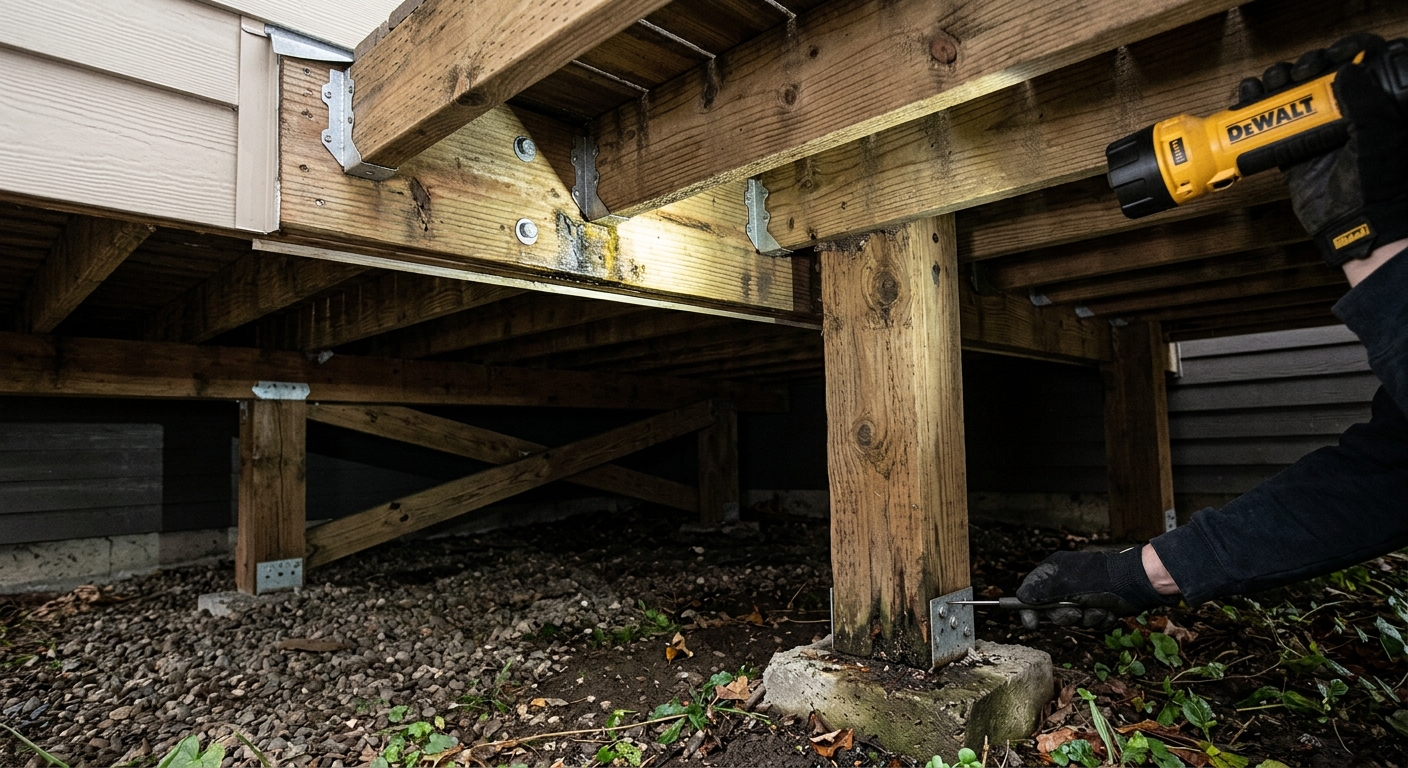
Adding a hot tub to your existing Seattle deck sounds straightforward until you understand the structural reality: a filled 6-person hot tub weighs more than a loaded pickup truck, and most King County decks were never designed to hold anything close to that load. Before you order the spa, before you measure the corner of your deck, before you call a supplier — you need to understand what your deck can actually carry, what it costs to make it capable, and what permits are required in King County. This guide covers every layer of that conversation.
We've reinforced dozens of existing Seattle-area decks to carry hot tub loads — on Bellevue hillsides, in West Seattle backyards, on Mercer Island lots where clay soil and elevation combine to make engineering more complex. The picture that emerges from those projects is consistent: the homeowners who plan the structural work upfront have a clean, permitted, trouble-free hot tub installation. The ones who skip it end up dealing with deflecting joists, visible settling, and in a few cases, dangerous structural conditions discovered during a home inspection years later.
The PNW climate adds a dimension that flat-state contractors don't fully appreciate. King County's average 38 inches of annual rainfall, clay-heavy soils on most hillside lots, and freeze-thaw cycling in higher elevations mean that a hot tub on a Seattle deck experiences different forces than the same installation in Phoenix or Atlanta. The soil under your footings expands and contracts seasonally. The structural load is permanent — not occasional furniture loading — and cycles through wet-dry conditions year after year. Engineering for that reality requires local knowledge, not national averages.
The Weight Problem: Why Most Seattle Decks Aren't Hot Tub-Ready
Standard residential decks in Seattle are engineered to carry 40–50 pounds per square foot (PSF) of live load. That covers patio furniture, parties, and the full weight of people gathered for outdoor events. It sounds like a lot — but it isn't close to what a hot tub demands.
A mid-size 6-person spa holds roughly 400 gallons of water. Water alone weighs 8.34 pounds per gallon — that's 3,336 pounds before you account for the shell, the mechanical equipment, or a single bather. Add a 700–900-pound shell and equipment package, and five adults averaging 175 pounds each, and the total loaded weight of a 6-person hot tub hits 5,000–6,000 pounds concentrated over 40–56 square feet of deck surface. Do the math: that's 100–140 PSF. For an 8-person tub, the numbers push higher still.
That concentrated load doesn't distribute evenly across the deck frame the way foot traffic does. It sits in one location, permanently, through every season. Standard 2×8 or 2×10 joists at 16 inches on center — the framing specification for tens of thousands of Seattle-area decks — cannot carry 120+ PSF over a meaningful span without modification. The deflection that results isn't theoretical; it's visible. We've assessed properties in Bellevue and Renton where homeowners added hot tubs to standard-framed decks without reinforcement. The sagging shows up by season two.
In King County, the risk compounds further. Clay-heavy soils — prevalent in Bellevue, Issaquah, the Sammamish Plateau, and South Seattle — shift seasonally as they saturate and drain. A standard tube-form footing sized for a 40 PSF deck can move under a concentrated 5,000-pound load through multiple wet winters. Hillside lots in Queen Anne, West Seattle, or Mercer Island add lateral load stress that flat-site framing calculations don't address. A deck carrying a hot tub through 38+ inches of PNW rain needs to be explicitly engineered for that load — not assumed to handle it.
Specific Hot Tub Weight Examples: Know What You're Adding
| Hot Tub Model Type | Shell + Equipment | Water Weight | Bather Load (max) | Total Load | Approx. PSF (7×8 ft footprint) |
|---|---|---|---|---|---|
| 2–3 person compact | 500–650 lbs | ~1,400 lbs | 250 lbs | ~2,200 lbs | 90–100 PSF |
| 4–5 person standard | 700–900 lbs | ~2,600 lbs | 400 lbs | ~3,900 lbs | 110–125 PSF |
| 6–7 person family | 800–1,100 lbs | ~3,300 lbs | 600 lbs | ~5,000 lbs | 125–145 PSF |
| 8+ person large | 1,000–1,400 lbs | ~4,200 lbs | 800 lbs | ~6,400 lbs | 140–160 PSF |
Common real-world examples:
- Bullfrog Spas A8L (6 person): Shell weight approximately 850 lbs, water capacity ~395 gallons. Filled total weight approximately 4,900 lbs.
- Hot Spring Vanguard (7 person): Shell approximately 965 lbs, water capacity ~420 gallons. Filled total weight approximately 5,465 lbs.
- Jacuzzi J-475 (7 person): Shell approximately 990 lbs, water capacity ~400 gallons. Filled total weight approximately 5,330 lbs.
Before ordering any tub, collect the manufacturer's specification sheet listing both dry weight (shell + equipment) and water capacity. These two numbers, plus average bather weight calculations, determine the structural requirement — and that's what the engineer needs to design the reinforcement.
A licensed structural engineer review — $300–$700 in the Seattle metro — should happen before any reinforcement work begins and before you finalize your hot tub purchase. Bring the manufacturer's specifications to that conversation. The engineer's assessment determines whether your existing footings, posts, beams, and joists can be reinforced or need to be replaced.
Structural Assessment Checklist for Existing Decks
Before we can tell you whether an existing deck can be reinforced for hot tub service, we need to evaluate five structural zones. Homeowners can run through a basic version of this checklist themselves before calling a contractor — it helps set realistic expectations about project scope.
Zone 1: Joists
- What size are the joists? (2×8, 2×10, 2×12)
- What is the spacing? (12-inch, 16-inch, or 24-inch centers)
- What is the span between beams?
- Are there any joists showing discoloration, soft spots, or visible sag?
- Is there adequate access below the deck for sistering work?
What we look for: 2×10 joists at 16-inch centers with 8-foot or shorter spans are candidates for reinforcement via sistering. Spans longer than 10 feet typically require both sistering and mid-span support addition. Any signs of rot or moisture damage disqualify the existing member for sistering — the rot needs to be addressed before structural work can proceed.
Zone 2: Posts and Footings
- What is the post size and height?
- Are posts on tube-form footings or poured pads?
- Can you assess whether footings are at adequate depth? (Typically 12–24 inches in King County, deeper for clay soils)
- Any visible lateral movement in posts?
- Any signs of post base corrosion?
What we look for: Shallow footings in clay-soil zones are a red flag for hot tub load. A tube-form footing at 12-inch depth in Sammamish clay that handles a 40 PSF deck load may not perform adequately under 120 PSF hot tub loading through multiple wet winters.
Zone 3: Beams
- What size are the beams?
- How many posts support each beam?
- Is the beam in solid condition or showing checks/splits?
Zone 4: Ledger (for attached decks)
- Is the ledger visible or accessible for inspection?
- What hardware was used (through-bolts, structural screws, lags)?
- Is there visible moisture damage or rot at the ledger-to-house connection?
- When was the deck built? (Pre-2000 ledger hardware is likely underspec for current loads)
This is the critical check. The ledger connection is the most common source of serious structural problems on existing decks. Hot tub loads near the house connection amplify stress on this junction.
Zone 5: Deck Surface Condition
- Is the existing decking rotted, soft, or significantly weathered?
- Were hidden fasteners or face screws used?
- Does the surface need replacement regardless of the tub addition?
If zones 1–4 check out as sound, reinforcement is typically viable and cost-effective. If multiple zones show deficiencies, the calculus shifts toward a new deck designed for the load.
What Reinforcement Actually Involves
When we reinforce an existing Seattle deck for hot tub service, the scope almost always involves four structural zones: the joists under the tub footprint, the posts and footings beneath those joists, the beams connecting those posts, and the ledger connection if the tub is near the house attachment.
Sistering joists is the most common reinforcement technique for the joist zone. We add a full-length piece of lumber alongside each existing joist in the hot tub footprint — doubling the framing capacity in that zone. On a standard 16-inch-on-center layout, we'll typically also add a mid-span joist between existing members to reduce effective span. The combined effect brings the joist zone's capacity from the standard 40–50 PSF design load to 90–120+ PSF, depending on the specific lumber size and span.
Footing augmentation is required when the existing footings below the hot tub zone were sized for standard deck loads. This typically involves excavating around existing tube-form footings and pouring a larger-diameter concrete footing that can carry the point load from the reinforced post above. In clay-soil zones — Sammamish Plateau, Issaquah, Bellevue's hillside neighborhoods — we sometimes specify helical piers instead, which anchor into load-bearing soil below the seasonal saturation zone. A standard tube-form footing that shifts through clay cycles is far more problematic under a continuous 5,000-pound load than under normal deck service.
Beam sizing gets addressed if the existing beam spanning between posts is undersized for the concentrated load. This is a function of the beam's cross-section, species, and the span between posts. Adding a post under the hot tub zone to reduce beam span is often more practical than replacing the existing beam with a larger member, particularly when the deck is elevated and beam replacement is labor-intensive.
Ledger verification matters most when the hot tub is positioned close to the house. The ledger connection — where the deck attaches to the rim joist or band joist of the house — carries vertical and lateral loads. Adding a significant concentrated load near the ledger puts that connection under increased stress. Seattle building inspectors check ledger hardware on hot tub deck permits. If the existing hardware is original pre-2000 installation, upgrading to current code-compliant through-bolts or approved structural screws is required.
Important
Your Three Structural Options
Option 1: Reinforce the Existing Deck Frame (Most Common)
If your deck is structurally sound and you have a defined hot tub location, targeted reinforcement of the existing frame is viable for most King County projects. The work typically runs $2,500–$6,500 in total — including structural engineer assessment, the sistering and footing work, any ledger upgrades, and permit management. The range reflects deck height (elevated decks are harder to access beneath), soil conditions (clay-heavy lots need more aggressive footing work), and whether existing framing is in solid condition.
Before committing to reinforcement, we inspect the existing frame carefully. If joists show signs of rot at the ledger connection — a common finding on decks over 12–15 years old in Seattle's wet climate — reinforcement scope expands. A hot tub load on a partially deteriorated frame is not a sound engineering outcome regardless of what gets sistered on top.
Option 2: Build a New Deck Designed for the Load (Best Long-Term Approach)
If your existing deck is aging, if you're planning to update the surface material anyway, or if you want a fully integrated outdoor living space built around the hot tub, designing the reinforced structure into a new deck from the start is the cleanest and most cost-effective long-term approach. The hot tub zone gets its own beam, post, and footing layout sized for the actual load from day one — no compromises from working around an existing frame.
The premium over a standard deck design for the hot tub reinforcement zone runs $2,000–$5,000. On a $35,000–$55,000 deck project, that's a relatively minor add that buys you a structure purpose-built for the load rather than adapted to carry it.
Option 3: Grade-Level Concrete Pad (For Ground-Level Tubs)
If your hot tub is at or near grade and doesn't need to integrate with an elevated deck, a reinforced concrete pad eliminates the deck structural problem entirely. A 4–6 inch slab with rebar and proper drainage handling supports any residential hot tub load without deck framing modifications. Cost in King County: $1,500–$3,500 for a 64–80 square foot pad.
The tradeoff is integration. A concrete pad adjacent to an elevated deck can look disconnected from the rest of the outdoor space. If the hot tub is meant to feel like part of the entertaining area — not a standalone utility in the corner of the yard — the elevated deck approach with integrated surround produces better results and better resale value.
| Category | Value |
|---|---|
| Grade-level concrete pad | $2,500 |
| Reinforce existing deck | $4,500 |
| New deck with integrated tub zone | $6,000 |
Permits: What King County Requires for a Hot Tub Addition
Hot tub additions in King County trigger two permit categories, and both are required. There is no exemption, no shortcut, and no legitimate contractor who will suggest skipping either one.
Building permit — Required for any structural modification to deck framing: sistered joists, new posts, augmented footings, ledger hardware upgrades. In Seattle, this routes through SDCI. In unincorporated King County, through the Department of Local Services Permitting Division. Cost in most jurisdictions: $300–$650. Timeline: 2–4 weeks standard; expedited review may be available at additional cost for simple reinforcement scopes. If the footprint of the deck is also changing — extending to create more surround space around the tub — this becomes a more complex permit that includes full structural drawings.
Electrical permit — Required for the dedicated 220–240V circuit that every hot tub needs. Cost: $150–$300. Requires a licensed Washington State electrical contractor — this is not a homeowner DIY-exempt permit category. The electrical permit runs on a parallel track with the building permit; both need to be in hand before rough-in work begins.
Private residential hot tubs for family use are exempt from Public Health plan review in King County. But the structural and electrical permits are not optional. Skipping them creates a disclosure obligation at resale, can void homeowner's insurance for losses related to the unpermitted work, and exposes you to forced correction if the violation surfaces during a home inspection. The combined permit cost ($450–$950) is trivial against that risk profile.
HOA Requirements
Note
Electrical Requirements: What the Code Specifies and What It Costs
Washington State code (WAC 296-46B-680) and the National Electrical Code establish clear requirements for hot tub wiring. These are not interpretable — they're fixed minimums:
- Dedicated 240V, 50–60A GFCI-protected circuit — no shared circuits, no exceptions. The specific amperage varies by tub manufacturer; a 6-person hot tub typically requires 50A, while 8-person and larger tubs sometimes require 60A. Verify against your specific tub's nameplate before the electrical permit application.
- Manual disconnect — visible from the spa, located at least 5 feet from the water edge and no more than 50 feet from the spa. Not at the panel — a lockable disconnect within sight of the tub that can de-energize the unit during service.
- All field-installed electrical equipment within 5 feet of water must be listed as a package unit with the spa.
- No standard GFCI outlets within 6 feet of the water edge. Any outdoor outlets within 10 feet must be GFCI-protected and positioned at least 6 feet from the water.
- Conduit routing through deck framing — this is done during framing, before decking goes down. Retrofitting conduit into a finished deck requires cutting into finished material.
Electrical Panel Requirements and Upgrade Costs
Many King County homes — particularly those built before 1990 — have electrical service panels at or near capacity. Before the hot tub electrical permit can be finalized, the licensed electrician will assess the main panel load. If the panel is at capacity, a panel upgrade is required before the spa circuit can be added.
Panel upgrade costs in King County:
- 100A to 200A upgrade: $1,500–$3,500 including permit and inspection
- 200A panel replacement (same amperage, new panel): $1,200–$2,500
- Sub-panel addition for remote spa circuit: $800–$1,800
Budget $800–$2,200 for the electrical installation in King County (assuming adequate panel capacity), including trenching if the main panel is across the yard or on the opposite side of the house. Seattle-area electricians run $125–$185/hour for spa circuit work. We coordinate the electrical contractor on every hot tub deck project to ensure rough-in timing aligns with framing and that both permits are processed in parallel.
Gas vs. electric heaters: The vast majority of residential hot tubs in King County use electric heaters. Natural gas hot tubs are less common but do exist — if your tub specification includes a gas heater, add a gas permit and licensed plumber to the scope. Budget an additional $800–$2,000 for gas line extension if the service panel is on the opposite side of the property.
Choosing the Right Decking Material for the Hot Tub Surround
The zone immediately around a hot tub is one of the most demanding environments for any decking material. It sees constant water from splash-out and entry/exit, chlorine and bromine vapor from the water chemistry, and Seattle's standard wet-weather loading on top of all of that. Material selection here matters more than anywhere else on the deck.
Material Comparison for Hot Tub Surrounds
| Material | Chemical Resistance | Moisture Resistance | Slip Resistance (wet) | Maintenance | PNW Recommendation |
|---|---|---|---|---|---|
| Fully capped composite (Trex, TimberTech) | Good | Good (4-sided cap) | Good (textured) | Annual soft wash | Recommended |
| Cellular PVC (AZEK, Fiberon Promenade) | Excellent | Excellent | Good (textured) | Annual soft wash | Best for shaded/north-facing |
| Western Red Cedar | Poor — absorbs chemicals | Moderate | Good (rough grain) | Reseal 12–18 months | Not recommended for tub zone |
| Composite (2-sided cap) | Good surface, poor edge | Moderate | Good | Annual soft wash | Not recommended |
| Pressure-treated lumber | Reacts with chlorine | Moderate | Moderate | Annual sealing | Not recommended |
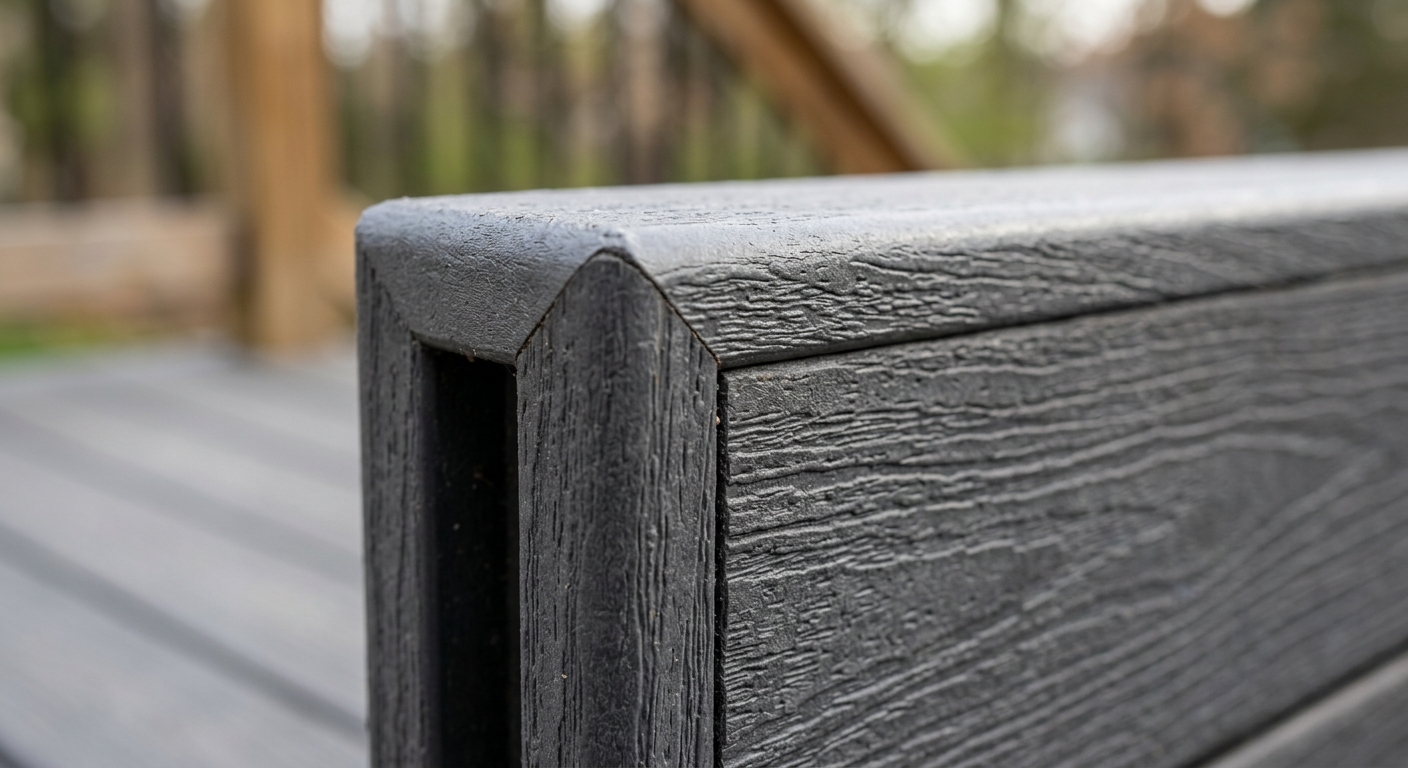
Fully capped composite is the right call for most hot tub surrounds. Products like Trex Transcend, TimberTech Legacy, and Fiberon Paramount have a polymer shell on all four sides of each board, sealing the wood-fiber core from moisture and chemical exposure. In Seattle's wet climate, the capping matters enormously.
Specify textured surface finish. Wet composite around a hot tub becomes slippery. Every premium composite line offers brushed or embossed surface textures that provide grip barefoot and wet. Specify this from the start — the smooth-finished versions are slick when wet, and adding anti-slip tape strips after installation is a visible workaround, not a design solution.
Cellular PVC (AZEK or TimberTech AZEK line) for persistently wet or shaded sites. PVC contains no wood fiber whatsoever — it cannot absorb moisture or support mold growth from within. On north-facing lots in Kirkland or Sammamish, heavily shaded properties in Bellevue's west hills, or any hot tub deck site where limited airflow under the deck keeps moisture levels chronically elevated, PVC is the appropriate specification. It costs 15–25% more than premium composite decking but is the correct long-term choice when moisture exposure is highest.
Avoid cedar near the hot tub. Cedar absorbs water normally; around a hot tub it also absorbs chlorine and bromine from splash-out and vapor. That chemical exposure accelerates deterioration, degrades the wood faster than normal weather weathering, and voids most wood treatment warranties. Even well-maintained cedar surrounding a hot tub requires sealing every 12–18 months and still degrades faster than in a dry environment.
For a full comparison of composite options for PNW conditions, see our composite vs. cedar guide.
Privacy Screening Options and Costs
Most King County homeowners want some degree of visual screening around a hot tub — from neighboring properties, from second-story windows, from the street on corner lots. The options range from simple and low-cost to fully integrated deck design elements.
Privacy Screening Comparison
| Option | Privacy Level | Cost Installed | Longevity in PNW | Best For |
|---|---|---|---|---|
| Cedar lattice panels | Partial | $800–$2,000 | 8–12 years | Budget projects, detached from tub zone |
| Composite slat panels | Full | $1,800–$4,500 | 20+ years | Modern aesthetics, chemical zone |
| Pergola structure | Overhead + partial | $4,000–$12,000 | 20+ years | Outdoor room feeling, rain cover |
| Aluminum louver panels | Full, adjustable | $3,000–$7,000 | 25+ years | Contemporary design, HOA compliance |
| Composite privacy fence | Full | $1,500–$4,000 | 20+ years | Budget, clean aesthetic |
| Mature landscaping | Full (3–5 yr) | $500–$2,500 | Indefinite | Gradual natural screening |
Lattice panels are the most common low-cost solution: cedar or composite lattice panels attached to the deck frame provide partial visual screening with minimal material cost. They're not solid-screen privacy but they interrupt sightlines significantly. For the hot tub zone specifically, specify composite lattice rather than cedar — cedar on the interior face of screening adjacent to a hot tub weathers faster than normal due to chlorine and bromine vapor.
Pergola structure with an arbor or trellis overhead provides both overhead coverage from rain and visual screening from upper floors and neighboring balconies. A pergola integrated into the hot tub deck design adds $4,000–$12,000 depending on complexity and material but transforms the hot tub area from a utilitarian spa pad into a defined outdoor room. See our pergola and covered deck guide for design ideas.
Mature landscaping: For homeowners willing to think in 3–5 year horizons, strategic planting of fast-growing evergreen privacy shrubs — Green Giant arborvitae, Emerald Green arborvitae, Skip laurel, or English laurel (widely used in King County) — provides natural screening that improves over time. A 6-foot Green Giant arborvitae installed in spring will reach 10–12 feet within four to five years with adequate water. This is the most cost-effective long-term privacy solution on most King County lots.
Tip
Code Compliance Details: King County Hot Tub Regulations
Beyond the building and electrical permits, hot tub installations in King County must comply with specific code provisions:
Barriers and fencing: In King County, hot tubs with water depths greater than 24 inches are classified as permanent pools under WAC 246-260 for public facilities — but private residential hot tubs with covers are generally exempt from the pool barrier requirement when the cover meets certain specifications. Check with your specific jurisdiction; some Eastside cities have adopted local amendments.
Setbacks: Hot tubs are typically considered accessory structures for setback purposes. The tub and any mechanical equipment must respect the property's setback requirements. In most King County residential zones, this means a minimum 5-foot setback from property lines. Some neighborhoods with smaller lots — particularly in dense Seattle zip codes — have specific setback requirements that affect tub placement.
HOA covenant compliance: Above and beyond code, HOAs in King County's planned communities often have specific placement, screening, and noise restrictions for hot tubs. Issaquah Highlands, Klahanie, Snoqualmie Ridge, and Redmond Ridge communities all have specific covenants. Review yours before design begins.
Noise considerations: While not a code requirement in most King County jurisdictions, spa pump noise can affect neighbor relations in dense suburban settings. Select pump equipment with noise ratings and consider sound isolation between the mechanical compartment and neighboring properties when screening options are designed.
Drainage: Managing Water Around a Hot Tub in Seattle
A hot tub on a Seattle deck generates standing water at a rate a standard deck never sees. Splash-out during entry and exit, towel drip, water sheeted off bather bodies, and overflow on warm evenings — combined with King County's normal rainfall, drainage has to be deliberate or it becomes a chronic problem.
Surface slope. The deck surface in the hot tub zone needs to slope away from the tub and away from the house — minimum 1/8 inch per foot toward the deck perimeter. Composite board gaps (3/16 inch standard) must stay consistent and unobstructed. Clogged gaps under the tub area create the moisture accumulation that produces mold and structural deterioration within a few seasons.
Perimeter drainage on heavy-rainfall sites. On lots with significant tree drip or concentrated roof runoff — common in Issaquah and Sammamish foothills neighborhoods — we add a linear trench drain installed flush with the decking surface at the low edge of the hot tub zone. It moves water off the deck edge more effectively than relying on board gaps and slope alone, and it handles the volume that heavy PNW rain events produce.
Under-deck moisture management. An under-deck drainage channel system (TimberTech DrySpace, DrySnap, or similar) keeps the space below the hot tub zone dry, protecting any structural framing that runs beneath from the constant moisture exposure above. This is especially important on enclosed under-deck spaces and on decks where access beneath for future maintenance would be difficult.
Real Cost Breakdown for King County Hot Tub Deck Additions
Cost varies significantly based on whether you're reinforcing an existing frame or building new, the height and access conditions of the deck, soil conditions, and material selections. Here's what real projects actually cost in King County:
| Scope | Cost Range |
|---|---|
| Structural engineer assessment | $300–$700 |
| Joist sistering + mid-span additions (hot tub zone only) | $800–$2,500 |
| Footing augmentation or helical pier installation | $1,200–$3,000 |
| Beam upgrades in hot tub zone | $400–$1,200 |
| Ledger hardware upgrade (if needed) | $500–$1,500 |
| Dedicated 240V electrical circuit (electrician scope) | $800–$2,200 |
| Electrical panel upgrade (if needed) | $1,500–$3,500 |
| Building permit (structural) | $300–$650 |
| Electrical permit | $150–$300 |
| Decking material upgrade (tub surround, capped composite) | $1,500–$4,000 |
| Privacy screening (basic lattice) | $800–$2,000 |
| Total reinforcement + electrical (no new decking) | $4,250–$12,050 |
| Total with new tub-zone decking + screening | $6,550–$18,050 |
| Total with panel upgrade if needed | Add $1,500–$3,500 |
Note: These are reinforcement costs for an existing structurally adequate deck. Full deck replacement with integrated hot tub support runs $33,000–$55,000+ for a 300 sqft composite deck in King County. See our Seattle deck cost guide for full project cost ranges.
Timeline: What to Expect From Start to Soaking
A hot tub deck reinforcement project in King County follows a predictable sequence, with permit timeline as the primary variable:
Week 1–2: Site assessment, structural engineer review, hot tub spec collection, permit application preparation.
Week 2–6: Building permit review (standard timeline for structural modification permits at SDCI and King County DPER). Expedited review available at additional cost for straightforward reinforcement scopes. Electrical permit runs parallel.
Week 6–8: Permits issued, construction begins. Framing reinforcement typically takes 2–4 days. Electrical rough-in during framing. Inspection after rough-in.
Week 8–10: Decking and finish work in the tub zone. Final inspection, permit closeout.
Week 10+: Hot tub delivery and placement, electrical final connection by licensed electrician. Spa startup and water chemistry management.
Total timeline from first call to soaking: 10–14 weeks for a typical reinforcement project. Homeowners who call in June wanting to be in the hot tub by August are almost always disappointed — the permit process alone takes most of that window. Calling in March is what gets you a functional hot tub for Seattle's brief dry summer.
Key insight
Frequently Asked Questions
Frequently Asked Questions
Can I add a hot tub to my existing deck without permits?
How much does it cost to reinforce an existing Seattle deck for a hot tub?
What size hot tub can my existing deck hold?
What decking material is best around a hot tub in Seattle?
Does adding a hot tub affect my homeowner's insurance?
How long does the permit process take for a hot tub deck addition in King County?
Can I put a hot tub on a wood deck, or does it need to be composite?
What happens if my footing doesn't go deep enough for the hot tub load?
Do I need to tell my HOA about adding a hot tub?
What electrical service does my hot tub need?
How do I know if my existing deck needs to be replaced vs. reinforced?
What is the difference between building a hot tub deck from scratch vs. reinforcing an existing deck?
Getting Started: What We Need From You
If you're thinking about adding a hot tub to your Seattle-area deck, the conversation starts in a predictable place: tell us about your deck (age, material, approximate size, elevation off grade) and tell us what hot tub you're considering — or what size you're targeting if you haven't chosen a model yet. From there, we can assess whether a site visit and structural engineer review makes sense, and give you an early-stage sense of whether reinforcement is viable or whether a new deck structure would serve you better.
We handle every permit on every project — building and electrical — as a standard line item. We coordinate the electrical contractor. We back everything with a five-year workmanship warranty. And we've been doing this work across King County since 2009 — over 500 completed projects, including dozens of hot tub deck additions on the challenging lots that define Seattle's hillside neighborhoods.
Our contractor license is verifiable at WA L&I. Permit information for your jurisdiction is available at SDCI for Seattle addresses or King County Permitting for Eastside cities and unincorporated areas.
Call (425) 675-6259 or request your free estimate online. We'll assess your deck, review your tub specs, and give you a complete picture of what the project involves before you commit to anything.
Planning a deck in the Seattle area?
Get an onsite design review and a clear, itemized quote from a licensed local builder.
Request a Free Quote