

If you're preparing to sell a home in Seattle, Bellevue, Kirkland, or anywhere else in King County, there's a good chance your deck is going to show up in the buyer's inspection report. Deck issues are among the most consistently flagged items in Pacific Northwest home inspections — and for good reason. Our climate is genuinely hard on wood structures. Seattle averages over 37 inches of rain per year, and the persistent moisture cycles from October through April create exactly the conditions that accelerate ledger rot, post base decay, fastener corrosion, and surface board softness. A deck that looks fine from the back porch on a sunny August afternoon may have significant structural issues that a trained inspector will catch within 20 minutes.
The stakes for sellers are real. Depending on what an inspector finds, you could be looking at a negotiation over repair credits, a demand to fix before closing, a formal disclosure obligation on your Form 17 seller disclosure statement, or in some cases, a lender-required repair before the appraisal can be certified. Understanding what inspectors actually look for — and what it costs to fix the issues they find — puts you in a position to control the outcome rather than react to it. The difference between a proactive seller who addresses deck issues before listing and one who discovers them at inspection is often measured in thousands of dollars and weeks of closing delay.
This article covers what home inspectors actually flag on Seattle decks, what repairs cost in 2025–2026, how Washington State's seller disclosure rules apply to deck defects and unpermitted work, and how to make an informed decision about whether to repair, disclose, or price-reduce before you list.
What Seattle Home Inspectors Actually Look For on Decks
Home inspectors in the Seattle area follow a systematic evaluation that covers both safety and structural integrity. Understanding exactly what they look for — and in what order — helps you see your deck through their eyes before a buyer's inspector does.
The Ledger Board: First and Most Critical
The ledger board is the framing member that attaches your deck to the house. It's the single most important structural element on an attached deck, and it's the first thing a thorough inspector examines. According to the North American Deck and Railing Association (NADRA), improper ledger board attachments account for approximately 90% of deck collapses. In Seattle's climate, the ledger is also the most vulnerable point for moisture infiltration and rot because water migrates toward the house/deck junction and collects there year after year.
Inspectors will look at whether the ledger is properly lag-bolted (not nailed — nails are a major red flag), whether there is adequate flashing to direct water away from the house, whether the ledger itself shows signs of rot or delamination, and whether the ledger is attached to the band joist of the house framing rather than to sheathing or siding alone. They'll also note whether the attachment pattern meets current code requirements — even if your deck was built decades ago, glaring code violations still get flagged.
Flashing: The Silent Failure
Improper or missing flashing at the ledger-to-house connection is one of the most common failures inspectors find in Seattle. When flashing is absent, water infiltrates behind the ledger, saturates the band joist, works into the wall cavity, and eventually causes rot that can extend well beyond the deck itself. In some cases homeowners discover that ledger moisture infiltration has damaged interior framing — turning what looked like a deck issue into a structural repair of the wall system behind it.
Inspectors look for z-flashing or step flashing that channels water down and away from the connection point, whether the flashing is properly integrated with the house's weather-resistant barrier, and whether caulk has been used as a substitute for flashing (a cosmetic fix that fails within a few years).
Post Bases and Footings
Deck posts bear the vertical load of the entire structure. In Seattle, the most common failure mode is rot at the post base — specifically where a wood post contacts concrete, a damp post base connector, or in older decks, the soil itself. Posts that were set directly in concrete or in the ground without an above-grade base connector are particularly vulnerable.
Inspectors probe post bases with a sharp instrument to check for soft wood, assess whether post base hardware is present and correctly installed, and look for signs of lateral movement or settlement at footings. They'll also check that footings are below the frost line (nominally 12 inches in most of King County, though local soil conditions vary) and that the concrete shows no significant cracking or heave.
Railings and Guards: The Safety Flag Inspectors Never Skip
Wobbly railings are one of the most consistently flagged items in inspection reports across all Seattle neighborhoods, from Capitol Hill to Sammamish. This isn't a cosmetic note — it's a life safety issue, and both lenders and buyers treat it seriously.
Current code in Seattle requires guards (railings) on any deck surface more than 30 inches above the grade below. Guards must be at least 36 inches in height for most residential applications. Balusters or infill must not allow a 4-inch sphere to pass through. Stair railings must be graspable and continuous from top to bottom of the stair run. These are minimum code requirements, and inspectors note any deviation — including railings that pass the wiggle test but have visible fastener failure.
The Seattle Department of Construction and Inspections (SDCI) provides detailed technical requirements for deck guard assemblies. Even if your deck was built before current code, an inspector will flag any railing condition that creates a visible fall hazard.
Surface Boards: Soft Spots, Gaps, and Cupping
Surface boards are often the most visible indicator of deck health. Inspectors walk the deck surface systematically, watching for flex, bounce, or soft spots that indicate rot in the decking or the joists below. They check for gaps between boards (acceptable) versus gaps at the ends of boards indicating shrinkage failure, cupping or warping that creates trip hazards, surface checks and splits that allow water infiltration, and any delamination in composite products that suggests the material has exceeded its useful life.
In cedar or pressure-treated decks common in Seattle, soft spots often indicate that the joist directly below is also compromised — a finding that can escalate a surface repair into a structural repair.
Hardware: The Missing Link
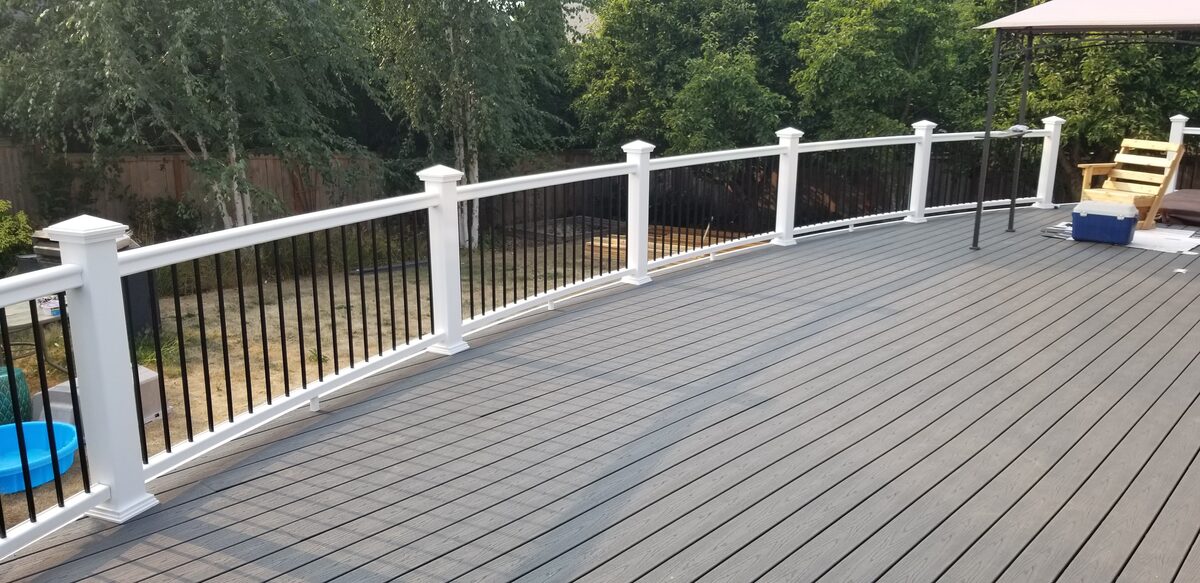
Older Seattle decks frequently lack the connector hardware that current building codes require. Inspectors look for joist hangers at every joist-to-beam connection, post caps at beam-to-post connections, post base hardware at post-to-footing connections, and hurricane ties or hold-downs where required by local seismic provisions. Missing or undersized hardware is a flagged item, and it's more common than most homeowners expect on decks built before 2010.
Permit Compliance: The Question Inspectors Ask and Buyers Care About
A trained inspector will often be able to identify whether a deck was permitted, and buyers are increasingly asking the question directly. If your deck was built without permits, or if additions were made without permits, this creates a formal disclosure obligation on your Form 17 seller disclosure statement. We'll cover this in detail in the permit compliance section below.
The Cost of Common Deck Repairs in Seattle
Understanding repair costs before you list is essential for making smart decisions about what to fix, what to disclose, and what to leave for negotiation. Here are realistic cost ranges for the most common repair scenarios in the King County market in 2025–2026. These are contractor pricing ranges — not DIY estimates.
Mid-range contractor pricing for the most common inspection-flagged deck repairs in King County.
| Category | Value |
|---|---|
| Ledger Repair (minor) | $800 |
| Ledger Repair (full replacement) | $2,500 |
| Post Base Replacement (per post) | $300 |
| Railing Repair (per section) | $300 |
| Hardware Upgrade (joist hangers, post caps) | $900 |
| Surface Board Replacement (partial) | $1,200 |
| Flashing Replacement | $600 |
| Stair Rebuild | $1,800 |
Ledger Repair: $800–$2,500
Ledger repairs are the most variable in cost because the scope depends on what's found once the ledger is exposed. A minor repair — reattaching a section of ledger with proper lag bolts and adding flashing — can run $800–$1,200. A full ledger replacement, which involves removing the ledger, treating or replacing any damaged band joist on the house, installing new flashing integrated with the house's water-resistive barrier, and reinstalling with code-compliant hardware, typically costs $1,500–$2,500 in the Seattle market. If the damage has extended into the wall framing, costs can go higher.
Post Base Replacement: $200–$400 Per Post
Replacing a rotted post base involves jacking the deck to temporarily support the load, removing the old post, installing a new above-grade post base connector on the existing footing, cutting a new post to height, and reinstalling. Labor and materials run $200–$400 per post depending on post height and access. Most decks have 4–8 posts, so a full post base replacement on a typical deck runs $800–$3,200.
Railing Repair and Replacement: $100–$500 Per Section
Railing repairs range widely based on what's wrong and what material the railing is made of. Tightening loose posts by adding blocking or through-bolting to the rim joist runs $100–$200 per post. Replacing an entire railing section with pressure-treated lumber runs $200–$400. Full railing replacement in composite or cable systems costs significantly more — see our guide to deck railing options in Seattle for a full cost breakdown.
Hardware Upgrades: $500–$1,500
Adding missing joist hangers, post caps, and post base hardware to a deck that was built without proper connectors is labor-intensive because the framing members are already in place. Expect $500–$1,500 for a typical 300–400 square foot deck, including materials and labor.
Surface Board Replacement: $800–$2,500
Partial surface board replacement — swapping out soft or damaged boards — runs $10–$18 per linear foot in pressure-treated lumber or $22–$35 per linear foot in composite, plus labor. Full surface replacement on a 300 square foot deck runs $1,500–$4,500 depending on material choice.
Tip
Cosmetic Issues vs. Structural Failures: Understanding the Difference
One of the most important things a seller can understand going into an inspection is the difference between cosmetic defects and structural failures. Home inspectors are required to note both, but buyers, lenders, and appraisers treat them very differently.
What Counts as Structural
Structural failures are conditions that affect the load-bearing capacity or stability of the deck. These include:
- Ledger failure or rot
- Post base rot or settlement
- Joist rot or significant notching
- Missing or failed hardware at primary connections
- Footing failure or frost heave
- Beam bearing loss
Structural failures in an inspection report are taken seriously by buyers, and they must be disclosed by sellers who are aware of them. Lenders underwriting FHA or VA loans will not allow loans to close on properties with documented structural safety hazards unless those hazards are repaired before closing.
What Counts as Cosmetic
Cosmetic defects are conditions that affect the appearance or surface of the deck but don't compromise structural integrity. These include:
- Surface checking and weathering on wood boards
- Fading or peeling finish on wood decking
- Minor cupping or warping that doesn't create a trip hazard
- Cosmetic rust staining from fasteners
- Discoloration from tannin bleed or algae
Cosmetic defects still show up in inspection reports, but they're negotiating points rather than deal-breakers. Buyers may request credits, but lenders generally don't require cosmetic repairs as conditions of funding.
Key insight
The Grey Zone: Railings
Railings occupy an interesting middle ground. A railing that wobbles but hasn't failed is arguably still functional — yet inspectors flag it as a safety hazard, buyers treat it as a serious finding, and FHA/VA appraisers can and do require railing repairs as a condition of loan approval. In practice, wobbly or non-code-compliant railings function more like structural issues from a sale-impact standpoint, even though the underlying problem may be fixable with a couple of hours of work and $50 in hardware.
Inspector Red Flags vs. Minor Items: A Practical Ranking
Not all inspection findings are equal. Here's a practical ranking of common Seattle deck inspection items from most to least impactful on your sale.
Tier 1 — Major Red Flags (Address Before Listing or Prepare for Significant Impact)
| Finding | Why It Matters | Typical Impact |
|---|---|---|
| Ledger rot or improper attachment | Structural collapse risk; lender-required repair | Sale can fall through; FHA/VA deal-breaker |
| Post base rot with structural compromise | Load-bearing failure risk | Lender-required repair; major buyer credit |
| Missing guard rails on elevated deck | Life safety; lender red flag | FHA/VA deal-breaker; buyer demand to repair |
| Deck built without permits | Form 17 disclosure required; lender complications | Price impact + legal obligation |
Tier 2 — Moderate Items (Fix or Credit to Control the Negotiation)
| Finding | Why It Matters | Typical Impact |
|---|---|---|
| Wobbly railings (still attached) | Safety concern; FHA/VA may require repair | Buyer credit demand $200–$800 |
| Missing joist hangers or post caps | Code compliance; future risk | Buyer credit demand $500–$1,500 |
| Soft surface boards (not joist-level) | Future maintenance; moisture entry | Buyer credit demand $500–$1,200 |
| Improper or missing flashing | Future moisture damage risk | Buyer credit demand $400–$800 |
Tier 3 — Minor Items (Note and Disclose; Minimal Sale Impact)
| Finding | Why It Matters | Typical Impact |
|---|---|---|
| Cosmetic weathering of wood surface | Appearance only | Minimal; buyer expectation in PNW |
| Surface checking or small cracks | Normal wood aging | Minimal |
| Rust staining from fasteners | Cosmetic | Minimal |
| Minor cupping on surface boards | Common in Seattle climate | Minimal |
Note
Pre-Listing Deck Inspections: Should You Get One?
A pre-listing deck inspection is a formal evaluation of your deck's condition performed by a qualified inspector before your home goes on the market. In the Seattle area, this typically costs $200–$400 as a standalone service, or is sometimes bundled into a full pre-listing home inspection that covers the entire property.
The Case for Getting One
The core argument for a pre-listing deck inspection is information control. When you list without knowing your deck's condition, you're waiting to find out what the buyer's inspector discovers — and you're discovering it at the worst possible moment: when the purchase agreement is signed, the buyer is emotionally committed, and both parties are under time pressure. That's when small findings get magnified and repair credits get padded.
When you know what's wrong before listing, you have options:
- Fix it — Repair the issues, document the work, and list with a clean deck.
- Disclose it — Provide buyers with an accurate picture of the condition, potentially with contractor bids already in hand.
- Price it — Adjust your list price to reflect the known condition, attracting buyers who are looking for value.
The pre-listing inspection also gives you the ability to get competitive bids from contractors at a time when you're not rushed, which almost always produces lower prices than emergency repair work driven by inspection deadlines.
Finding a Qualified Deck Inspector in Seattle
For a standalone deck inspection, look for inspectors who are members of NADRA or who have specific structural experience with deck systems. General home inspectors are qualified to flag obvious defects, but a contractor with deck-specific expertise may catch more nuanced issues — particularly with ledger attachment and hardware specifications that require knowledge of current IRC code requirements.
The NADRA deck evaluation guide is publicly available and gives you a clear framework for what a thorough inspection should cover, so you can evaluate whether the inspector you're considering is being thorough.
Tip
Permits, Unpermitted Decks, and Washington State Disclosure Rules
This is the section that makes a lot of Seattle homeowners uncomfortable — but it's critically important to understand before you list.
Seattle's Deck Permit Requirements
The Seattle Department of Construction and Inspections requires permits for most decks that are more than 18 inches above grade. Specifically, most attached decks need at minimum a Subject-to-Field-Inspection (STFI) permit, while decks that are more than 8 feet above grade, include beams 14 feet or longer, are located in an environmentally critical area, have solid surface decking, or exceed 750 square feet require a full building permit. King County has similar requirements for unincorporated areas — you can review current King County permit thresholds at kingcounty.gov.
What Happens When a Deck Was Built Without Permits
Unpermitted decks are common in Seattle — particularly decks built in the 1980s and 1990s when permit enforcement was less rigorous and many contractors built without pulling permits. If your deck was built without permits, you have a legal disclosure obligation in Washington State.
Washington State's seller disclosure law requires that sellers complete Form 17, the Real Property Transfer Disclosure Statement, before closing. This form asks specifically about permits and code compliance. Deliberately concealing known unpermitted work creates legal liability that survives the sale closing — meaning a buyer can sue you after the fact if they discover you knew about unpermitted work and failed to disclose it. Washington's consumer protection statutes can make these claims costly.
Important
Retroactive Permit Options
If your deck was built without permits, you have the option to seek a retroactive permit before listing. This process involves submitting an application to SDCI, having the existing deck inspected against current code, and making any corrections required to bring it into compliance. Retroactive permits can be worth pursuing if the deck is structurally sound and close to current code — it removes the disclosure obligation and may make the property eligible for FHA and VA financing without complication.
The downside is time and cost. Retroactive permits require inspection scheduling with SDCI, and any required corrections need to be completed before the permit closes. In a spring listing timeline, this can be tight. Consult with a licensed deck contractor who has experience with Seattle SDCI to understand what's realistic given your specific situation and timeline. Our guide to deck permits in King County covers this process in detail.
The Form 17 Deck Disclosure Questions
Washington's Form 17 asks sellers about:
- Whether the property has unpermitted additions or alterations
- Whether the seller has any knowledge of defects or material facts affecting the property
- Whether any notices of building code violations have been issued
For deck-specific disclosures, sellers should disclose: known structural defects, unpermitted construction, any prior inspection reports that identified deck issues, and any known water intrusion related to the deck. The pre-listing inspection guidance available through Washington's real estate licensing framework makes clear that having a pre-listing inspection actually strengthens your legal position as a seller — it demonstrates good-faith disclosure rather than deliberate concealment.
How Deck Condition Affects Lender Appraisals
For buyers using conventional financing, deck condition is typically a buyer/seller negotiation issue — the appraiser notes condition but doesn't require specific repairs as a condition of the loan unless there's an obvious safety hazard. For FHA and VA financing, the rules are stricter, and sellers need to understand the exposure.
FHA Appraisal Requirements
FHA appraisers are required to identify any conditions that pose a threat to the health or safety of the occupants or affect the structural soundness of the property. For decks, this means:
- Guardrails missing on decks more than 30 inches above grade will be flagged as an FHA condition — the appraiser will require repairs to be completed before the loan can close.
- Significant structural defects noted by the appraiser (including obvious ledger or post failures) will be flagged as conditions requiring repair.
- Decks with visible rot at structural members are frequently flagged.
The requirement for railings on elevated drops is consistently enforced in FHA appraisals across the Seattle market. If your buyer is using FHA financing and your deck is elevated without proper guards, you will be required to install them before the loan closes.
VA Appraisal Requirements
VA minimum property requirements (MPRs) are similar to FHA standards in their focus on safety, soundness, and sanitation. VA appraisers in Washington State take deck structural conditions seriously, particularly anything that suggests imminent collapse risk or immediate safety hazards. Wobbly railings on an elevated deck, visibly rotted posts, or a ledger clearly pulling away from the house will all trigger VA appraisal conditions.
For sellers marketing to the significant population of military and veteran buyers in the Puget Sound region (given Joint Base Lewis-McChord, Naval Station Everett, and other installations in the area), ensuring your deck meets these standards before listing is particularly important.
Conventional Financing: Less Rigid, But Not Irrelevant
With conventional financing, the appraiser makes condition adjustments rather than hard repair requirements — meaning a deck in poor condition lowers the appraised value rather than blocking the loan. This can still complicate a transaction if the appraisal comes in below contract price, forcing a renegotiation.
Note
Repair vs. Disclose vs. Price Reduction: Making the Right Call
This is the decision framework every seller with deck issues needs to work through. The right answer depends on the severity of the issue, your timeline, your buyer pool, and your tolerance for negotiation uncertainty.
When to Repair Before Listing
Repair before listing makes sense when:
- The issue is structural (ledger, post, railings) and will either block FHA/VA financing or trigger a buyer demand for repair anyway
- The repair cost is well-defined and the work can be completed in your pre-listing timeline
- The issue involves unpermitted work and you have time to pursue a retroactive permit
- The repair cost is materially less than what you'd lose in a price reduction or buyer credit
The math on ledger repairs illustrates this clearly: a legitimate ledger repair costs $800–$2,500. A buyer who finds a ledger issue in inspection will often ask for a $3,000–$5,000 credit to account for the hassle, the uncertainty, and the contractor markup they'll expect to pay for emergency work. Paying $1,500 to have the ledger properly repaired before listing saves you $1,500–$3,500 in negotiation exposure while also making your property FHA and VA eligible.
When Disclosure Makes Sense
Disclosure without repair makes sense when:
- The repair is large, complex, or timeline-prohibitive
- You're pricing the condition into the list price
- The issue is clearly cosmetic and doesn't create safety or lender complications
- You already have contractor bids in hand that give buyers a realistic picture of costs
Disclosure without bids is the weakest position — buyers will imagine the worst. Disclosure with a packet of two or three contractor bids showing a defined repair cost is a much more controlled situation. It tells buyers the problem is real but bounded, that you're being transparent, and that the path to resolving it is clear.
When Price Reduction Is the Right Move
Price reduction — rather than repair or credit — makes sense for larger scope deck issues where repair costs are significant and uncertain, particularly on decks that are at end of life. If your deck is a 25-year-old pressure-treated structure with multiple issues, trying to repair it piecemeal is often less economical than either replacing it or pricing to reflect that the buyer will need to address it.
In this scenario, consider the guidance in our article on Seattle deck costs — having an accurate replacement cost estimate lets you have an informed conversation with buyers and listing agents about how the pricing reflects the condition.
Key insight
What to Do Right Now: A Pre-Listing Deck Action Plan
If you're planning to list your home within the next six months, here's the sequence of steps to take with your deck.
Step 1: Walk the Deck Yourself
Before calling anyone, do a basic self-assessment using NADRA's publicly available deck evaluation checklist. Push on every railing post. Look at the ledger-to-house connection and the flashing above it. Probe any wood near post bases with a screwdriver. Walk the entire surface and feel for soft spots. Look from below at the joist structure if accessible.
This isn't a substitute for a professional inspection, but it tells you whether you're likely dealing with cosmetic issues or something more serious before you spend money on an inspector.
Step 2: Get a Professional Pre-Listing Deck Inspection
Hire a qualified inspector or experienced deck contractor to do a thorough evaluation. Budget $200–$400. Ask them to give you a written report that categorizes findings by severity — structural, safety, code compliance, cosmetic. This document becomes the foundation for your disclosure and repair strategy.
Step 3: Get Competitive Repair Bids
For any structural or safety findings, get two or three bids from licensed deck contractors. In Washington, you can verify contractor licensing at the Washington Labor & Industries contractor verification page. Licensed contractors are required to carry liability insurance and surety bonds — an important protection when you're doing repairs related to a sale.
Verify licensing before hiring anyone for pre-listing deck work. A repair done by an unlicensed contractor can create additional disclosure complications.
Step 4: Evaluate Permit Status
Review what you know about your deck's permit history. If you have original permits in your records, great. If not, SDCI's permit search portal allows you to look up permit history by address. If no permit appears and your deck required one when built, consult with a contractor about retroactive permit options given your timeline.
Step 5: Make Repair Decisions and Document Everything
Complete repairs with licensed contractors. Keep invoices, before/after photos, and any documentation of permit closure. This documentation package — your pre-listing inspection report, contractor invoices, and permit records — becomes a powerful disclosure asset. It tells buyers your story proactively and reduces the uncertainty that drives inflated credit demands.
For a comprehensive review of Seattle deck repair options and material choices, our repair service page walks through the full range of structural and surface repair work we perform across King County.
The Value Question: Does a Good Deck Help Your Sale Price?
The National Association of Realtors' Remodeling Impact Report consistently shows outdoor living improvements among the highest-return projects for resale value. In the Seattle market, where outdoor living space is genuinely valued given the region's summers and the premium buyers place on usable private outdoor area, a well-maintained deck in good condition is a marketing asset — not just a liability to manage.
A deck in excellent condition — clean, structurally sound, with current-code railings and no deferred maintenance — photographs well, shows well, and gives listing agents something positive to say. In a competitive market, it's a differentiator.
Conversely, a deck that clearly shows deferred maintenance — gray weathered wood, loose railings, visible rot at post bases — reads as a signal to buyers about how the whole property has been maintained. This is a subtle but real factor in how buyers price their offers.
Material Choices for Pre-Sale Deck Improvements
If your deck needs substantial surface replacement before listing, you face a material choice. For a detailed comparison of options in the Seattle market, see our articles on composite decking, cedar decking, and our comparison of composite vs. cedar for Seattle conditions.
For pre-sale work specifically: composite decking has the advantage of requiring no ongoing maintenance after installation — buyers see a finished, low-maintenance surface. Cedar properly finished reads as premium to many buyers but requires the finish to be in good condition at time of sale. Pressure-treated lumber, while structurally sound, is the least impressive cosmetically unless it's been recently stained.
If you're replacing surface boards, consider that the cost delta between composite and pressure-treated on a partial deck replacement is often recoverable in sale price in the Seattle market. Our team can help you evaluate this tradeoff given your specific deck size and neighborhood.
Ready to Get Your Deck Inspected Before You List?
If you're preparing to sell your Seattle-area home and you're not sure where your deck stands, the best move is a professional evaluation before the buyer's inspector gets there. The Seattle Decking Company performs pre-listing deck assessments and repairs throughout King County — including Seattle, Bellevue, Kirkland, Redmond, Bothell, Shoreline, Edmonds, and surrounding communities.
We'll give you an honest assessment of what inspectors are likely to flag, what it costs to fix, and whether repair, disclosure, or pricing adjustment makes the most sense for your situation. We carry current L&I licensing and liability insurance, and we can provide documentation packages that support your Form 17 disclosure and satisfy buyers' agents.
Call us at (425) 675-6259 or visit our contact page to schedule a pre-listing deck evaluation. We're based in Bothell at 22722 29th Drive SE and serve the entire greater Seattle metro area.
Frequently Asked Questions
How much does a pre-listing deck inspection cost in Seattle?
What are the most common deck failures Seattle home inspectors find?
Do I have to disclose an unpermitted deck in Washington State?
Will a deck with problems prevent my home from closing?
How long does it take to repair a deck before listing?
What does ledger repair cost in Seattle?
What railing height is required on Seattle decks?
Can I sell my Seattle home 'as-is' with deck problems?
Does a deck increase home value in Seattle?
What is the Seattle SDCI and why does it matter for my deck sale?
How do I find a licensed deck contractor in Seattle for pre-sale repairs?
What should I ask a deck contractor before hiring them for pre-sale repairs?
Planning a deck in the Seattle area?
Get an onsite design review and a clear, itemized quote from a licensed local builder.
Request a Free Quote