
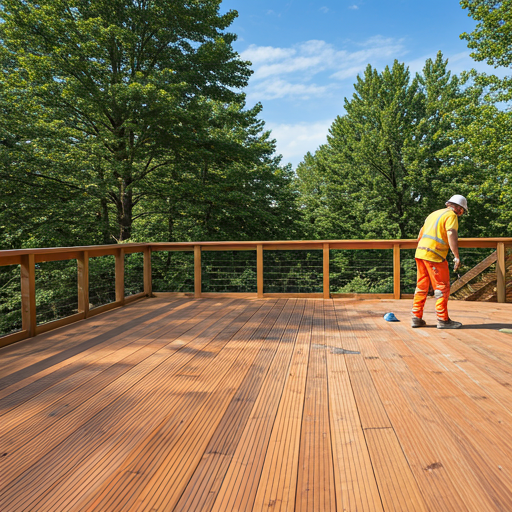
When Seattle homeowners start planning their backyard, the first real decision isn't material or color — it's structure. A deck and a patio both create outdoor living space, but they work differently, cost differently, and perform differently in King County's climate. This deck vs. patio guide breaks down the question for Seattle specifically — not the national-average homeowner with a flat Arizona lot.
The short answer: for most Seattle properties, a deck is the better investment. Here's the data behind that, and when a patio still makes sense.
What Actually Separates a Deck from a Patio
The fundamental difference is elevation and structure. A patio sits at or near grade — a hardened outdoor floor built directly on the ground, typically from concrete, pavers, or stone. A deck is a framed, elevated platform anchored to footings (and usually to your home's ledger), built anywhere from a few inches to 14 feet above grade.
This structural difference has direct consequences for Seattle homeowners.
The Seattle Lot Problem: Why Patios Don't Always Work Here
Seattle and its surrounding cities — Bellevue, Kirkland, Renton, Sammamish, Mercer Island — sit on some of the most variable residential terrain in the country. Many lots slope steeply away from the back of the house. Some drop 8, 10, or 15 feet from the foundation line to the flat yard below.
On a sloped lot, a grade-level patio means one of two things: either you build it at the bottom of the slope (disconnected from the house, requiring stairs that break the indoor-outdoor flow), or you cut and fill to create a flat area — which means excavation, drainage engineering, and often a retaining wall. That earthwork can add $15,000–$30,000 to a "simple" patio project on a sloped Bellevue or North Seattle lot.
A deck spans the slope. The framing handles the grade change; the surface is level with your back door. No cut-and-fill required.
Rule of thumb: if your back door is more than 18–24 inches above grade, a deck is almost certainly the correct structure for your property.
Cost Comparison: Seattle Reality vs. National Averages
National cost guides quote patio and deck prices that don't reflect King County labor rates, which run 15–25% above the national average. Here's what both structures actually cost installed in this market:
| Project (400 sqft) | National Average | Seattle Range (2026) |
|---|---|---|
| Concrete patio | $5–$15/sqft | $12–$20/sqft |
| Paver patio | $10–$17/sqft | $18–$28/sqft |
| Cedar deck | $25–$45/sqft | $35–$55/sqft |
| Composite deck | $35–$55/sqft | $45–$70/sqft |
| PVC deck | $45–$65/sqft | $55–$80/sqft |
Ranges include demo of existing structure if applicable, permit, materials, and installation.
A 400 sqft paver patio in Seattle runs $7,200–$11,200. A 400 sqft composite deck runs $18,000–$28,000. The deck costs more upfront — but the comparison doesn't end there once Seattle's climate and terrain enter the picture.
For a full cost breakdown by project type and material, see our Seattle deck cost guide.
The Maintenance Math Under 37 Inches of Annual Rainfall
King County receives 37–38 inches of rain per year — more than New York, more than Miami. That rainfall reshapes the maintenance equation for both structures.
Patios in Seattle
Concrete patios crack as soil settles through wet/dry cycles. Pavers heave when the ground beneath freezes (Seattle records 20–30 freezing nights annually) and shifts. Moss and algae colonize unsealed concrete within two wet seasons. A paver patio on correctly prepared base with adequate drainage lasts 25+ years; a patio on inadequate base — common with underbid projects — begins failing within 5 years as the material migrates in sustained rain.
Cedar Decks in Seattle
An unsealed cedar deck grays and begins soft rot within 2–3 years in King County's climate. Proper maintenance requires staining or sealing every 1–2 years — not the 3–5 year intervals adequate in drier climates. Over 15 years, a 400 sqft cedar deck accumulates $3,000–$6,000 in maintenance costs before any repairs.
Composite Decks in Seattle
Fully capped composite (Trex Transcend, TimberTech Legacy, AZEK) resists moisture, doesn't require staining, and carries 25–30 year warranties that hold in PNW conditions. Annual cleaning — a hose and a composite-safe cleaner — is the complete maintenance program. The upfront premium typically pays back within 8–10 years on a standard King County build.
For a full material breakdown, see our best decking materials guide for Seattle.
ROI: What Each Structure Returns at Resale in King County
Seattle's real estate market transacts near a $889,000 median home price. Outdoor living space is a genuine driver of buyer interest here. Here's how each structure performs at resale:
Deck ROI: A composite deck on a King County home typically recovers 60–80% of its installed cost in appraised value. On a $1.1M Bellevue home, a $35,000 composite deck can add $21,000–$28,000 in value and meaningfully accelerates sale timelines when listed in spring or summer.
Patio ROI: Patios nationally carry ROI figures of 50–70%, but Seattle-specific performance depends heavily on lot geometry. A well-built paver patio on a flat lot adds real value. A patio at the bottom of a slope — visually and physically disconnected from the main living floor — adds far less than a deck at the same elevation as the back door.
The ROI gap is real but isn't the only factor. What matters more than the percentage is whether the structure is actually usable the way you intend to use it.
Permits: What Seattle and King County Require for Each
Both decks and patios can require permits in Seattle. Here's the split:
Decks: Any deck surface more than 18 inches above grade requires a building permit in Seattle. The city offers STFI (Subject to Field Inspection) permits for simple projects, sometimes issued same-day. Standard permits take 2–4 weeks. Bellevue, Sammamish, and Redmond may run 3–6 weeks during spring peak season. Typical permit cost: $300–$650.
Patios: Ground-level patios under Seattle code generally don't require a building permit. However, if the project involves grading, a retaining wall, or an attached structure (covered pergola, patio roof), permits may apply. Impervious surface limits — regulated throughout King County to manage stormwater runoff — can also cap how much hard surface you can add to a given lot. Properties in environmentally critical areas (steep slopes, near water bodies) face more restrictive limits.
For city-by-city permit details, see our King County deck permit guide.
When a Patio Is the Right Call
There are genuine scenarios where a patio beats a deck for Seattle homeowners:
Flat lot with a walkout ground floor. If your home's lower level opens to a level yard, building a patio at the door is structurally appropriate. No elevated framing, simpler drainage design, lower cost.
Budget-constrained project on cooperative terrain. A well-built paver patio on a flat lot is less expensive than a deck and still provides functional outdoor space. If the lot cooperates and budget is limited, a patio is a sound choice.
Preference for ground-level connection. Some homeowners prefer the visual grounding of a patio — it reads as "yard" rather than "platform" and integrates better into cottage garden or native planting landscapes.
As a complement to a deck. Many King County properties benefit from both: a deck at the main living level and a patio at grade below it. A two-level outdoor space connected by stairs is increasingly popular on Bellevue and Kirkland properties that drop 8–10 feet from house to yard. The deck handles elevated outdoor dining; the patio handles the lawn-level fire pit and planting zone.
For ideas on how a deck and lower-level outdoor space work together, see our outdoor living design guide.
The Decision Framework
Here's how we work through the deck vs. patio question with Seattle homeowners:
- What's your grade differential from back door to yard? More than 18–24 inches → deck. Less than 12 inches on flat terrain → patio is viable.
- What's your priority: lower upfront cost or lower lifetime cost? Patio wins on day one. A quality composite deck wins over 15–20 years.
- What does your HOA allow? Some King County communities restrict elevated deck height, materials, or railing type. Check before designing anything. Our HOA approval guide covers what to expect in common Eastside HOA communities.
- What's your resale timeline? Selling in 3–5 years → composite deck ROI is meaningful. Staying 20+ years → the lifetime cost math strongly favors composite over any patio material.
Have more questions? Our FAQ page covers the most common Seattle homeowner questions about outdoor structures — or call us directly.
Get a free deck estimate from The Seattle Decking Company — call (425) 675-6259 or request your estimate.
Planning a deck in the Seattle area?
Get an onsite design review and a clear, itemized quote from a licensed local builder.
Request a Free Quote