
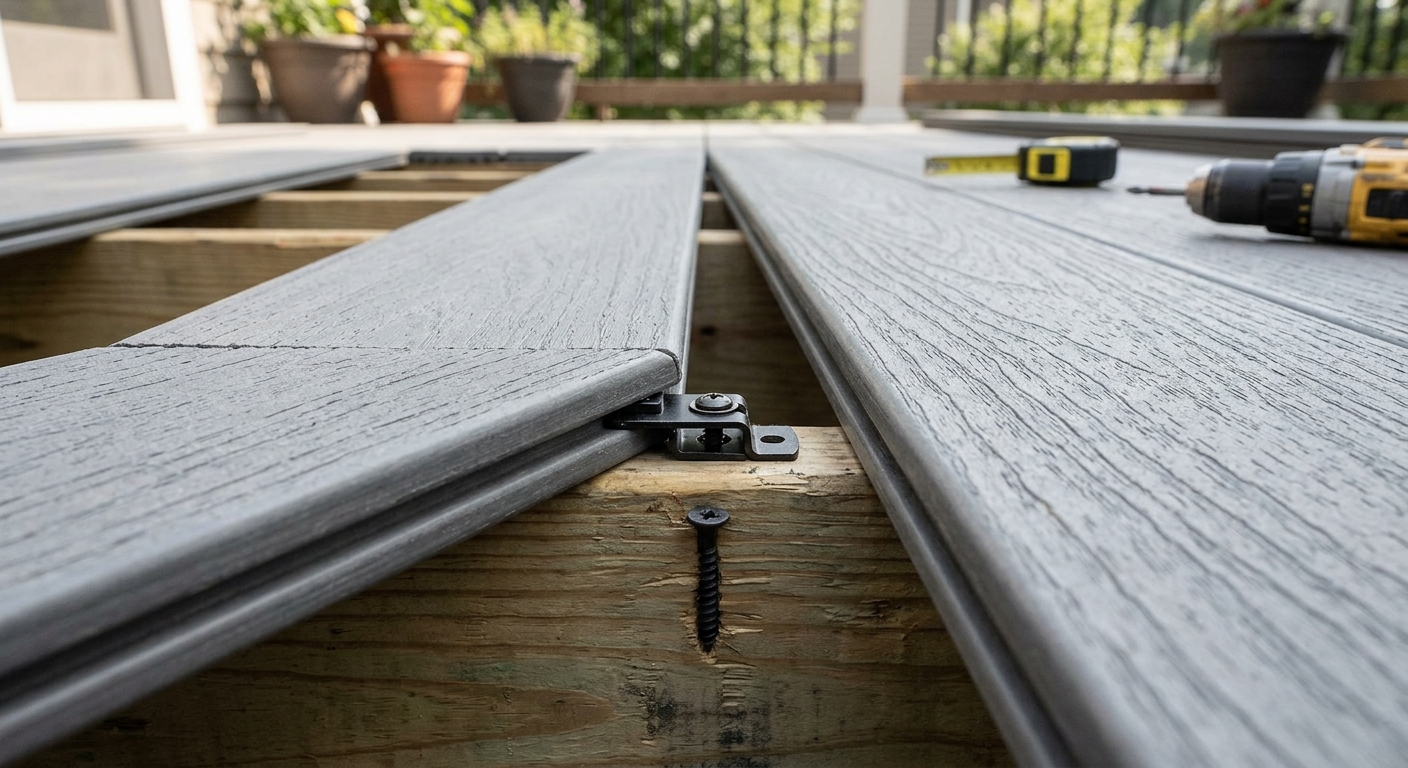
Every year, we talk to Seattle homeowners who made the same expensive mistake: they chose their decking material based on what looked good at a big-box store showroom, or what a contractor recommended without any real explanation of why. Then two years later, they're calling us because their deck is green with moss, the boards are cupping, or the finish has gone gray and chalky — and the repair or replacement estimate is more than the original build cost.
We've been building decks in Seattle and across King County for over 15 years. We've built on north-facing lots in Maple Leaf that never see direct sun from November through February. We've built elevated decks in Bellevue that catch wind and rain from three directions. We've built ground-level patios in Renton where the soil stays perpetually damp. What that experience has taught us is that choosing decking material in Seattle is not the same exercise as choosing decking material in Phoenix, or Charlotte, or even Portland. Seattle's climate — specifically, the combination of 38 inches of annual rainfall, extended overcast periods, and modest but real freeze-thaw cycles — creates a uniquely punishing environment for any wood-based surface.
This article is our honest, builder-to-homeowner ranking of every major decking material available in 2026. We're going to tell you what we actually see in the field after years of installation and follow-up visits, what the manufacturers won't put in their brochures, and what you should consider given your specific lot conditions, budget, and maintenance tolerance. No manufacturer partnerships influence this ranking. No affiliate fees. Just what we've learned doing this work in your city.
Why Seattle's Climate Demands a Different Approach to Decking
Most national decking guides are written for an average American climate that doesn't exist in Seattle. The average U.S. city gets between 25 and 30 inches of precipitation per year. Seattle gets 38 inches — and more importantly, that moisture arrives in a pattern that is particularly brutal for decking materials: not as heavy downpours that drain quickly, but as persistent drizzle, mist, and overcast dampness that keeps surfaces wet for days or weeks at a time.
The Real Enemy Is Duration, Not Volume
The critical factor most homeowners don't understand is that it's not the amount of rain that destroys decking — it's how long surfaces stay wet. A deck in Miami might get more total annual rainfall than a Seattle deck, but Miami rain falls in intense afternoon thunderstorms that are over in 45 minutes and followed by 85-degree sunshine that dries everything within hours. In Seattle's Fremont neighborhood in January, a deck surface might stay damp for 10 days straight without a meaningful dry period. That sustained moisture exposure is what causes wood fibers to expand and contract repeatedly, what drives mold and moss spore germination, and what accelerates rot in any wood product with exposed end grain or unsealed surfaces.
This is why the research and our field experience both point to the same conclusion: composite and PVC decking outperform wood in Seattle not because wood is a bad material in general, but because wood requires maintenance cycles that most homeowners don't realistically sustain in a climate where the maintenance window — dry, warm days with several days of dry weather forecast ahead — is genuinely short. According to research from Alki Decks, composite decking costs about 30% more upfront than wood but capped composite boards resist the moss adhesion and moisture that drive rot and warping in cedar.
Moss, Mold, and Gray Discoloration: Seattle's Specific Failure Modes
If you've lived in Seattle for any length of time, you know what a neglected cedar deck looks like: gray, mottled with green, and starting to show soft spots at the end grain near the house wall. This is not a sign of a cheap material — cedar is actually one of the most naturally rot-resistant domestic woods available. It's a sign of a maintenance gap meeting a demanding climate.
Stewart Lumber and Hardware in Seattle has been selling building materials in this market for decades, and their research aligns with what we see: western red cedar requires sealing or staining every 1-2 years in Seattle's King County climate. Not every 5 years as commonly assumed. Not "when it looks like it needs it." Every 12 to 18 months, consistently, or moss growth and gray discoloration can begin within two years of installation. We've seen brand new cedar decks show early moss in their second season when the homeowner didn't apply a follow-up sealer coat after the initial installation.
How King County Permit Requirements Factor In
Material choice can also affect your permit pathway, which affects your timeline and budget. In Seattle and King County, decks more than 18 inches above the ground with beams over a certain span require a construction permit through either the Seattle SDCI or King County DLS, depending on whether you're in the city limits. Railings are required by code on any deck over 30 inches above grade. Permit fees typically run $250 to $1,000 depending on project complexity and valuation.
What this means for material selection: if you're building a simple ground-level deck under the permit threshold, you have more material flexibility and your cost equation is simpler. If you're building an elevated deck that requires permitting and inspection, you need to choose materials that meet code requirements for span ratings and load capacities — and you need a contractor who pulls the permit properly. We cover this in detail in our King County deck permit guide.
Note
Material #1: Capped Composite Decking — The Workhorse for Wet Climates
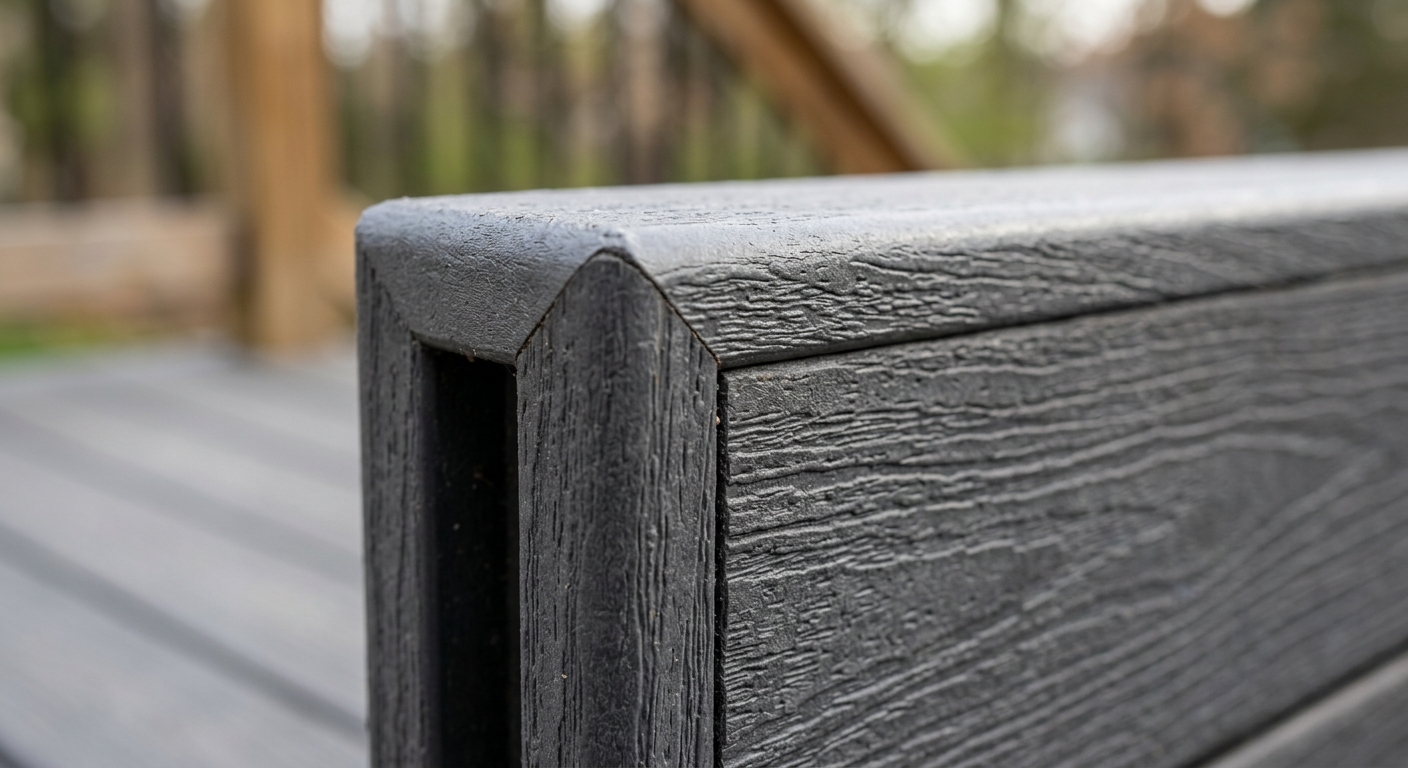
If we had to make one recommendation for the broadest range of Seattle homeowners — decent sun exposure, medium maintenance tolerance, budget around the market average — it would be fully capped composite decking. Not uncapped composite. Not "composite-style" products. Fully capped composite, meaning the wood-fiber core is encased in a polymer shell on all four sides.
This distinction matters enormously in the Pacific Northwest. Research published by Orca Roofing and Exteriors makes the point directly: fully capped composite (polymer shell on all four sides) is critical in the PNW — uncapped composite has an exposed wood-fiber core that can absorb moisture and develop mold. We've seen this in the field ourselves. Older composite products from the early 2000s — products that were sold as low-maintenance alternatives to wood — had partial capping or no capping at all, and they failed in Seattle faster than cedar would have. They absorbed moisture through the cut ends and the underside, swelled, cupped, and developed surface mold that couldn't be cleaned without damaging the surface.
How Capped Composite Works and Why It Matters Here
Modern capped composite boards consist of a wood-fiber and resin core (typically 50-60% recycled wood fiber and 40-50% polyethylene or polypropylene) fully encased in a solid polymer shell. The shell is what makes these boards perform well in wet climates: it prevents moisture from reaching the organic wood-fiber core, which is the material that would otherwise swell, rot, and host mold.
The polymer shell also provides the stain and scratch resistance that makes composite decking attractive for families with outdoor furniture, pets, and grills. High-quality capped composite boards from brands like Trex, Fiberon, AZEK, and TimberTech come with 25 to 30-year warranties that specifically cover fading, staining, and surface quality. For a Seattle homeowner who bought their house in the $800,000+ market that King County has become, the ability to set and forget a major exterior element for 25 years has real value.
The Major Capped Composite Brands: What We've Seen in the Field
Trex is the most widely recognized composite decking brand and the largest manufacturer in the U.S. Trex Transcend and Trex Select are the two lines most commonly specified for Seattle projects. Transcend is the premium line — deeper wood grain embossing, wider color palette, and a full 25-year warranty covering fade and stain. Select is a mid-range option with a 25-year structural warranty but a 10-year stain and fade warranty. In our experience, Trex performs consistently well on south and west-facing Seattle decks with reasonable sun exposure. The darker colors can get warm on the rare 85+ degree Seattle summer day, so we typically recommend lighter tones for uncovered decks.
Fiberon offers strong value in the mid-range market. Their Paramount and Eon lines use a composite core with a full polymer cap and have performed well in the Seattle climate we've observed. Fiberon's color options tend to run toward the warmer wood tones, which some homeowners prefer for a more natural look. We cover the detailed comparison in our Trex vs. Fiberon vs. TimberTech article.
TimberTech (now owned by AZEK) offers both composite and full-PVC lines, and their higher-end composite products are among the best we've worked with for grain texture and dimensional stability. Their AZEK brand products are discussed separately in the PVC section below.
Capped Composite: Cost in the Seattle Market
Installed capped composite decking in Seattle runs approximately $15 to $27 per square foot for the boards only, not including framing, railing, stairs, or permits. The wide range reflects the difference between entry-level capped composite (Trex Select, Fiberon Good Life) and premium products (Trex Transcend, TimberTech Terrain). A complete deck build with composite boards, pressure-treated framing, basic rail, and permit typically lands in the $18,000 to $32,000 range for a 400 square foot deck in the current Seattle market.
For a detailed breakdown of what Seattle homeowners actually pay across project types, see our Seattle deck cost guide and the deck cost calculator page.
| Composite Brand | Line | Installed Cost/SF (boards only) | Warranty (fade/stain) | PNW Performance Rating |
|---|---|---|---|---|
| Trex | Transcend | $22-$27 | 25 years | Excellent |
| Trex | Select | $17-$22 | 10 years | Very Good |
| Fiberon | Paramount | $20-$25 | 25 years | Excellent |
| Fiberon | Eon | $16-$20 | 15 years | Good |
| TimberTech | Legacy | $21-$26 | 30 years | Excellent |
| TimberTech | Terrain | $15-$19 | 25 years | Very Good |
Tip
Maintenance Reality for Composite in Seattle
The low-maintenance promise of composite decking is real but not zero-maintenance. In Seattle's climate, you'll still want to clear debris from between boards seasonally — fallen leaves and needles can hold moisture and create conditions for mold on the surface, even though the boards themselves won't absorb it. An annual wash with a composite-safe cleaner and a garden hose is sufficient for most installations. Under heavy tree canopy, a diluted oxygen bleach solution applied once a year keeps the surface clean. For more detail, see our composite deck maintenance guide for Seattle.
Material #2: PVC Decking — Best for Shaded and North-Facing Seattle Lots
PVC decking is categorically different from composite decking, and most homeowners conflate the two. Composite decking contains wood fiber in its core — the polymer cap prevents moisture from reaching that core, but the wood fiber is still there. PVC decking contains zero wood fiber. It is 100% polyvinyl chloride, fully synthetic from edge to edge. This means it is completely impervious to moisture, rot, mold, and insect damage in a way that even the best capped composite cannot match.
For the majority of Seattle homeowners — those with reasonable sun exposure and normal care practices — fully capped composite is sufficient. But there is a specific Seattle lot condition where we routinely recommend PVC over composite: north-facing or heavily shaded installations where the deck surface stays damp for extended periods and receives minimal UV exposure.
Why Shade Changes the Equation
In a shaded Seattle environment — think of a deck under a mature Douglas fir canopy in Shoreline, or a north-facing lot in Magnolia where direct sun hits the deck for less than three hours a day in summer and essentially never in winter — even fully capped composite can develop surface mold. The polymer shell doesn't absorb moisture, but surface mold can colonize the textured surface of composite boards when conditions are consistently damp and cool. It's a surface-level issue, not a structural one, and it can typically be cleaned — but it becomes a recurring chore that defeats the low-maintenance purpose of upgrading from wood.
PVC decking, with its completely synthetic composition and typically smoother surface texture (compared to the embossed grain of composite), gives mold fewer places to anchor. Research from M3 Decks supports the recommendation that TimberTech AZEK (100% PVC) and similar fully synthetic products are the top-rated choice for Pacific Northwest decks in challenging conditions due to complete moisture immunity and structural longevity.
AZEK and TimberTech PVC Products
AZEK's decking line (sold under both the AZEK and TimberTech brands following the company's consolidation) represents the premium end of PVC decking. Their boards are manufactured with virgin PVC plus stabilizers and proprietary additives that address one of PVC decking's historical weaknesses: thermal expansion. PVC expands and contracts more than composite in response to temperature changes, and early PVC decking products sometimes showed visible gapping or board movement in climates with significant temperature swings.
Modern AZEK products have addressed this substantially through their TerraLoc hidden fastener system and revised formulations. For Seattle's climate — which doesn't typically see the extreme temperature swings of, say, Denver or Minneapolis — the thermal expansion characteristics of quality PVC decking are manageable with proper installation technique, specifically maintaining correct gapping between board ends and using manufacturer-specified fastener systems.
Cost for installed PVC decking in Seattle runs approximately $22 to $35 per square foot for boards only — notably higher than composite. The premium is real and worth acknowledging: for a 400 square foot deck, choosing AZEK PVC over mid-grade composite might add $3,000 to $5,000 to the board cost alone. For most homeowners, that premium is worth it only if their specific lot conditions — heavy shade, north-facing, mature tree canopy — make composite a maintenance challenge.
PVC Railing Systems
One area where PVC products offer advantages beyond decking boards is railing. PVC railing systems are completely impervious to moisture and require no painting or staining. In Seattle's climate, painted wood railings require touch-up every 2-3 years minimum, and composite railing — while better — can show surface oxidation over time. PVC railing stays cleaner longer in our wet environment. For more on railing options across all materials, see our deck railing options guide for Seattle.
Key insight
Material #3: Western Red Cedar — The Local Classic, With Real Caveats
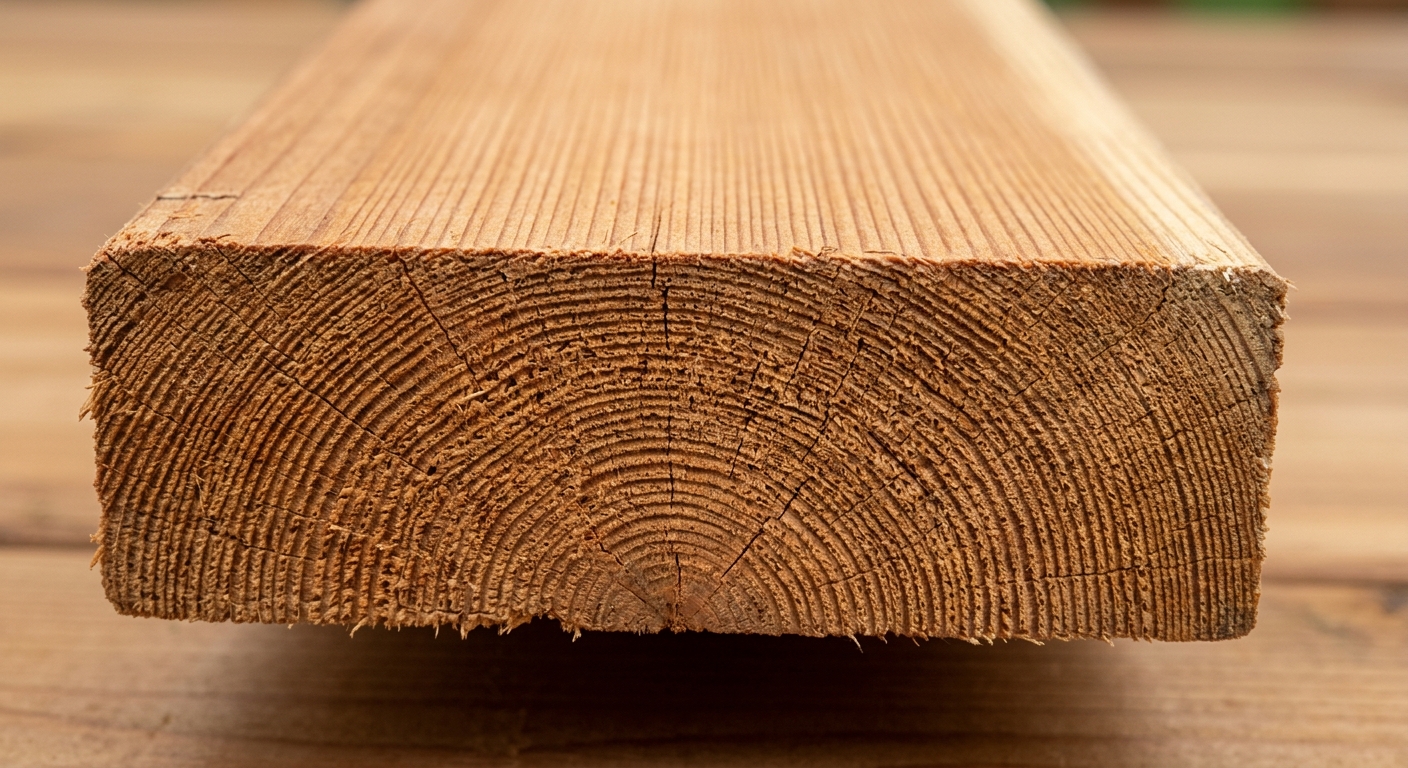
Western red cedar is the traditional Seattle decking material, and for good reasons that haven't entirely disappeared. It's locally abundant, beautiful, structurally sound, and carries a natural scent that is genuinely part of the Pacific Northwest outdoor experience. We've built cedar decks that homeowners love deeply — and we'll keep building them. But we're not going to pretend that cedar is the right choice for every Seattle homeowner in 2026, because it isn't.
Cedar's challenges in Seattle come down to a single, blunt reality: the maintenance schedule that cedar requires to stay beautiful and structurally sound is longer and more frequent than most homeowners realize when they choose it, and shorter than most contractors honestly disclose.
The Real Cedar Maintenance Schedule in King County
Here's what we tell cedar deck customers before they sign a contract with us: plan to clean and reseal or restain your deck every 12 to 18 months. Not every 5 years. Not "every few years." Every year to year and a half, consistently. This is not a conservative estimate to protect ourselves — it's what the climate demands and what our follow-up visits confirm.
The research from Stewart Lumber supports this directly: western red cedar requires sealing or staining every 1-2 years in Seattle's King County climate, or moss growth and gray discoloration can begin within two years on an unsealed deck. We've seen first-hand that cedar installed in spring, not sealed before the following fall, can show early moss colonies and the beginning of gray discoloration by the second spring.
Why does Seattle require more frequent maintenance than the national guidelines suggest? National cedar maintenance guidelines — often cited as "every 3-5 years" — are calibrated to average U.S. precipitation and UV exposure. Seattle's sustained moisture exposure through October, November, December, January, February, and March — six months of consistently wet conditions — outpaces the assumptions built into those guidelines. See our full cedar deck sealing guide for Seattle for the specific products and application windows that work in this climate.
When Cedar Is the Right Choice
Despite these caveats, cedar is the right choice for certain Seattle homeowners:
Homeowners who genuinely enjoy deck maintenance. Some people take real pleasure in caring for natural wood — the annual cleaning, the application of a quality oil-based stain, the appearance of grain coming alive after a fresh coat. If that describes you, cedar can give you a genuinely beautiful deck for decades.
Projects where budget is a significant constraint. Cedar installed in Seattle runs approximately $25 to $35 per square foot installed. For a 300 square foot deck, that's meaningfully less than premium composite. If you're going to maintain it consistently, the lifetime cost equation is more competitive than the upfront number suggests.
Historically or aesthetically sensitive properties. In some neighborhoods — parts of Capitol Hill, Queen Anne, or older Bellevue areas — a composite deck looks out of place next to a craftsman or bungalow home. Cedar, properly maintained, has a material authenticity that composites don't replicate perfectly, despite improvements in grain embossing technology.
Shaded lots where the homeowner is committed to maintenance. Yes, composite or PVC is easier in shade — but a properly sealed cedar deck on a shaded lot, maintained on schedule, can last 20+ years.
Cedar Quality: What to Specify
Not all cedar is equal, and this matters in Seattle. When we build cedar decks, we specify Clear or #1 grade western red cedar with proper kiln drying. Lower grades contain more knots, which are entry points for moisture penetration and weak points for cracking. We also specify tight grain (higher growth rings per inch) which is inherently more resistant to moisture absorption than wide-grain cedar.
The hidden cost of cedar that many homeowners don't factor in: the maintenance labor and materials over a 15-year period. Professional annual deck cleaning and sealing in the Seattle market runs $300-$700 depending on deck size. Over 15 years, that's $4,500 to $10,500 in maintenance costs — often enough to close the lifetime cost gap with composite entirely.
| Feature | Cedar | Capped Composite |
|---|---|---|
| Upfront Material Cost (installed, per SF) | $25-$35 | $17-$27 |
| Maintenance Frequency | Every 12-18 months | Annual cleaning only |
| Annual Maintenance Cost (professional) | $300-$700 | $0-$150 |
| Expected Lifespan (with maintenance) | 20-30 years | 25-35 years |
| Appearance: Natural Wood Look | Excellent | Very Good to Good |
| Moisture Resistance (Seattle climate) | Moderate (with maintenance) | Excellent |
| Moss/Mold Resistance | Low (needs sealer) | High (polymer cap) |
| DIY Repair/Replacement | Excellent | Good |
For a full side-by-side, see our composite vs. cedar decking comparison for Seattle.
Material #4: Pressure-Treated Wood — Best for Framing, Problematic as Decking Boards
Pressure-treated (PT) lumber is the most commonly misunderstood material in the decking conversation. Most homeowners encounter it because it's the cheapest option at any lumber yard or home improvement store, and contractors often offer it as the budget entry point. What those conversations sometimes don't clarify is that there's a meaningful difference between using PT lumber for structural framing (which is standard practice, including in our builds) and using it for the actual decking surface boards that you walk on and see every day.
Why PT Works for Framing but Struggles as Surface Decking in Seattle
Pressure-treated lumber gets its rot resistance from chemical preservatives — most commonly copper-based compounds like ACQ or CA — forced deep into the wood fibers under pressure. This makes it excellent for ground-contact or buried applications, and for structural elements like beams, joists, and posts where long-term moisture resistance under load is critical. We use PT lumber for framing on virtually every deck we build, including decks with composite or cedar surface boards.
As a surface decking board in Seattle, PT lumber has several characteristics that limit its appeal:
It warps. PT lumber is sold "wet" — it's still holding significant moisture from the pressure treatment process. As it dries after installation, it frequently warps, cups, or twists. In Seattle's climate, where drying happens slowly and inconsistently, this warping process can take two to three years and produce boards that are visually uneven and physically uncomfortable to walk on in bare feet.
It checks and cracks. As the wood dries, surface checks (small cracks along the grain) develop. These checks are entry points for moisture and create rough edges. On a decking surface, surface checks can catch feet and produce splinters.
It requires the same maintenance as cedar. PT lumber needs sealing or staining to maintain appearance and prevent surface degradation. The preservative treatment addresses structural rot, not surface appearance. An unsealed PT deck will gray and check as fast as unsealed cedar.
The cost differential isn't as dramatic as it appears. PT decking boards in Seattle run approximately $15 to $25 per square foot installed. That's only modestly less than entry-level composite, and less than cedar — but once you factor in the required maintenance and the shorter lifespan as a surface material compared to composite, the lifetime cost equation often favors composite for homeowners who can afford the slightly higher upfront investment.
Where PT Decking Makes Sense
There are scenarios where PT surface decking is a legitimate choice:
Temporary or transitional decks. If you're building a deck on a home you plan to sell within 5 years, or you're in a temporary living situation, PT's lower upfront cost and easy availability make it reasonable.
Budget constraints are real and non-negotiable. Not every homeowner has the budget for composite. A well-built PT deck, properly sealed at installation and maintained annually, can serve for 10-15 years. That's a real deck that provides real value.
Projects where the deck will be covered. Under a covered porch or pergola where precipitation exposure is limited, PT's moisture-related weaknesses are substantially reduced.
Mid-range installed cost per square foot, boards only. Does not include framing, railing, or permits. Seattle market pricing as of 2026.
| Category | Value |
|---|---|
| Pressure-Treated Wood | $20 |
| Entry Composite (capped) | $18 |
| Cedar | $30 |
| Mid Composite (capped) | $22 |
| Premium Composite | $25 |
| Hardwood (Ipe) | $25 |
| PVC (AZEK) | $28 |
Material #5: Hardwood Decking (Ipe, Mahogany, Garapa) — Premium Option With High Labor Costs
Tropical hardwoods represent the premium tier of natural wood decking, and Ipe (pronounced ee-PAY) in particular has a devoted following among architects, designers, and homeowners who want the most durable natural wood product available. Ipe's density and natural oil content give it a Class A fire rating, exceptional hardness, and natural resistance to insects and rot that is genuinely remarkable for a wood product.
In Seattle's climate, tropical hardwoods occupy a niche: they're more naturally moisture-resistant than cedar, they don't require preservative treatment, and they can look stunning on high-design projects. The Westlake or Mercer Island waterfront property, the custom modern home in Medina — these are contexts where Ipe or similar hardwoods fit both aesthetically and financially.
The Real Challenges With Hardwoods in Seattle
Labor cost is the primary obstacle. Ipe is extremely hard — harder than oak, harder than maple. Working with it requires specialized tooling and more time. Pre-drilling is required for every fastener. Blades dull faster. In Seattle's labor market, this translates to installation costs that are meaningfully higher than cedar or composite. Installed Ipe in Seattle runs $20 to $30 per square foot for the boards — comparable to composite — but that range can expand significantly on complex projects because of the extra labor hours.
Maintenance is non-trivial. Ipe is sold with the marketing claim that it can be left unfinished and will weather to a silver-gray patina. This is technically true. But "silver-gray patina" is not what most homeowners visualize when they spend premium money on a hardwood deck. Maintaining the warm, reddish-brown color of Ipe requires annual or biannual application of a hardwood oil specifically formulated for dense tropical species. These products are more expensive than cedar sealers, and application is more technically demanding because Ipe's density means oils penetrate more slowly.
Sustainability concerns. Responsible sourcing of tropical hardwoods matters, and certifications like FSC (Forest Stewardship Council) are important to verify. FSC-certified Ipe is available but typically commands a price premium over uncertified product.
Thermal performance. Ipe and similar dark tropical hardwoods can get extremely hot in direct sun — hotter than composite and significantly hotter than cedar. In Seattle, this is rarely a critical concern given our limited summer heat, but on south-facing decks during the increasingly warm Pacific Northwest summers, it's worth noting.
Where Hardwood Makes Sense in the Seattle Market
Hardwood decking makes sense for Seattle homeowners who:
- Have a high-design project where natural material authenticity is architecturally important
- Are willing to commit to annual oiling and maintenance
- Have budget for the higher installation labor cost
- Are building a deck that will remain with the property for decades and where a premium appearance matters for resale
For most Seattle homeowners, the combination of higher cost, significant maintenance requirements, and specialized installation labor makes hardwood a third-tier recommendation behind composite and cedar. But for the right project, there is nothing that looks quite like properly maintained Ipe.
Seattle Permit Requirements and How They Affect Your Material Choice
Permit requirements are not just bureaucratic hurdles — they directly affect which materials you can use, how your deck must be structured, and ultimately what you can legally build. In Seattle and King County, the permit landscape has specific implications for decking material selection that every homeowner should understand before getting quotes.
Seattle SDCI vs. King County DLS: Which Governs Your Project
If your property is within the Seattle city limits, your deck permit goes through the Seattle Department of Construction and Inspections (SDCI). Their specific guidance on common deck projects is published at seattle.gov/sdci/permits/common-projects/decks.
If your property is in unincorporated King County — many areas in Redmond, Sammamish, Renton, Maple Valley, and other suburban King County communities — your permit goes through King County's Department of Local Services at kingcounty.gov/en/dept/dls/building-safety-inspection/building/permits.
If your property is in an incorporated city within King County that is not Seattle — Bellevue, Kirkland, Issaquah, Shoreline, etc. — you go through that city's permit department, which in most cases uses the same Washington State Building Code but may have local amendments.
When a Permit Is Required
The triggering conditions for a permit in most King County jurisdictions:
- Deck more than 18 inches above grade at any point (measured to the ground beneath the highest board, not average grade)
- Any deck attached to the house structure (ledger-attached decks require permit regardless of height in most jurisdictions)
- Decks over 200 square feet in some jurisdictions
- Any structural changes to an existing deck
Freestanding, ground-level decks under 18 inches may not require a permit in some jurisdictions, but this varies. Never assume — call your local permit office or hire a contractor who will verify for your specific parcel before you build.
How Permit Requirements Interact With Material Choice
Permit requirements don't typically specify which surface decking material you must use, but they do establish structural requirements that affect your framing choices, and framing choices affect surface material compatibility.
For example, composite and PVC decking boards have different span ratings than dimensional lumber. A composite board that requires joist spacing of 12 inches on center (rather than the standard 16 inches) for a perpendicular installation will require more joists in your framing plan, which adds cost and needs to be reflected in the permitted drawings. If you decide mid-project to switch from cedar (which typically handles 16-inch centers) to a composite that requires 12-inch centers for diagonal installation, your structure may need modification.
This is one reason we strongly recommend selecting your surface decking material before finalizing permit drawings. If you're planning to use composite, tell your contractor at the beginning. They need to know the specific product and its installation requirements to frame your deck correctly.
Permit fees in the Seattle market run $250 to $1,000 depending on project valuation and complexity. For a full walkthrough of the King County permit process including timelines and what inspectors look for, see our deck permit guide for King County.
Important
Railing Requirements and Material Options
Any deck over 30 inches above grade requires a railing by Washington State Building Code. Railings must be at least 36 inches high (42 inches for commercial) and must pass a 200-pound load test at the top rail. Balusters must be spaced so a 4-inch sphere cannot pass between them.
These requirements apply regardless of your decking material choice, but they do interact with material selection in practical ways. If you're building a composite deck, most composite manufacturers offer matching railing systems that are engineered and code-compliant for use together. Using a matching composite railing ensures consistent warranty coverage and visual integration.
For a complete overview of railing options — composite, aluminum, cable, glass — see our deck railing options guide for Seattle and our cable railing guide for Seattle.
Total Cost Breakdown by Material: What Seattle Homeowners Actually Pay in 2026
Cost is where every material conversation eventually arrives, and it's where homeowners deserve the most honest information. National cost guides — including the widely cited research showing Seattle deck projects averaging around $10,133 with most falling between $5,272 and $14,994 — reflect a range that spans everything from a small ground-level PT wood deck to a mid-size composite installation. The range is real, but the detail matters for budgeting.
What Goes Into the Total Project Cost
A complete deck build in Seattle includes:
Surface decking boards — the material most of this article has focused on. This is what you see and walk on, but it's typically not the largest cost category.
Structural framing — beams, joists, posts, ledger, hardware. In Seattle and King County, this is almost universally pressure-treated lumber regardless of what you choose for surface boards. Framing cost is relatively consistent across projects regardless of surface material choice.
Foundation — footings, post bases, concrete. For permits, Seattle requires engineered footings based on soil conditions and deck load. This is a fixed cost category that doesn't change much with material choice.
Railing — a significant variable. Basic aluminum railing runs $60-$100 per linear foot installed. Composite railing runs $80-$120 per linear foot. Cable railing runs $150-$250 per linear foot depending on hardware quality and post spacing.
Stairs — each staircase run adds $1,500-$3,000+ depending on rise, materials, and railing.
Permit and inspection — $250-$1,000 for most Seattle-area projects.
Washington state sales tax — 10.35% on the full project including labor.
Contractor margin — in Seattle's market, general contractor margin on deck projects typically runs 20-30% over material and direct labor cost.
2026 Cost Ranges by Material (Complete Project, 400 SF Deck)
| Material | Surface Boards Installed (400 SF) | Typical Total Project Cost | 20-Year Maintenance Estimate |
|---|---|---|---|
| Pressure-Treated Wood | $6,000-$10,000 | $18,000-$28,000 | $5,000-$12,000 |
| Western Red Cedar | $10,000-$14,000 | $22,000-$34,000 | $6,000-$14,000 |
| Entry Capped Composite | $7,000-$10,000 | $20,000-$30,000 | $1,500-$4,000 |
| Mid-Grade Capped Composite | $9,000-$12,000 | $22,000-$34,000 | $1,500-$4,000 |
| Premium Capped Composite | $11,000-$14,000 | $26,000-$38,000 | $1,500-$4,000 |
| PVC (AZEK/TimberTech) | $12,000-$17,000 | $28,000-$42,000 | $1,000-$3,000 |
| Hardwood (Ipe) | $10,000-$14,000 | $26,000-$38,000 | $5,000-$10,000 |
Note: Total project costs include framing, footings, permit, basic railing, and one stair run. Does not include custom features, built-in seating, lighting, or pergola structure. All figures in 2026 Seattle market dollars.
The Lifetime Cost Argument for Composite
The NAR Remodeling Impact report tracks how remodeling projects affect home value and homeowner satisfaction. Deck additions consistently rank among the highest in both categories. But the financial calculus for decking material choice goes beyond what the NAR tracks — it includes the ongoing maintenance cost that compounds over years of ownership.
When we add 20-year maintenance estimates to the upfront build cost, the lifetime cost gap between composite and cedar narrows significantly. A cedar deck built for $28,000 with $10,000 in maintenance over 20 years has a lifetime cost of $38,000. A mid-grade composite deck built for $30,000 with $2,500 in maintenance has a lifetime cost of $32,500 — and it doesn't require the homeowner to schedule and monitor annual treatments or risk the early failures that come from missed maintenance cycles.
This is why the NADRA (North American Deck and Railing Association) has increasingly shifted its educational materials toward lifetime cost analysis rather than upfront cost comparison. Their research and the experience of professional deck builders nationally aligns with what we see in Seattle: composite's higher upfront cost frequently delivers better value over the ownership period.
Project Types and What They Cost
Entry deck (8x10, ground level, PT wood, basic rail): $8,000-$14,000 total Standard deck (12x16, elevated 6 feet, composite boards, aluminum rail): $22,000-$32,000 total Premium deck (16x20, elevated, composite or PVC, cable rail, stairs, lighting): $38,000-$60,000+ total
For context on how these numbers compare to add-on and renovation projects, see our deck addition guide for Seattle and our deck and patio combo guide.
Tip
Specialty Topics: Curved Decks, Lighting, and Feature Decks
Before we close out the material ranking, it's worth addressing two questions that come up frequently when Seattle homeowners are choosing materials: curved deck construction and integrated lighting.
Curved Decks: Which Materials Work
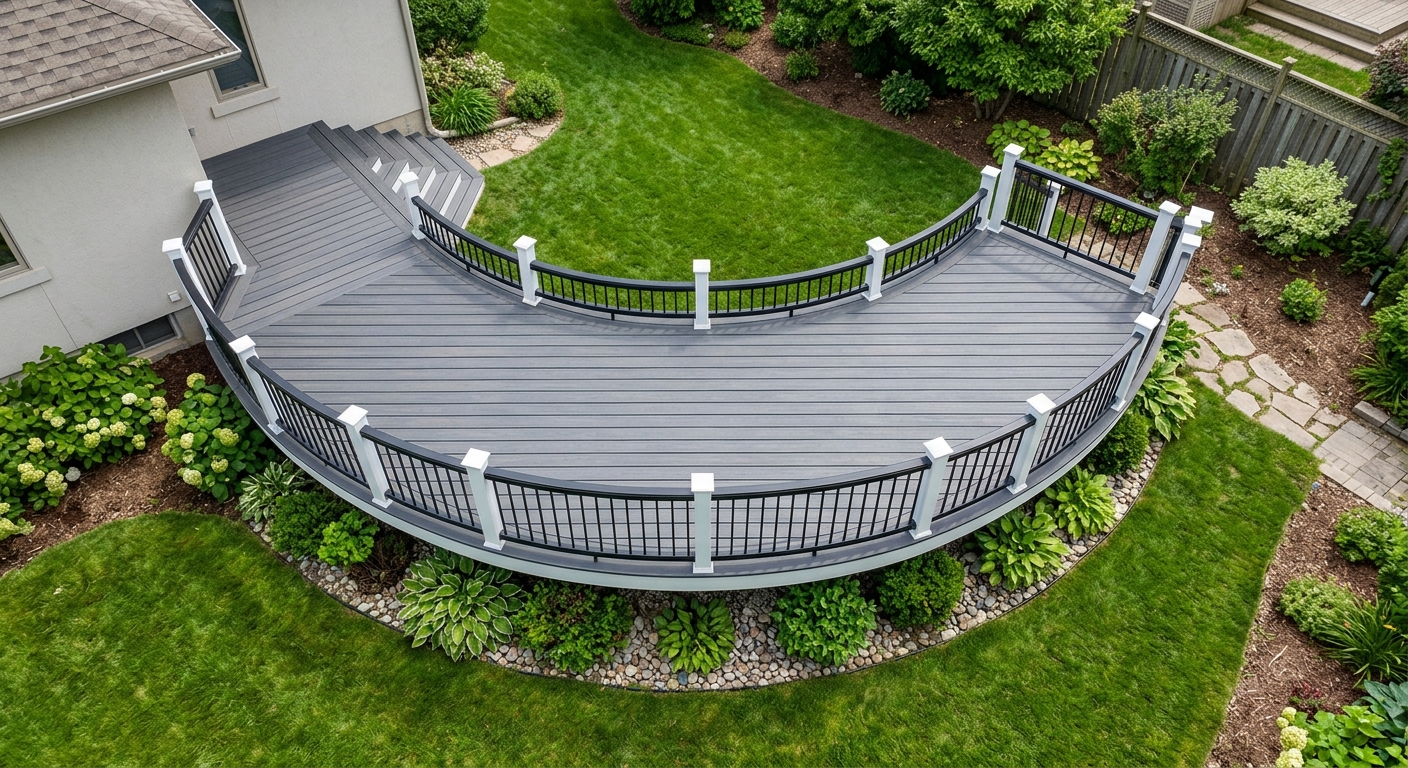
Custom curved decks — whether a simple radius corner or a sweeping multi-level curve — place specific demands on decking materials. Not every material bends equally. For detailed information on curved deck construction, see our custom curved decks guide for Seattle, but here's the short version:
Composite decking with kerfs: Most composite boards can be kerfed (thin cuts made on the underside) to achieve gentle curves. This requires specific technique and the right saw setup, and it voids most manufacturers' warranties on the bent sections.
PVC decking: High-quality PVC boards can be heated and bent to achieve tighter radius curves. AZEK and similar products are sometimes used this way on custom curved decks, though it's a specialized application.
Cedar: Naturally more flexible than composite for mild curves. Thin-ripped cedar strips can achieve curved patterns. This is one application where cedar's workability genuinely outperforms composite.
Hardwood: Least practical for curved work due to hardness and cost of waste from cutting.
Deck Lighting Integration
Integrated deck lighting — post cap lights, stair riser lights, under-rail lighting, deck board lighting — has become nearly standard on premium Seattle deck projects. The material choice affects how cleanly lighting can be integrated:
Composite and PVC decking accommodate recessed deck board lights most cleanly because the boards are consistent in dimension and density. Cedar can also accept recessed lighting but requires more careful fitting to avoid moisture ingress around the fixture.
For a full overview of deck lighting options, see our deck lighting guide.
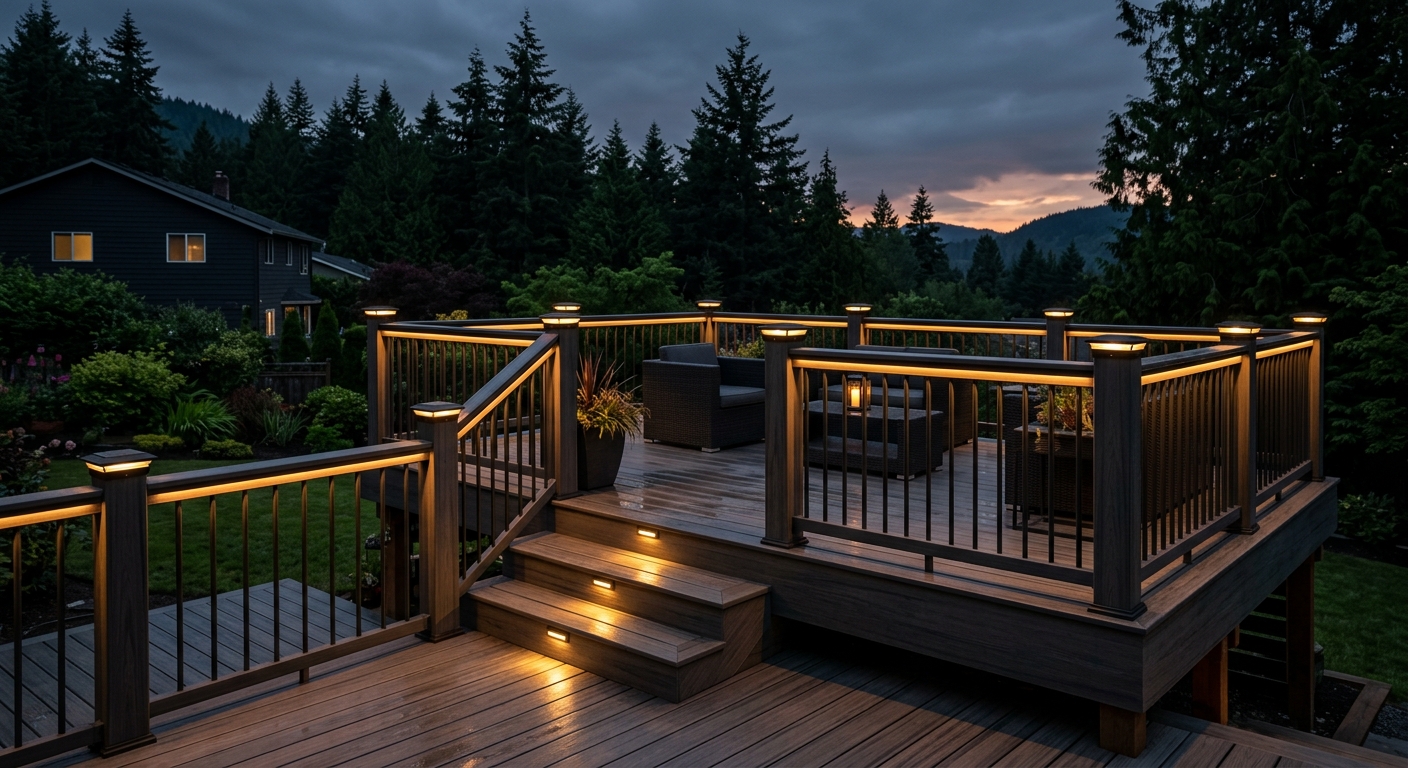
Our Honest Ranking: Best to Worst for Seattle's Climate in 2026
After 15+ years of building in this market, here is our frank ranking of decking materials for the Seattle/King County climate, from most to least recommended for typical homeowners:
1. Fully Capped Composite (Premium Tier — Trex Transcend, Fiberon Paramount, TimberTech Legacy): Best overall for the broadest range of Seattle homeowners. Excellent moisture resistance, 25-30 year warranties, low maintenance, consistent availability, and a growing range of colors and textures that genuinely approximate natural wood.
2. PVC Decking (AZEK, TimberTech AZEK): Best for shaded, north-facing, or heavily tree-canopied lots. Higher upfront cost, but the most moisture-immune option available for demanding Seattle site conditions.
3. Mid-Grade Capped Composite (Trex Select, Fiberon Eon, TimberTech Terrain): Strong value for budget-conscious homeowners who still want composite performance. Shorter stain/fade warranties than premium tier, but the same basic moisture resistance from the polymer cap.
4. Western Red Cedar: Best natural wood option in Seattle for homeowners genuinely committed to the maintenance schedule. Beautiful, locally appropriate, repairable — but only works if you reseal every 12-18 months without fail.
5. Hardwood (Ipe, Mahogany, Garapa): Right for specific high-design projects where natural material is architecturally important and budget is flexible. Not practical as a general recommendation due to labor cost, maintenance requirements, and sustainability complexity.
6. Pressure-Treated Wood (as surface boards): Acceptable for temporary, budget-constrained, or covered applications. Not recommended as a primary surface material for Seattle homeowners building a long-term investment.
This ranking reflects our field experience and is consistent with findings from Legacy Decking's research on Washington weather performance, which concludes that composite and PVC decking are the best choices for Washington's wet climate because they resist moisture, mold, and rot far better than wood.
For more context on how these materials perform on specific project types, see our best decking materials overview for 2026 and our full composite vs. cedar comparison.
Ready to Build? Let's Talk About Your Specific Seattle Lot
The material ranking above is a general framework, but every lot in Seattle is different. The north-facing lot in Greenwood shaded by a 60-foot cedar tree has different needs than the sunny south-facing slope in Renton. The elevated deck on Mercer Island with lake views and wind exposure has different demands than the ground-level patio deck in a Bellevue backyard.
At The Seattle Decking Company, we build decks across King County — from Shoreline and Kenmore in the north to Renton and Maple Valley in the south, from Capitol Hill and Madison Park in Seattle proper to Issaquah and Sammamish on the east. Every estimate we provide starts with a site visit where we assess your lot conditions, sun exposure, drainage, and specific climate factors before we recommend a material.
If you're ready to get a real number for your project — not a national average, but a quote specific to your lot, your design, and your 2026 Seattle market conditions — call us at (425) 675-6259 or visit our contact page. We're located at 22722 29th Drive SE, Bothell, WA 98021, and we serve all of King County.
We'll tell you honestly what material makes sense for your lot, what permits you'll need, and what the full cost will be including Washington state sales tax. No surprises, no upsells, no manufacturer bias. Just what our 15 years of building in this specific climate has taught us works.
Frequently Asked Questions
What is the best decking material for Seattle's wet climate?
How often does cedar decking really need to be sealed in Seattle?
What is the difference between capped and uncapped composite decking?
Do I need a permit to build a deck in Seattle or King County?
How much does composite decking cost installed in Seattle in 2026?
Is pressure-treated wood a good decking material for Seattle?
How does Seattle's sales tax affect my deck budget?
What decking materials work best for shaded lots in Seattle?
Is Ipe decking worth the cost in Seattle?
What composite decking brands do you recommend for Seattle?
How do I choose between composite and cedar for my Seattle deck?
Can composite decking be used for curved deck designs?
Planning a deck in the Seattle area?
Get an onsite design review and a clear, itemized quote from a licensed local builder.
Request a Free Quote