
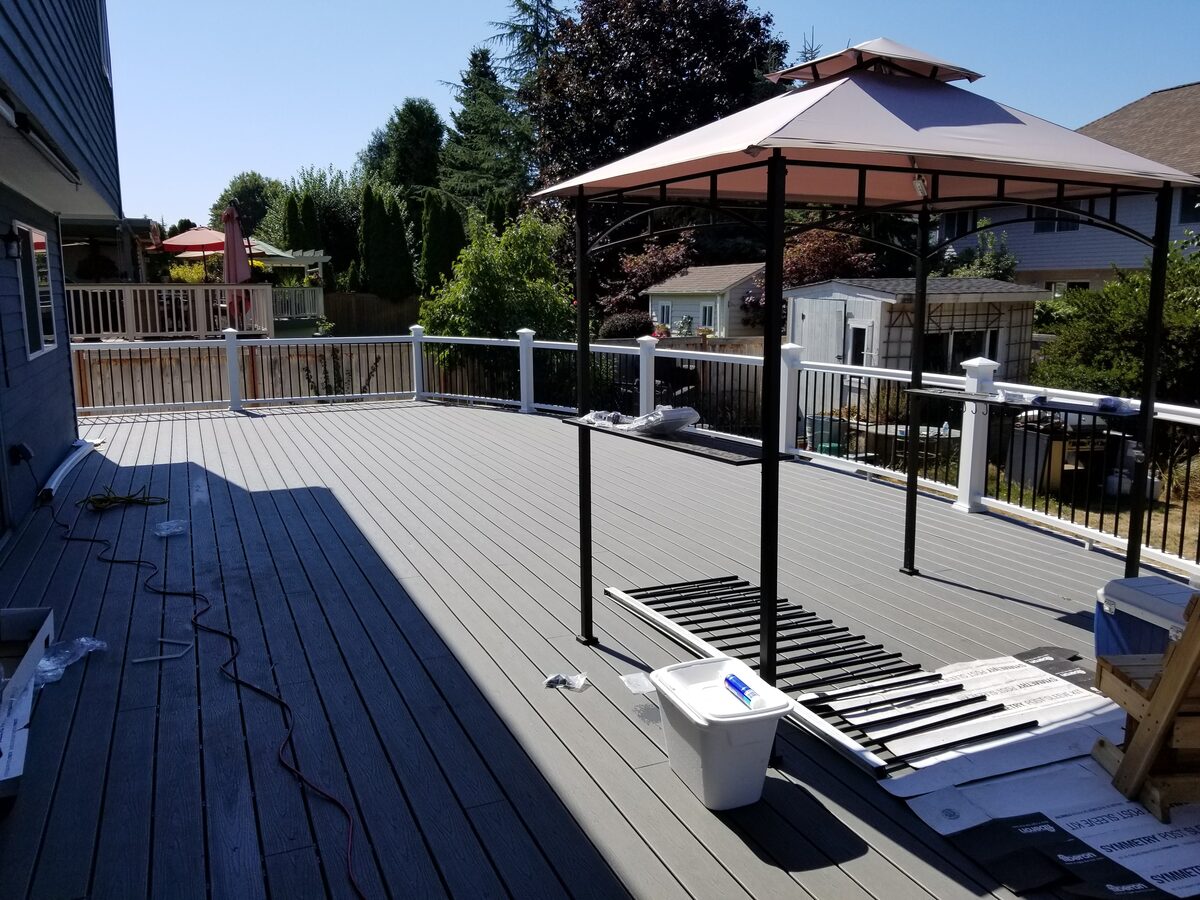
Hiring a deck contractor in Seattle is a bigger financial decision than most homeowners realize. A new composite deck in the Seattle metro area runs anywhere from $18,000 to $55,000 depending on size, materials, and complexity — and that's before you factor in permits, site prep, and any structural repairs to the existing ledger or band joist. In a market where labor costs run 25 to 40 percent above the national average and journeyman carpenter wages hover around $38–$52 per hour, there's real money on the table. And where there's real money, there are contractors willing to take it under false pretenses.
The Pacific Northwest climate adds another layer of risk. Seattle's 38 inches of annual rainfall, persistent overcast winters, and the freeze-thaw cycling that happens in elevated neighborhoods like Magnolia and Beacon Hill means a deck that isn't built to code — with proper flashing, drainage slope, and corrosion-resistant fasteners — will fail years ahead of schedule. A cut-rate contractor who skips permits, uses indoor-grade fasteners, or fails to flash the ledger connection properly can hand you a beautiful-looking deck that's actively rotting from the inside by year three. You won't know until you're standing on a soft board 10 feet above grade.
This guide gives you the seven specific red flags that should stop any Seattle homeowner from signing a contract. These aren't vague cautions about "doing your research." These are concrete, verifiable warning signs — things you can check in 10 minutes on your phone before the contractor even leaves your driveway. We'll also walk through what a legitimate contractor looks like on every single point, so you have a clear baseline for comparison.
Red Flag #1: No Verifiable Washington State Contractor License
This is the single most important check you can make, and it takes less than two minutes. Washington State requires any contractor performing construction work valued at more than $2,000 — labor and materials combined — to be registered with the Washington State Department of Labor and Industries (L&I). That registration isn't just a formality. It requires the contractor to carry a surety bond (minimum $12,000 for general contractors), maintain general liability insurance, and keep a workers' compensation account current.
When you hire an unregistered contractor, you're not just bending a bureaucratic rule. You're personally exposed in multiple ways: if a worker is injured on your property, you could be liable for their medical costs. If the contractor disappears mid-project, you have no bonding to recover against. If the finished deck fails inspection, the remediation costs fall entirely on you.
How to Verify in Under 2 Minutes
Go to secure.lni.wa.gov/verify and enter the contractor's business name or license number. The result will tell you:
- Whether the license is active and current
- Whether their workers' comp account is paid-to-date
- Any safety or construction citations on record
- Any lawsuits filed against their surety bond
- The registered business owner's name
That last point matters more than most homeowners realize. A contractor who gives you a business name that doesn't match their L&I registration is either operating under a different entity (common with contractors who've had complaints against a previous company) or is simply unlicensed. Ask them to show you their registration number before the first site visit is over.
What Legitimate Looks Like
A reputable Seattle deck contractor will hand you their L&I registration number without hesitation — often it's printed on their business card or truck decal. They'll also carry a current certificate of general liability insurance (typically $1 million per occurrence, $2 million aggregate for residential work) and workers' compensation coverage for every employee on-site. Ask for the certificate of insurance directly from their insurer, not a copy the contractor emailed you — certificates can be forged, and you want a live document that names you as the certificate holder.
Important
If a contractor tells you they "work alone" or uses only subcontractors to avoid the workers' comp requirement, that's a separate problem entirely. Washington State law requires subcontractors to hold their own active L&I registration — so even if the primary contractor is registered, every sub on your job needs to be verified independently.
The Bond and What It Actually Protects
Washington State's surety bond requirement for licensed contractors is often misunderstood. The bond is not the same as insurance. It's a financial guarantee — a third-party pledge that if the contractor defaults on a contract, walks off a job, or causes financial harm to a homeowner, there is a pool of funds to compensate the victim. The bond amount for general contractors ($12,000) is modest relative to the cost of a full deck build, which means a bond claim might not fully cover your loss on a large project — but it provides meaningful recourse on smaller disputes and creates a formal accountability mechanism that unregistered contractors simply don't have.
When you verify a contractor on the L&I system, you'll see not only whether their bond is current but also whether any claims have been filed against it in the past. A contractor with multiple bond claims in their history is a pattern you need to understand before signing anything. One claim in a long business history might be a difficult customer or a genuine dispute. Three claims across two years of operation is a pattern of behavior.
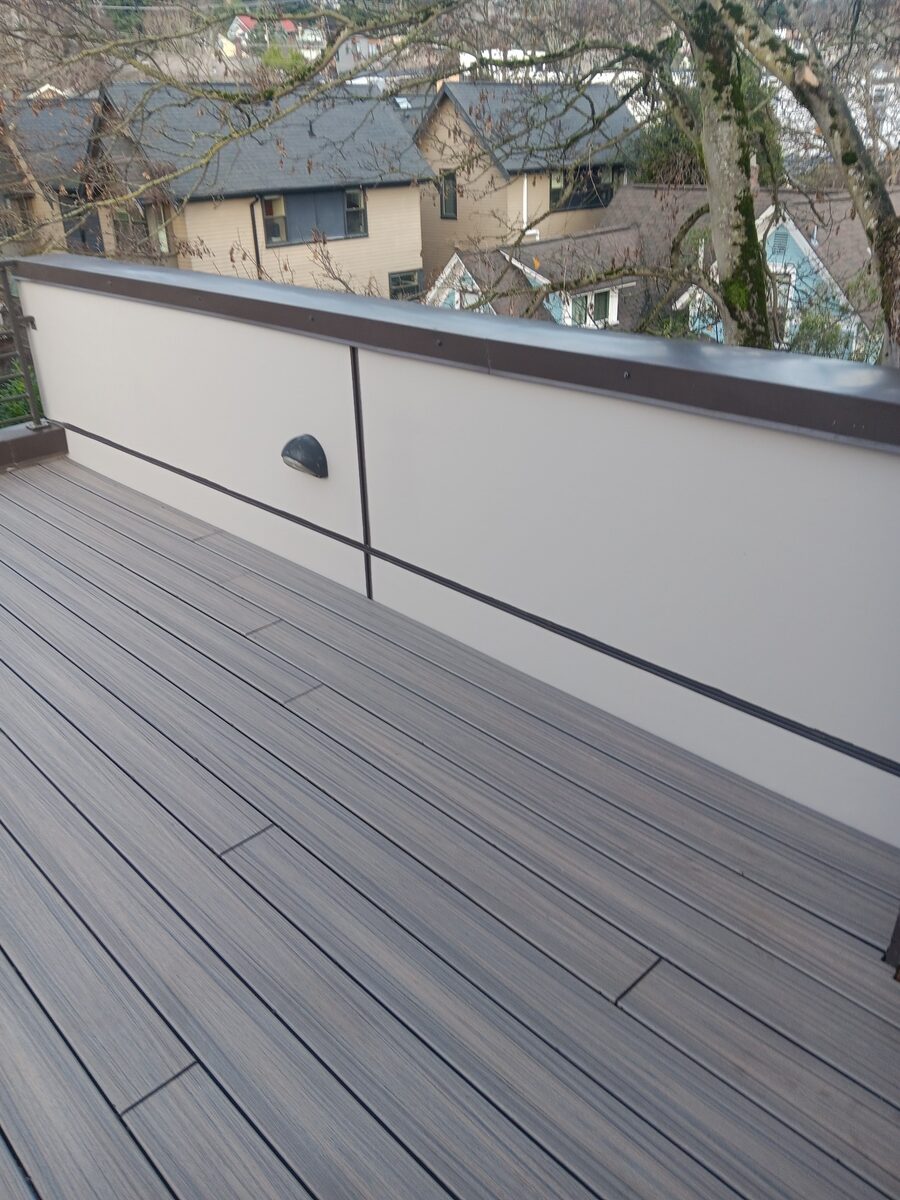
Red Flag #2: No Permit Plan, or Suggesting You Skip Permits
If a Seattle contractor suggests building your deck without a permit to "save money" or "speed things up," walk away. This isn't a risk you should even consider, and any contractor who floats the idea is either ignorant of local code or is banking on your ignorance to cut their own costs.
The Seattle Department of Construction and Inspections (SDCI) requires permits for the vast majority of new decks. Generally speaking, a permit is required for any deck attached to the house, any deck more than 18 inches above grade, any deck over a basement or crawlspace, and any freestanding deck over 200 square feet. Full construction permits (rather than the simpler Subject-to-Field-Inspection permit) are required for decks more than 8 feet above grade, decks with beams 14 feet or longer, roof decks, or any deck in an Environmentally Critical Area — which covers large swaths of Seattle neighborhoods near ravines, steep slopes, and shorelines.
What Happens When You Skip a Permit
The consequences of unpermitted deck construction are severe and long-lasting. If discovered — by a neighbor's complaint, a routine inspection, or a real estate transaction — you'll be required to either pull a permit retroactively (which may require exposing structural members to demonstrate code compliance) or demolish the structure entirely. Retroactive permitting for unpermitted work in Seattle typically costs 50–100% more than pulling the permit upfront, because the inspector has no visibility into what's buried under the decking.
More immediately: your homeowner's insurance may deny a claim for deck-related damage or liability if the structure was built without a permit. If someone falls from an unpermitted deck 10 feet above your Seattle hillside lot, you're not just looking at an insurance denial — you're looking at personal liability exposure in civil court.
For a deep dive on the permit process, our King County deck permit guide walks through exactly what's required for unincorporated King County versus Seattle city limits versus Bellevue and Redmond — the requirements differ more than most homeowners expect.
ECA (Environmentally Critical Area) Complications
One area where permit-skipping has particularly severe consequences is when a property is in or adjacent to an Environmentally Critical Area. Seattle has extensive ECA designations — steep slopes, wetland buffers, shoreline areas, and landslide-prone zones all qualify. An ECA designation doesn't mean you can't build a deck; it means the permit process is more involved, requiring a pre-application site visit and potentially a geotechnical report. A contractor who suggests skipping the permit to "avoid the ECA hassle" is suggesting that you build an unpermitted structure on an environmentally regulated parcel — which can trigger not just building code violations but environmental enforcement action from the Seattle Office of Sustainability and Environment. The consequences compound significantly.
What Legitimate Looks Like
A legitimate contractor in Seattle will discuss permits in the first conversation. They'll tell you what tier of permit your project requires, give you a realistic timeline (SDCI's review time for standard Subject-to-Field-Inspection permits is typically 2–4 weeks; full construction permits can run 6–12 weeks depending on scope), and include permit fees in their estimate. Those fees typically run $500–$1,500 for residential deck projects in Seattle, sometimes higher for complex structures.
Note
The contractor should also be the party pulling the permit, not you. When a contractor asks the homeowner to pull the permit, they're shifting liability — a permit pulled by a homeowner is an "owner-builder" permit that assumes the homeowner is directing the work themselves. It can void certain insurance coverages and creates a paper trail that the contractor is not the licensed professional of record.
Red Flag #3: Demanding 50% or More Upfront
Cash flow is a real challenge for small construction businesses. Legitimate contractors do require deposits — they have to purchase materials, schedule crews, and hold the project slot in their calendar. But there's a meaningful difference between a reasonable deposit and a demand that signals either financial distress or intent to disappear.
The industry standard for residential construction in Washington State runs roughly 10–33% at contract signing, with progress payments tied to specific milestones (completion of framing, completion of decking, completion of railings), and the final payment — typically 10–15% of the total — held until the project passes final inspection. NADRA, the North American Deck and Railing Association, recommends never paying more than 33% upfront for any deck project.
Why Large Upfront Payments Are Dangerous
A contractor who demands 50% or more before breaking ground is almost certainly either (a) financially unable to purchase materials without your cash, which suggests a business that's already in trouble, or (b) running a pattern where they collect deposits from multiple homeowners, delay projects indefinitely, and disappear before completing work.
This is one of the most common contractor fraud patterns in the Pacific Northwest, and it spikes after major storms when homeowners are anxious to get deck repairs done quickly. The WA Attorney General's Consumer Protection Division maintains a contractor-specific resource page and processes thousands of contractor complaints annually — large upfront payment demands are consistently among the top complaint drivers.
What Legitimate Looks Like
A well-structured payment schedule for a $30,000 composite deck in Seattle might look like this:
| Milestone | Payment | % of Total |
|---|---|---|
| Contract signing | $6,000 | 20% |
| Materials delivered to site | $9,000 | 30% |
| Framing complete / inspection passed | $9,000 | 30% |
| Project complete / final walk | $6,000 | 20% |
Every payment should be tied to a verifiable milestone — not a calendar date. Calendar-date payments put all the leverage with the contractor. Milestone payments keep the leverage with you. If a contractor cannot complete the framing, you don't release the framing payment. That's how legitimate payment schedules work.
Key insight
Also verify that the payment schedule is spelled out in the written contract, not just discussed verbally. Washington State's contractor registration law requires written contracts for residential projects over $1,000. If a contractor is resistant to putting payment terms in writing, that resistance itself is a red flag.
Industry-standard milestone payments for a $30,000 composite deck — no single payment should exceed 33% of total project cost
| Category | Value |
|---|---|
| Final walkthrough / inspection passed | 20% |
| Decking + railings complete | 30% |
| Framing complete / inspection | 30% |
| Contract signing (deposit) | 20% |
Red Flag #4: Lump-Sum Quote With No Line Items
A quote that says "$24,500 — new 400 sq ft composite deck" tells you almost nothing about what you're buying. A lump-sum price is not a quote — it's a number that can be inflated when the project starts and cannot be compared meaningfully to any other bid you receive. Legitimate deck contractors in Seattle provide itemized quotes.
What an Itemized Quote Should Include
A professional deck quote should break down costs into at minimum these categories:
Materials:
- Decking boards (species, manufacturer, product line, linear footage)
- Framing lumber (species, grade, quantity)
- Ledger board material and flashing specification
- Hardware (joist hangers, post bases, structural screws — all should be rated for the application and climate)
- Fasteners (hidden or face-mount, stainless or coated)
- Railing system (manufacturer, style, height)
Labor:
- Demo (if applicable)
- Framing
- Decking installation
- Railing installation
- Post-hole excavation or concrete footings
Other:
- Permit fees
- Delivery charges
- Waste disposal
When you receive itemized quotes from multiple contractors, you can make real comparisons. If one contractor is quoting pressure-treated joists and another is quoting cedar, you understand the cost difference. If one contractor's quote includes hidden fasteners and another uses face screws, you can evaluate that trade-off. Without line items, you're comparing apples to unknown objects.
For a detailed breakdown of what to look for in a professional deck quote, our guide to how to read a deck quote walks through every line item and explains what each one means for your project.
The Comparison Problem
Lump-sum quotes are often strategically low — designed to win the bid — with the intent to recover margin through change orders once work begins. A contractor who comes in $4,000 under every other bidder on a lump-sum quote, then issues change orders for "unforeseen site conditions," "upgraded hardware," or "code-required additions" once demo is underway, is running a textbook low-bid / change-order trap. By the time you receive the first change order, your deposit is spent and your yard is torn up.
Tip
Red Flag #5: No Written Warranty
Every major component of a quality Seattle deck comes with manufacturer warranties — Trex offers a 25-year limited residential warranty on their composite decking, TimberTech provides a 30-year fade and stain warranty, and Fiberon covers their composite boards for 25 years against material defects. These are real, transferable warranties that add value to your home. But they only apply if the product is installed correctly according to the manufacturer's specifications.
A contractor warranty is separate from the manufacturer warranty and covers the labor — the actual installation. A contractor who won't provide a written workmanship warranty is either not confident in their work or intending to be unavailable if problems emerge.
Minimum Warranty Expectations in Seattle
In Washington State, there's an implied warranty of workmanship that applies to residential construction even without a written contract — but enforcing it requires litigation, which is expensive and slow. A written warranty eliminates the ambiguity. Here's what to look for:
Workmanship warranty: Minimum 1–2 years for general construction; 3–5 years from quality deck builders who stand behind structural work. This should cover any defects in installation — fastener failures, railing wobble, board cupping caused by improper spacing, flashing failures.
Manufacturer material warranty: This is the composite manufacturer's warranty, but the contractor should explain it to you, provide the warranty documentation, and confirm the installation meets the requirements to honor it. Some manufacturers (Trex, TimberTech) require registered installers for warranty claims — ask your contractor if they're a registered installer for the brand they're proposing.
What the warranty doesn't cover: Normal weathering, surface scratches, and damage from improper maintenance are typically excluded. A reputable contractor will explain these exclusions clearly, not hide them.
Note
Compare materials side by side in our composite vs. cedar decking guide to understand the warranty differences between material types.
Red Flag #6: Cannot Provide Verifiable Local References
Reviews on Google and Yelp are useful background checks, but they're not a substitute for speaking directly with a homeowner who had a comparable project done by this contractor. A contractor who cannot provide two or three local references — people you can actually call — should raise your concern level significantly.
Why "Local" Matters
A deck contractor who did great work in Tacoma five years ago is not the same as a contractor actively working in Seattle neighborhoods today. Local references tell you:
- Whether the contractor consistently pulls permits and passes inspections in your municipality
- How they handle Pacific Northwest-specific issues (drainage, frost, seismic ledger connections)
- Whether the warranty is actually honored — you can ask the reference directly if they've had to call back the contractor for anything
- How their communication is throughout a project
Ask the contractor for references from jobs completed in the last 12–24 months, within a reasonable geographic radius of your project. Seattle and the immediate Eastside (Bellevue, Redmond, Kirkland, Bothell) are fair game. References from out of state or jobs completed more than three years ago are less useful.
What to Ask References
When you call:
- Did the project come in on budget, or were there change orders? If change orders, why?
- Did the contractor pull permits and pass all inspections on the first visit?
- How did they handle problems that came up during construction?
- Is there anything you'd change about the process?
- Would you hire them again?
That last question is the most telling. Satisfied customers who say "yes, I'd hire them again" without hesitation are the strongest possible endorsement. Customers who say "the finished product looks great, but the process was painful" are telling you something important about communication and project management.
Tip
Online Research to Supplement References
Beyond the references the contractor provides, run your own independent research:
- Search the contractor's business name at the L&I contractor tracking system to see any formal complaints
- Check BBB Northwest (bbb.org) for complaint history — even non-accredited businesses appear in the complaint database
- File a consumer complaint record search at atg.wa.gov/consumer-protection if you've already had a negative experience
- Search "[Business Name] + Seattle + complaints" in Google, looking for patterns across multiple review platforms
One or two negative reviews among dozens of positives is expected for any busy contractor. A pattern of complaints about the same issue — payment disputes, unfinished work, warranty refusals — is a disqualifying signal regardless of how polished the sales presentation was.
For more guidance on what questions to ask before signing any contract, see our detailed contractor vetting checklist.
Red Flag #7: Price Significantly Below Every Other Bid
A low bid feels like good news. In residential construction, it's almost always a warning sign. If you've collected three quotes for a 400 square foot composite deck in Seattle and two come in at $42,000–$48,000 while one comes in at $26,000, the low bidder is not finding efficiencies the other two missed. They're either planning to recoup the difference through change orders, cutting corners on materials or structural elements, or using unlicensed subcontract labor.
The Math Behind the Low Bid
Here's how the change-order trap works in practice. A contractor deliberately under-prices the base scope to win the job. Once demo is complete — your old deck is gone, you've paid the deposit, and your backyard is an open pit — they begin issuing change orders:
- "We found rot in the rim joist that wasn't visible until demo — that's an extra $1,800."
- "The soil conditions require deeper footings than we quoted — add $2,400."
- "The composite you selected requires a specific hidden fastener system that wasn't in the original quote — $900 more."
- "King County now requires stainless hardware at all ledger connections — code compliance addition, $1,200."
Each change order sounds plausible in isolation. In aggregate, your $26,000 bid has become a $38,000 project — and it's still not done. This pattern is well-documented in the WA Attorney General's complaint database and is among the most common contractor fraud complaints in the Seattle metro area.
How Far Below Market Is Too Far Below Market?
Current market rates in Seattle for 2025–2026:
| Project Type | Low End | High End | Red Flag Threshold |
|---|---|---|---|
| Pressure-treated wood deck | $50/sq ft | $90/sq ft | Below $35/sq ft |
| Cedar deck | $70/sq ft | $110/sq ft | Below $50/sq ft |
| Entry composite (Trex Select, Fiberon Sanctuary) | $80/sq ft | $120/sq ft | Below $60/sq ft |
| Premium composite (Trex Transcend, TimberTech Pro) | $110/sq ft | $180/sq ft | Below $80/sq ft |
| Multi-level / complex structure | $150/sq ft | $250/sq ft | Below $110/sq ft |
These are all-in numbers including materials, labor, permits, and basic railings. A bid that comes in more than 20–25% below the low end of these ranges is almost certainly missing something — whether that's permits, proper hardware, structural engineering, or the contractor's actual cost of doing business with legally employed, insured workers.
To understand what realistic budgets look like for Seattle deck projects by size and material, see our detailed Seattle deck cost guide.
Key insight
Three More Warning Signs That Didn't Make the Main List
The seven red flags above are the most common and most financially damaging, but three additional warning signs deserve explicit mention:
No Physical Business Address
A legitimate deck contractor in the Seattle metro area has a physical business address — not a P.O. box, not just a website with a contact form. You should be able to look them up on Google Maps, see their registered address in the L&I verify system, and know where to send a certified letter if something goes wrong. Contractors who operate with only a cell phone and a website are nearly impossible to locate after a project goes sideways.
This doesn't mean they need a retail storefront. Most deck builders operate from a shop or yard where they stage materials and store equipment. But that address should be verifiable and consistent across their license registration, insurance certificate, and any written contract.
High-Pressure Sales Tactics
A contractor who needs you to sign today because "prices are going up" or "I have another client ready to take this slot" is manipulating you. Responsible contractors welcome the time it takes for homeowners to gather multiple bids, check references, and review contracts with a family member or advisor. The pressure tactics exist to short-circuit exactly that due diligence process.
Washington State consumer protection law gives residential construction customers a 3-day right of rescission on contracts signed at their home — but this only applies to door-to-door sales situations, not all residential contracts. Don't rely on that as a safety net. Give yourself adequate time to vet any contractor before signing.
Requesting Cash-Only Payment
Cash leaves no paper trail. If a contractor specifically requests cash — especially for the deposit — it's a strong signal they're trying to avoid a record of the transaction, potentially for tax reasons, potentially because they've had disputes with homeowners before and don't want a payment trail that could be used in a complaint process. Pay by check or credit card, always.
WA Consumer Protection Resources: What to Do If You've Already Hired the Wrong Contractor
Sometimes you don't spot the red flags until you're already mid-project. Here's what to do:
Step 1: Document Everything
Before you do anything else, document your current situation. Photograph the work in progress (or lack of it), screenshot all communications, save every text message and email, and compile copies of the contract, all change orders, and every payment receipt. This documentation is the foundation of any formal complaint.
Step 2: File an L&I Complaint
If the contractor is licensed, L&I has enforcement authority. You can file a contractor complaint at lni.wa.gov. L&I can investigate, suspend a license, and require the contractor to make restitution. If the contractor is unlicensed, L&I can investigate and impose penalties — and the surety bond claim process exists specifically to provide homeowner remedies when a licensed contractor defaults.
Step 3: File with the WA AG Consumer Protection Division
The Washington State Attorney General's Consumer Protection Division processes thousands of contractor complaints annually. They won't represent you individually, but a pattern of complaints against a contractor can trigger formal enforcement action, and the informal mediation process has historically recovered millions of dollars for Washington consumers. File at atg.wa.gov/file-complaint.
Step 4: BBB Complaint
Filing a complaint with BBB Northwest creates a public record and often prompts contractor response — businesses value their BBB rating and frequently resolve complaints to avoid a public mark. It won't force resolution, but it's a low-cost step with real leverage for contractors who actively maintain their BBB profile.
Step 5: Small Claims Court
Washington State Small Claims Court handles disputes up to $10,000. For larger amounts, you'll need District or Superior Court. An attorney familiar with Washington construction law is valuable here — many offer free initial consultations, and some work on contingency for residential contractor fraud cases where the contractor is licensed and bonded.
Important
What a Trustworthy Seattle Deck Contractor Actually Looks Like
It's useful to flip the conversation. After seven red flags and several additional cautions, here's the positive picture: what does a legitimate, reliable deck contractor in Seattle look like at every decision point?
At first contact: They respond promptly, schedule a site visit at a time convenient to you, and show up on time. They ask about your permit history, soil conditions, existing deck structure (if demo is involved), and budget before quoting a number. They don't give you a price on the first call.
At the quote: They provide a written, itemized quote within 5–7 business days of the site visit. The quote includes a specific materials list with manufacturer names and product lines, a breakdown of labor phases, permit fees, and a project timeline with start and completion targets. You can compare it directly to other quotes.
At contract signing: The contract includes a clear scope of work, a payment schedule tied to milestones, a warranty clause (both workmanship and manufacturer), a change-order process requiring written approval before any additional cost is incurred, and a clear dispute resolution mechanism. They do not pressure you to sign immediately.
During construction: They pull the permit before breaking ground. They communicate proactively about schedule changes. Their crew shows up as scheduled, works clean, and doesn't leave your yard in a disaster state at the end of each day. The superintendent or lead installer is reachable by phone.
At completion: They walk the project with you before requesting final payment. They provide warranty documentation, manufacturer registration information, and basic maintenance guidance for your specific decking material. They schedule the final inspection with the city or county and are present when the inspector arrives.
After completion: If something goes wrong in the first year — a fastener backs out, a board cups, a railing post loosens — they come back without argument. That's what a warranty means.
For a comprehensive guide to finding contractors who meet this standard in the Seattle area, see our how to find a deck builder in Seattle guide.
Ready to Get a Legitimate Quote? Here's How We Do It at The Seattle Decking Company
At The Seattle Decking Company, we build decks in Seattle, Bellevue, Redmond, Kirkland, Bothell, and surrounding King County communities. Every project we take on is permitted, every crew member is covered under our workers' compensation policy, and every quote we provide is fully itemized — materials, labor, permits, and all.
Our payment schedule is milestone-based. Our workmanship warranty is in writing. We're registered with Washington L&I (you can verify us right now at secure.lni.wa.gov/verify), and we carry $2 million in general liability coverage. We'll give you the certificate of insurance before we ask you to sign anything.
If you've been burned by a contractor before, or if you're simply trying to make sure you don't get burned on a project of this size, we'd welcome the chance to show you what the process looks like when it's done right.
Call us at (425) 675-6259 or visit us at 22722 29th Drive SE, Bothell, WA 98021. You can also request a quote online at our contact page — we typically schedule site visits within 3–5 business days and deliver written, itemized quotes within a week of the visit.
No pressure. No lump sums. No disappearing acts.
Frequently Asked Questions
How do I verify a deck contractor's license in Washington State?
Is a permit required for a deck in Seattle?
What is a reasonable deposit for a deck project in Seattle?
What should an itemized deck quote include?
How low is too low for a deck quote in Seattle?
What warranty should I expect from a Seattle deck contractor?
What should I do if a contractor skips a permit in Seattle?
Can I verify a deck contractor's insurance before hiring them?
What resources does Washington State offer if a contractor defrauds me?
How do I know if a deck contractor's references are real?
Is pressure-treated lumber an acceptable choice for a Seattle deck?
What is the L&I complaint process for a bad deck contractor in Washington?
Planning a deck in the Seattle area?
Get an onsite design review and a clear, itemized quote from a licensed local builder.
Request a Free Quote