If you're researching Fiberon decking for a Seattle-area project, you've already seen the brand's marketing: attractive wood-look aesthetics, eco-conscious manufacturing, and a price point that slots between budget composite and premium AZEK lines. What the marketing doesn't tell you is how Fiberon performs in 37–38 inches of annual rainfall, on fog-drenched mornings in Sammamish, or on the shaded, north-facing lots that account for a significant portion of the Eastside's residential inventory. After 15-plus years of building composite decks across King County — hillside lots in Bellevue, view properties on Mercer Island, suburban backyards in Renton and Bothell — we've built with Fiberon, watched it age through PNW winters, and developed clear opinions about which product lines belong here and which ones don't.
Fiberon's position in the composite decking market has shifted meaningfully in the last five years. When Fortune Brands Innovations — the same parent company as AZEK — acquired Fiberon, the brand gained access to shared R&D resources that pushed its upper-tier products forward in quality, warranty coverage, and manufacturing precision. The Fiberon you spec today is not the Fiberon of 2018. The upper product lines in particular — Concordia composite and the Promenade and Paramount PVC boards — are genuinely competitive with Trex Transcend and TimberTech Legacy at a price point that typically runs 10–20% lower on installed King County projects.
But "competitive" and "right for your project" are different questions. Seattle's climate creates conditions — persistent rain, marine humidity, shaded north-facing lots, moss-spore-dense air, and freeze-thaw cycling from October through March — that filter out underspecified materials fast. This guide walks you through every Fiberon product line, tells you which ones we specify and which ones we don't, and gives you the real cost and performance picture for King County in 2026.
What Is Fiberon Decking and Who Makes It?
Fiberon is an American composite and PVC decking manufacturer founded in 1997. For most of its history the company operated independently, building a reputation for well-priced mid-market composite products. In 2018, Fortune Brands Innovations — the same company that had already acquired the AZEK/TimberTech portfolio — purchased Fiberon.
That acquisition matters for Seattle homeowners because it answers a question we get regularly: "If they're both Fortune Brands, is Fiberon just a cheaper AZEK?" The answer is no — but the ownership relationship has materially benefited Fiberon. Shared manufacturing research, coordinated material science, and access to Fortune Brands' polymer development pipeline have all contributed to improvements in Fiberon's upper-tier products that show up in real-world performance and warranty terms.
The Fortune Brands–Fiberon–AZEK Triangle
When Fortune Brands Innovations consolidated the AZEK and Fiberon portfolios under one roof, the industry expected rapid homogenization — one parent company, two brands that would eventually become interchangeable. That hasn't happened, and understanding why matters for Seattle buyers.
AZEK remains the premium all-PVC line. Fiberon remains the composite-focused brand with PVC options at the top of its lineup. The two product families maintain distinct manufacturing identities, distribution networks, and target price points. What changed: the R&D investment that previously benefited AZEK exclusively now flows to Fiberon's upper tiers as well. The polymer cap formulation on Fiberon Concordia reflects this. The warranty terms — 50 years on stain and fade for Concordia, now matching what Fortune Brands' PVC products have offered for years — reflect it directly.
For Seattle homeowners comparing quotes that include both brands, the key takeaway is that these are not equivalent products at different price points. They are different materials (composite vs. PVC) with different performance characteristics, produced by the same parent company and available from the same installation network. A contractor certified for AZEK is typically certified for Fiberon as well — and should be able to give you an honest comparison rather than pushing you toward a preferred brand.
Fiberon makes two fundamentally different product types:
Capped wood-plastic composite: Ground wood fiber blended with recycled plastic, encased in a polymer shell. The shell quality — specifically whether it wraps two sides or four sides of the board — is the single most important variable in PNW performance.
Cellular PVC: All-plastic boards with zero wood fiber content. These boards are fundamentally impervious to water at the material level. Fiberon's PVC lines are Promenade and Paramount.
The brand's manufacturing emphasis on sustainable materials — including use of recycled wood fiber and plastics — appeals to environmentally conscious Seattle homeowners, and the spec sheet backing that claim is credible. What matters more to us on a King County project is how the material performs in 38 inches of annual rain, and that answer varies significantly by product line.
Fiberon's Product Lines: Which One Belongs on a Seattle Deck?
Not all Fiberon products perform equally in the Pacific Northwest, and in King County's climate — 37–38 inches of rain per year at Sea-Tac, significantly more in the Issaquah foothills and Sammamish Plateau — the difference between product tiers is not cosmetic. It is structural.
Good Life: Skip It for the PNW
Good Life is Fiberon's entry-level composite line. It uses a two-sided cap — polymer shell on the top and bottom of the board only — leaving the board edges exposed. In dry climates like Phoenix or Denver, this is a defensible budget option. In Seattle, it isn't.
Exposed composite edges absorb moisture from the sides. Through King County's wet winters — October through March often brings 25 of those 38 annual inches — water infiltrates the wood-fiber core through the unprotected edges, creating conditions where mold and mildew establish and where board degradation accelerates. Good Life's warranty is shorter than every other Fiberon line, and that is not a coincidence. We do not specify Good Life for any project in this market, and we counsel homeowners against selecting it even when the price point is the driver. The cost savings evaporate quickly if boards degrade or require early replacement.
Contractors who quote "Fiberon composite" without specifying the product line sometimes include Good Life when the budget is tight. If you're getting a composite deck quote that references Fiberon but doesn't name the specific product line, ask directly. If the answer is "Good Life," ask for an upgrade to ArmorGuard minimum before you proceed.
ArmorGuard: Minimum Viable for the PNW
ArmorGuard is Fiberon's entry point into four-sided capping, and that distinction changes the performance profile entirely. A polymer shell wraps all four sides of the board, blocking moisture infiltration into the wood-fiber core regardless of which face contacts rain, dew, or standing water.
Four-sided capping is the baseline we require for any composite deck we build in King County. ArmorGuard meets that standard. It comes in a limited color range — four options compared to Sanctuary's five and Concordia's seven — and sits below the upper-tier lines in finish quality, with a more basic embossed surface texture. But for budget-driven projects where PVC isn't financially feasible and where the goal is a durable, moisture-resistant deck without premium aesthetics, ArmorGuard is a defensible starting point.
ArmorGuard's installed cost in King County runs $32–$44/sqft — the most affordable of Fiberon's warranted PNW-appropriate lines. We specify it most often on utility decks, secondary spaces attached to primary structures, and projects where the finished surface will see heavy foot traffic rather than fine-detail aesthetics.
Sanctuary: The Solid Mid-Range Choice
Sanctuary is where Fiberon becomes genuinely competitive with the middle tier of other composite brands. Four-sided capping, a multi-tonal embossed wood texture with realistic grain depth, five color options spanning the PNW palette from warm teak tones to cooler weathered-gray finishes, and a 40-year stain and fade warranty.
Properly installed Sanctuary holds color and resists moisture through decades of Seattle winters. Its performance record in King County is solid — we've followed up on Sanctuary installs we completed four and five years ago, and the boards present well. Moss growth requires the same annual cleaning you'd do on any composite, but we've seen no moisture-related failures on correct installations.
Compared to Trex Select or Trex Enhance — the analogous price tier from Fiberon's most direct competitor — Sanctuary wins on warranty length and four-sided edge protection while matching them closely on finish quality and color range. Against Trex Transcend, it gives up some depth in color variation and premium finish quality while coming in at a lower installed cost. That trade-off is worth making on larger projects where material cost per square foot has a real impact on total budget.
Sanctuary installed in King County runs $36–$50/sqft. For a 350-square-foot deck — a common size for King County projects — these ranges translate to $12,600–$17,500 in Sanctuary, compared to $15,750–$22,750 for Trex Transcend. A delta that pays for railings or stairs on most projects.
Concordia: Fiberon's Premium Composite
Concordia is Fiberon's flagship composite line and the product we most often specify for clients who want Fiberon's best. It carries a lifetime structural warranty and a 50-year stain and fade warranty — coverage that outpaces Trex Transcend's 25-year fade coverage and matches TimberTech's Legacy line in most warranty terms.
The aesthetics at this tier are genuinely impressive. Concordia's deeply embossed, multi-tonal surface is difficult to distinguish from real hardwood at normal conversational distances. The grain variation is sophisticated enough that it reads as premium in markets where resale expectations are high — Mercer Island, Clyde Hill, Bellevue's Somerset neighborhood — without requiring the maintenance burden that genuine hardwood carries in this climate.
Concordia's seven-color palette covers the full range of Seattle home exterior palettes — cool driftwood grays for modern Eastside builds, warm teak and cedar tones for craftsman homes, and rich brown charcoal tones that complement the dark siding common on newer construction throughout Bellevue, Kirkland, and Sammamish.
We specify Concordia when a client wants composite decking, has the budget for a premium product, and wants the strongest warranty coverage in the composite (non-PVC) category. The 50-year fade warranty is particularly meaningful in Seattle's context: while our lower-angle UV doesn't fade boards as aggressively as Arizona or Florida, a warranty that covers twice as long as Trex Transcend's 25-year coverage has value in a high-resale market.
Concordia installed in King County runs $42–$60/sqft, placing it squarely competitive with Trex Transcend ($45–$65/sqft) and below TimberTech Legacy ($50–$70/sqft) on installed cost.
Tip
Promenade and Paramount: Fiberon's PVC Lines
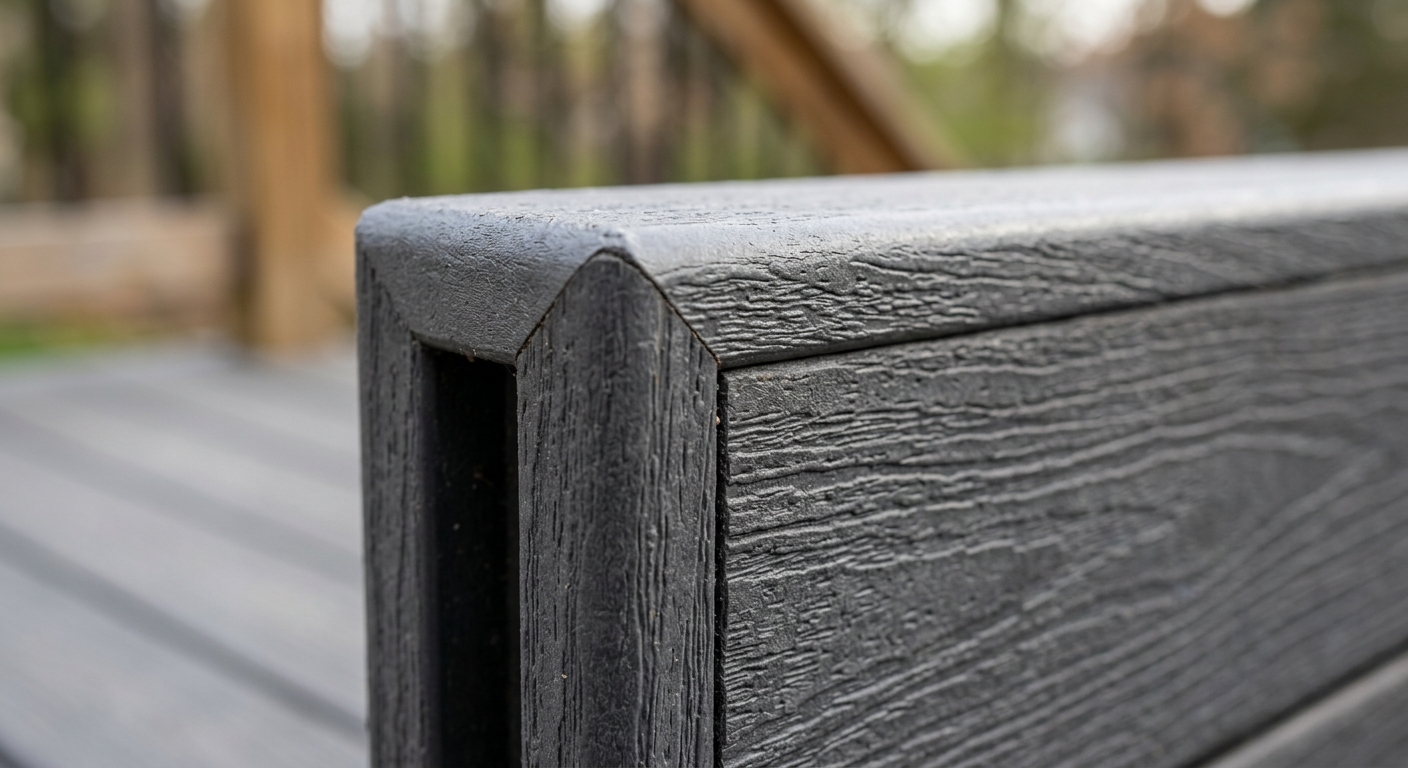
Fiberon's PVC lines — Promenade and Paramount — are all-plastic boards. Zero wood fiber content means zero moisture absorption, zero mold risk from organic substrate, and zero maintenance beyond an annual cleaning with a soft brush and mild soap. Both carry lifetime structural and 50-year stain and fade warranties.
Promenade adds a feature worth noting for specific Seattle-area applications: a Class A fire resistance rating. For properties near the wildland-urban interface zones in the Issaquah Highlands, the Sammamish foothills, or Cougar Mountain-adjacent neighborhoods, that rating can affect insurance requirements, HOA approvals, and in some cases may be required or preferred by your jurisdiction. If you're building in or near a designated WUI zone, fire resistance rating is a question worth raising with your contractor before you finalize the material specification.
Paramount is Fiberon's premium PVC, adding a more sophisticated visual texture and expanded color palette over Promenade. Both boards compete directly with AZEK's TimberTech product lines — and given the shared Fortune Brands parentage, the performance comparisons are close. The primary distinction between Fiberon PVC and AZEK PVC in practice is color palette, specific surface texture preferences, and project-specific availability through distributors. We compare them directly in our Fiberon vs. AZEK guide.
Fiberon PVC installed in King County runs $48–$70/sqft depending on line and project complexity. For applications where moisture performance is the primary specification driver — rooftop decks, decks over living space, waterfront properties, low-slope applications, and heavily shaded north-facing sites — PVC is the correct specification regardless of brand.
Fiberon Installation Best Practices for the Pacific Northwest
Getting the most out of any composite decking product in a wet climate requires correct installation. We've seen good material fail early because of installation shortcuts, and we've seen budget products perform well because the installation details were right. In King County specifically, several practices are non-negotiable.
Board Gap Specifications for PNW Moisture Conditions
Fiberon's installation guides specify minimum gap widths, but those minimums are calculated for the national average — not for a climate with 37+ inches of annual rain and sustained six-month wet seasons. In King County, we install Fiberon composite boards at 3/16-inch gap minimum, with 1/4-inch gap preferred on shaded north-facing exposures or lots with particularly dense tree canopy that slow drying.
The reason: composite boards expand as they absorb ambient humidity. A board installed at 1/8-inch gap in January — Fiberon's stated minimum for cool-weather installation — may be board-to-board contact by September on a lot that doesn't fully dry out between rain cycles. That contact causes surface buckling, squeaking, and accelerated wear at board edges. We've assessed decks installed by other contractors with tight Seattle gaps and found visible surface distortion within two seasons. Gap specification is a technical judgment that should reflect local climate, not just manufacturer minimum tables.
Fastener Specifications: Hidden Fasteners Required
Fiberon boards are available in solid-edge (face-screw compatible) and grooved-edge (hidden fastener) versions. We default to grooved-edge boards with Fiberon's Cortex hidden fastener system on every project. Hidden fasteners deliver three concrete benefits in Seattle's climate:
Cleaner aesthetics: No visible screw heads on the finished deck surface. On a $20,000 deck, the appearance matters.
Improved drainage: Hidden fastener clips create consistent spacing that optimizes airflow and drainage between boards — boards installed with hidden fasteners have better gap consistency than face-screwed boards installed by a crew going quickly.
Elimination of screw head corrosion: Face screws in Seattle's persistent moisture environment will eventually show surface rust, staining the board around the fastener. Stainless-steel face screws reduce this risk but don't eliminate it. Hidden fasteners eliminate the exposed metal at the board surface entirely.
For repairs, grooved-edge boards with hidden fasteners are easier to service — a single board can be removed by disengaging the clips without drilling out fasteners.
End Seal Requirements on Composite Boards
Every time a Fiberon composite board is cut — for length, around posts, at stair nosings — the cut end exposes the wood-fiber core. Those cut ends must be sealed with Fiberon's approved end-sealant before installation. This is both a warranty requirement and a practical moisture-management step in Seattle's climate.
AZEK and other PVC boards don't require end sealing because there's no exposed fiber at the cut. One of the practical installation differences between Fiberon Concordia (composite) and Fiberon PVC (Promenade/Paramount) is this additional step on every cut. Professional installers do it consistently; rushed or less experienced crews skip it. Unsealed cut ends on a composite board in Seattle's wet climate are a slow moisture entry point that degrades the board from the inside out over years.
Ask any contractor quoting Fiberon composite whether they end-seal every cut. The answer should be an immediate yes.
Slope and Drainage Requirements
Every composite deck we build in King County is sloped a minimum of 1/8 inch per foot away from the house. This is a code requirement, not an aesthetic choice — and it is more critical for composite boards than cedar because composite boards channel standing water along their length. Improper slope leads to water pooling in low spots, which accelerates biofilm growth and can compromise fastener integrity over time.
For rooftop decks or any near-flat application, we specify pedestal systems that elevate boards above the membrane surface, creating both slope and airflow beneath the deck field. Fiberon composite is not compatible with truly flat applications — if standing water can pool on the surface, composite boards are not the correct specification.
Ventilation Requirements Below the Deck Frame
Adequate airflow beneath composite decking slows moisture accumulation in the substructure and reduces the gradient that drives moisture into the framing. We build composite deck joists on 16-inch centers maximum, maintain a minimum 18-inch clearance between the deck framing and the ground, and avoid skirting details that block airflow on all four sides without compensating venting.
On hillside lots where the deck skirt runs to grade on three sides — common on Bellevue and Renton hillside properties — we install ventilation panels rather than solid skirting. This matters significantly for the long-term health of the framing in King County's saturated-soil climate, where enclosed under-deck spaces can accumulate moisture that accelerates wood decay even in pressure-treated framing.
Key insight
Rim Board and Fascia Material
The fascia detail — the trim board that wraps the perimeter frame of the deck — is one of the most weather-exposed elements of any composite deck in Seattle. We specify Fiberon's matching fascia product when available, or cellular PVC trim board for perimeter wrapping. Cedar fascia under a Fiberon deck is a common shortcut that we don't take — cedar fascia in persistent contact with rain and splash-back begins to show moisture damage within three to five years on north-facing PNW exposures.
Fiberon offers matching fascia products in coordinated colors for each of the composite product lines. Using the matching Fiberon fascia preserves the color cohesion of the finished deck across the perimeter, where the full face of the fascia board is visible. Substituting a pressure-treated or cedar fascia and painting it to match is a visible quality compromise that shows up in year two when the wood fascia begins to weather at a different rate than the composite.
How Fiberon Actually Performs in Seattle Rain: 15 Years of Follow-Up
Marketing claims are easy to make. What we know comes from follow-up visits to Fiberon decks we installed across King County over the past 15 years.
Four-sided capped Fiberon (Sanctuary, Concordia, Promenade, Paramount) performs well in Seattle conditions. On decks with correct slope for drainage (1/8 inch per foot minimum), appropriate fastener spacing for airflow beneath boards, and properly detailed fascia and flashing at the house connection, we have not observed moisture-related failures in the board material itself. The cap layer does exactly what it claims in PNW conditions.
Moss and algae growth is the most common follow-up item we address — and this is not specific to Fiberon. Any horizontal surface in the Pacific Northwest accumulates airborne moss spores. The meaningful difference is that capped composite boards clean up with a deck brush and a mild dish-soap solution, while cedar boards require more aggressive treatment (pressure washing, borate applications, resealing) to prevent moss from bonding to the open grain. Composite maintenance in Seattle is one annual cleaning cycle; cedar maintenance is an ongoing seasonal commitment. Our advice: clean composite decks in April after winter moss growth, before peak outdoor use season.
First-year color weathering is worth discussing at consultation, particularly on lighter palette choices. Gray and warm beige composite boards can show slightly uneven coloration during the first weathering season before exposure stabilizes the color tone across the full deck surface. This is not a product defect — it is how composite boards equalize UV exposure — but it surprises homeowners who didn't expect it. We set this expectation explicitly on every Fiberon project. By the end of year one, the color has normalized and will hold well for years.
Rooftop and standing-water applications: Fiberon composite is not designed for sustained water contact. If your project involves a rooftop deck, a deck over living space with limited drainage slope, or any site with pooling risk, we specify PVC rather than composite — Fiberon Promenade, AZEK, or TimberTech Edge depending on the project requirements. Our membrane decking guide covers these applications in detail.
Temperature performance: Seattle summers are mild, but composite boards in direct sun still get warm. Darker Fiberon Concordia colors — the rich brown and charcoal tones — will run 15–25°F above air temperature in direct August sun. For families with young children or households with elderly members, we often recommend lighter palette choices or shaded deck orientations. The PVC lines run cooler than composite by construction.
Note
Project Examples: Fiberon in Seattle Neighborhoods
The best measure of a material's fit for a market is how it performs on actual installed projects. Here are representative examples from King County projects where we've specified Fiberon products.
Bellevue Hillside — Fiberon Concordia, Antique Leather
A 420-square-foot elevated deck on a west-facing hillside lot in Bellevue's Somerset neighborhood, approximately 12 feet above grade at the lowest point. The site gets good afternoon sun exposure from April through September. We specified Fiberon Concordia in Antique Leather — a warm brown tone that matched the cedar shake siding on the existing home. Hidden Cortex fasteners, cable railing system with stainless cable for the view-facing elevation, and composite fascia throughout.
Three years in: the boards look nearly identical to installation day. No staining, no moss accumulation that didn't clean off with the first spring soft-wash, no fastener corrosion. The client called to ask whether they needed to "do anything" for maintenance. The answer was no — beyond the annual cleaning they were already doing, the deck requires nothing.
Renton — Fiberon Sanctuary, Weathered Teak
A 280-square-foot replacement deck on a flat South Renton lot, replacing a cedar deck that had developed significant rot at the ledger connection and joist ends after 14 years. Budget-conscious client who wanted durable composite without paying Concordia pricing. We specified Fiberon Sanctuary in Weathered Teak with grooved-edge boards and hidden fasteners. New composite fascia replaced the deteriorated cedar original.
The project cost $11,200 installed — about $4,800 less than it would have run in Concordia for the same footprint. The site gets reasonable sun, the drainage is good, and Sanctuary's four-sided cap performs appropriately. Two seasons in, the deck is performing correctly and the client has zero complaints.
Sammamish Plateau — Fiberon Promenade PVC, North-Facing Shaded Lot
A 360-square-foot deck on a heavily shaded north-facing lot in Sammamish — one of the most challenging microclimate conditions for composite materials in King County. Dense Douglas fir canopy to the east and north means this deck receives maybe three hours of direct sun on summer days and virtually none from October through March.
For this project, we specified Fiberon Promenade PVC rather than Concordia composite. The sustained shade and minimal drying time in the PNW wet season created conditions where even a properly installed four-sided capped composite would face heightened mold risk on the board surface. PVC's zero-organic-content construction eliminates that variable. The Class A fire resistance rating on Promenade was also a secondary consideration — the property is in a zone with WUI adjacency.
Four seasons in: no moss, no surface staining, no issues. The PVC premium was worth it for this specific site.
How to Verify You're Getting Authentic Fiberon — Not a Knockoff
In King County's active construction market, we occasionally encounter contractors who quote "Fiberon-style composite" or reference Fiberon pricing while sourcing generic composite from overseas distributors. The risk is real: generic composite products without proper four-sided capping or verified UV inhibitor formulations will fail in Seattle's climate, and there's no manufacturer warranty backing them.
Request the specific product documentation. Any legitimate Fiberon installation should include a copy of the manufacturer's product data sheet, the warranty document, and the purchase receipt from an authorized Fiberon distributor. Fiberon materials come in labeled packaging; ask to see a sample board from the actual shipment that will be used on your project, not a showroom display sample.
Verify through Fiberon's dealer network. Fiberon maintains a dealer locator on their website that lists authorized distributors in the King County area. Your contractor should be sourcing Fiberon through one of these channels. If they can't confirm the distributor or if the pricing seems unusually below market for a specific product line, ask for clarification.
Check the manufacturer's warranty registration. After installation, Fiberon products should be warranty-registered through the manufacturer. Legitimate installations produce a warranty registration document with a specific product line, serial/lot number, and installation address. If the contractor can't produce this documentation after completion, follow up directly with Fiberon.
Where to Buy Fiberon in King County
For homeowners who want to source samples or verify pricing before signing with a contractor, Fiberon products are available through several King County channels:
Building supply distributors: Fiberon is distributed through regional building supply networks serving professional contractors in King County. Prices through these channels are typically lower than retail and reflect contractor purchasing volumes. If your contractor is a volume Fiberon buyer, their distributor pricing passes through to your project.
National retailers: Home Depot carries select Fiberon product lines, primarily Good Life and ArmorGuard, in limited color selections. For upper-tier lines (Sanctuary, Concordia, Promenade, Paramount), the selection at retail is limited; contractor-grade purchasing is typically the path to the full palette.
Specialty decking showrooms: Some King County building supply showrooms carry Fiberon samples alongside Trex, TimberTech, and AZEK for side-by-side comparison. We recommend viewing samples in outdoor light, not under showroom lighting, to get an accurate sense of how the color reads in Seattle's predominantly overcast ambient light.
Fiberon vs. Trex vs. TimberTech: A Seattle-Specific Comparison
The composite decking market in King County comes down to three primary brands for most projects. Here is how they compare on the specifications that matter in PNW conditions.
| Feature | Fiberon Concordia | Trex Transcend | TimberTech Legacy |
|---|---|---|---|
| Material type | Capped composite | Capped composite | Capped composite |
| Wood fiber core | Yes (4-sided cap) | Yes (4-sided cap) | Yes (4-sided cap) |
| Structural warranty | Lifetime | 25 years | Lifetime |
| Stain and fade warranty | 50 years | 25 years | 30 years |
| PNW moisture resistance | Strong | Strong | Strong |
| Installed cost — Seattle | $42–$60/sqft | $45–$65/sqft | $50–$70/sqft |
| PVC option available | Yes (Promenade/Paramount) | No | Yes (AZEK) |
| Color range | 7 colors | 16 colors | 13 colors |
| NADRA-recognized brand | Yes | Yes | Yes |
| Parent company | Fortune Brands | Trex Company | Fortune Brands |
Installed cost ranges reflect King County labor and material costs as of 2026. Railings, stairs, demo of an existing deck, and permit fees ($300–$650 in most King County jurisdictions) are not included. See our Seattle deck cost guide for full project cost breakdowns.
The warranty differential between Fiberon Concordia and Trex Transcend is the comparison that matters most in high-resale King County markets. A 50-year fade warranty versus 25 years isn't just a number — in a market where a $45,000 deck is one of the largest discretionary investments a homeowner will make, the warranty transferability at resale is a genuine financial consideration. Trex Transcend's warranty coverage does not match Concordia's at the price where they compete.
For the Trex vs. Fiberon vs. TimberTech comparison across all product tiers, see our comprehensive brand comparison guide.
| Category | Value |
|---|---|
| Fiberon ArmorGuard | $/sqft38 |
| Fiberon Sanctuary | $/sqft43 |
| Fiberon Concordia | $/sqft51 |
| Trex Select | $/sqft36 |
| Trex Transcend | $/sqft55 |
| TimberTech Legacy | $/sqft60 |
| Fiberon Promenade PVC | $/sqft59 |
| AZEK PVC | $/sqft62 |
Fiberon Decking Cost in Seattle: 2026 Installed Ranges
In King County, Fiberon decking installed typically runs within these ranges as of 2026. These figures include materials and labor but exclude permit fees, structural engineering (required on elevated or hillside projects), demolition of an existing deck, and railing systems.
- ArmorGuard: $32–$44/sqft installed
- Sanctuary: $36–$50/sqft installed
- Concordia: $42–$60/sqft installed
- Promenade (PVC): $48–$68/sqft installed
- Paramount (PVC): $52–$72/sqft installed
On a 350-square-foot deck — a common size for King County projects — these ranges translate to:
| Product | Low Estimate | High Estimate |
|---|---|---|
| ArmorGuard | $11,200 | $15,400 |
| Sanctuary | $12,600 | $17,500 |
| Concordia | $14,700 | $21,000 |
| Promenade PVC | $16,800 | $23,800 |
| Paramount PVC | $18,200 | $25,200 |
These figures do not include railings, which in King County run $120–$185/LF for cable systems, $150–$300/LF for glass systems, and $45–$90/LF for composite balusters. See our full deck railing options guide and deck cost guide for complete project pricing.
Important
King County labor rates run 15–25% above national averages, driven by the regional cost of living, prevailing wage norms, and the logistics of working on the hillside lots and tight urban lots that characterize Seattle's residential market. The installed cost ranges above reflect this premium. Material-only cost for Fiberon boards runs $8–$18/sqft depending on product line and distributor pricing — the remainder is Seattle-market labor.
Long-Term Maintenance Comparison: Fiberon vs. Trex vs. Cedar Over 20 Years
One of the most useful frames for comparing composite decking options isn't the upfront cost — it's the total cost of ownership over the realistic life of the deck. Here's how Fiberon Concordia compares to Trex Transcend and Western Red Cedar over a 20-year period on a typical 350-square-foot King County deck:
| Cost Item | Fiberon Concordia | Trex Transcend | Western Red Cedar |
|---|---|---|---|
| Initial installed cost | $17,850 | $19,250 | $12,250 |
| Annual cleaning supplies | $25/yr × 20 = $500 | $25/yr × 20 = $500 | $150/yr × 20 = $3,000 |
| Sealing/staining (cedar) | N/A | N/A | $800 × 8 = $6,400 |
| Board replacement (10-15 yr) | Unlikely | Unlikely | $2,000–$5,000 |
| Structural recheck (15-yr) | $350 | $350 | $500 |
| 20-year total | ~$18,700 | ~$20,100 | ~$24,150–$27,150 |
Note: Cedar costs assume diligent maintenance every 2–3 years and one partial board replacement. Deferred cedar maintenance accelerates degradation and pushes 20-year costs higher.
The comparison changes the frame from "composite costs more upfront" to "composite costs less over the ownership period." On a property you expect to own for 15–20 years, Fiberon Concordia at its installed cost delivers better total economics than cedar — not just less maintenance hassle, but lower total cost.
When to Specify Fiberon: Our Recommendation Framework
After 15 years of building with composite decking across King County, here is how we think about specifying Fiberon vs. the alternatives:
Specify Fiberon Concordia when:
- The client wants premium composite at a price point below Trex Transcend or TimberTech Legacy
- Warranty coverage (50-year fade, lifetime structural) is a priority
- Project is on Eastside where Fiberon has strong distributor availability and installer familiarity
- Resale timeline is 10+ years and warranty transferability matters
Specify Fiberon Promenade/Paramount PVC when:
- Site has sustained moisture exposure: waterfront, rooftop, north-facing, heavily shaded
- Client wants zero-maintenance beyond annual cleaning
- Fire resistance rating is a specification requirement (Promenade)
- Budget supports PVC but not AZEK's premium pricing
Specify Trex Transcend instead of Concordia when:
- Client has specific color or texture preferences that only Trex's broader palette addresses
- Long-standing familiarity with Trex brand is a client preference
- Project is in a Trex Certified Installer territory where labor warranty coverage adds value
Specify TimberTech Legacy instead of Concordia when:
- Premium color and texture variety is the priority
- Project complexity (curves, picture-frame inlays, multi-level) benefits from TimberTech's broader profile options
- Budget supports the 10–20% premium over Concordia
For the complete comparison across all three brands at every price tier, see our Trex vs. Fiberon vs. TimberTech Seattle guide.
Fiberon and the PNW: What Homeowners Ask Most
Frequently Asked Questions
Is Fiberon decking good for Seattle's rainy climate?
How does Fiberon compare to Trex in Seattle?
What does Fiberon decking cost in Seattle?
Does Fiberon grow moss in Seattle?
Is Fiberon better than cedar in Seattle?
What is Fiberon's warranty and does it cover Seattle rain damage?
Should I choose Fiberon composite or Fiberon PVC for a Seattle deck?
Can I install Fiberon decking myself?
How long does Fiberon decking last in Seattle?
Does Fiberon need to be sealed or stained?
Is Fiberon available from Seattle-area suppliers?
What's the difference between Fiberon and AZEK?
The Seattle Decking Company's Fiberon Assessment
Fiberon has earned its place in our rotation of specified composite decking products for King County projects. The upper-tier lines — Sanctuary, Concordia, and the PVC boards — deliver genuine value in Seattle's climate: moisture resistance that works in practice, warranty coverage that holds up on paper, and installed costs that make Fiberon competitive with Trex Transcend and TimberTech Legacy at every price tier.
We specify Concordia regularly on Eastside projects where clients want premium composite performance without paying TimberTech Legacy pricing. We specify Promenade on rooftop decks and waterfront properties where the material composition matters more than cost delta. And we steer every client away from Good Life regardless of budget pressure — the two-sided cap is simply the wrong specification for King County conditions.
Our broader guidance: composite decking of any brand is a better long-term choice than cedar for the majority of Seattle homeowners. The maintenance delta — one annual cleaning for composite versus 18-month sealing cycles and periodic moss treatment for cedar — closes the upfront cost gap within the first decade of ownership. Within the composite category, the product line selection matters more than the brand selection: four-sided capping is the threshold, and premium warranty coverage delivers real value in King County's active resale market.
If you're weighing Fiberon for a Seattle-area deck, the first step is a site visit. Shaded hillside lots, north-facing exposures, and elevated properties near the wildland-urban interface all affect the specification. We'll assess your site, discuss your budget, and recommend the product that will perform correctly for the next several decades — whether that's Fiberon, Trex, TimberTech, or something else entirely.
For permit requirements specific to your jurisdiction, see SDCI's deck permit page for Seattle addresses or King County's permit portal for Eastside and unincorporated King County. We manage every permit application, plan review, and inspection as a standard part of every project we build.
Call us at (425) 675-6259 or visit our contact page to schedule a free consultation. We build in every King County jurisdiction and have the permit history across Bellevue, Sammamish, Renton, Kirkland, Mercer Island, and Seattle proper to navigate whatever your site requires.
Planning a deck in the Seattle area?
Get an onsite design review and a clear, itemized quote from a licensed local builder.
Request a Free Quote