
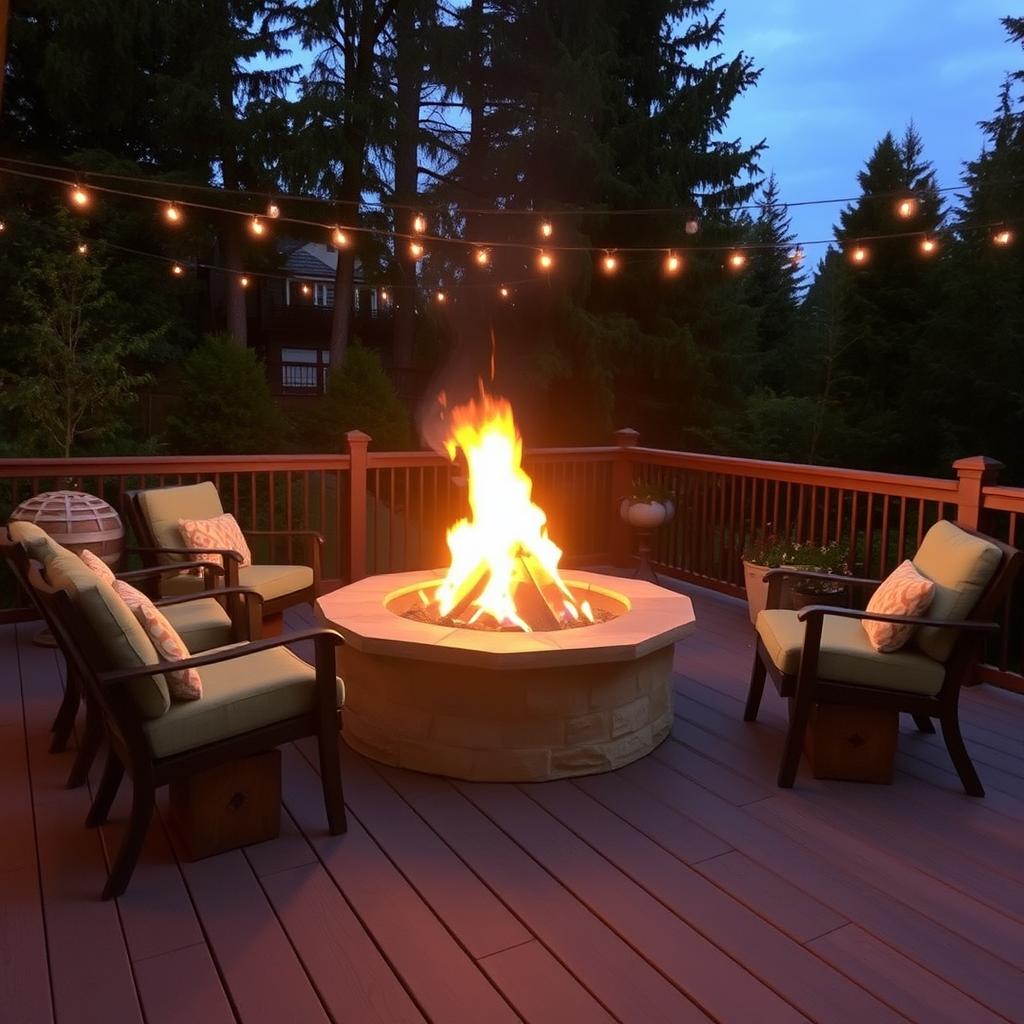
If you've spent a wet Seattle autumn watching rain streak down your back windows, the appeal of a fire pit on your deck is obvious. A flame feature transforms a damp Pacific Northwest evening into something worth staying out for — and with gas fire pits now available in everything from sleek low-profile tables to dramatic built-in installations, more Northgate, Bellevue, and Bothell homeowners are asking how to make it happen safely.
The short answer: it's absolutely doable, but Seattle and King County have specific rules that govern what type of fire pit you can use, where you can place it, and what permits you need. Skip the research, and you risk voiding your homeowner's insurance, damaging composite decking that costs $50 or more per square foot installed, or failing an inspection that holds up your project. Get it right, and you have a feature that extends your outdoor season by three or four months and — according to NAR's remodeling impact data — returns strong value when you sell.
This guide covers every practical decision: gas versus wood burning, King County and Seattle fire codes, how to protect composite decking from heat damage, what built-in versus freestanding fire features cost, and what permits you'll need for gas line installation. We build decks with fire features regularly across King and Snohomish counties, and this is exactly how we walk our own clients through the process.
Gas vs. Wood-Burning Fire Pits: What Seattle's Rules Actually Say
The first question most homeowners ask is whether they can use a wood-burning fire pit on their deck. The honest answer for most of greater Seattle is no — and the reasons are layered across multiple overlapping authorities.
King County's Recreational Fire Rules
King County's outdoor burning regulations, administered in concert with the Puget Sound Clean Air Agency, draw a distinction between "recreational fires" and fixed gas appliances. A recreational fire — meaning a wood-burning campfire or fire pit — must be at least 25 feet from any structure, must be built in a metal or concrete container, must not exceed three feet in diameter, and must maintain 20 feet of overhead clearance from any branches or overhangs.
Run that math against a typical Seattle deck: most decks are attached to the house, which immediately violates the 25-foot setback from a structure. Even a freestanding deck rarely provides the 25 feet needed to place a wood fire at a safe distance while keeping it on the deck surface. King County's fire safety and building codes page makes clear that these requirements are enforced by local fire districts, and burn bans — which occur regularly in King County during dry stretches — prohibit even permitted recreational fires.
Seattle Fire Department's Stance
Inside Seattle city limits, the Seattle Fire Department's CAM 5022 guidance on recreational fires confirms that recreational fires are generally prohibited within city limits except at designated locations. The 2021 Seattle Fire Code (Chapter 3) requires permits for open flame devices and specifies clearances from combustible materials. A wood-burning fire pit on a cedar or composite deck fails these requirements on multiple counts.
Gas Fire Features Are the Exception
Gas fire pits — whether natural gas or propane — are treated as fixed appliances rather than recreational fires, which puts them in a different regulatory category. They don't produce sparks, they're controllable, and when properly installed with a gas shutoff and appropriate clearances, they satisfy both fire and building code requirements. This is why every fire feature we install on Seattle-area decks is gas-fueled.
Key insight
Burn Ban Considerations
Even if you wanted a wood fire, King County's burn ban system activates quickly during summer dry spells. Stage 1 bans prohibit recreational fires for non-essential burning; Stage 2 bans shut down even permitted fires. In 2023 and 2024, King County issued multiple ban periods running weeks at a time. A gas fire feature works year-round regardless of burn ban status — because it doesn't produce smoke, ash, or embers.
King County Fire Code Requirements for Gas Fire Features on Decks
Understanding what's required before you buy a fire table or start planning a built-in installation saves you from costly surprises. Here's what the code framework looks like at the local level.
The Permit Question
In Seattle, gas line work requires a permit from SDCI (Seattle's Department of Construction and Inspections). Running a new gas line to a deck — whether for a fire table connection or a permanently plumbed built-in fire pit — requires a mechanical or gas piping permit. The work must be done by a licensed plumber or gas fitter, and it must be inspected. This is non-negotiable regardless of project size.
For unincorporated King County, the same requirement applies through King County's permitting authority. You can check your specific jurisdiction at King County's building and fire codes portal.
For more detail on Seattle's overall permit process, our guide to deck permits in King County covers the layered approval system.
Clearances Required by Code
Gas fire features on decks must maintain specific clearances. These are drawn from the 2021 Seattle Fire Code and manufacturer specifications, which are incorporated by reference:
- Minimum 10 feet from combustible structures (walls, overhangs, pergola beams) on all sides
- Minimum 3 feet clearance on all sides of the fire feature at deck surface level
- Overhead clearance: manufacturer specs typically require 6–10 feet of clear vertical space above the burner
- Gas shutoff valve must be accessible within 6 feet of the appliance — most fire tables have a built-in shutoff, but built-in installations need a clearly marked manual shutoff
Note
Emergency Shutoff Requirements
The Seattle Fire Code and manufacturer guidelines both require that gas fire features have an accessible emergency shutoff. For a portable fire table connected via flex hose to a propane tank, the tank valve serves this purpose. For a natural gas line installation, a dedicated manual shutoff valve must be installed at the appliance — separate from the main gas shutoff for the house.
Built-in fire pit installations that are permanently plumbed typically require both a local shutoff at the feature and an upstream shutoff accessible from inside or immediately outside the structure. Your gas plumber should handle this as part of the permit scope.
HOA Restrictions
If your home is in an HOA-governed community — common across Bothell, Kirkland, Sammamish, and Issaquah — you'll need to clear the fire feature with your HOA before purchasing anything. Many HOAs have rules about open flames on decks that go beyond code minimums. Some prohibit propane tanks on decks entirely (requiring natural gas only). Some require submitted drawings before approval.
Our article on HOA deck approval in King County walks through how to navigate that process, but the short version is: get HOA approval in writing before ordering equipment or pulling permits.
Protecting Composite Decking from Heat Damage
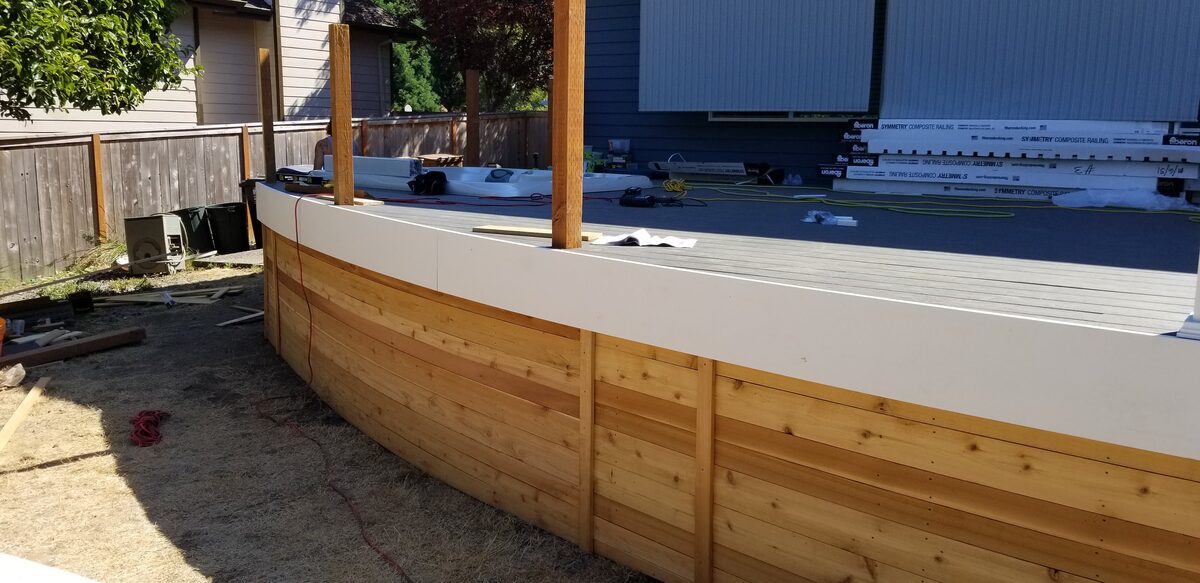
This is where we spend the most time educating clients, because the stakes are high. Composite decking — Trex, TimberTech, Fiberon — is the dominant material on new Seattle decks, and it performs beautifully in every way except direct heat exposure.
Why Composite Is Vulnerable
Composite decking is manufactured from a blend of wood fiber and polymer (typically polyethylene or PVC). That polymer component is what makes composite resistant to rot, mold, and moisture — all critical properties in the Pacific Northwest's wet climate. But polymer is sensitive to heat in a way that wood is not.
Trex's own specifications indicate that their composite products carry a Class A fire rating for surface flame spread, meaning they resist catching fire from external sources. However, Class A flame spread is not the same as heat resistance. Composite can begin to soften and deform at temperatures as low as 150–176°F, well below the 200–400°F of radiant heat that a gas fire pit can generate at deck level without a heat shield.
The practical result: without a heat barrier, a gas fire table sitting directly on Trex or TimberTech decking will eventually cause the boards to dimple, warp, or discolor — damage that's expensive to repair and typically not covered under manufacturer warranties when caused by a heat source.
Aluminum Heat Shields: The Standard Solution
The industry-standard solution for protecting composite decking under a gas fire table is an aluminum heat shield or deck protector. Products like DeckProtect create an air gap between the fire feature's base and the decking surface, dissipating radiant heat before it reaches the composite boards.
Key specs to look for in a heat shield:
- Solid aluminum construction (not coated steel, which can rust in Seattle's wet climate)
- Minimum 1-inch air gap between shield and decking surface
- Sized at least 6 inches larger than the fire feature's footprint on all sides
For built-in fire pit installations, the approach is different: the composite decking is typically cut away and replaced with non-combustible material — stone, tile, or concrete pavers — in the immediate surround of the fire feature. This is structurally cleaner and eliminates heat damage risk entirely.
Tip
PVC Decking and Heat
PVC decking — like AZEK or TimberTech's PVC line — is pure polymer with no wood fiber content. It's even more susceptible to heat deformation than wood-composite hybrid products. PVC decking should always use a heat shield under a fire feature, and built-in installations should always cut out the PVC and replace with stone or tile in the fire surround.
Our guide to PVC decking covers performance characteristics in detail, but the fire-sensitivity question is the most significant drawback of PVC as a material for decks that include fire features.
Cedar and Wood Decking
Cedar is actually more forgiving than composite in terms of heat tolerance — it won't soften or deform from radiant heat the way composite does. However, cedar is combustible, and placing a fire feature directly on cedar creates ignition risk if an ember escapes or the feature malfunctions.
The standard for cedar decks is to install a non-combustible pad — stone pavers, brick, or tile set over a concrete backer — under any gas fire feature. This serves both the heat protection function and the fire safety function simultaneously.
For a comparison of how cedar and composite handle the full range of PNW conditions, see our composite vs. cedar decking comparison.
Fire Table vs. Fire Bowl vs. Built-In Fire Pit: Which Is Right for Your Deck
These three categories cover most of what homeowners are choosing, and the right answer depends on your budget, your deck layout, and how central the fire feature is to your overall outdoor living design.
Fire Tables
A gas fire table is the most popular choice for Seattle-area decks, and for good reason. They're freestanding, available in a huge range of styles and sizes, and can be connected to either propane (via an onboard tank) or natural gas (via a permanent line). Prices range from about $800 for entry-level models to $5,000 or more for commercial-grade tables in premium finishes.
The appeal: you get a dual-function piece — seating/serving surface plus fire feature — that doesn't require any structural modification to your deck. The limitation: even high-end fire tables tend to have lower BTU output (30,000–60,000 BTU is typical) than built-in installations, and the look is necessarily that of furniture rather than a permanent architectural element.
For Seattle's climate, look for fire tables with weather-resistant ignition systems. Moisture is the enemy of piezo igniters, and a fire table that won't light on a rainy evening defeats the purpose.
Fire Bowls
A fire bowl is a bowl-shaped container — often stone, concrete, or metal — mounted on a pedestal, with a gas burner in the center. They're dramatically striking and available in a wide size range. Typical cost is $600–$3,000 for the unit itself.
The tradeoff compared to fire tables: a fire bowl doesn't provide a surface, so you're adding furniture separately. And the open bowl design tends to distribute heat more laterally, which requires more careful placement relative to adjacent seating and deck materials.
Built-In Fire Pit Installations
A built-in fire pit is a permanent, structural fire feature constructed as part of the deck itself. This typically involves a framed fire pit surround — built from concrete block, stone veneer, or tile — with a gas burner insert at the center. The surrounding area is finished in non-combustible material, and the gas line is permanently plumbed.
Built-in installations on Seattle decks range from $3,000 to $10,000+ depending on size, materials, and complexity. The gas line component ($500–$1,500) is separate. This is the choice for homeowners who want a fully integrated outdoor living space — the fire feature becomes an architectural anchor, not a piece of furniture.
Key insight
Installed cost ranges including heat protection and basic gas connection. Built-in costs include gas line rough-in.
| Category | Value |
|---|---|
| Entry Fire Table (propane) | $1,200 |
| Mid-Range Fire Table (natural gas) | $2,800 |
| Premium Fire Table | $5,000 |
| Fire Bowl (gas) | $2,000 |
| Built-In Fire Pit (basic) | $4,500 |
| Built-In Fire Pit (premium) | $9,500 |
Propane vs. Natural Gas: What Makes Sense for Seattle Decks
Both fuel types can power a deck fire feature effectively, but the choice has real implications for convenience, cost, and code compliance.
Propane: Lower Upfront, More Hassle
A propane-fueled fire table runs from a standard 20-lb tank (the same size as a BBQ grill tank), which typically provides 4–8 hours of burn time at moderate flame settings. Advantages: no installation required, fully portable, no gas line permit needed. The tank sits in a cabinet built into most fire tables and is easy to swap.
The downside in Seattle: propane is more expensive per BTU than natural gas, and you're managing tank refills. If you're running your fire feature frequently during the October–March shoulder season (when outdoor fires are most appealing in the PNW), you'll be refilling or swapping tanks regularly. Some HOAs prohibit storing propane tanks on decks, which eliminates this option entirely if that rule applies to you.
Natural Gas: Higher Upfront, Better Long-Term Experience
A natural gas connection eliminates the tank entirely. Your fire feature lights with the turn of a knob and burns as long as you want with no interruption. Natural gas in Seattle-area Puget Sound Energy territory currently runs about $1.50–$1.80 per therm, substantially cheaper per BTU than propane.
The upfront cost: running a new gas line from your home to a deck fire feature costs $500–$1,500 in the greater Seattle area, depending on the distance from your existing gas service and whether the line needs to run under concrete or through finished spaces. You'll also need a permit and a licensed gas fitter — both required by Seattle and King County code regardless of project complexity.
For decks within 20–30 feet of an existing gas line (common for homes in Bellevue, Kirkland, and Bothell built in the 1990s–2000s), the connection cost is toward the lower end of that range. For decks on homes that have older or limited gas service infrastructure, costs can run higher.
Tip
Permits for Gas Line Installation
In Seattle, gas line work falls under mechanical permit requirements from SDCI. The permit fee varies by project scope but typically runs $150–$400 for a straightforward outdoor gas line extension. The work must be inspected and signed off before the fire feature is put into service.
In unincorporated King County, the process is similar. Washington State requires gas line work to be performed by a licensed contractor — you can verify contractor license status at Washington L&I's contractor lookup. Don't let anyone do gas work without a valid license and permit; the liability exposure on an unpermitted gas installation is severe.
Our deck permit guide for King County explains the broader permit process and how gas permits interact with deck structural permits when you're doing a combined project.
Designing Fire Features into Deck Seating Areas
The best fire pit decks in Seattle aren't just a fire feature dropped onto an existing deck — they're designed as integrated outdoor living spaces where the fire is the focal point and everything else radiates from it.
Seating Configurations
The most functional layouts for deck fire features follow one of three patterns:
Wraparound seating: Built-in bench seating on two or three sides of the fire feature, with the open side facing the view or the door. This maximizes the number of people who can gather around the fire and creates a cohesive look. Built-in benches can incorporate storage underneath.
Mixed seating: The fire feature is centered, with a mix of built-in seating on one side and movable chairs or sofas on the others. This works well when the deck serves multiple functions — sometimes fire-centered, sometimes dining-centered.
Fire table with surround seating: The fire table functions as a coffee table within a seating group. Sectional sofas or deep-seat chairs arranged around the table create a living room feel outdoors. This is the most flexible configuration and works well on decks where the fire feature is secondary to the seating.
Clearance Planning in Practice
Clearance requirements aren't just about code — they're about comfort. Even on a large deck, placing seating too close to a fire feature makes it unusable at full flame. We typically design seating setbacks of 4–5 feet from the edge of the fire feature, which satisfies comfort requirements and exceeds most code minimums simultaneously.
On a 12 x 16 deck (192 square feet, a common size for Seattle additions), a central fire table with 4-foot seating clearance on all sides leaves approximately 80–90 square feet for seating — enough for 4–6 people comfortably.
Important
Combining Fire Features with Deck Lighting
Gas fire features produce enough ambient light to make deck lighting optional when the fire is running — but deck lighting is essential for the times when the fire isn't on. Recessed deck lighting, post-cap lights, and pergola string lights all work well in combination with fire features.
The one caution: keep low-voltage deck lighting wiring away from gas line trenches, and never route electrical conduit through the same penetration as a gas line. Both are code requirements and common sense.
For detailed lighting options, our deck railing and lighting guide covers the full range of low-voltage options that pair well with fire features.
Deck Material Heat Resistance: A Practical Comparison
For homeowners choosing decking materials with a fire feature in the plan, here's how the main options compare on the heat resistance question.
Comparison Table: Decking Materials and Fire Feature Compatibility
| Material | Heat Deformation Threshold | Spark/Ember Risk | Required Protection | Warranty Coverage (fire) |
|---|---|---|---|---|
| Trex (composite) | 150–176°F | Low (Class A) | Aluminum heat shield or stone surround | Not covered |
| TimberTech composite | 150–180°F | Low (Class A) | Aluminum heat shield or stone surround | Not covered |
| Fiberon composite | 155–175°F | Low (Class A) | Aluminum heat shield or stone surround | Not covered |
| AZEK / TimberTech PVC | 140–165°F | Low (Class A) | Aluminum heat shield or stone surround | Not covered |
| Western Red Cedar | ~400°F+ (ignition) | Moderate | Non-combustible pad required | N/A |
| Pressure-treated pine | ~400°F+ (ignition) | Moderate | Non-combustible pad required | N/A |
| Ipe/hardwood | ~450°F+ (ignition) | Low-moderate | Non-combustible pad recommended | N/A |
The pattern is clear: wood-based materials are more heat tolerant but present greater ignition risk from sparks. Composite and PVC materials are spark-resistant but vulnerable to heat deformation at relatively low temperatures.
For most Seattle homeowners choosing between composite options, the heat sensitivity differences between brands are minor — the heat shield requirement applies across the board. The more significant differentiator is how each product handles the base conditions: moisture, mold resistance, and long-term appearance. Our composite brand comparison guide covers those factors in depth.
What "Class A Fire Rating" Actually Means
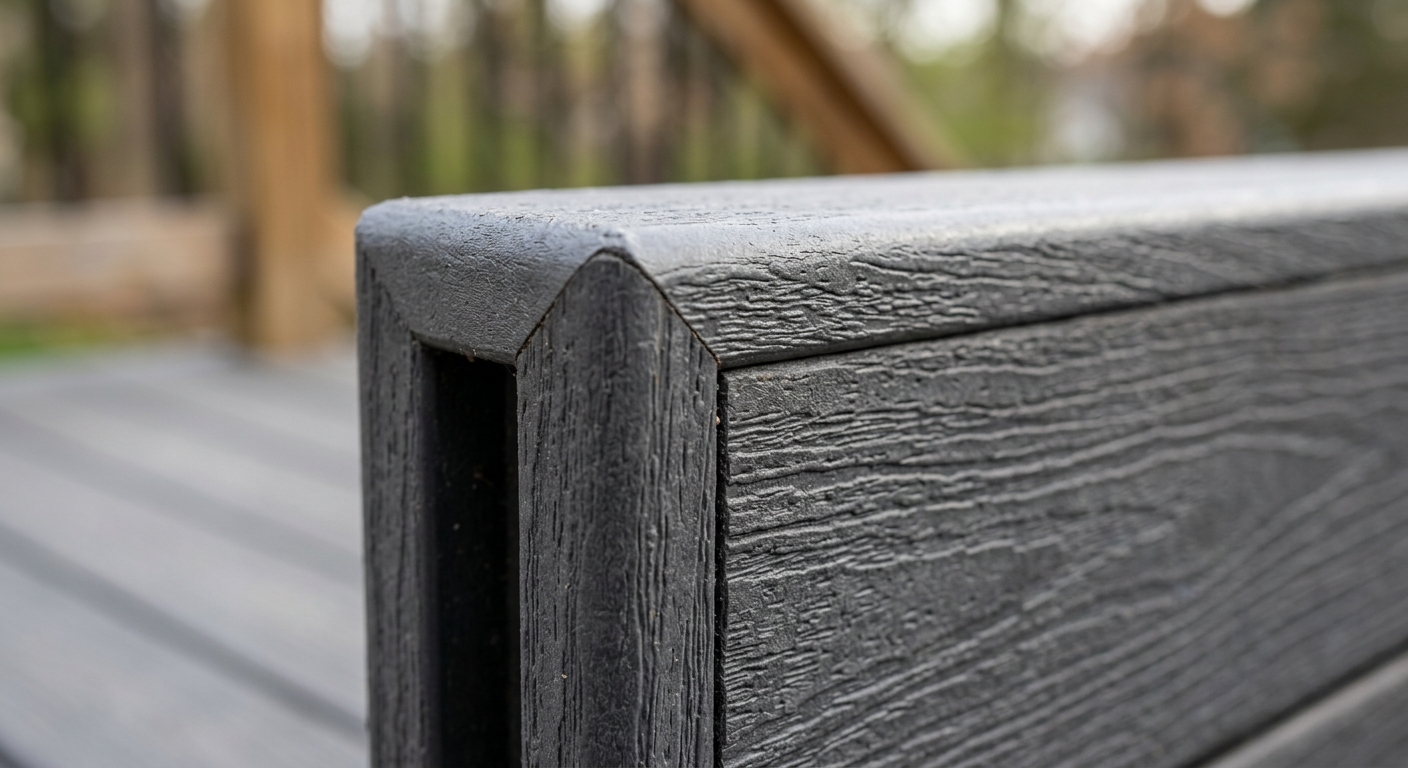
Every major composite decking brand advertises a Class A fire rating, which sounds reassuring when you're thinking about fire features. It's important to understand what that rating actually covers.
Class A fire rating (per ASTM E84 and NFPA 255 testing) measures how quickly flame spreads across a surface when exposed to a specific test flame. A Class A rating means the material resists surface flame spread well — it won't propagate fire rapidly across the deck surface if ignited.
Class A does NOT mean the material is impervious to heat damage, won't soften, or won't deform under sustained radiant heat below ignition temperature. The heat damage that occurs under a gas fire feature without a shield is not ignition — it's polymer softening at temperatures well below the flame spread test conditions.
This distinction matters because manufacturers will honor warranty claims for fire damage (actual combustion) but typically won't cover heat deformation damage when a heat source was placed directly on the decking without an approved heat shield.
What It Costs: Full Budget Breakdown for Seattle Deck Fire Features
Let's build out realistic budget scenarios for the three main approaches Seattle homeowners choose.
Scenario 1: Gas Fire Table on Existing Composite Deck
This is the most common entry point — an existing deck, a propane or natural gas fire table, and the heat protection to do it safely.
| Component | Cost Range |
|---|---|
| Mid-range gas fire table (propane) | $1,200–$3,000 |
| Aluminum heat shield (deck protector) | $80–$250 |
| Propane tank (20 lb) | $40–$60 |
| Natural gas line (if converting, 20–30 ft) | $600–$1,200 |
| Gas line permit | $150–$350 |
| Total (propane setup) | $1,320–$3,310 |
| Total (natural gas setup) | $2,150–$4,810 |
Scenario 2: Built-In Fire Pit on New Deck Construction
Integrating a built-in fire pit into a new deck is the most cost-effective approach to a premium installation. The structural work, gas rough-in, and surround materials are all incorporated into the initial build.
| Component | Cost Range |
|---|---|
| Deck construction (200 sq ft composite) | $18,000–$28,000 |
| Built-in fire pit framing and surround | $2,500–$5,000 |
| Gas burner insert (linear or round) | $800–$2,500 |
| Gas line rough-in | $500–$1,200 |
| Stone/tile surround finish | $1,200–$3,500 |
| Permits (deck + gas) | $500–$1,200 |
| Total project | $23,500–$41,400 |
Scenario 3: Retrofitting a Built-In Fire Pit on an Existing Deck
Retrofitting is more expensive per component than new construction because of the additional labor involved in working around existing structure.
| Component | Cost Range |
|---|---|
| Demo and modification of existing decking | $400–$1,000 |
| Structural framing for fire pit surround | $1,500–$3,000 |
| Gas burner insert | $800–$2,500 |
| Gas line (existing home to deck) | $700–$1,500 |
| Stone/tile surround | $1,500–$4,000 |
| Permits | $400–$900 |
| Total retrofit | $5,300–$12,900 |
For context on overall deck construction costs in Seattle, our 2025 Seattle deck cost guide provides detailed breakdowns by deck type and material.
Note
Finding and Vetting a Contractor for Your Fire Pit Deck Project
A deck fire feature project touches multiple trades: deck carpenter, gas plumber, possibly an electrician (for lighting), and potentially a masonry contractor (for stone surrounds). Coordinating that scope is where a general contractor or an experienced deck builder with fire feature experience earns their fee.
What to Ask About Fire Feature Experience
Not every deck contractor has built decks with integrated gas fire features. When interviewing contractors, ask:
- Have you done gas fire pit installations before? Can you show me examples?
- Do you pull the gas line permit, or do I need to hire a separate plumber?
- How do you protect composite decking during construction from heat damage later?
- What's your approach to gas shutoff and emergency shutoff placement?
A contractor who hedges on the gas permit question — or suggests you don't need one for a propane connection — is a red flag. Even propane connections that involve permanent line installation or deck penetrations often require permits.
Our guide to vetting deck contractors in Seattle covers the full due diligence process, and our questions to ask your deck builder lists the specific questions that reveal experience level quickly.
License Verification
Always verify that any contractor doing gas work holds a current Washington State plumber's license. You can check license status instantly at Washington L&I's verification portal. Gas work done by an unlicensed contractor is unpermitted by definition, and that creates liability exposure for you as the homeowner if there's ever a problem.
For the deck construction component, verify the general contractor's registration through the same L&I system. Washington requires all contractors performing residential work over $500 to be registered.
Getting Accurate Quotes
Fire feature projects have more variables than a straightforward deck build: gas line routing, fire pit unit selection, material choices for the surround. Our guide to reading a deck quote walks through what should be line-itemized in a proper proposal so you can compare bids accurately.
Ready to Plan Your Fire Pit Deck? Let's Talk.
Adding a fire feature to your Seattle-area deck is one of the highest-impact outdoor improvements you can make — it extends your outdoor season, creates a gathering point, and adds genuine value to your home. Done right, with the correct materials, clearances, and permits, it's also safe and code-compliant.
We've designed and built fire feature decks across King and Snohomish counties — from straightforward fire table setups in Bothell and Kenmore to fully integrated built-in fire pit installations in Bellevue and Kirkland. We handle the full scope: deck design, structural build, gas line coordination, permitting, and fire feature integration.
Call us at (425) 675-6259 to talk through your project, or reach out through our contact page. We serve Bothell, Kirkland, Bellevue, Woodinville, Kenmore, Redmond, and surrounding King and Snohomish county communities. Our office is at 22722 29th Drive SE, Bothell, WA 98021.
Frequently Asked Questions
Can I put a wood-burning fire pit on my deck in Seattle?
Do I need a permit to install a gas fire table on my deck in Seattle?
Will a gas fire table damage my Trex composite decking?
What's the difference between a fire table, fire bowl, and built-in fire pit for a deck?
How much does it cost to run a gas line to my deck for a fire pit in Seattle?
Does King County have burn bans that affect gas fire pits?
What clearances does a gas fire pit need on a deck?
Can my HOA prohibit a fire pit on my deck even if it meets King County code?
Is PVC decking (like AZEK) better or worse than composite for a deck with a fire feature?
How do I know if my existing deck structure can support a built-in fire pit?
What type of gas shutoff is required for a deck fire feature in Seattle?
How far in advance should I plan a deck fire feature project?
Planning a deck in the Seattle area?
Get an onsite design review and a clear, itemized quote from a licensed local builder.
Request a Free Quote