
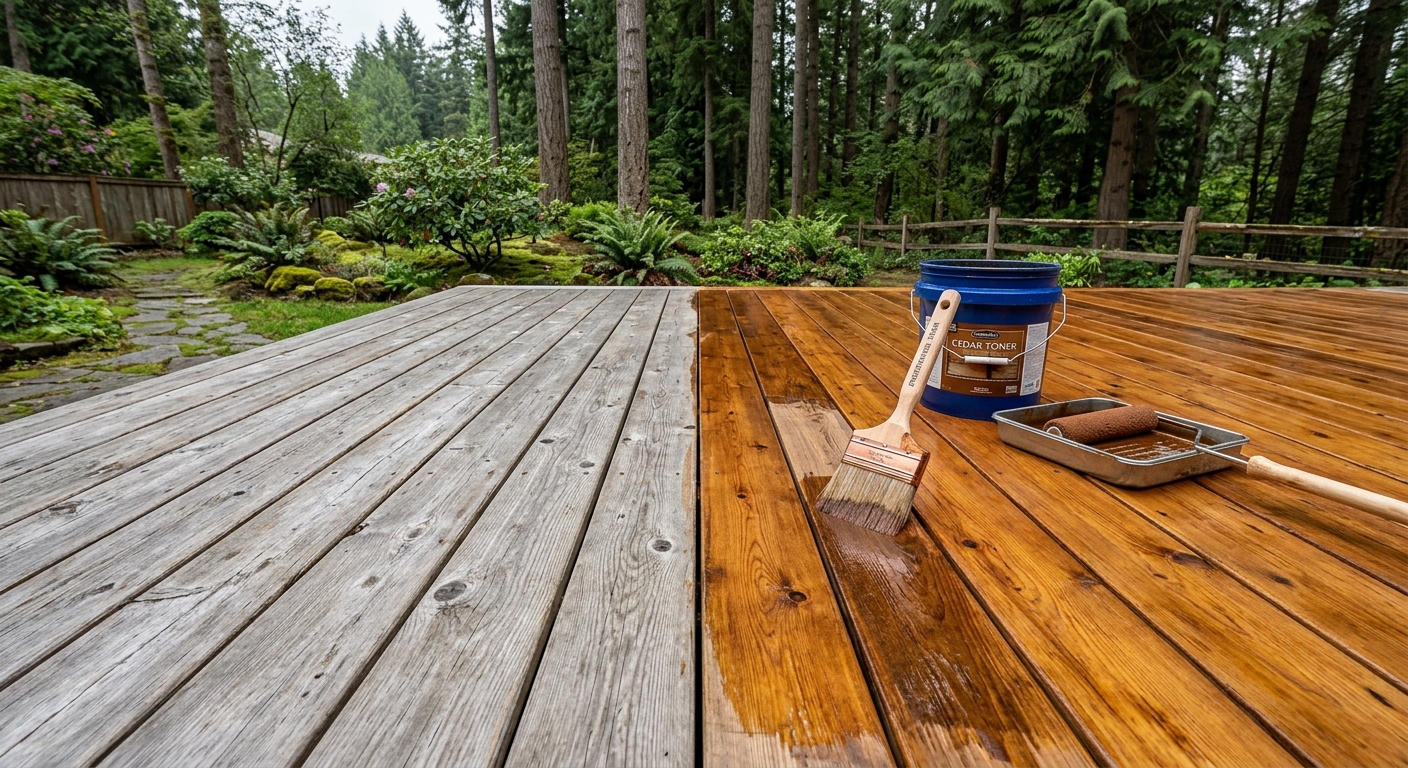
If you own a cedar deck in the Seattle area, you already know the ritual: every couple of years, you're out there power-washing, sanding, and rolling on another coat of stain — or you're writing a check to a contractor to do it for you. It feels like routine upkeep, the same as painting a room or servicing your furnace. But when you step back and run the actual numbers across 20 years, what looks like a modest recurring expense can balloon into something that rivals the cost of switching to composite entirely. Seattle's climate is uniquely punishing to wood decks — NOAA climate data puts Seattle's average annual rainfall at roughly 39 inches, with the bulk of it arriving between October and March in the form of persistent, soaking drizzle. That's not a brief monsoon season; it's eight months of near-continuous moisture exposure that accelerates cedar degradation far faster than in drier climates.
The decision between continuing to stain your cedar and switching to composite isn't really a materials question — it's a financial and lifestyle question. The math is messier than most contractors or composite manufacturers will admit to you, because the answer genuinely depends on your specific situation: how shaded your yard is, how long you plan to stay in the house, whether your existing framing is sound, and how much you value your own Saturday afternoons. This article is going to give you the honest numbers, including the scenarios where cedar actually still makes sense, so you can make the call with your eyes open rather than being pushed by a sales pitch in either direction.
One more thing before we dive in: this comparison is built for a 300-square-foot deck, which is a realistic mid-range size for a single-level deck in Bellevue, Kirkland, Redmond, or the Seattle neighborhoods east of Lake Washington. Your deck may be larger or smaller, and the math scales proportionally — but the break-even dynamics and the key decision factors remain the same.
The Seattle Climate Problem: Why Cedar Degrades Faster Here Than Anywhere Else
If you've ever looked up "how often should I stain my deck" and gotten the answer "every 2–3 years," understand that answer was written for the national average — a composite of climates ranging from Arizona to Florida. Seattle is not the national average. Seattle is one of the most demanding climates in North America for wood decks, and the 2–3 year rule doesn't hold here.
What the Numbers Actually Look Like in King County
The National Centers for Environmental Information 30-year climate normals for Seattle show an average of 39.34 inches of precipitation annually, distributed across more than 150 rain days per year. More importantly for your deck, the pattern of that rain matters: instead of heavy summer thunderstorms that dry quickly, Seattle gets persistent low-intensity drizzle that keeps wood surfaces damp for days or weeks at a time. That sustained moisture is what drives mold, mildew, and fungal growth into cedar decking.
Add shade to the equation and the problem compounds dramatically. Much of King County's residential stock sits on wooded lots — Doug firs, western red cedars, big-leaf maples — that cast shade over backyard decks for most of the day. Shade suppresses the UV that would otherwise help dry the wood surface between rain events. On a shaded north-facing deck in Kenmore or Woodinville, the surface can stay damp for 10 to 14 days after a rain event. In those conditions, stain breaks down in 12 to 18 months rather than 24 to 36.
The Real Restaining Cycle for Seattle Decks
We've been building and repairing decks in the Seattle area for years, and here's what we observe on the ground:
- Exposed south-facing decks in sunny neighborhoods like Beacon Hill or Madrona: stain holds 2–2.5 years before visible graying and moisture infiltration
- Partially shaded decks in typical King County suburban yards: stain holds 18–24 months reliably
- Heavily shaded north-facing decks under tree canopy: stain may degrade visibly in 12–15 months
The Western Red Cedar Lumber Association acknowledges that maintenance frequency depends heavily on local climatic conditions. In our market, "local climatic conditions" means you're on the aggressive end of the maintenance schedule compared to almost anywhere else in the continental US.
What Happens When Staining Gets Delayed
This is where Seattle homeowners get caught off guard. Life gets busy, you push the restaining off one season, and suddenly you're looking at surface checking (small cracks running along the grain), gray weathering, and the beginning of soft spots near deck post bases and board ends. At that point you're not just staining — you're also replacing individual boards, which adds $200–$600 to the project depending on scope. On a board-by-board basis, premium cedar decking material costs $4–$8 per linear foot, and labor to replace individual boards in a stain-and-repair project can run $50–$85 per hour.
The North American Deck and Railing Association (NADRA) notes that over 60 million decks in North America are now more than 20 years old, with a significant portion showing structural issues that developed partly from inadequate maintenance. Seattle's weather accelerates that timeline.
The Real 20-Year Cost of Staining a Cedar Deck in Seattle
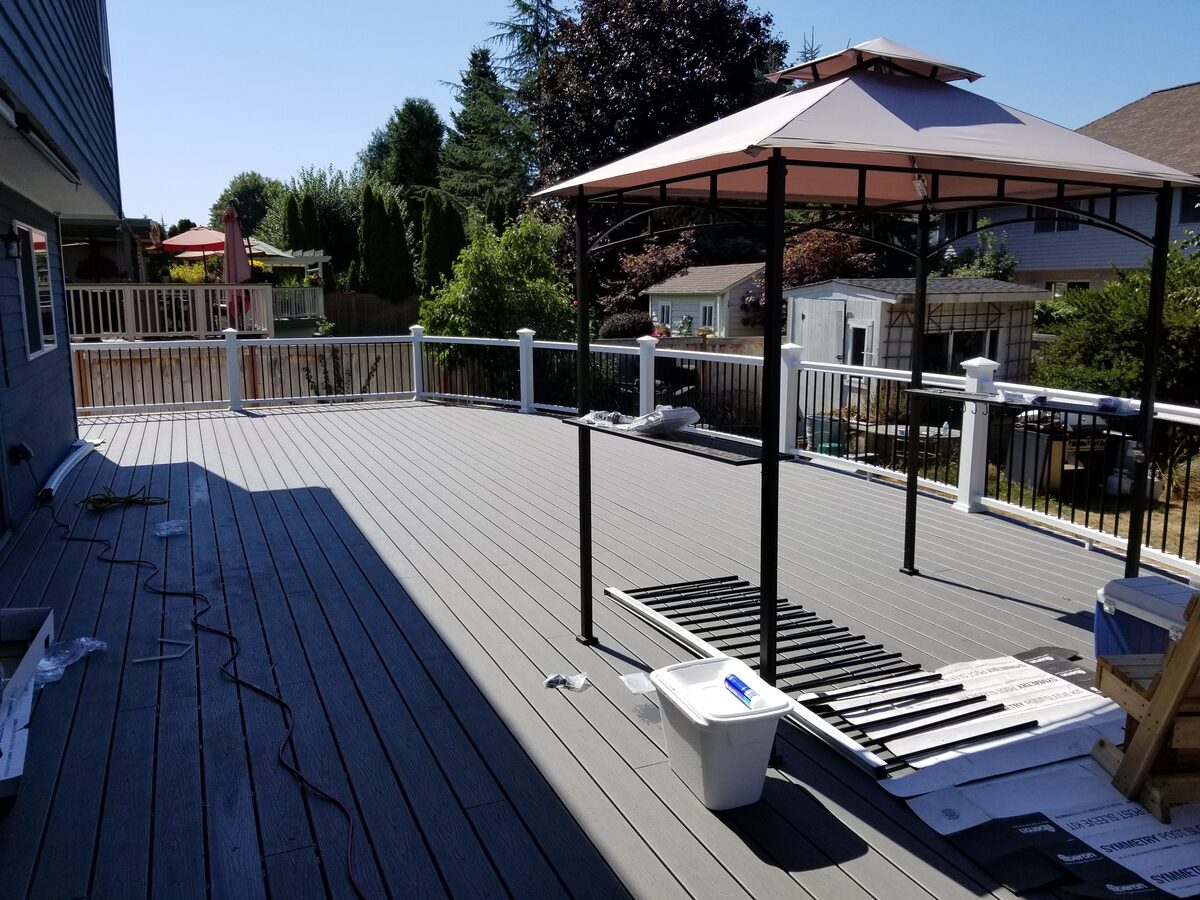
Let's build the actual ledger. We're going to use a 300-square-foot deck as our baseline — a realistic size for a single-level backyard deck in most Seattle and Eastside neighborhoods. We'll use current 2025–2026 cost data and model three scenarios: DIY, professional mid-range, and professional premium. All figures are in today's dollars; we're not inflation-adjusting over 20 years to keep the math clean, though you should know that labor costs have risen roughly 4–6% annually in the Seattle market over the past five years.
What Professional Staining Costs in Seattle Right Now
Homeyou's Seattle deck staining data and Angi's Seattle-specific pricing both show a wide range depending on scope and condition:
- Basic professional stain (clean + 1 coat): $800–$1,200 for 300 sqft
- Full professional restain (pressure wash, light sand, 2 coats): $1,200–$1,800 for 300 sqft
- Stain + board replacement (typical mid-cycle repair): $1,400–$2,400 depending on number of boards
DIY costs for materials alone — deck cleaner, stripper if needed, stain, rollers, brushes — run $300–$600 for a 300 sqft deck depending on product quality. A premium penetrating oil stain like Cabot Australian Timber Oil or Armstrong Clark (popular in the PNW contractor community) costs $50–$75 per gallon, and you'll need 2–3 gallons for a 300 sqft deck with two coats.
Building the 20-Year Cost Model
Using a 1.75-year restaining cycle (the realistic Seattle average for a partially shaded deck) and a professional restain cost of $1,200 per cycle, plus board replacement costs every 4–5 years as individual boards fail:
| Scenario | Cycle | Cost/Cycle | Cycles in 20 yrs | Board Repairs | 20-Year Total |
|---|---|---|---|---|---|
| DIY enthusiast, south-facing | 2.5 years | $450 | 8 | $600 total | ~$4,200 |
| DIY, typical shaded yard | 1.75 years | $500 | 11 | $1,200 total | ~$6,700 |
| Professional, south-facing | 2.5 years | $1,100 | 8 | $800 total | ~$9,600 |
| Professional, typical yard | 1.75 years | $1,200 | 11 | $1,600 total | ~$14,800 |
| Professional, heavy shade | 1.25 years | $1,300 | 16 | $2,400 total | ~$23,200 |
The DIY column assumes you're genuinely doing the work yourself — not just intending to — and that you value your time at zero. We'll come back to the time-value question shortly, because for most Seattle homeowners it's actually one of the most important factors in this decision.
The Hidden Costs That Don't Show Up in Staining Quotes
The staining cost is the visible line item, but there are associated costs that accumulate quietly over 20 years:
Deck cleaning products and equipment: Even between professional staining cycles, you should be washing the deck once or twice a year. A deck brightener and garden hose is $30–$50 per year. If you're using a pressure washer, equipment rental is $60–$80 per day.
Furniture moving: Every restaining project requires clearing the deck, which often means moving furniture into the garage or across the yard. If a contractor is doing this as part of the job, it's typically included in the quote — but some don't, and you end up doing it yourself.
Lost use of deck: Professional staining typically requires 24–48 hours of cure time before the deck can be used. In Seattle's wet climate, contractors may need to tent the deck or monitor weather windows, which can extend scheduling delays. Over 20 years with 11 cycles, you're losing 22–33 days of deck use to mandatory downtime.
Note
What Composite Decking Actually Costs in Seattle: Honest Numbers
Composite decking's reputation for being "expensive" is both accurate and incomplete. It's accurate because the upfront material and installation cost is meaningfully higher than cedar. It's incomplete because that upfront cost is essentially the end of the cost story for 25–50 years, depending on the product.
Installed Composite Decking Costs for Seattle in 2026
Based on current market data from Seattle-area deck builders and composite pricing guides:
Entry-level composite (Trex Enhance, Fiberon Basics):
- Material: $6–$9 per sqft for decking boards
- Installed: $35–$50 per sqft all-in (including framing, fasteners, labor)
- 300 sqft total: $10,500–$15,000
Mid-range composite (Trex Select, TimberTech EDGE, Fiberon Symmetry):
- Material: $9–$14 per sqft for decking boards
- Installed: $45–$65 per sqft all-in
- 300 sqft total: $13,500–$19,500
Premium composite (Trex Transcend, TimberTech PRO, AZEK Vintage):
- Material: $14–$22 per sqft for decking boards
- Installed: $60–$85 per sqft all-in
- 300 sqft total: $18,000–$25,500
These prices assume the existing framing (joists, beams, posts) is in sound condition and can be reused. If the framing needs to be replaced as part of the resurfacing project, add $3,000–$8,000 for structural work depending on scope.
Resurfacing vs. Full Replacement: The Most Important Decision
If your cedar deck is 10–15 years old and the framing is still structurally sound, resurfacing with composite — removing only the deck boards and replacing them with composite — is the most cost-effective path to switching materials. This saves you 30–50% compared to a full deck tear-down and rebuild.
Resurfacing a 300 sqft deck with mid-range composite: $8,000–$14,000 Full replacement of a 300 sqft deck with composite: $13,500–$22,000
The key variable is the condition of your joists. In Seattle, joists on poorly maintained cedar decks often show joist end rot — where moisture has wicked into the end grain of the joists at the beam connection. This is very common in decks over 12 years old in the PNW, and it changes the calculus from resurfacing to full replacement. Any reputable contractor should inspect the framing before quoting a resurfacing job. See our guide to deck repair in Seattle for more on what structural inspection covers.
Important
Composite Maintenance Costs Over 20 Years
This is where the math gets interesting. Premium composite from manufacturers like Trex, TimberTech/AZEK, and Fiberon requires essentially no maintenance beyond annual cleaning:
- Annual cleaning (soap, water, soft brush or light pressure wash): $0 if DIY, $150–$300 if professional
- No staining, sealing, or sanding — ever
- No board replacement due to rot or moisture damage (covered under warranty)
20-year maintenance cost for composite: $0 (DIY cleaning) to $3,000–$6,000 if you hire someone to clean it annually — but most homeowners handle this themselves with a hose.
Compare that to $4,200–$23,200 for cedar maintenance over the same period.
The Break-Even Analysis: When Does Composite Pay Off in Seattle?
Break-even analysis on deck materials is straightforward conceptually but depends on which inputs you use. Here's the honest framework.
Based on Seattle market rates 2025–2026. Cedar costs include staining cycles and board repairs. Composite costs include installation premium over cedar baseline.
| Category | Value |
|---|---|
| Cedar DIY (favorable) | $4,200 |
| Cedar DIY (typical) | $6,700 |
| Cedar Pro (favorable) | $9,600 |
| Cedar Pro (typical) | $14,800 |
| Cedar Pro (shaded) | $23,200 |
| Composite mid-range | $14,000 |
| Composite premium | $19,000 |
How to Calculate Your Personal Break-Even
The break-even point is where the cumulative cost of cedar staining equals the incremental cost of upgrading to composite. The "incremental cost" is the difference between what you'd spend on a cedar resurfacing and what you'd spend on a composite resurfacing — not the full composite price, because you'd be paying for resurfacing materials and labor either way.
Example for a typical Seattle homeowner:
- Cedar resurfacing (boards + labor, reusing frame): $5,000–$7,000
- Composite resurfacing (mid-range, reusing frame): $10,000–$14,000
- Incremental cost of upgrading to composite: $5,000–$7,000
If you're paying $1,200 per professional staining cycle at a 1.75-year cycle, that's about $686 per year in staining costs. Add $200/year for incidental board repairs averaged over time, and your annual cedar maintenance cost is roughly $886/year.
Divide the $6,000 incremental composite cost by $886/year = 6.8-year break-even.
For homeowners with more favorable cedar conditions (south-facing, professional staining at longer intervals), the break-even stretches to 10–14 years. For homeowners with heavy shade, frequent professional restaining, and a pattern of delayed maintenance, the break-even can be as short as 5–6 years.
The Time-Value Factor Seattle Homeowners Underestimate
Seattle's median household income is among the highest in the nation — the tech economy has made King County one of the wealthiest metropolitan areas in the US. If you're a software engineer or business owner billing $150–$300 per hour professionally, the time you spend on cedar maintenance has a real cost that doesn't show up in material pricing.
A thorough DIY cedar restaining project on a 300 sqft deck takes 6–10 hours across prep, cleaning, sanding, and two-coat application. At a 1.75-year cycle over 20 years, that's 11 cycles × 8 hours average = 88 hours of your personal time. At $100/hr opportunity cost, that's $8,800 in value — which changes the DIY math dramatically.
Key insight
Factors That Make Composite the Clear Winner in Seattle
For many Seattle-area homeowners, the break-even analysis alone isn't enough to make the decision obvious. Here are the specific circumstances where composite clearly wins.
Heavy Tree Coverage and North-Facing Orientation
As noted earlier, shaded decks in Seattle face the most aggressive cedar degradation schedule. If your deck sits under Doug firs or maple trees and faces north or northeast, you're likely looking at a 12–18 month staining cycle, not the 24–36 month national guideline. On that schedule, you're not just paying more for maintenance — you're also dealing with the constant logistics of scheduling contractors in Seattle's narrow weather windows.
Composite handles shade conditions without penalty. The coextruded shell on products from Trex, TimberTech, and Fiberon doesn't rely on sunlight or airflow for protection — it's built into the board structure. Tree shade has no meaningful effect on composite longevity.
Planning to Sell Within 10 Years
If you're planning to sell your home within the next 8–12 years, the financial case for composite is particularly strong. A clean, low-maintenance composite deck presents better at open houses and inspections than a cedar deck that needs staining — buyers and their inspectors notice surface condition immediately.
The NAR 2025 Remodeling Impact Report indicates that outdoor living improvements, including decking, consistently rank among the top remodeling investments for resale value. In the Seattle market specifically, composite decking often appears as a selling feature in listings because buyers with young families or busy lifestyles strongly prefer low-maintenance outdoor spaces.
Data from Seattle-area deck contractors and real estate professionals suggests that a newer composite deck can add $10,000–$20,000 to a home's sale price compared to an equivalent-size cedar deck that needs attention. That's not a universal number — it depends heavily on neighborhood, overall home condition, and buyer pool — but it's a real factor in the math for homeowners with a 5–10 year horizon.
Homeowner Time and Lifestyle Constraints
If you work long hours, travel frequently, or simply don't enjoy outdoor maintenance projects, cedar is a structural mismatch with your lifestyle regardless of the math. Composite's value proposition in that context isn't primarily financial — it's about eliminating a recurring maintenance obligation that will create stress and eventually result in deferred maintenance and accelerated degradation. A neglected cedar deck costs significantly more to restore than one that's been maintained on schedule.
Adjacent to the Puget Sound or a Lake
Waterfront and water-adjacent properties in the Seattle area face additional challenges for cedar: salt air (minimal in Puget Sound, but present) and elevated ambient humidity even when it isn't actively raining. Properties on Lake Washington, Lake Sammamish, or along the Sound should factor in a more aggressive degradation schedule and lean more strongly toward composite as the long-term solution.
Tip
When Cedar Still Makes Financial Sense
To be straightforward: cedar is still the right answer in several specific situations. We're not trying to sell every homeowner on composite — we're trying to give you the honest framework to make the right call for your circumstances.
Covered Decks with Minimal Rain Exposure
A cedar deck under a full roof cover — either an attached porch roof or a pergola with solid polycarbonate roofing — is in a fundamentally different exposure environment than an open deck. With rain largely excluded, the staining cycle can genuinely extend to 3–5 years, and cedar's natural beauty under covered conditions is hard to match. The 20-year cost math is much more favorable to cedar when the cycle is long and exposure is low.
Tight Upfront Budget with Sound Existing Framing
If you're facing a deck resurfacing project and have $5,000–$7,000 available but not $10,000–$14,000, cedar resurfacing is a legitimate near-term decision. It's not the most cost-effective 20-year choice in most scenarios, but it buys you 5–8 years while you build toward a composite replacement. The key caveat: make sure the framing is genuinely sound. Using a cedar resurfacing project to delay addressing failing framing makes the eventual composite project more expensive, not less.
Owners Who Genuinely Enjoy the Maintenance Process
This isn't as unusual as it sounds. Some homeowners take real satisfaction in seasonal deck maintenance — it's a ritual that connects them to the property and provides tangible visible results. If you're in this category, the time-cost argument doesn't apply to you the same way, and cedar's natural warmth and authenticity may deliver lifestyle value that composite simply can't match.
See our detailed comparison guide at composite vs. cedar decking in Seattle for a deeper look at the material qualities of each option beyond the cost dimension.
Historic or Character Homes Where Cedar Belongs Aesthetically
In some Seattle neighborhoods — Craftsman homes in Ballard or Columbia City, classic bungalows in Green Lake or Wallingford — cedar decking is architecturally appropriate in a way that composite boards aren't. If preserving the authentic character of the home matters to you (or to a future buyer in a historically sensitive neighborhood), that's a legitimate reason to stay with cedar regardless of the maintenance math.
| Decision Factor | Cedar Better | Composite Better |
|---|---|---|
| Upfront budget | Yes (lower cost) | No (higher upfront) |
| 20-year total cost, shaded deck | No | Yes |
| 20-year total cost, covered deck | Yes | No |
| Time/labor investment | No | Yes |
| Resale appeal in 5-10 years | Neutral/negative | Yes |
| Architectural authenticity | Yes (some homes) | No |
| Maintenance frequency preference | DIY-friendly | Zero-maintenance preferred |
| Heavy tree canopy | No | Yes |
Evaluating Your Existing Cedar Frame: The Make-or-Break Question
Before any discussion of composite resurfacing makes sense, you need an honest assessment of your existing framing. The framing — posts, beams, joists, ledger board, and hardware — represents 40–60% of a full deck replacement cost. If the framing is in excellent condition, resurfacing with composite is cost-effective and straightforward. If the framing has significant rot or structural compromise, you're looking at a full replacement regardless of what you do with the surface boards.
What to Inspect
Ledger board connection: The ledger is where the deck attaches to your house, and it's the most common location for serious rot on Seattle decks. Water infiltrates behind the flashing, sits in the ledger-joist connection, and rots both the ledger and the adjacent rim joist of your house. Probe the ledger with a screwdriver — sound wood resists penetration; rotted wood allows the blade to sink in.
Joist ends at the beam: In Seattle's climate, the end grain of joists at beam connections absorbs moisture and rots from the inside out. This is often invisible from the top surface but becomes obvious when the framing is inspected from below. Joists that feel soft or spongy at their ends, or that show dark discoloration, need replacement.
Post bases and post bottoms: Posts that sit in post bases at or near grade level are exposed to ground moisture. Posts that were direct-buried (now prohibited under current code) are almost certainly rotted at their base by the time they're 15 years old. Check King County's permit requirements for structural deck work — replacing more than 50% of a deck's structural members typically requires a permit.
Hardware condition: Galvanized joist hangers and hardware on decks built before 2004 may have been installed using hot-dipped galvanized hardware that is inadequate for the treated lumber used today. If your deck uses older hardware and was built with chemical preservatives, corrosion may have compromised the hardware significantly.
The Framing Condition Decision Tree
- Excellent framing (no rot, all hardware solid): Resurfacing with composite is the cost-effective path. Budget $8,000–$14,000 for a 300 sqft mid-range composite resurfacing.
- Moderate framing issues (spot rot at 1–3 joists, minor ledger concerns): Resurfacing is still viable with joist sister-ins and ledger repair. Budget an additional $1,500–$3,500 for framing repairs as part of the resurfacing scope.
- Significant framing deterioration (widespread joist rot, ledger failure, multiple post issues): Full replacement is the correct path. Resurfacing on compromised framing is false economy — you'll be back in 3–5 years doing it again. Budget for a full deck replacement. See our deck cost guide for Seattle for full replacement pricing.
Note
The Timeline of Cedar Degradation in Seattle: What to Expect Year by Year
One of the most useful things we can offer Seattle homeowners is a realistic timeline of what happens to an uncoated or poorly maintained cedar deck in this climate. If you're evaluating your deck right now, this will help you locate where you are in the degradation curve.
Year 1–3: The Honeymoon Phase
A freshly stained cedar deck in Seattle looks beautiful and performs well. The stain forms a protective film or penetrates the wood (depending on the stain type), and the cedar's natural oils provide some additional moisture resistance. Surface is easy to clean, splinter-free, and structurally sound.
Year 2–4: Early Stain Breakdown
In shaded conditions, you'll start seeing gray weathering at edges and high-traffic areas. The stain has thinned through foot traffic and UV exposure. Mildew appears as black spotting, particularly in low-drainage areas. A cleaning and re-coat at this point is the most cost-effective maintenance action.
Year 4–8: First Structural Concerns
If maintenance has been deferred, surface checking (small cracks along the grain) begins. End grain of boards at post and joist connections starts absorbing moisture. Individual boards may begin to cup or warp. Fastener holes become entry points for water. This is the stage where the conversation about resurfacing vs. continued staining becomes financially relevant.
Year 8–12: Significant Maintenance Required
Without regular staining, boards show significant gray weathering, soft spots, and possible delamination of the wood surface layer. Individual board replacement becomes routine rather than exceptional. Joist end rot is often developing invisibly at this stage.
For reference, our guide on deck lifespan in Seattle covers the full structural lifecycle of different deck materials and construction types in King County.
Year 12–18: Decision Point
A well-maintained cedar deck at 12–15 years may still be structurally sound and cosmetically acceptable with ongoing staining. A neglected or poorly maintained deck at this age may be approaching the end of its structural life. This is typically the decision point: invest in composite resurfacing if the framing is good, or plan for full replacement if the framing has deteriorated.
Year 18–25+: End of Useful Life
Most cedar decks in Seattle that were built to minimum code standards and have received average maintenance are approaching the end of their useful life by 20–25 years. Some exceed this — particularly those with premium cedar grades, ideal exposure conditions, and meticulous maintenance. But the average deck in King County built in the early 2000s is approaching this threshold now.
Composite Decking Brands for Seattle: What to Specify
If you've decided composite is the right path, the next decision is which product. Not all composite decking performs equally, and product selection matters in Seattle's specific climate conditions. Here's a quick framework for the major brands:
Trex
Trex is the most recognized name in composite decking and offers solid performance across its product lines. The Enhance line (25-year warranty) is the entry point; the Select line (35-year warranty) offers better fade and stain resistance; and the Transcend line (50-year warranty) is the premium option with the most realistic wood aesthetics. In Seattle's UV-reduced environment (less intense sun than southern climates), the mid-range Select is often the best value position. See our detailed guide to Trex vs. Fiberon vs. TimberTech in Seattle for a full product comparison.
TimberTech / AZEK
TimberTech and AZEK (both owned by the same parent company) offer a range of composite and PVC products. AZEK is a cellular PVC product (not composite) and offers arguably the highest performance for moisture resistance — a meaningful advantage in Seattle. TimberTech PRO and TimberTech EDGE are composite products with 30–50 year warranties. For Seattle homeowners who want the most moisture-resistant surface available, AZEK PVC boards are worth the premium.
Fiberon
Fiberon offers competitive pricing at the mid-range and premium tiers, with strong performance in fade, stain, and moisture resistance. The Symmetry and Paramount lines are well-suited to Seattle's conditions and carry solid warranty coverage.
What to Prioritize for Seattle Specifically
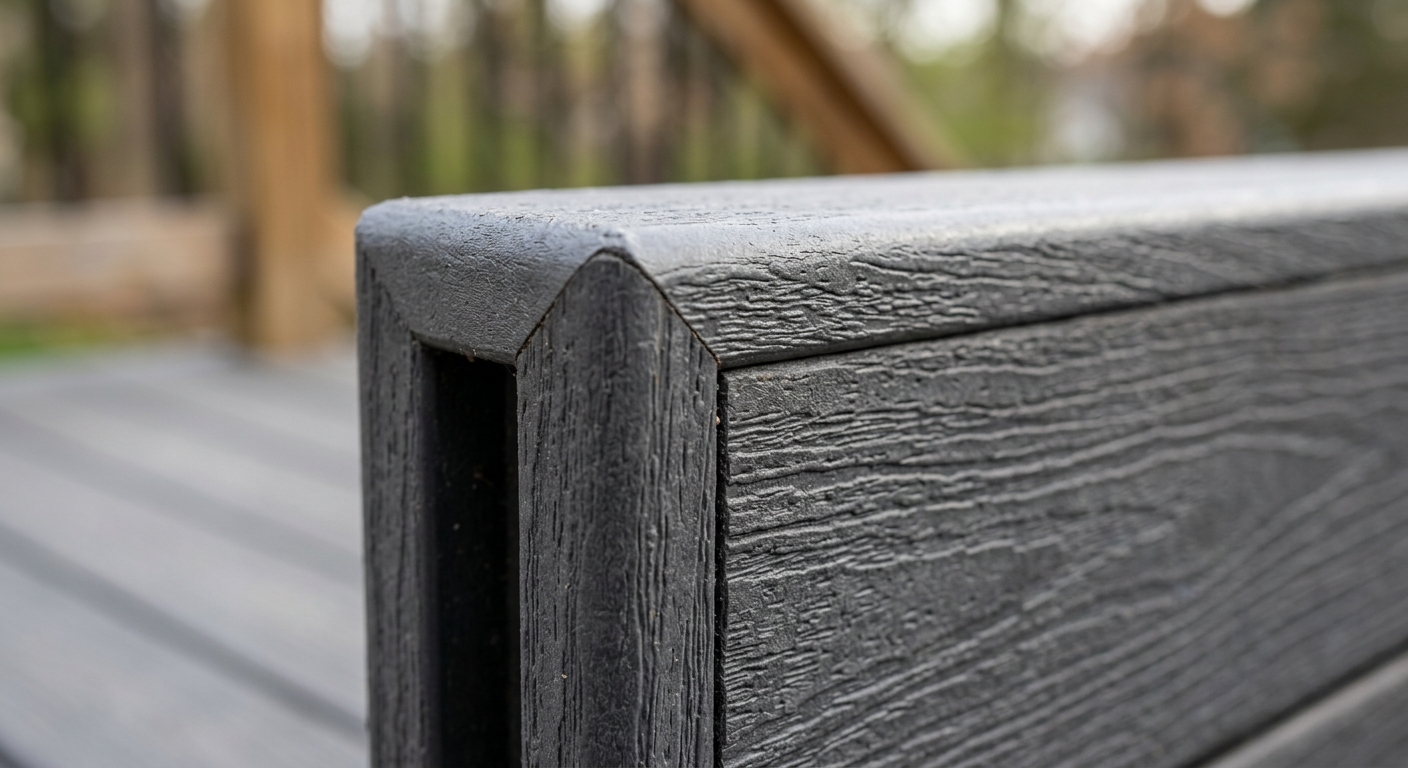
- Closed-board ends or end-cap systems: Water infiltrating board ends is the leading composite maintenance issue. Specify boards with capped ends or install end-cap covers.
- Hidden fasteners: Avoid face-screwed composite decking if possible. Hidden fastener systems eliminate the screw holes that become water infiltration points.
- Lighter colors in shaded yards: Dark composite boards in heavily shaded yards can develop mold growth more visibly than lighter boards. It's not a structural issue — it washes off — but it affects appearance.
Tip
Getting the Right Quote: What to Expect from Seattle Deck Contractors
Whether you're continuing with cedar staining or planning a composite resurfacing, getting accurate quotes in the Seattle market requires knowing what questions to ask and what to look for in the proposals you receive.
What a Cedar Staining Quote Should Include
A professional staining quote for a Seattle deck should specify:
- Whether price includes pressure washing or deck cleaning
- Product brand and type being applied (penetrating oil vs. film-forming stain matters for longevity)
- Number of coats
- What surface preparation is included (light sanding? spot repair?)
- Timeline and weather contingency
- Any board replacement pricing (per linear foot is the usual structure)
What a Composite Resurfacing Quote Should Include
A composite resurfacing quote should specify:
- Whether framing inspection is included (it should be)
- Exactly which boards and structural members are included vs. excluded
- Composite product line, color, and warranty documentation
- Fastener system (hidden vs. face-screw)
- What happens if framing problems are discovered during the job (change-order process)
- Permit scope and who pulls it
For a deeper guide to reading and comparing deck quotes, see our article on how to read a deck quote. For guidance on contractor selection, how to find a deck builder in Seattle covers what to look for in licensing, insurance, and references.
If budget is a concern, we have a guide to deck financing options in Seattle that covers contractor financing programs, home equity options, and lender comparisons.
Making the Call: A Decision Framework for Seattle Homeowners
We've covered a lot of ground. Here's a condensed decision framework to help you reach a conclusion.
Choose continued cedar staining if:
- Your deck is covered (roof or solid pergola covering)
- Your framing is in excellent condition and cedar boards are sound
- You have a tight upfront budget and the math works for your timeline
- You genuinely enjoy maintenance and value cedar's aesthetic authenticity
- Your deck faces south with minimal shade and stain reliably holds 2+ years
Choose composite resurfacing if:
- Your deck is shaded and you're staining more often than every 2 years
- You plan to sell in the next 5–12 years
- Your time is valuable and maintenance is a burden you'd rather eliminate
- You're already facing a cedar resurfacing project (the incremental cost to upgrade is relatively small)
- Your existing framing is in good condition (making resurfacing cost-effective)
Choose full replacement if:
- Your framing shows significant rot or structural compromise
- Your deck is over 20 years old and has a history of deferred maintenance
- You want to change the deck's footprint, height, or configuration at the same time
The best decking materials guide for Seattle in 2026 covers the full range of material options — cedar, composite, PVC, Ipe, and membrane systems — if you want to explore beyond the cedar-vs-composite comparison.
Talk to a Seattle Deck Builder Who Knows the Real Numbers
There's a right answer to the cedar-vs-composite question for your specific deck, and it depends on details that no general guide can account for: your exact framing condition, your tree coverage, your lifestyle, your timeline in the house, and what your deck budget actually looks like. The numbers in this article are as honest as we know how to make them, but the specific numbers for your deck require an on-site assessment.
The Seattle Decking Company has been building, repairing, and resurfacing decks throughout King County — Bellevue, Redmond, Kirkland, Kenmore, Bothell, Woodinville, Issaquah, and across Seattle's neighborhoods. We'll inspect your existing deck, give you a straight framing assessment, and present you with a clear comparison of your options with actual pricing — not ranges.
Call us at (425) 675-6259 to schedule a consultation. We're located at 22722 29th Drive SE, Bothell, WA 98021, and we serve the full King County and south Snohomish County area. You can also reach us through our contact page to request a quote online.
This is a decision that will affect how you spend your weekends and what your home is worth for the next 20 years. Make it with real information from a contractor who's seen hundreds of Seattle decks at every stage of their lifecycle — not from a national content guide that doesn't know what a shaded Kenmore deck looks like in November.
Frequently Asked Questions
How often do I really need to stain my cedar deck in Seattle?
What does professional deck staining cost in Seattle in 2026?
Is composite decking worth the extra cost in Seattle specifically?
Can I resurface my existing deck with composite instead of replacing the whole thing?
What composite decking brands work best in Seattle's climate?
How much of my cedar deck's 20-year maintenance cost is staining vs. repairs?
Does composite decking add more resale value than a cedar deck in Seattle?
What are the signs my cedar deck framing needs to be replaced rather than resurfaced?
How does tree shade affect the cedar vs. composite decision?
Is DIY cedar staining a realistic option for saving money in Seattle?
What permits are required to resurface a deck in King County?
How do I find a reputable deck contractor for staining or composite work in the Seattle area?
Planning a deck in the Seattle area?
Get an onsite design review and a clear, itemized quote from a licensed local builder.
Request a Free Quote