
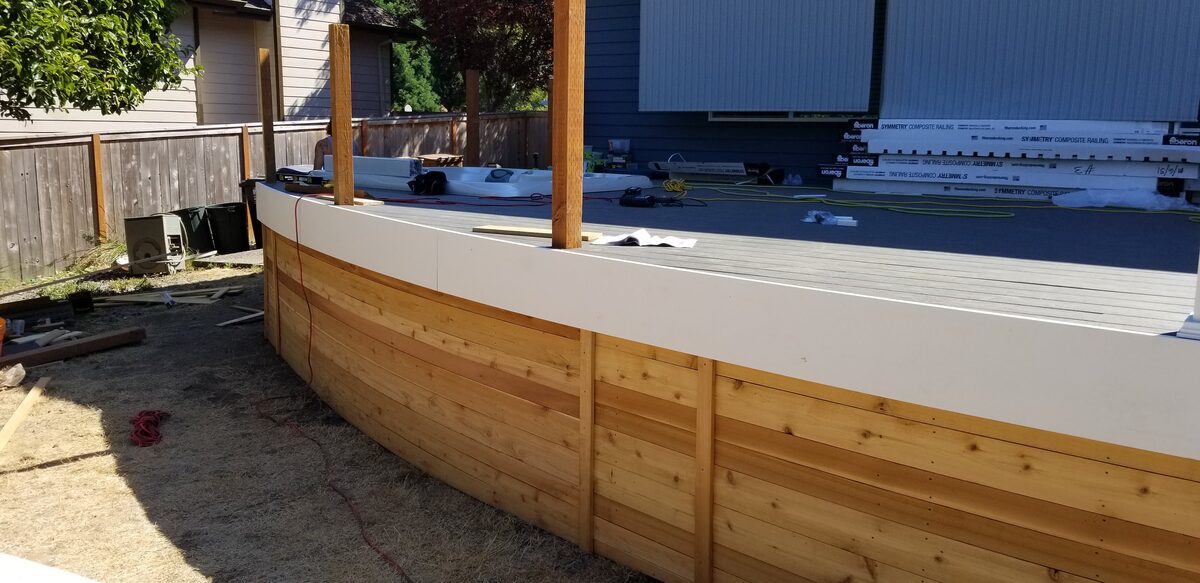
Mercer Island is not a forgiving place to build a deck out of wood. The island sits in the middle of Lake Washington, surrounded by water on every side, canopied by some of the densest tree cover of any residential community in King County, and drenched by more than 150 rainy days a year. Cedar boards that might last twelve to fifteen years on a dry east-facing slope in Kirkland can look grey, check-cracked, and soft-to-the-probe in half that time on a shaded south-facing lot in the Norwood neighborhood or the hillside streets above SE 68th Street. Pressure-treated lumber fares no better. The combination of persistent moisture, canopy shade that prevents decking from drying out between rain events, and the natural humidity rising off Lake Washington creates conditions that accelerate wood degradation in ways that surprise even experienced Seattle-area homeowners.
What makes Mercer Island deck projects genuinely different from a mainland King County build is not just climate. It is the convergence of three overlapping complications that every project on the island eventually encounters: a Tree Preservation Ordinance that requires a permit before you can touch a tree that may be sitting exactly where your footings need to go; a permitting framework that layers City of Mercer Island building requirements on top of Shoreline Master Program compliance for waterfront lots; and the logistical reality that every stick of lumber, every pallet of composite boards, every concrete truck, and every contractor vehicle entering the island must route through I-90 — a corridor with no alternates, limited interchange exits, and a history of closures that can derail a delivery schedule on short notice. This guide is written from the perspective of builders who have navigated all three. It covers what you need to know before you finalize a deck footprint, before you sign a contract, and before you schedule a material drop.
Why Mercer Island Cedar Decks Fail Faster Than Mainland Seattle Builds
Ask a homeowner on the Eastside of Lake Washington why their cedar deck is falling apart and the answer is almost always the same: "It was fine for years and then it just went downhill fast." That progression is not random. It follows a predictable pattern that is specific to Mercer Island's microclimate, and understanding it changes how you evaluate repair versus replacement, and which materials make sense for the next build.
The Moisture-Shade Feedback Loop
Cedar's natural durability comes from the presence of thujaplicins — naturally occurring fungicidal compounds in the heartwood that resist rot. But those compounds are not infinite, and they are depleted faster when wood is exposed to persistent moisture without adequate drying time between wet cycles. On Mercer Island, the canopy cover that gives the island its distinctive character — the same tree canopy that makes the neighborhoods around Island Crest Way and the streets north of the town center feel private and wooded — prevents decking from drying out between rain events. Shade suppresses surface temperature, which slows evaporation. A cedar board on a south-facing Mercer Island lot under a 60-foot Douglas fir canopy may stay wet for 36 to 48 hours after a rain event that would dry a board in a more exposed location in 6 to 8 hours.
That sustained wetness accelerates the growth of surface mold, algae, and the fungi that begin to break down wood fiber. Once checking (surface cracking) begins — which happens when wood absorbs moisture and then dries unevenly under UV exposure — moisture infiltration into the board interior increases exponentially. What starts as a cosmetic maintenance issue becomes a structural deterioration issue.
South-Facing Slopes and Elevated Exposure
Mercer Island's topography compounds the problem. The island is not flat. The central ridge running roughly north to south along Island Crest Way creates hillside lots that terrace down toward the water on both the east and west shores. South-facing slope exposures get more direct UV in summer but also collect more precipitation because they tend to face into the prevailing winter weather patterns coming off Puget Sound. Elevated decks on these slopes — which are extremely common given that many Mercer Island homes are built on lots that step down from the street — are often cantilevered over ground that never sees direct sunlight, keeping the space under the deck perpetually damp and encouraging moisture to wick upward into the deck structure from below.
The combination of top-down rain exposure and bottom-up moisture from shaded ground beneath an elevated structure creates what builders call a "wet sandwich" condition in the framing. Joists and beams in this condition, even pressure-treated ones, can show significant decay in as few as 10 to 12 years if they were not detailed with proper ventilation, drainage, and flashing at the ledger connection.
What the Numbers Look Like Over Time
The financial case for switching from cedar to composite on Mercer Island comes down to maintenance cycle math. Cedar maintenance on the island — proper sanding to remove grey oxidized surface wood, deck wash, full penetrating stain application, and sealer coat — costs $1,200 to $1,800 per cycle depending on deck size and product used. Realistically, that cycle needs to happen every 18 to 24 months in Mercer Island's climate to keep the wood protected. That is a minimum of $600 to $900 per year in maintenance costs, not counting any board replacement or structural repairs.
Over ten years, a cedar deck on Mercer Island will accumulate $6,000 to $9,000 in maintenance costs if you stay on top of it. If you do not, you are looking at board replacement or premature full replacement, which costs significantly more. A composite deck — Trex Transcend, TimberTech AZEK, or Fiberon Paramount — has essentially zero annual maintenance cost beyond an occasional cleaning with soap and water. The higher initial material cost of composite is typically offset by the end of year four or five on a Mercer Island project when lifecycle totals are compared honestly.
For a deeper look at how cedar and composite compare across a full project lifecycle in the Seattle market, our guide on composite vs. cedar decking in Seattle breaks down the numbers with current material pricing.
Key insight
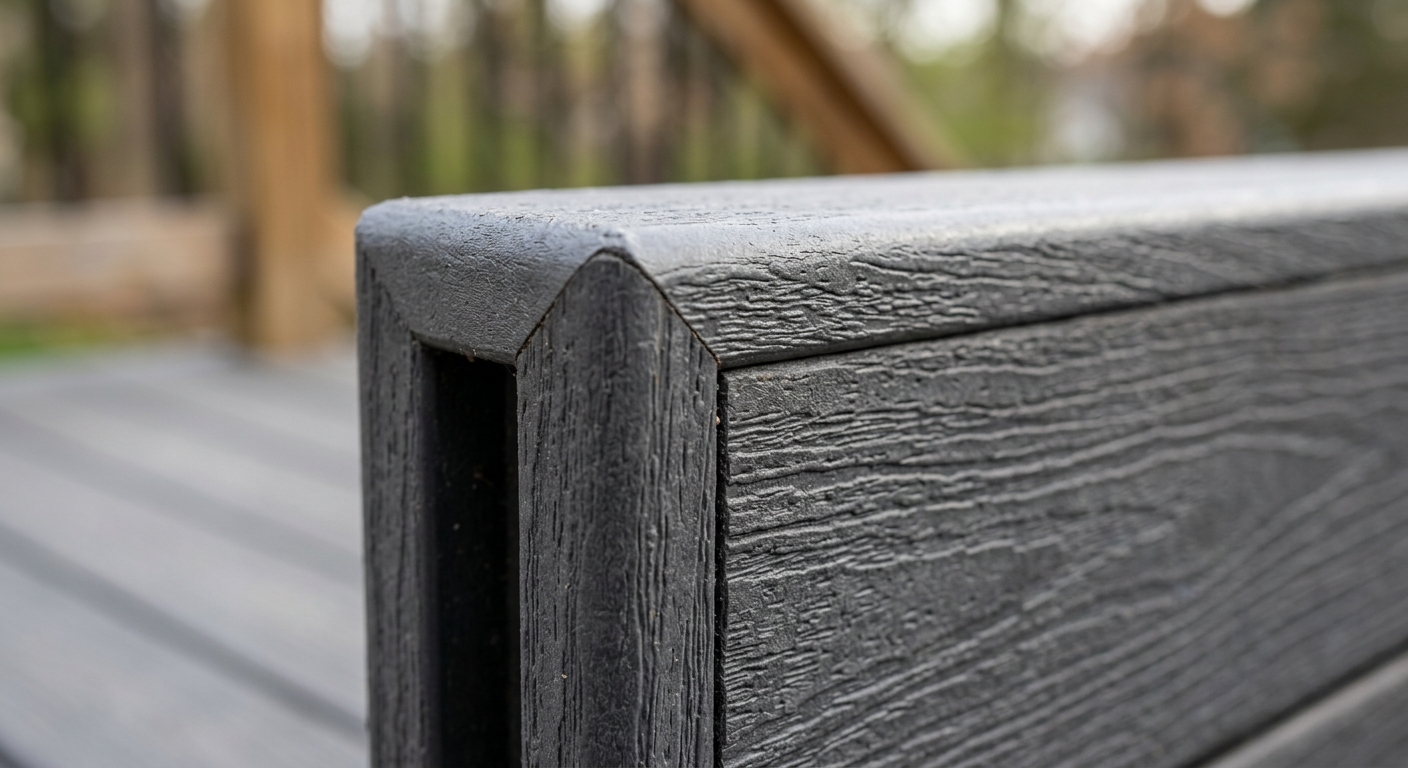
Composite vs. Cedar on Mercer Island: A 10-Year Cost Comparison
The decision between composite and cedar on Mercer Island is not a pure preference question — it is a financial and durability analysis that, when done honestly, points clearly toward composite for most island lots. This section lays out the actual cost comparison with real Mercer Island-specific pricing, not national averages.
Initial Material and Installation Costs
Composite decking material (Trex, TimberTech, AZEK) runs $6 to $12 per square foot for material alone, depending on product line. Cedar clear-heart decking boards run $3 to $6 per square foot for material. At a glance, cedar wins on material cost. But installed cost is what matters for project budgeting, and labor rates in the Seattle area run $85 to $95 per hour and represent roughly 70% of total deck project cost — which narrows the material cost gap considerably.
For a representative 300-square-foot Mercer Island deck replacement:
| Cost Category | Cedar | Composite (Mid-Range) | Composite (Premium) |
|---|---|---|---|
| Decking material | $900–$1,800 | $1,800–$2,700 | $2,700–$3,600 |
| Fasteners + hardware | $200–$350 | $300–$500 (hidden) | $400–$600 (hidden) |
| Labor (install) | $7,650–$8,550 | $7,650–$8,550 | $7,650–$8,550 |
| Year 1 total (materials + labor) | $8,750–$10,700 | $9,750–$11,750 | $10,750–$12,750 |
| Maintenance Year 2 | $1,200–$1,800 | $0 | $0 |
| Maintenance Year 4 | $1,200–$1,800 | $0 | $0 |
| Maintenance Year 6 | $1,200–$1,800 | $0 | $0 |
| Maintenance Year 8 | $1,200–$1,800 | $0 | $0 |
| Maintenance Year 10 | $1,200–$1,800 | $0 | $0 |
| 10-Year Total | $14,750–$19,700 | $9,750–$11,750 | $10,750–$12,750 |
These figures assume the frame is sound in both cases and only the decking surface is being replaced. They also assume the homeowner stays on the cedar maintenance schedule — many do not, which accelerates deterioration and increases the 10-year total further.
Warranty Comparison
Composite manufacturers have significantly extended their warranty coverage over the past decade. Trex offers a 25-year fade and stain warranty on their Transcend and Select lines. TimberTech AZEK offers a 30-year warranty covering fade, stain, and performance on their AZEK PVC line. Fiberon offers comparable coverage on their Horizon and Paramount products. Cedar decking carries no manufacturer warranty — its longevity depends entirely on installation quality, site conditions, and maintenance discipline.
For Mercer Island's waterfront properties specifically, AZEK PVC decking from TimberTech warrants specific attention. PVC (as opposed to wood-plastic composite) contains no wood fiber at all, making it impervious to the moisture absorption cycle that drives checking and rot in wood-based materials. On a lake-facing waterfront lot in Proctor Landing or the shoreline streets east of SE Mercer Way, AZEK PVC eliminates the moisture concern entirely rather than managing it.
The Resurfacing Option
Not every Mercer Island cedar deck needs full replacement. If the existing frame — posts, beams, joists, and ledger — is structurally sound, resurfacing the deck by removing old cedar boards and installing composite decking over the existing frame costs 30 to 50% less than a full tear-down-and-rebuild. On a 300-square-foot deck, that is a savings of $5,000 to $10,000.
The catch is that the frame must genuinely be sound. On older Mercer Island builds — many of the homes in the neighborhoods east and west of Island Crest Way were built in the 1970s and 1980s with decks added shortly after — the frame may have been built with materials and methods that are now 30 to 40 years old. A thorough structural assessment before committing to resurfacing is not optional. We discuss the assessment process in detail later in this guide.
Navigating Mercer Island's Tree Preservation Ordinance Before You Pour a Footing
This is the section that most deck planning guides skip, and it is the one that can derail a Mercer Island project most expensively if you do not address it early. The City of Mercer Island's Tree Preservation Ordinance is not a minor procedural hurdle — it is a substantive regulatory requirement with real consequences for deck footprint design, and it has teeth.
What the Ordinance Actually Requires
Mercer Island updated its Critical Area code in 2019, and the tree preservation provisions were strengthened as part of that update. As stated directly on the City of Mercer Island's tree permits page, any tree removal on private property — even outside an active development project — requires a Non-Development Tree Application Permit and may require additional review if the tree is located in a Critical Area.
Critical Areas on Mercer Island include geologically hazardous areas (steep slopes, erosion-prone soils, landslide hazard areas), wetlands, and their associated buffers. A significant portion of the island's residential lots touch one or more of these designations, particularly the hillside lots above the shoreline. If a tree you need to remove to clear the footprint of your deck sits within a Critical Area or its buffer, the review process is more involved and the outcome is not guaranteed.
The City provides an Interactive Tree Permit Map — accessible through the City's Community Planning and Development (CPD) department portal — that allows you to check a specific parcel for tree permit requirements before you commit to a deck footprint. This tool should be the first thing any Mercer Island homeowner or contractor uses when laying out a new deck. Discovering a permit requirement after you have finalized a design and submitted for a building permit adds weeks and potentially months to the project timeline.
How Tree Placement Affects Deck Footprint Design
The practical implication for deck design is significant. If the location where your posts and footings need to go is occupied by a protected tree, you have three options: apply for a tree removal permit and wait for approval (which is not guaranteed), redesign the deck footprint to work around the tree, or explore foundation alternatives like helical piers that can sometimes be positioned to minimize root disturbance. None of these are fast.
The critical-area buffer zones are also relevant even when no tree removal is involved. A deck footing placed within a geologically hazardous area buffer may trigger Critical Area review of the building permit application itself, requiring a geotechnical report. The cost of that report — typically $2,500 to $5,000 for a standard site assessment on Mercer Island — can be a significant addition to a project budget that was not planned for it.
Important
Working with the City's CPD Department
The City of Mercer Island's Community Planning and Development department handles both tree permit applications and building permit review. Their office is located at 9611 SE 36th Street in Mercer Island. For projects that require both a tree permit and a building permit, there is some benefit to initiating both conversations simultaneously — the tree permit review timeline can sometimes run concurrently with building permit plan check, rather than sequentially, if the application sequencing is handled correctly.
An experienced Mercer Island deck contractor will know the CPD staff and the current processing timelines. That familiarity has real value — knowing whether to expect a two-week or a six-week tree permit review at a given point in the year, and how to structure your building permit application to avoid triggering unnecessary additional review, is institutional knowledge that reduces project duration and cost.
Our detailed walkthrough of the permit process — including how to read Mercer Island's permit fee schedule and what triggers full plan review versus a streamlined simple project path — is covered in our King County deck permit guide, with Mercer Island-specific callouts throughout.
Permit Roadmap: City of Mercer Island Building and Shoreline Master Program Requirements
Mercer Island's permitting framework has more layers than most homeowners expect when they start a deck project. Understanding the permit structure before you engage a contractor — and understanding which permits apply to your specific lot — avoids the expensive surprise of discovering mid-design that your project requires an additional regulatory review.
The Basic Building Permit Trigger
The threshold is clear: any deck over 30 inches above grade requires a City of Mercer Island building permit. As documented on the City's permits page, basic decks not in geologically hazardous areas or critical-area buffers may qualify as "simple projects" and move through an expedited review path. All others route through full plan review with CPD.
Full plan review means your project will require:
- Engineered drawings or architect-stamped plans (for more complex structures)
- Site plan showing setbacks, existing structures, and any trees within the project area
- Structural design details for posts, beams, joists, and ledger connection
- Potentially a soils report or geotechnical review if the site involves slopes, fill soils, or proximity to erosion-prone areas
Projects in geologically hazardous areas — which include many of the hillside lots with significant grade changes that are common throughout Mercer Island — almost always fall into the full plan review path, regardless of deck height.
Permit Fees on Mercer Island
The City of Mercer Island scales permit fees with project value. Based on current fee schedules:
| Project Value | Estimated Permit Fee |
|---|---|
| Under $10,000 | $300–$600 |
| $10,000–$25,000 | $600–$1,200 |
| $25,000–$60,000 | $1,200–$2,500 |
| Over $60,000 | Calculated per valuation schedule |
Structural engineering review, when required by CPD as a condition of permit issuance, adds $800 to $2,500 to project costs depending on the scope of the review and the complexity of the structure.
Shoreline Master Program: The Second Permit Layer
Waterfront lots on Mercer Island face an additional permitting requirement that inland lots do not: compliance with the City's Shoreline Master Program (SMP). The SMP establishes setback requirements for structures near Lake Washington's shoreline, restricts certain types of overwater development, and in some cases limits the size or configuration of decks on waterfront lots.
The practical impact varies by lot. A deck addition set well back from the shoreline setback line on a large waterfront parcel may not trigger SMP review. A deck expansion that pushes toward the water on a narrower lot can require a Shoreline Substantial Development Permit, which involves a separate application, a public comment period, and a longer review timeline than a standard building permit.
For Mercer Island homeowners with lake-facing lots — in areas like the west shoreline neighborhoods north of West Mercer Way, the Proctor Landing area, or the east shore communities along East Mercer Way — the first conversation with any contractor should include a clear question about SMP applicability. Getting that wrong by starting construction without a required SMP permit can result in mandatory removal of completed work.
Note
Who Pulls the Permit?
In Washington State, the licensed general contractor is responsible for pulling permits for the work they perform. Any Mercer Island deck contractor you hire should be pulling permits as a standard part of their process — not as an optional add-on. A contractor who suggests building without permits, or who prices the job "unpermitted," is not a contractor you want on a Mercer Island project. The City inspects deck work, and a deck built without required permits creates title issues when you sell, potential insurance complications, and personal liability if anyone is injured on an unpermitted structure.
I-90 Delivery Logistics: How Island Access Affects Your Build Timeline and Budget
This is a topic that most deck project guides do not cover because most deck projects are not on an island. Mercer Island is. Every material delivery to every job site on Mercer Island routes through the I-90 floating bridge and the island's limited interchange network. There is no alternate route. There is no "we'll take the back way" option. Understanding this constraint is essential for anyone planning a Mercer Island deck project.
The Infrastructure Reality
I-90 is one of the most congested corridors in Washington State, particularly during the peak morning and evening commute windows. More relevantly for construction projects, I-90 is subject to regular lane closures for maintenance, bridge deck work, and the ongoing construction associated with Sound Transit's East Link light rail extension. Lane closures on I-90 — particularly the express lanes and the reversible center roadway — are not uncommon, and when they happen, they can add significant time to deliveries that were scheduled for early morning to beat traffic.
The island has a limited number of interchange exits. Lumber and composite material deliveries typically come from distribution yards in Renton, Kent, or Tukwila, and delivery drivers must navigate to one of the island's interchange exits, navigate the island's residential street network (which is not designed for large flatbed trucks), and reach the job site. On lots with significant grade change — hillside properties in the Roanoke neighborhood or on the slopes east of Island Crest Way — the final approach to the delivery point can be constrained enough that material staging requires planning and sometimes a smaller secondary delivery vehicle for the last segment.
How This Affects Scheduling
Experienced Mercer Island contractors build delivery scheduling into their project timeline differently than they would for a Bellevue or Kirkland project. Specific strategies include:
Early-morning delivery windows: Many suppliers accommodate early delivery windows (6:00 to 7:30 AM) before peak I-90 congestion. This adds complexity to job scheduling but reduces the risk of late material arrival delaying a crew that is already on site.
Consolidated deliveries: Rather than taking multiple partial deliveries as materials are needed, a Mercer Island project will typically consolidate material orders to minimize the number of I-90 crossings required. This means upfront material procurement planning is more detailed than on a mainland project.
Buffer days in the schedule: Scheduling that assumes materials will arrive exactly on time is optimistic for any project, but it is particularly so for a Mercer Island project. Building in one or two buffer days around critical delivery windows — particularly for large items like the framing lumber delivery or the composite decking pallet drop — is standard practice.
I-90 closure monitoring: WSDOT publishes planned I-90 closure schedules, and a contractor managing a Mercer Island project will be checking those schedules during the scheduling phase of the project. A permit-approved project that loses a delivery window to an unexpected I-90 closure can result in a crew idle day, which at $85 to $95 per hour for skilled labor adds up quickly.
Tip
Cost Implications
The logistics reality translates into modest but real cost differences compared to mainland Seattle projects. Delivery surcharges from some suppliers for Mercer Island addresses reflect the extra time and complexity of island delivery. Consolidated ordering requires more upfront capital because materials are purchased earlier in the project lifecycle. And the possibility of a weather or congestion-related idle day means project contingency budgets on Mercer Island should be slightly higher than on comparable mainland projects.
These are not dramatic differences — we are not talking about adding 20% to a project budget. But a contractor who pretends the logistics are the same as a Bellevue project is either not paying attention or is not being honest with you about where schedule risk lives.
Repair or Replace? How to Assess Your Existing Cedar Frame Before Committing
The single most important decision on a Mercer Island cedar deck replacement project is one that has to be made before a material order is placed: can the existing frame be saved, or does the entire structure need to come down? Getting this wrong in either direction is expensive. Replacing a frame that could have been saved wastes $5,000 to $10,000 in unnecessary demolition and framing costs. Resurfacing over a frame that has hidden structural deficiencies creates a liability and a future problem that will be more expensive to fix after the new decking is installed.
The Frame Assessment Process
A proper frame assessment for a Mercer Island cedar deck starts with access. To evaluate joists, beams, and posts properly, the existing decking surface typically needs to be at least partially removed — or the assessor needs access from below through the crawlspace or under-deck area. A visual inspection from deck level looking down through board gaps is not sufficient to evaluate joist condition.
What to check for on the framing:
Ledger board condition and flashing: The ledger board — the framing member bolted to the house that supports the inside edge of the deck — is the most common point of failure on aging Mercer Island decks. On older installations, ledgers were often installed directly against the house sheathing without proper flashing, creating a moisture trap that allows water infiltration behind the ledger and into the house framing. If the ledger shows soft spots, visible rot, or has inadequate flashing detail, it must be replaced regardless of the condition of the rest of the frame.
Joist condition: Run an ice pick or awl along the top surface of each joist, paying particular attention to the ends (where joists are most moisture-exposed), the areas directly beneath deck board gaps (which allow water to concentrate), and any area where a joist penetrates or contacts a beam. Soft wood that the awl penetrates easily indicates decay. Moderate surface checking without penetration may be acceptable with appropriate treatment. Significant checking or any punky, soft fiber is disqualifying.
Beam and post base condition: Post bases are extremely vulnerable on Mercer Island's wet sites. Concrete footings that are too close to grade collect standing water. Post bases that are set directly in concrete without proper hardware corrosion protection (which was common in installations before the 2000 code updates) can show advanced corrosion. Any post showing base rot must be replaced.
Hardware condition: Look at every joist hanger, post cap, and structural connector. On older decks, these are often galvanized hardware rather than stainless or hot-dipped galvanized, and after 20 to 30 years in Mercer Island's wet climate they can be significantly corroded. Corroded hardware does not provide the structural capacity it was designed for.
Decision Framework
| Frame Condition | Recommended Path |
|---|---|
| Ledger sound, joists sound (less than 10% with soft spots), hardware intact | Resurfacing — 30–50% cost savings versus full replacement |
| Ledger needs replacement, joists mostly sound | Ledger replacement + resurfacing — still less expensive than full replacement |
| Multiple joists compromised, beam checking, post base issues | Full replacement — resurfacing over this frame creates liability |
| Any evidence of house framing damage from ledger moisture infiltration | Full replacement + house framing repair before new deck |
The financial logic is straightforward. If resurfacing saves $7,500 on a $15,000 project but requires a $2,000 joist sistering repair and $1,500 ledger flashing work, you are still net ahead by $4,000 compared to full replacement — and you have a properly detailed frame that will support the new composite decking surface properly.
Our article on deck addition considerations in Seattle covers the structural assessment process in more detail, including what to look for when adding a new deck to an existing structure rather than replacing an existing one.
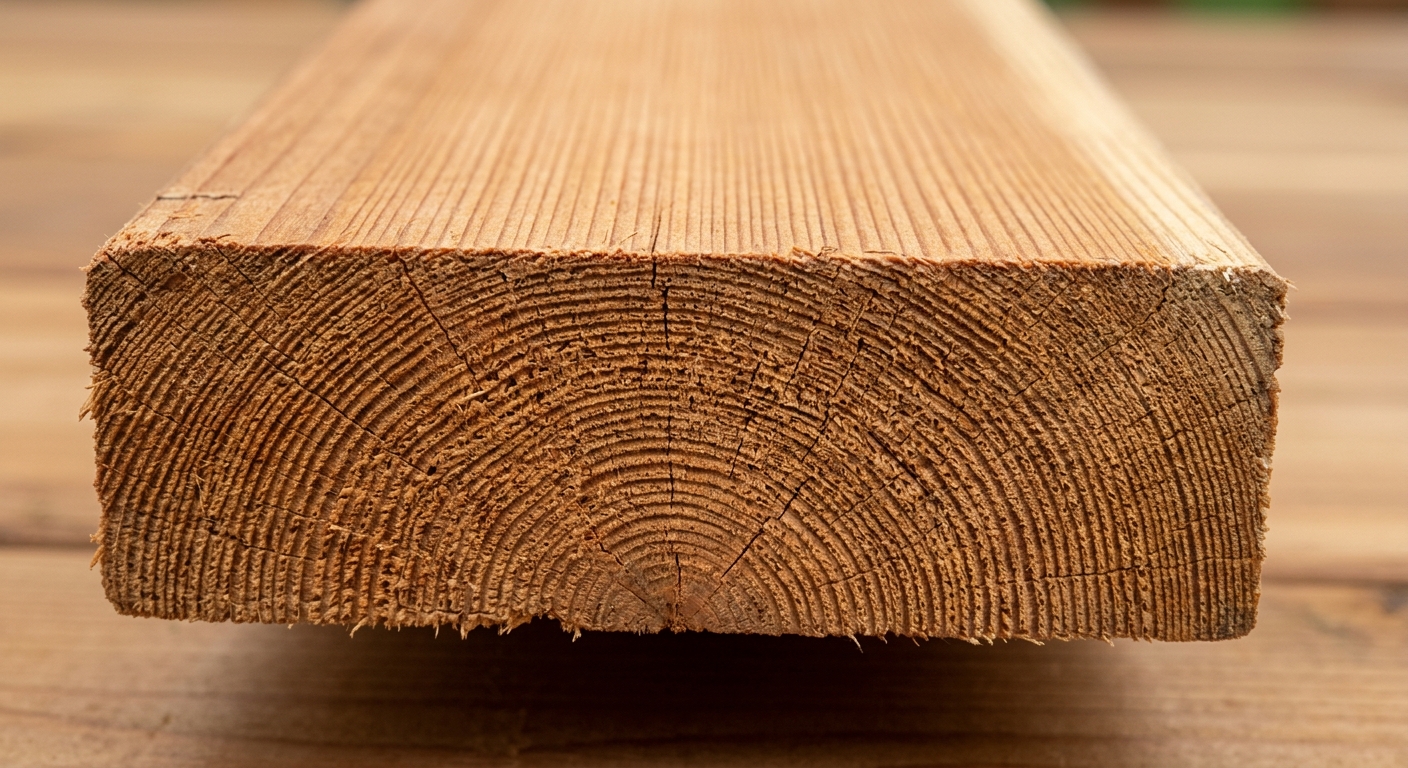
Choosing the Right Composite for Mercer Island's Waterfront and Canopy Shade Conditions
Not all composite decking products are equal, and the specific conditions on Mercer Island — high moisture, canopy shade, potential waterfront exposure — make product selection a more consequential decision than it would be on a drier, more exposed site. This section breaks down the major product lines and explains which performs best in which Mercer Island condition.
Understanding the Product Categories
The composite decking market has two primary product types that are relevant to Mercer Island projects:
Wood-plastic composite (WPC): Products like Trex Transcend, Fiberon Horizon, and TimberTech Evolutions are made from a blend of recycled wood fiber and polyethylene plastic. They are substantially more resistant to moisture than wood decking, but they still contain wood fiber, which means they can absorb some moisture and are not entirely impervious to biological growth under persistent wet conditions. Most WPC products have a protective polymer cap layer on all four sides (capped composite) that significantly reduces moisture exposure to the wood fiber core.
PVC (cellular PVC): Products like AZEK from TimberTech are made from 100% cellular PVC with no wood fiber content. They cannot absorb moisture, cannot rot, and are impervious to insect damage. They are the most resistant decking material available for high-moisture applications. Trade-offs include higher material cost and a slightly different underfoot feel than wood-fiber composite.
Product Recommendations by Mercer Island Site Type
Waterfront lots (east and west shoreline): AZEK PVC is the unambiguous recommendation for lake-facing waterfront lots. The combination of spray moisture, high humidity, and the presence of boat traffic and watercraft creates an extreme moisture exposure environment. A material with zero wood fiber content eliminates the moisture absorption concern entirely. TimberTech's AZEK line includes profiles specifically designed for coastal and high-moisture environments.
Hillside canopy-shaded lots: Trex Transcend Lineage or TimberTech Vintage Coastline in a capped composite formulation are appropriate for most shaded hillside lots. The protective cap layer on all four sides is essential — uncapped composite on a Mercer Island shaded site will develop surface mold and algae faster than you want. Look specifically for products with mold and mildew resistance ratings.
South-facing, more sun-exposed lots: Any of the major capped composite lines will perform well in more exposed conditions. Color selection matters more in sun-exposed applications because heat buildup on darker boards can affect barefoot comfort. Trex Signature or Fiberon Paramount in lighter color palettes work well.
Under-deck and semi-enclosed applications: If your deck design includes an underdeck system for covered outdoor living underneath an elevated deck — a common configuration on hillside Mercer Island lots — material selection for the underside structure should account for even higher moisture exposure than the deck surface itself. Stainless hardware, pressure-treated or composite framing, and proper drainage detailing matter significantly in these applications.
Hidden Fastener Systems
For composite decking on a Mercer Island project, hidden fastener systems are strongly preferred over face-screwed installations. Hidden fasteners eliminate the surface penetrations that can allow moisture infiltration on a wood-fiber composite product, and they produce a cleaner visual finish. Most major composite manufacturers offer proprietary hidden fastener systems designed for their specific products. Using a manufacturer-matched fastener system is important for maintaining warranty coverage.
Tip
For a direct comparison of the three major composite brands available in the Seattle market, our guide on Trex vs. Fiberon vs. TimberTech in Seattle covers head-to-head performance, warranty terms, and pricing in the current market.
Mercer Island Neighborhoods: Site-Specific Deck Design Considerations
Mercer Island is small enough — roughly 5.5 miles long by 1.5 miles wide — that it can seem like a single homogeneous community. In practice, the deck design and permitting challenges vary meaningfully by neighborhood, lot position, and proximity to water. Understanding which considerations apply to your specific location saves time and avoids surprises.
North Mercer Island (North of I-90)
The neighborhoods north of I-90 — including the areas around North Mercer Way and the residential streets north of the interchange — tend to have somewhat smaller lots than south island properties, with a mix of mid-century homes and more recent construction. Deck projects here are often additions to existing homes rather than replacements of aging structures. The proximity to I-90 itself — construction noise, the elevated freeway structure — is a context factor for outdoor living design. Canopy density is high in many north island neighborhoods.
Permit considerations in the north island area are standard City of Mercer Island requirements. The geologically hazardous area designations are less prevalent in some of the flatter north island neighborhoods, which may allow some projects to qualify for the streamlined simple project permit path.
Central Island (Island Crest Corridor)
The central island neighborhoods along and east and west of Island Crest Way contain the largest concentration of hillside lots with significant grade changes. Homes here are often set on lots that step down from the street to a lower rear yard, creating the demand for elevated decks — sometimes two stories above the lower grade — that define much of the deck replacement work we do on Mercer Island.
These are the projects where the full structural assessment framework matters most. An elevated deck on a hillside lot involves more complex framing, taller posts with potential bracing requirements, and greater exposure to the moisture-shade conditions that degrade wood fastest. They are also the projects where the geologically hazardous area designation is most likely to apply, triggering full plan review and potentially a geotechnical report requirement.
West Shore (West Mercer Way and Adjacent Streets)
The west shore corridor is the most topographically dramatic part of the island, with the hillside dropping steeply from Island Crest Way down to West Mercer Way and the lake. Properties here often have multi-level outdoor living structures that cascade down the hillside, sometimes combining a deck at the main living level with lower terraces or platforms. The shoreline proximity means SMP compliance is a routine consideration rather than an edge case for projects on this side of the island.
Waterfront lot deck projects on the west shore frequently involve AZEK PVC decking for the lake-facing exposure, cable railing systems for view preservation, and multi-level structural designs that require engineering review. For projects involving cable railing on these high-exposure sites, our cable railing guide for Seattle projects is relevant reading.
East Shore (East Mercer Way and Lake Washington Boulevard SE)
The east shore has a mix of waterfront properties and hillside lots stepping up from the water. The residential neighborhoods east of Island Crest Way and the communities along East Mercer Way have some of the island's largest lots and most substantial homes, and deck replacement projects here often involve larger square footages — 400 to 600 square feet is not uncommon for a primary outdoor living deck on a larger east shore property.
The east shore also has several properties with aging dock and deck infrastructure that predates current code — structures built in the 1970s and 1980s that are now reaching the end of their service life simultaneously in a way that is creating a significant backlog of replacement project demand.
Roanoke Neighborhood (Southwest Island)
The Roanoke area in the southwest quadrant of the island combines hillside topography with older residential stock. Many homes in this neighborhood have original decks built in the early construction period of the neighborhood, and the combination of age, the microclimate conditions described throughout this guide, and deferred maintenance means a high proportion of Roanoke area deck assessments result in full replacement recommendations rather than resurfacing.
2026 Mercer Island Deck Pricing: What to Expect From First Quote to Final Inspection
Getting an accurate estimate for a Mercer Island deck project requires understanding the cost components that are specific to the island, not just the general Seattle market rates. This section gives you a realistic cost framework for the most common project types, built from actual Mercer Island pricing rather than national averages.
Complete Cost Framework by Project Type
Cedar resurfacing with composite (existing frame retained):
- 200 sq ft deck: $12,000–$18,000
- 300 sq ft deck: $16,000–$24,000
- 400+ sq ft deck: $22,000–$35,000
This assumes the frame passes structural assessment and requires only minor repairs (ledger flashing, a few sistered joists). Material selection within the composite range (WPC vs. PVC, product tier) affects the upper and lower bounds.
Full replacement — standard composite (no critical area complications):
- 200 sq ft deck: $18,000–$28,000
- 300 sq ft deck: $25,000–$40,000
- 400+ sq ft deck: $35,000–$60,000+
Full replacement — elevated hillside deck (over 4 ft above grade, requires engineering):
- Add $3,000–$8,000 for engineering review, additional structural members, and bracing
- Geotechnical report (if required): add $2,500–$5,000
Waterfront deck with SMP compliance and AZEK PVC:
- Premium of $8–$15 per sq ft over standard composite pricing for material upgrade
- SMP permit processing: add $1,500–$3,000 for permit fees and potential consultant fees if the SMP application is complex
Installed cost ranges for common Mercer Island deck project types. Elevated hillside range includes engineering; waterfront range includes AZEK PVC premium and SMP permit costs.
| Category | Value |
|---|---|
| Resurface 300sqft | $20,000 |
| Full Replace 300sqft | $32,000 |
| Elevated Hillside 300sqft | $40,000 |
| Waterfront AZEK 300sqft | $45,000 |
| Multi-Level 400sqft+ | $55,000 |
Where the Money Goes
Labor is the dominant cost on any Seattle-area deck project, running $85 to $95 per hour and representing roughly 70% of total project cost. On a Mercer Island project, that labor cost allocation does not change — but the number of hours required can be higher than a comparable mainland project because of site access constraints (hillside lots, limited staging areas), delivery coordination, and any complications from critical area or SMP compliance.
Permit fees are a real line item: $600 to $2,500 depending on project value, plus any engineering review costs. Experienced contractors include permit fees in their project quotes — be cautious of bids that show permit costs as a separate pass-through item without a clear estimate, as this can be a way of making a bid look lower than it actually is.
Material escalation in the current market has stabilized somewhat after the volatility of 2022 to 2024, but composite decking material pricing remains subject to manufacturer price adjustments. Locking in material pricing with a signed contract is important on larger projects where there is a meaningful lag between bid and construction start.
The NADRA Benchmark
The National Association of Deck and Railing professionals (NADRA) tracks deck project costs and value nationally. The NAR Remodeling Impact Report consistently ranks deck additions among the highest-ROI home improvement projects for resale value. In the Seattle market — and Mercer Island specifically, where outdoor living space is at a premium given the island's lot sizes and the premium that buyers place on Lake Washington views and forest surroundings — a well-built composite deck reliably contributes positive value to a home sale.
The ROI question for Mercer Island homeowners doing a deck replacement is not just "what does this cost?" but "what is the alternative?" A failing cedar deck that is visible in listing photos, that requires disclosure, or that fails a buyer's home inspection is a negotiating liability. A professionally rebuilt composite deck in excellent condition is a premium feature.
For a comprehensive look at how deck projects are priced across the greater Seattle area, our Seattle deck cost guide covers the full market including per-square-foot benchmarks by material, labor cost breakdown, and permit fee expectations across King County jurisdictions.
Key insight
Why Local Contractor Experience Matters on Mercer Island
Mercer Island deck projects are not interchangeable with Bellevue or Redmond deck projects. The regulatory environment, the site conditions, the delivery logistics, and the microclimate all create a body of project-specific knowledge that only comes from having built decks on the island repeatedly over many years. Choosing a contractor with genuine Mercer Island experience is not just a preference — it is a practical risk management decision.
What a Mercer Island-Experienced Contractor Knows
The CPD staff and current permit processing windows. Permit processing times at the City of Mercer Island's Community Planning and Development department fluctuate based on staffing and backlog. An experienced local contractor knows whether the current processing window for a simple project is two weeks or six weeks, and can advise you accordingly on project scheduling. They also know which permit reviewers handle deck projects and what their specific review concerns tend to be — which reduces the likelihood of a comment letter that delays permit issuance.
Which lots are likely to be in critical areas. After doing multiple projects in a neighborhood like Roanoke or along the west shore hillside, a contractor develops a working familiarity with which lot positions typically trigger geologically hazardous area review and which do not. This is not a substitute for the official determinations the City makes, but it means experienced contractors can flag the likely permit path early in the design process rather than after design is already complete.
Supplier relationships that account for Mercer Island logistics. The lumber yards and composite material distributors in the Kent and Renton areas have their own familiarity with Mercer Island deliveries. An established contractor has working relationships with drivers and dispatch coordinators at these yards who understand the island's constraints and can flag I-90 closure issues proactively.
The design vocabulary for hillside lots. Hillside deck projects on Mercer Island have a specific set of structural and aesthetic requirements — tall post systems with lateral bracing, under-deck drainage systems, multi-level transitions — that require design experience. A contractor who primarily builds ground-level decks on flat suburban lots will be in unfamiliar territory on a 12-foot elevated Mercer Island hillside project.
HOA and Aesthetic Considerations
Some Mercer Island communities have HOA covenants or architectural control committee requirements that affect deck design. Several of the planned communities on the island — particularly some of the condo and townhome developments near the town center — have deed restrictions or HOA rules governing deck materials, colors, and railings that apply in addition to City permit requirements. Knowing to check HOA documents before finalizing a design, and having experience navigating HOA approval processes on previous projects, is another dimension of local contractor knowledge that matters.
For homeowners considering railing options — which are often a significant aesthetic decision on a prominent Mercer Island deck — our Seattle deck railing options guide covers the current range of materials and styles with specific attention to how different railing systems perform in the PNW climate.
Licensing and Insurance in Washington State
In Washington State, deck construction requires a licensed general contractor with the appropriate classifications. Verify that any contractor you hire holds a current Washington State contractor's license (verifiable through the Department of Labor and Industries lookup tool) and carries general liability insurance with limits appropriate for your project value. For a $30,000 to $50,000 project, minimum general liability limits of $1 million per occurrence are appropriate. Workers' compensation coverage is also required for any contractor employing workers in Washington State — do not accept assurances about this; ask for the certificate of insurance.
The Complete Mercer Island Deck Build Timeline
Understanding what a realistic project timeline looks like from initial contact to final inspection helps Mercer Island homeowners plan their project in relation to their use season. Mercer Island's outdoor season runs roughly from late May through October — planning a project that misses the season because of permit delays or scheduling conflicts is a real cost in terms of use and enjoyment.
Typical Timeline Breakdown
Phase 1 — Site visit and design (2–4 weeks): Initial site visit, structural assessment of existing structure if applicable, design development, preliminary material selection. Tree permit map review and preliminary critical area assessment. Initial HOA consultation if applicable.
Phase 2 — Permitting (3–10 weeks): This range reflects the real variability in Mercer Island permit processing. A simple project on a straightforward inland lot may sail through in three weeks. A project in a critical area buffer requiring full plan review, or a waterfront project requiring SMP permit, may take eight to ten weeks or longer. Start the permit phase as early as possible — ideally in winter for a spring or early summer construction target.
Phase 3 — Material procurement (1–2 weeks after permit issuance): Order composite decking, hardware, railing system, and structural materials once permit is in hand. Consolidated ordering for Mercer Island delivery. Confirm delivery windows with I-90 closure schedule in mind.
Phase 4 — Construction (1–4 weeks depending on project scope): Demolition of existing structure (if full replacement), framing, decking installation, railing installation, stair construction, lighting if specified. City inspection at framing stage and final inspection upon completion.
Phase 5 — Final inspection and closeout (1–2 weeks): City final inspection, any punch list corrections, project closeout and final documentation.
Total realistic timeline from first contact to completed deck: 12–20 weeks. For a summer outdoor season target, the practical implication is that Mercer Island homeowners who want to be using their new deck by July 4th should be making their first contractor contact no later than mid-February.
Note
Best Decking Materials for Mercer Island's Specific Conditions
Pulling together the site-specific analysis from throughout this guide, here is a direct summary of material recommendations organized by Mercer Island condition type. This is builder judgment based on project experience and manufacturer product performance data — not marketing copy.
For Maximum Durability in High-Moisture Shaded Conditions
AZEK PVC (TimberTech) — Best performer. No wood fiber, no moisture absorption, impervious to the biological growth that affects wood-fiber composites under persistent canopy shade. Highest material cost but lowest 20-year total cost of ownership.
Trex Transcend (capped composite) — Strong performer with four-sided cap protection and specific mold/mildew resistance. More widely available and typically $2–$4 per square foot less expensive than AZEK. Appropriate for most shaded inland Mercer Island lots.
TimberTech Evolutions (capped composite) — Comparable to Trex Transcend in performance. TimberTech's warranty language on mold and stain resistance is strong. Available through Pacific Northwest distributors.
For Waterfront Applications
AZEK PVC — Non-negotiable recommendation for direct lakefront exposure. The combination of spray, humidity, and UV at the water's edge is the most demanding condition on the island, and PVC's complete absence of wood fiber is the right specification for it.
For Cost-Effective Resurfacing Projects
Fiberon Horizon (capped composite) — Fiberon's mid-tier product line offers solid four-sided cap protection at a price point that makes resurfacing economics work on smaller budgets. Not the top-tier performer under the most extreme conditions, but appropriate for inland lots where the existing frame is sound and the goal is a durable low-maintenance surface at a competitive price.
For a comprehensive evaluation of the full composite product landscape in the current Seattle market, our best decking materials for Seattle 2026 guide covers all major product lines with specific performance notes for PNW climate conditions.
Working With The Seattle Decking Company on Your Mercer Island Project
The Seattle Decking Company builds decks throughout King County, with specific depth of experience on Mercer Island projects. Our team understands the Tree Preservation Ordinance, the CPD permit process, the Shoreline Master Program requirements for waterfront lots, and the I-90 delivery logistics that make Mercer Island projects different from mainland King County builds.
We work with the full range of composite products discussed in this guide — Trex, TimberTech AZEK, Fiberon — and we pull permits on every project as a non-negotiable part of our process. We do not build without permits, and we do not recommend that our clients do either.
If you have an aging cedar deck on a Mercer Island property — whether it is a hillside lot above Roanoke, a waterfront property on East Mercer Way, or a canopy-shaded home in the Island Crest neighborhoods — the right starting point is a structural assessment visit to evaluate the frame condition and give you an honest recommendation on resurfacing versus full replacement. That conversation shapes everything that comes after it: design, material selection, permit path, and timeline.
To schedule a consultation for your Mercer Island deck project, contact The Seattle Decking Company at (425) 675-6259 or visit our contact page. Our office is located at 22722 29th Drive SE, Bothell, WA 98021 — a short drive from I-90 east, which means we are familiar with the corridor your materials will be traveling every day of your project.
You can also explore our complete Seattle deck cost guide for current pricing across King County, or read our breakdown of composite decking maintenance in the Seattle climate to understand what the ownership experience looks like after your new deck is built.
Frequently Asked Questions
Do I need a permit to build or replace a deck on Mercer Island?
Can I remove a tree on my Mercer Island property to build a deck without a permit?
How much does a deck cost on Mercer Island in 2026?
Is composite decking really better than cedar for Mercer Island specifically?
What is the Shoreline Master Program and does it affect my Mercer Island deck project?
How does Mercer Island's I-90 access affect a deck building project?
How do I know if my existing cedar deck frame can be reused for a composite resurfacing project?
What type of composite decking is best for a waterfront Mercer Island lot?
What permit fees should I expect for a Mercer Island deck project?
How long does it take to build a deck on Mercer Island from start to finish?
Do Mercer Island HOAs have requirements that affect deck design?
What is the difference between a simple project permit and a full plan review for a Mercer Island deck?
Planning a deck in the Seattle area?
Get an onsite design review and a clear, itemized quote from a licensed local builder.
Request a Free Quote