
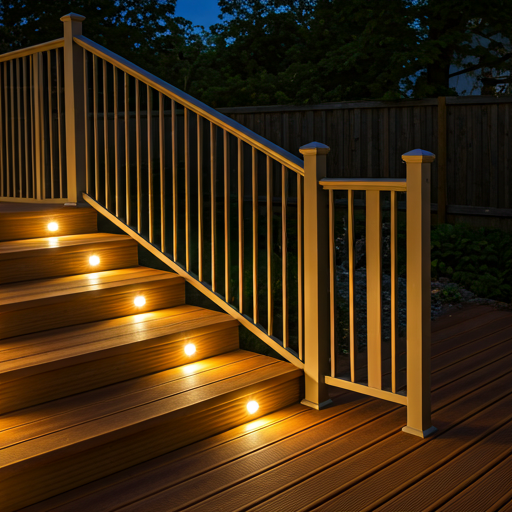
If you have spent any time researching composite decking for a Seattle build, you have run into the same two names over and over: AZEK and Trex. Both are premium brands. Both are heavily marketed. Both have armies of satisfied homeowners posting photos on Instagram. But here in King County, where a Bellevue hillside deck sees 37-plus inches of rain per year, where a Magnolia backyard is shaded by Douglas firs from September through May, and where an elevated Queen Anne deck sits exposed to salt-laden Puget Sound air — the differences between these two products are not marketing distinctions. They are structural ones.
We have built hundreds of decks across King County, Snohomish County, and the surrounding communities. We have seen Trex Transcend hold up beautifully on sun-exposed Sammamish builds. We have seen TimberTech AZEK specified by design-build firms for shaded, high-moisture hillside lots in Magnolia and Capitol Hill. We have also seen homeowners make the wrong call because they chose a product based on national comparison articles written by people who have never had to sweep moss off a 40-foot elevated deck in January. This article is written by builders, for Pacific Northwest homeowners, with real pricing from the current Seattle market and real performance data from our own project history.
The honest answer is: both are excellent products. But "excellent" is not the same as "right for your specific lot, your specific slope, and your specific budget." Let's break down what actually matters when you are choosing between AZEK and Trex for a King County deck build.
Why Seattle's Climate Demands More From Decking Materials Than Anywhere Else in the Lower 48
Most decking comparison guides are written for national audiences. The advice they give — "composite holds up better than wood in wet climates" — is true as far as it goes. But it does not go far enough for a Pacific Northwest homeowner trying to make a $15,000 to $40,000 decision on a deck that will spend six months of every year under a wall of gray rain.
Seattle's climate is not just "wet." It is specifically, relentlessly, consistently damp in ways that create conditions unlike the wet-climate decks most product testing is designed around. Annual rainfall at Sea-Tac Airport averages 37.49 inches per year according to NOAA data — which sounds manageable until you understand that most of that precipitation falls as extended drizzle and overcast, not heavy downpours. A Florida deck might get three inches of rain in a single afternoon storm and then see three dry sunny days to dry out. A Seattle deck gets 0.1 inches of drizzle every day for two weeks straight, with relative humidity rarely dropping below 75% from October through April. That sustained moisture load is categorically harder on decking materials than episodic heavy rain.
Shading: The Variable That National Guides Miss
Beyond raw precipitation, King County lots have a shading problem. Homes in Ballard, Crown Hill, View Ridge, West Seattle, and the Eastside plateau communities are frequently surrounded by mature Douglas firs, western red cedars, and big-leaf maples that shade decks for 60 to 70 percent of daylight hours during the wet season. Shade dramatically slows drying time, allowing moisture to sit on board surfaces and in the gaps between boards for extended periods. This is where organic debris accumulates. This is where algae and moss spores find purchase. This is where the performance gap between a 100% PVC product like AZEK and a wood-composite hybrid like Trex actually shows up in real-world conditions.
Elevated Builds and Air Circulation
Seattle's topography creates a third variable: elevation and slope. Homes in Queen Anne, Magnolia, Capitol Hill, Madison Park, and the hillside neighborhoods of the Eastside sit on steep lots where decks are often elevated 8 to 20 feet above grade. These builds have excellent air circulation underneath — which helps with drying — but also experience higher wind loading and exposure to moisture from multiple directions simultaneously. Elevated decks in Seattle also require more robust permitting and structural engineering, which you can explore in detail through the King County permit office and the Seattle SDCI decks page. Our own deck permit King County guide walks through the local permit process in detail.
The Two-Material Baseline
For Pacific Northwest conditions, our standard baseline is that uncapped composite boards are not appropriate for King County builds. Uncapped boards expose a wood-fiber core that can absorb moisture, swell, and support biological growth in ways that undermine the deck's structural integrity and appearance over time. Industry research from Deck Builder WA confirms this: fully capped composite boards with a polymer shell on all four sides are the minimum specification for Pacific Northwest conditions. Both Trex and TimberTech AZEK produce fully capped products — so the comparison between these two brands starts from the same defensible baseline.
The question is not "which is better for Seattle" in the abstract. The question is: given your specific lot, your specific build height, your specific shading conditions, and your specific budget, which product is the right call? That requires understanding how each product is actually built.
AZEK vs. Trex: How Each Brand Is Built (PVC vs. Capped Composite)
This is the foundational distinction, and it is one that a lot of homeowners gloss over because both products look similar in marketing photos and feel similar underfoot. But the material composition of AZEK and Trex is fundamentally different, and those differences have real consequences for performance in Seattle conditions.
How Trex Is Built
Trex manufactures what is correctly described as capped wood-polymer composite decking. The core of a Trex board — across all product lines, including the premium Transcend series — consists of a blend of reclaimed wood fiber and polyethylene plastic. Trex sources approximately 95% of its manufacturing inputs from recycled materials, including reclaimed sawdust from cabinet shops and reclaimed plastic from plastic bags. The core is then encapsulated on all four sides with a proprietary polymer shell that protects the wood-fiber core from direct moisture contact.
The polymer shell is the key to Trex's durability. Without it, the wood-fiber core would absorb moisture readily. With it, Trex boards achieve a water absorption rate of approximately 0.1 to 0.25 percent — a figure the company documents in its technical data sheets and which independent testing organizations have confirmed. For most climates and most build applications, 0.1 to 0.25 percent water absorption is genuinely negligible. The polymer cap does its job.
Where this becomes relevant for Seattle builders is in edge situations: low-slope builds where water pools rather than drains, shaded lots where boards stay wet for weeks at a time, and elevated builds where wind-driven rain pushes water horizontally against board edges. In those scenarios, the small amount of moisture absorption that Trex boards experience is worth tracking over a 20-plus year service life.
How AZEK Is Built
AZEK — now operating as TimberTech under the parent company CPG Building Products — manufactures 100% cellular PVC decking. There is no wood fiber in an AZEK board. The core is entirely polyvinyl chloride. This means AZEK boards have zero wood content and are completely impervious to moisture. Not resistant to moisture — impervious. Water cannot penetrate a PVC board at any meaningful level.
This distinction matters in two practical ways for Seattle builds. First, AZEK boards will not support the biological processes that wood fiber can support even at trace moisture levels. Second, AZEK boards will not experience the minor swelling and expansion cycles that wood-composite boards can exhibit under sustained wet conditions. From a purely moisture-resistance standpoint, AZEK wins this comparison outright.
Key insight
Trex Product Lines Relevant to Seattle Builds
Trex organizes its decking products into three main tiers. For King County builds, we typically specify from the upper two tiers:
- Trex Transcend: The premium tier. Deepest grain texture, widest color palette, highest polymer cap density. The product that holds up best in Pacific Northwest conditions within the Trex lineup.
- Trex Select: Mid-tier. Good performance in most Seattle conditions. More limited color options.
- Trex Enhance: Entry-level. Adequate for protected builds in drier Seattle microclimates. Not our first recommendation for heavily shaded or low-slope King County lots.
AZEK Product Lines Relevant to Seattle Builds
AZEK (under the TimberTech brand) also organizes products into tiers. The lines most relevant to Seattle builds:
- AZEK Vintage and Arbor Collections: The premium AZEK PVC lines. These are the products Seattle-area builders cite when they say they "spec AZEK" for elevated builds.
- TimberTech Pro Reserve and Pro Legacy: Capped composite (not 100% PVC) products from the same parent company. Better than entry-level composites, but not the same as 100% PVC AZEK boards.
- TimberTech Edge: Entry-level capped composite. Good baseline product but not the moisture-performance leader in the lineup.
This distinction is important: not everything sold under the AZEK or TimberTech brand is 100% PVC. The AZEK-branded lines are PVC. The TimberTech-branded lines include both PVC and capped composite products. When Seattle builders say they "spec AZEK," they are specifically referring to the AZEK PVC products — Vintage, Arbor, and similar collections.
Moisture and Mold Resistance: Head-to-Head in Pacific Northwest Conditions
For Seattle homeowners, no performance category matters more than moisture and mold resistance. This section covers what both products actually do — and don't do — in sustained Pacific Northwest wet conditions.
Moisture Resistance: The Real Numbers
AZEK PVC boards absorb essentially zero moisture. PVC is chemically inert to water; it does not swell, contract, or change structurally in response to moisture exposure. This is the defining performance advantage of 100% PVC decking in a climate like Seattle's.
Trex capped composite boards absorb 0.1 to 0.25 percent of their weight in water under standard testing conditions. In practical terms, a 16-foot Trex Transcend board weighs approximately 40 to 45 pounds. At 0.25% absorption, that board might hold roughly 0.1 pounds of water when fully saturated — a genuinely small number. On a well-drained, properly sloped deck with adequate gapping between boards (our standard spec is 3/16 inch gaps to allow drainage), this level of absorption is not a meaningful durability concern.
The scenarios where it becomes a consideration:
- Low-slope builds where inadequate drainage allows water to pool on board surfaces for extended periods
- Shaded lots in neighborhoods like Maple Valley, Kenmore, or wooded areas of Bellevue where boards stay wet for weeks without drying cycles
- Board ends where the polymer cap is cut during installation and the wood-fiber core is briefly exposed (proper sealing of cut ends with a capped composite sealant addresses this)
Note
Mold and Algae: The Warranty Clause Both Companies Would Rather You Not Read
Here is the honest truth about mold on composite and PVC decking that most brand comparison articles glide past: neither AZEK nor Trex warranties cover mold and mildew growth. Both companies explicitly exclude biological growth from their warranty coverage. This is not an oversight. It is an acknowledgment that any outdoor surface in a moist climate will accumulate mold and algae spores, and the responsibility for maintaining a clean deck surface lies with the homeowner, not the manufacturer.
What does differ between the two products is the mechanism of mold growth and how easily it is addressed.
Composite decking — including Trex — does not feed mold and algae the way untreated wood does. The polymer cap prevents the wood-fiber core from serving as a food source. However, as Olympic Decks Seattle documents in their maintenance guidance, mold spores can settle on any outdoor surface when moisture and organic debris accumulate. On a shaded Seattle deck covered in fir needles and leaf debris in November, mold growth is a housekeeping issue, not a material failure.
For Trex boards, the textured surface that provides excellent slip resistance also provides slightly more surface area for organic debris to accumulate. Cleaning typically requires a stiff-bristle brush, a composite deck cleaner, and some elbow grease.
For AZEK PVC boards, the smoother surface holds debris less readily, and mold that does settle on the surface typically comes off with soap, water, and a light scrub. The completely non-porous surface of PVC means there is nowhere for biological growth to establish roots into the material itself.
Practical Maintenance Expectations by Seattle Lot Type
| Lot Type | Trex Maintenance Need | AZEK Maintenance Need |
|---|---|---|
| South-facing, minimal shade | Annual cleaning, light brush | Annual cleaning, light hose-down |
| Mixed shade, moderate tree debris | 2x annual cleaning, stiff brush | Annual cleaning, occasional scrub |
| Heavily shaded, high fir needle load | 2-3x annual cleaning, power wash recommended | 2x annual cleaning, light scrub |
| Low-slope with drainage concerns | Quarterly inspection, 2-3x cleaning | Quarterly inspection, 2x cleaning |
| Elevated with full air circulation | Annual cleaning sufficient | Annual cleaning sufficient |
The practical takeaway: both products require maintenance in Seattle's climate. Neither is maintenance-free. AZEK is somewhat easier to clean due to its non-porous surface. The difference is real but not dramatic for homeowners willing to spend a few hours per year on deck maintenance.
For detailed guidance on keeping composite decking clean in Pacific Northwest conditions, see our article on composite deck maintenance Seattle.
Slip Resistance and Safety on Wet Decks
This is the category where Trex actually wins the head-to-head comparison against AZEK in Pacific Northwest conditions, and it is one that does not get enough attention in brand comparison articles.
Why Texture Matters on Seattle Decks
Seattle decks are wet for six months of the year. Not occasionally wet — persistently, reliably wet. A deck surface that performs adequately when dry but becomes slick when wet is a genuine safety hazard for Seattle homeowners, especially on elevated builds, stairways, and areas adjacent to hot tubs or outdoor kitchens where water spills are common.
Trex boards — particularly the Transcend and Select lines — feature a deep, multi-directional texture pattern that mimics real wood grain while providing meaningful grip in wet conditions. The texture creates friction points that water cannot fully bridge, maintaining traction even when the board surface is visibly wet. For Seattle-specific builds, this is a performance attribute, not a cosmetic one.
AZEK's PVC boards have a smoother surface finish. The aesthetic is clean and contemporary — it photographs beautifully and appeals to the modern design sensibility common in newer Seattle and Eastside construction. But the smoother surface provides less grip when wet. Multiple sources, including Today's Homeowner's AZEK vs. Trex comparison, specifically flag AZEK's smoother finish as offering less wet-weather traction than Trex's textured boards.
Important
Mitigation Options for AZEK Slip Resistance
If you prefer AZEK's moisture performance and aesthetics but are concerned about slip resistance, there are mitigation options:
- Anti-slip tape or strips: Applied to stair treads and high-traffic areas, these are effective but require periodic replacement and maintenance.
- AZEK's own grip-enhanced products: AZEK offers board profiles with enhanced texture in specific lines — ask about these options for stair treads and areas of specific concern.
- Proper slope and drainage: A well-drained deck surface sheds water faster and dries more quickly, reducing the window during which slip risk is elevated.
For most Seattle homeowners building a ground-level or moderately elevated deck with standard railing systems, AZEK's slip resistance, while lower than Trex's, is manageable with appropriate precautions. For steeply elevated builds and decks with complex stairways in neighborhoods like Capitol Hill or Queen Anne, Trex's textured surface is the more defensible safety specification.
Our detailed guide to deck railing options Seattle covers how railing choices interact with slip safety on elevated Pacific Northwest builds.
<figure> <img src="/images/generated/detail-composite-closeup.jpg" alt="Close-up of composite decking board surface showing texture and capping detail on a Seattle-area deck build" /> <figcaption>The texture difference between capped composite (Trex) and PVC (AZEK) boards is visible on close inspection and has real performance implications for wet-weather traction on King County decks.</figcaption> </figure>
Cost Comparison: AZEK vs. Trex Pricing in the Seattle Market (2025–2026)
Let's talk real numbers. The cost comparison between AZEK and Trex is not as clean-cut as some articles suggest, because pricing varies significantly by product tier, dealer, and project complexity. Here is what we are seeing in the current King County market.
Material Costs
At the materials level, Trex boards run approximately $2.42 to $8.45 per linear foot depending on product line and board profile. AZEK PVC boards sit at the higher end of the premium composite market. For apples-to-apples comparison, we typically compare the top-tier lines:
- Trex Transcend (premium line): Material-only cost in the $35 to $50 per square foot range for top-tier colors and profiles
- AZEK Vintage or Arbor Collections: Comparable material-only cost, often $5 to $10 per square foot higher than equivalent Trex Transcend
The material cost premium for AZEK over Trex narrows when you compare equivalent performance tiers rather than bottom-of-lineup against top-of-lineup. Comparing entry-level AZEK against Trex Transcend significantly overstates the cost premium.
Installed Costs for King County Builds
Installed pricing — which includes materials, labor, fasteners, framing, and substructure — is what actually matters for a budget conversation. Based on current Seattle-market pricing:
- Trex decking (installed, all-in): $19 to $35 per square foot
- AZEK PVC decking (installed, all-in): $22 to $37 per square foot
These ranges reflect a wide variety of project complexity, from simple ground-level rectangular decks to elevated, multi-level builds with integrated lighting and custom railings. The upper end of both ranges reflects premium configurations.
Installed cost ranges per square foot for King County deck projects. Ranges reflect project complexity from simple ground-level to elevated premium builds. Source: Seattle-market contractor pricing, 2025–2026.
| Category | Value |
|---|---|
| Trex Enhance (entry) | $19 |
| Trex Select (mid) | $25 |
| Trex Transcend (premium) | $32 |
| AZEK Entry-Line | $24 |
| AZEK Vintage/Arbor (premium) | $35 |
Project-Level Cost for a 240 Square Foot Deck
The benchmark comparison most buyers use is a 12x20 foot deck — 240 square feet, a common size for a Seattle backyard deck or side-yard addition:
| Project | Low Estimate | High Estimate |
|---|---|---|
| 240 sq ft Trex deck (all-in) | $4,600 | $8,400 |
| 240 sq ft AZEK deck (all-in) | $5,300 | $8,900 |
| Premium difference (AZEK over Trex) | ~$700 | ~$500 |
At the high end of the range — where you are comparing premium AZEK against premium Trex — the installed cost difference actually narrows. The most meaningful cost premium for AZEK over Trex shows up in mid-range comparisons, where a standard AZEK spec costs roughly $700 to $1,500 more than an equivalent Trex spec on a 240-square-foot project.
For larger decks — 400 to 600 square feet, which is more common on Eastside properties with larger lot coverage — the premium scales accordingly:
| Project Size | Estimated AZEK Premium Over Trex |
|---|---|
| 200 sq ft | $600–$1,800 |
| 300 sq ft | $900–$2,700 |
| 400 sq ft | $1,200–$3,600 |
| 600 sq ft | $1,800–$5,400 |
Tip
What King County Permit and Inspection Costs Add to the Budget
Both AZEK and Trex require permits for decks over 200 square feet or elevated builds in King County. Permit fees in the Seattle metro area typically run $800 to $2,500 depending on project scope and jurisdiction. These costs apply equally regardless of decking material choice. Our deck cost Seattle page has current permit cost estimates for King, Snohomish, and Pierce counties.
For a full breakdown of what drives Seattle-area deck project costs, including material, labor, permit, and substructure, see our deck cost Seattle 2025 guide.
Warranties and Long-Term Value in King County's Rain Shadow
Warranty terms are often dismissed as marketing language. On a $10,000 to $40,000 deck project in a climate as demanding as King County's, warranty terms reflect the manufacturer's actual confidence in their product's durability — and the differences between AZEK and Trex are worth understanding in detail.
Trex Warranty Terms
Trex's warranty structure varies by product line:
- Fade and Stain Warranty: 25 years on Transcend and Select lines; 10 years on Enhance
- Product Defect Warranty: Covers manufacturing defects for the life of the warranty period
- Exclusions: Explicitly excludes mold, mildew, and biological growth. Excludes damage from improper installation, modifications to the board (unprotected cut ends), and use of improper cleaning chemicals.
The 25-year fade and stain warranty on Trex Transcend is a legitimate commitment. Trex has been manufacturing composite decking since 1992, and their long track record gives the warranty some real-world backing.
AZEK/TimberTech Warranty Terms
AZEK's warranty structure:
- Limited Lifetime Warranty (50 years): AZEK PVC products carry a 50-year limited warranty covering product performance, color uniformity, and structural integrity
- Product Defect Coverage: Covers manufacturing defects for the warranty period
- Exclusions: Same biological growth exclusion as Trex. Excludes damage from improper installation, impact damage, and certain cleaning chemical damage.
The 50-year warranty on AZEK reflects the fundamental durability of 100% PVC as a building material. PVC does not rot. It does not absorb moisture. It does not feed biological growth. A properly installed AZEK deck is genuinely expected to outlast its installation by the manufacturer's own reckoning, and the 50-year warranty reflects that confidence.
Reading Between the Lines on Warranty Value
For Pacific Northwest homeowners, the warranty comparison raises a practical question: which manufacturer's confidence is better calibrated to Seattle conditions? Our view:
Trex's 25-year warranty is appropriate for their product's performance profile in most climates. In Seattle's sustained moisture environment, the warranty gives you good coverage for the product's expected service life at the capped composite tier. The biological growth exclusion is universal and not a meaningful differentiator.
AZEK's 50-year warranty is better calibrated to Seattle conditions because the product it covers — 100% PVC — has a genuine physical basis for long-term durability in high-moisture environments that capped composite does not quite match. The warranty is not marketing puffery on a product that might struggle at year 20. It reflects the actual material science of PVC in outdoor applications.
From a long-term value standpoint, if you are building a deck on a heavily shaded lot in Kenmore, Renton, or unincorporated King County — where moisture load is highest and expected service life is the primary value driver — the AZEK warranty represents a real long-term advantage that is worth the $700 to $2,500 premium on a 240-square-foot project.
What NADRA Data Says About Deck ROI in the Pacific Northwest
The North American Deck and Railing Association tracks deck performance and homeowner satisfaction data across climate zones. Premium decking in the Pacific Northwest — including both AZEK PVC and Trex Transcend — consistently shows high homeowner satisfaction scores at the 10 and 15-year marks because these products genuinely hold up. The NAR Remodeling Impact Report documents deck additions as consistently delivering high remodeling value, with composite and PVC decking commanding higher resale premiums than pressure-treated wood in high-value markets like King County.
What Seattle Deck Builders Actually Spec — and Why
Brand comparison articles often skip the most useful question: what do the builders actually working in this climate put in the ground? Here is our honest read on what we see in the Seattle market and why.
TimberTech AZEK as the Default for Elevated and High-Moisture Builds
Multiple Seattle-area builders — including firms like Petra Decks, which services King and Pierce counties, and Orca Roofing's deck division — cite TimberTech AZEK as their default specification for elevated builds in hillside neighborhoods. Petra Decks explicitly recommends fully capped boards for Pacific Northwest wet conditions, noting that both Trex and TimberTech qualify. However, for the highest-moisture scenarios — Queen Anne elevated decks, Magnolia hillside builds, Capitol Hill shaded lots — AZEK PVC is the go-to.
The reasoning is simple: in the highest-moisture scenarios, the 100% PVC product removes variables. There is no wood-fiber core to worry about, even at trace levels. There is no cap integrity concern at board ends. There is nothing in the material composition that water can interact with over a 30-year service life.
Trex as the High-Value Standard for Sun-Exposed and Mid-Range Builds
On south-facing Sammamish lots, open Issaquah Highlands builds, and Eastside properties with more sun exposure and better natural drainage, Trex Transcend is the workhorse premium composite. It performs excellently in these conditions, offers a wider color range than some AZEK lines, has excellent contractor familiarity, and delivers premium aesthetics at a lower price point than AZEK PVC.
For clients with a $15,000 to $20,000 total deck budget who want premium composite at a 300-square-foot scale, Trex Transcend is our most common recommendation for builds that are not in the highest-moisture risk category.
How We Think About the Spec Decision
When we sit down with a King County homeowner to discuss material selection, the conversation typically comes down to four questions:
- What direction does the deck face, and how much sun does it get? South and southwest-facing decks with good sun exposure can confidently use Trex Transcend. North-facing and east-facing shaded lots push us toward AZEK.
- How elevated is the build? Ground-level decks drain well and dry relatively quickly. Elevated decks above 8 feet have different moisture exposure profiles, and the premium for AZEK is more defensible at height.
- What is the drainage situation? Low-slope lots in Renton, Kent, and Auburn sometimes require drainage engineering. On those builds, the zero-moisture-absorption properties of AZEK are worth the premium.
- What is the total project budget? For a $12,000 deck project, the difference between Trex Transcend and AZEK Vintage is roughly $1,000 to $1,800 — a meaningful percentage of a smaller budget. For a $35,000 multi-level deck project, the same dollar difference is less significant relative to the total investment.
<figure> <img src="/images/generated/guide-composite-modern.jpg" alt="Modern composite deck build in Seattle showing AZEK and Trex premium decking on a hillside lot with cable railing" /> <figcaption>A premium composite deck on a hillside Seattle lot — this type of elevated, shaded build is where the AZEK vs. Trex material selection conversation matters most.</figcaption> </figure>
The Mixed-Material Approach
One option we have used successfully on a number of Eastside and Seattle builds: specifying Trex Transcend for the main deck field and AZEK boards for stairs and high-moisture transition zones. This approach captures Trex's lower cost and superior wet-weather traction on the main deck area while using AZEK's moisture impermeability on stair treads and areas adjacent to planters or water features where sustained moisture exposure is highest. It requires a builder who is comfortable working with both products and who can match color profiles effectively.
For more detail on how material choices interact with railing selection on Seattle builds, see our cable railing Seattle guide, which covers how cable railing systems pair with both Trex and AZEK boards on elevated Pacific Northwest builds.
Which Brand Should You Choose for Your Seattle Build?
After working through the detailed comparison above, let us give you the direct answer we give our own clients.
Choose AZEK If:
- Your lot is north-facing or heavily shaded by mature conifers with minimal drying cycles during the wet season
- Your build is elevated above 8 feet in a hillside neighborhood like Queen Anne, Magnolia, Capitol Hill, or the Bellevue hillside communities
- You have low-slope drainage concerns or a lot that holds moisture seasonally
- Your project has a long-term horizon — you are building the deck you want to still be maintaining at year 30 or 40 with minimal work
- You are comparing to Trex Transcend or another premium capped composite and the total installed cost difference is less than 10 to 12% of your total project budget
- Ease of cleaning is a priority and you prefer the less-textured surface that comes off clean with minimal scrubbing
Choose Trex If:
- Your lot has reasonable sun exposure — south or west-facing builds that get 4 to 6 hours of direct sun during the shoulder seasons
- Wet-weather slip resistance is a priority, particularly on stair treads, elevated sections, or builds adjacent to outdoor water features
- Your project budget is in the $12,000 to $25,000 range and the $700 to $1,800 price premium for AZEK represents a material percentage of the total
- You want the widest color selection — Trex offers more color options in most lines than equivalent AZEK products
- You value contractor familiarity — Trex is the most widely installed composite deck brand in North America, and nearly every Seattle-area deck builder has deep experience with it
- You are building a ground-level deck with good drainage and natural slope that will dry adequately after rain events
The Honest Bottom Line
Both products are excellent. Both are appropriate for Seattle builds when properly specified and installed. The choice between them is a function of your specific lot conditions, your build configuration, your budget, and your maintenance preferences — not a universal answer that applies to every King County homeowner.
What we can say with confidence: do not buy entry-level AZEK because it is "the AZEK brand" and think you are getting the moisture performance of the premium PVC line. Do not buy Trex Enhance for a shaded north-facing build because it is cheaper than Trex Transcend. The performance differences within each brand's product lineup are as significant as the differences between brands. Work with a builder who understands the specific product lines and can match them to your specific build.
Key insight
How Railing, Substructure, and Accessory Choices Interact With Material Selection
Your decking material choice does not exist in isolation. In King County, decking material selection affects:
- Substructure requirements: Both Trex and AZEK can be installed over traditional pressure-treated lumber framing. For extended service life in high-moisture environments, we increasingly specify Trex Elevations steel framing or similar aluminum substructure systems, particularly on elevated builds where substructure moisture exposure is high.
- Fastener choice: Both brands offer proprietary hidden fastener systems. On AZEK, proper fastener selection is important because PVC expands and contracts more than capped composite in response to temperature changes. We spec fastener systems designed for PVC's expansion profile on all AZEK builds.
- Railing compatibility: Both Trex and AZEK produce complementary railing systems, but many King County homeowners mix decking brands with independent railing systems — aluminum cable railing, glass panel systems, or powder-coated steel — for a custom look. See our deck railing options Seattle and cable railing Seattle guides for how these combinations work on Pacific Northwest builds.
- Lighting integration: Deck lighting is increasingly standard on Seattle builds. Both Trex and AZEK systems support integrated LED riser lighting, cap post lighting, and under-rail strip lighting. This is an area where working with a builder who has experience with both systems pays dividends. Our deck addition Seattle guide covers how lighting adds to both function and resale value.
For homeowners who are comparing decking material options more broadly — including cedar, pressure-treated, and other composite brands — our composite vs. cedar decking Seattle comparison and best decking materials Seattle 2026 guide provide the wider context. Our Trex vs. Fiberon vs. TimberTech Seattle article compares three of the top composite brands across the performance categories most relevant to Pacific Northwest builds.
Specific Seattle and King County Neighborhoods: Where the Material Decision Actually Plays Out
We have built decks across King County for years. The AZEK vs. Trex conversation plays out differently depending on exactly where in the county you are building. Here is how we think about neighborhood-level context.
Queen Anne, Magnolia, Capitol Hill
These neighborhoods are characterized by steep hillside lots, mature tree canopy, north and east-facing slopes, and elevated decks that see high moisture exposure year-round. These are the builds where AZEK is most frequently specified. The combination of elevation, shade, and sustained moisture load makes the PVC product's zero-absorption advantage most meaningful here. Permit complexity in these neighborhoods is also highest — both King County DLS and Seattle SDCI have specific requirements for elevated builds on steep lots that add engineering review to the permit process.
Sammamish, Issaquah Highlands, East Bellevue
South-facing plateau communities with more sun exposure and better natural drainage. These are the builds where Trex Transcend performs most confidently. Many newer homes in these communities have decks that see 5 to 7 hours of direct sun during the shoulder seasons, creating drying conditions that significantly reduce moisture load on decking materials. Cost-conscious homeowners in these neighborhoods often find Trex Transcend at the right price-to-performance point.
Renton, Kent, Auburn
These South King County communities include a mix of sun-exposed lots and flatter terrain where drainage engineering matters. Low-slope lots in these areas can accumulate standing water during heavy winter rain events, and on those specific builds, AZEK's zero absorption is worth the premium. On standard sloped lots with proper drainage design, Trex Transcend performs well.
Bellevue, Kirkland, Redmond (Tech Corridor)
High-value Eastside properties where project budgets are typically larger and long-term performance is prioritized over initial cost savings. In our experience, Eastside homeowners in these communities split roughly 60/40 between AZEK and Trex Transcend, with the shade profile of the specific lot being the primary deciding factor. When in doubt on an Eastside build with significant tree canopy, we default to AZEK.
Woodinville, Bothell, Kenmore
Our home neighborhood (our shop is in Bothell at 22722 29th Drive SE) is characterized by mature Douglas fir canopy, significant rainfall accumulation, and a mix of elevated and ground-level lot configurations. Bothell and Kenmore lots that sit under significant conifer canopy — which is most of them — see sustained high moisture conditions. We see both products on these builds, but for heavily shaded Bothell and Kenmore lots, we lean toward AZEK when budget allows.
| Neighborhood Type | Recommended Material | Primary Reason |
|---|---|---|
| Hillside, heavily shaded, elevated | AZEK PVC (Vintage/Arbor) | Maximum moisture resistance, zero absorption |
| South-facing plateau, moderate canopy | Trex Transcend | Best price-performance, excellent traction |
| Low-slope, drainage concerns | AZEK PVC | Zero moisture absorption, no standing-water risk |
| Ground-level, well-drained, mixed sun | Trex Transcend or AZEK (budget-driven) | Either appropriate; budget decides |
| High-value, long-term horizon, any lot | AZEK PVC | 50-year warranty, PVC durability |
The Cedar Alternative: When Neither Brand Is the Right Answer
We would be doing our readers a disservice if we did not acknowledge that AZEK and Trex are not the only premium decking options available for King County builds. Western red cedar — specifically, locally sourced tight-grained old-growth character cedar — remains a compelling option for Seattle homeowners who want the authentic look and feel of natural wood and are willing to maintain it properly.
We are not going to relitigate the full composite vs. cedar debate here — we have done that in detail in our composite vs. cedar decking Seattle guide. But the short version: cedar is a legitimate premium material for Seattle builds when it is properly specified (tight-grained, not sapwood), properly installed (appropriate gapping, stainless hardware), and properly maintained (sealing every 2 to 3 years). Cedar does feed mold and mildew more readily than composite or PVC, requires more frequent maintenance, and will not last as long as premium composite in high-moisture conditions without consistent upkeep. But it looks and feels like no manufactured product can replicate, and for clients who want that, it is the right material.
Our cedar deck sealing Seattle guide covers the maintenance requirements for cedar in Pacific Northwest conditions in detail.
Summary: The AZEK vs. Trex Decision Framework for Seattle Homeowners
Let us consolidate everything above into a clear decision framework you can take into your first builder consultation.
Step 1: Assess your lot's moisture profile
- Shaded, north-facing, or low-slope with drainage concerns → AZEK PVC is the defensible specification
- Mixed to sun-exposed, well-drained, south or west-facing → Trex Transcend performs confidently
Step 2: Assess your build elevation
- Elevated above 8 feet on a hillside lot → AZEK's zero-absorption advantage is most meaningful here
- Ground-level or low-elevation with good drainage → Either product appropriate
Step 3: Assess your budget sensitivity
- The AZEK premium on a 240-square-foot deck is approximately $700 to $2,500 more than Trex
- On larger projects, this premium scales linearly
- Compare equivalent tiers: AZEK Vintage vs. Trex Transcend, not AZEK entry vs. Trex premium
Step 4: Assess your slip-resistance priorities
- Stairs, elevated sections, water-feature adjacency → Trex's textured surface is the safer specification
- Flat, well-supported deck field without stair complexity → AZEK's slip resistance is adequate with proper slope
Step 5: Assess your long-term horizon
- Planning to sell within 10 years → Both products add comparable resale value in King County
- Building for 20-plus year ownership → AZEK's 50-year warranty and PVC longevity have more relevance
- Building for maximum maintenance-minimization → AZEK's non-porous surface cleans more easily
This framework is not a substitute for a site visit and a real conversation with a builder who knows your specific lot. But it gives you the right questions to bring to that conversation.
For a complete look at how these material choices affect total project cost at multiple size points, our deck cost Seattle 2025 guide has current pricing for both AZEK and Trex installations across a range of project configurations in King County.
If you are ready to compare specific AZEK and Trex configurations for your King County lot, call The Seattle Decking Company at (425) 675-6259 or visit our contact page. We do site visits across King and Snohomish counties and can give you honest product recommendations based on your specific lot conditions, not brand loyalty or whatever brand our distributor is promoting this quarter. We have built with both products on hundreds of Pacific Northwest decks, and we will tell you exactly which one makes sense for your build — including when the answer is "the price difference doesn't justify the premium for your specific situation."
Frequently Asked Questions
Is AZEK better than Trex for Seattle's climate?
How much more does AZEK cost than Trex in Seattle?
Will mold grow on my AZEK or Trex deck in Seattle?
Which decking is better for a shaded Seattle deck?
Does Trex or AZEK have better slip resistance for wet conditions?
What warranty does Trex offer vs. AZEK in Seattle?
Do I need a permit for a Trex or AZEK deck in King County?
Is AZEK or Trex better for a deck addition on a Seattle hillside?
Can Trex and AZEK boards be mixed on the same deck?
How do I choose between AZEK and Trex for a Seattle deck build?
How long does AZEK or Trex composite decking last in Seattle's climate?
Is Fiberon a better option than Trex or AZEK for Seattle?
Planning a deck in the Seattle area?
Get an onsite design review and a clear, itemized quote from a licensed local builder.
Request a Free Quote