
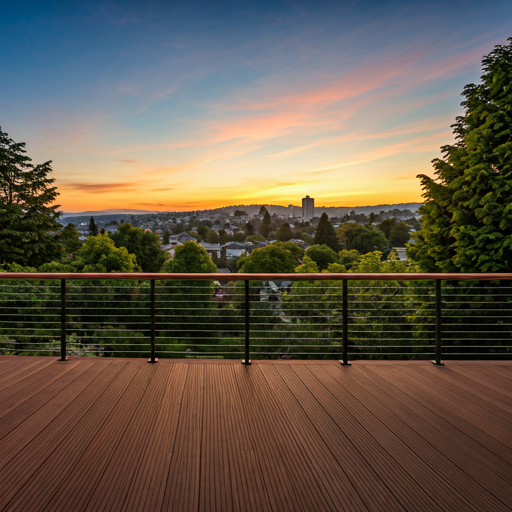
If you've spent any time talking to Shoreline homeowners about home improvement projects, you've probably heard some version of the same frustration: they call a deck builder from South Seattle or the Eastside, and the contractor shows up having never dealt with Shoreline's Planning and Community Development department, has no idea how the city's electronic permitting portal works, and is vaguely surprised that Shoreline is its own incorporated city with its own rules — not just another unincorporated corner of King County. That contractor then low-balls the permit timeline, misses a critical zoning check on a sloped lot, and the project drags four weeks past the quoted date while the homeowner eats the cost of a delayed BBQ season.
This guide is written by builders who work North Seattle regularly — Shoreline, Kenmore, Lake Forest Park, Mountlake Terrace, and the neighborhoods in between. We know the terrain: literally. Shoreline's topography is not uniform, and neither are its permitting requirements. From the flat mid-city lots near Aurora Avenue to the steeply graded hillside properties above Puget Sound or on the shores of Lake Washington, Hamlin Lake, and Echo Lake, what you can build, how much it costs, and how long it takes to permit varies significantly street by street. If you're a Shoreline homeowner who wants a straight answer about decks in 2026 — what they cost, what the city requires, and which materials make sense for this specific climate — this is the guide you've been looking for.
Why Shoreline Homeowners Need a Local Deck Builder — Not Just Any Seattle Contractor
There's a persistent assumption in the remodeling industry that if a contractor works in Seattle, they can work anywhere in the metro area without missing a beat. For simple interior remodels, that might be close to true. For decks in Shoreline, it's frequently not. The reasons are specific and consequential — and they affect your project timeline, your permit costs, and ultimately what you end up building.
Shoreline Is Its Own City, With Its Own Permit Process
Shoreline incorporated as its own city in 1995. That matters for permitting in a direct, practical way. If you live in Shoreline, your building permits go through the City of Shoreline's Planning and Community Development department — not King County's Department of Local Services and not Seattle's SDCI. A contractor who is deeply familiar with King County's permitting portal or with Seattle's SDCI deck process is not automatically familiar with Shoreline's process, its review timelines, its specific checklist items, or the staff who review residential building applications.
This distinction has real consequences. We've heard from Shoreline homeowners who hired contractors that submitted applications with incomplete site plans because the contractor was used to Seattle's checklist, not Shoreline's. Incomplete applications go back in the queue. In a city with a small building department, that can cost you three to five weeks of project time. A contractor who does regular work in Shoreline — who has submitted dozens of permit applications through the city's electronic portal and knows what the review team expects to see — eliminates that friction before it starts.
The Topography Varies Dramatically by Neighborhood
Shoreline is roughly ten square miles, and the terrain is not uniform. The city occupies a position between Puget Sound to the west and Lake Washington to the east, and the land reflects that: there are flat areas near Aurora Avenue North, moderately sloped lots in the interior neighborhoods around 15th Avenue NE and Meridian Avenue N, and significantly steep parcels in the western neighborhoods that slope down toward Puget Sound or in the eastern reaches near Lake Washington. Neighborhoods like Innis Arden, Richmond Beach, and the areas above the BNSF railroad tracks can have grades that make a "simple deck" project into something requiring engineered drawings, significant post depth specifications, and soil engineering review.
Ground-level decks on flat lots in central Shoreline — near Paramount Park, Echo Lake, or the Briarcrest neighborhood — are materially less expensive and less complicated to permit than raised or cantilevered decks on the hillside lots in western Shoreline. A local contractor has seen both and knows at first glance what category your property falls into. An out-of-area contractor may not recognize the grade challenges until they're already on-site.
Weather-Appropriate Material Selection
Shoreline gets approximately 37 inches of rain per year — less than its reputation suggests, but enough. More relevant than total precipitation is the pattern: gray, damp, overcast conditions from October through March, with limited drying time between rain events. Decking materials that perform well in drier climates can trap moisture, support mold growth, or require maintenance schedules that are genuinely difficult to keep in a Pacific Northwest winter. A local builder's material recommendations are calibrated to the specific exposure conditions of North Seattle — not to a national average.
We cover material selection in depth later in this guide, but the short version is: the PNW climate pushes most Shoreline homeowners toward composite decking for the boards themselves, with Western Red Cedar remaining a viable and beautiful choice for homeowners who are committed to a real maintenance regimen. A contractor who knows Shoreline knows which choice fits which homeowner.
Note
Shoreline Deck Permit Requirements: What the City Actually Requires in 2026
Let's be direct about permits: they are not optional, they are not a formality, and they are not something you should try to avoid to save money. In Shoreline, getting caught with an unpermitted deck — especially if something goes wrong, like a railing failure or a structural issue — exposes you to liability, can complicate your homeowner's insurance claim, and will absolutely surface during a real estate transaction when the home inspector flags the work. The cost of pulling the correct permit upfront is small compared to the cost of correcting unpermitted work after the fact.
When Is a Permit Required in Shoreline?
The City of Shoreline follows Washington State building code for deck permitting thresholds, with local amendments applied through the city's adopted building standards. Here is how it breaks down in practice:
Any new deck or replacement deck that is 30 inches or more above grade at any point requires a building permit, regardless of square footage. This is a hard line — there is no size exemption once you cross the 30-inch height threshold.
Ground-level decks below 30 inches may qualify for an exemption from a building permit, but only if they are not attached to the house in a way that affects the structure, are not in a critical area (more on this below), and meet setback requirements. Even exempt projects may need a zoning review to confirm setback compliance. When in doubt, call the city before you build.
All permit applications in Shoreline must be submitted electronically. The city provides permit checklists and application packets on its website, and you will need to submit a complete package including a site plan, construction drawings, and elevation drawings for most deck projects. A licensed contractor who regularly works in Shoreline will handle this process as a matter of course.
What Does a Shoreline Deck Permit Cost?
Permit fees in Shoreline are assessed based on the project's estimated construction value. For a standard residential deck project in 2026, permit fees typically run $800 to $3,000 depending on project size and complexity. A straightforward 200 sq ft deck on a flat lot will be toward the lower end. A multi-level raised deck with stairs and cable railing on a sloped lot with an engineered structural review will be toward the higher end.
Plan review fees are charged separately from inspection fees in some cases, and there may be additional fees if your project requires a pre-application meeting or triggers environmental review. Your contractor should be able to give you a reasonable estimate of the permit cost before you sign anything, and that cost should be explicitly included in your project quote — not treated as a surprise add-on later.
The Pre-Application Meeting Option
The City of Shoreline offers optional pre-application meetings with the city's review team before you submit a formal permit application. These meetings are not required for straightforward deck projects, but they are strongly recommended for:
- Raised decks more than 8 feet above grade
- Multi-level decks
- Decks on steeply sloped lots
- Waterfront-adjacent projects (see next section)
- Projects in or near critical areas (steep slopes, wetlands, streams)
- Projects where you have any uncertainty about setback compliance or zoning
A pre-application meeting adds a few weeks to the front end of your timeline, but it can prevent a much more costly mid-review surprise. Your contractor should be the one requesting and attending this meeting — their familiarity with what questions to ask and what information to bring directly affects how useful it is.
Inspections During Construction
Once your permit is issued, Shoreline requires inspections at specific stages of construction. For a deck project, you will typically need a footing inspection before concrete is poured, a framing inspection before decking boards are installed, and a final inspection when the project is complete. Your contractor schedules these inspections through the city's system and is responsible for ensuring the work is inspection-ready at each stage. Missed inspections or inspections that reveal non-compliant work can significantly extend your project timeline.
Important
Shoreline Substantial Development Permits: Do You Live Near Water?
This is the permit requirement that catches the most Shoreline homeowners off guard, and it's worth its own detailed section because the consequences of missing it are serious.
Washington State's Shoreline Management Act (SMA) requires additional review for development within 200 feet of the ordinary high water mark of certain water bodies. In Shoreline, this applies to Lake Washington, Hamlin Lake, Echo Lake, and any significant streams or rivers running through the city. If your property is within 200 feet of any of these water bodies, your deck project may trigger shoreline jurisdiction — even if your deck is not on the waterfront itself and even if you can't see the water from your back door.
The Shoreline Substantial Development Permit Threshold
A Shoreline Substantial Development Permit (SSDP) is required when the fair market value of a development project within shoreline jurisdiction exceeds the state threshold. That threshold was last set at $8,504 in 2022 and is scheduled for adjustment on July 1, 2027. For context, virtually every deck project of any meaningful size will exceed this threshold — a 200 sq ft composite deck alone will typically cost $15,000 to $25,000 installed in 2026. If your property is in shoreline jurisdiction, the SSDP is almost certainly required.
You can check King County's GIS resources and the City of Shoreline's zoning maps to determine whether your property falls within shoreline jurisdiction, but honestly, the most reliable approach is to ask your contractor. A contractor with Shoreline experience will know which neighborhoods and streets routinely trigger shoreline review and will have that conversation with you during the initial consultation — not after the permit has been submitted. For reference, King County's shoreline permit process provides additional context on how shoreline jurisdiction is determined.
Neighborhoods Most Likely to Trigger Shoreline Review
In Shoreline, the neighborhoods with the highest concentration of properties in shoreline jurisdiction include:
Richmond Beach: The westernmost Shoreline neighborhood, running along Puget Sound. Properties here are almost universally in shoreline jurisdiction and face the most stringent shoreline master program requirements.
Lake Washington Shoreline (East Shoreline): Properties along the western shore of Lake Washington, including portions of the Innis Arden neighborhood and areas east of 15th Avenue NE near the lake's edge.
Echo Lake Area: Properties immediately adjacent to or near Echo Lake in central Shoreline.
Hamlin Lake Vicinity: Smaller water body, but properties in close proximity may trigger shoreline jurisdiction depending on the specific ordinary high water mark determination.
If you're not sure whether your property is in shoreline jurisdiction, err on the side of assuming it is and have the conversation with the city early. The cost of not knowing — submitting a standard permit application, getting approved, beginning construction, and then having shoreline jurisdiction raised mid-project — is enormous.
Shoreline Master Program and Critical Areas
Shoreline also has a Shoreline Master Program (SMP) that governs what can be built, at what setback from the water, and with what design standards, within shoreline jurisdiction. The SMP sets standards for vegetation buffers, structure setbacks from the ordinary high water mark, and allowed uses. A deck that would be straightforward outside shoreline jurisdiction may face height restrictions, setback requirements, or required native vegetation buffers within it.
Critical areas — steep slopes exceeding certain grades, wetlands, streams, wildlife habitat — require additional review regardless of whether you're in shoreline jurisdiction. Properties on the steep western hillsides of Shoreline near the sound, or on lots adjacent to any of the city's stream corridors, are most likely to trigger critical area review. These reviews add time and occasionally cost (for required geotechnical or biological assessments), but they are not optional and should not be treated as an obstacle to work around.
2026 Deck Cost Breakdown for Shoreline, WA: Materials, Labor, and Permits
Let's talk about real numbers. Cost is the question we hear most frequently from Shoreline homeowners, and the honest answer is that it depends — but it depends on specific, identifiable variables that we can walk you through. You can also reference our detailed 2025 Seattle deck cost guide for additional context on regional pricing trends.
What Drives Deck Cost in Shoreline?
The major cost variables for a Shoreline deck project in 2026 are:
Square footage: More square footage means more material and more labor. This is the most obvious variable and the one homeowners tend to focus on, but it's not always the most important one.
Elevation above grade: A ground-level deck on a flat lot is the cheapest type of deck to build. Every foot of elevation adds cost — for longer posts, for deeper and larger footings (because a tall post carries a higher moment load), and for the engineering review that many lenders and building departments require above certain heights.
Terrain and access: Sloped lots common in west Shoreline and east Shoreline near Lake Washington add cost because equipment access is harder, material staging is more complex, and the structural design must account for differential elevation across the deck footprint.
Decking material: This is a major variable. Pressure-treated pine is the cheapest but requires the most maintenance and is generally not the right choice for a PNW deck you intend to use for 20+ years. Cedar and composite are the most common choices in Shoreline.
Railings: Railings are expensive relative to their footprint. Simple wood railings are the cheapest. Cable railing and glass panel railing are significantly more expensive but dramatically change the aesthetics and view preservation of a deck. Our deck railing options guide for Seattle covers this in detail.
Stairs: Each flight of stairs adds $1,500 to $4,000 to a project depending on length, material, and whether the landing requires its own footing.
Permits: As covered above, budget $800 to $3,000 for permit fees depending on project scope.
2026 Installed Price Ranges by Material
| Material | Installed Cost (per sq ft) | Notes |
|---|---|---|
| Pressure-treated pine | $45–$70 | Lowest upfront cost; highest maintenance; not recommended for primary Shoreline decks |
| Western Red Cedar | $60–$90 | Beautiful, local species; requires sealing every 2–3 years in PNW conditions |
| Composite (Trex, TimberTech, Fiberon) | $75–$130 | Highest upfront cost; lowest lifetime maintenance; best PNW durability |
| PVC decking | $90–$150 | Maximum moisture resistance; good for waterfront-adjacent applications |
Sample Project Cost Ranges for Shoreline, WA (2026)
| Project Type | Size | Estimated Total Installed |
|---|---|---|
| Ground-level cedar deck, flat lot | 200 sq ft | $12,000–$18,000 |
| Ground-level composite deck, flat lot | 200 sq ft | $15,000–$26,000 |
| Raised deck (6–8 ft above grade), cedar, sloped lot | 300 sq ft | $22,000–$35,000 |
| Raised deck, composite, with cable railing + stairs | 300 sq ft | $28,000–$45,000 |
| Multi-level deck, composite, engineered, waterfront | 400+ sq ft | $45,000–$80,000+ |
Key insight
Average mid-range installed cost estimates for Shoreline, WA deck projects in 2026. Actual costs depend on site conditions, materials, and permit requirements.
| Category | Value |
|---|---|
| Ground-Level Cedar (200 sq ft) | $15,000 |
| Ground-Level Composite (200 sq ft) | $20,500 |
| Raised Cedar w/ Stairs (300 sq ft) | $28,500 |
| Raised Composite w/ Cable Rail (300 sq ft) | $36,500 |
| Multi-Level Composite Waterfront (400+ sq ft) | $62,500 |
The Real Cost of the Permit Process
We want to address something that comes up frequently: homeowners who are tempted to build without a permit to avoid the cost and time of the permitting process. We understand the frustration — permit fees, plan review time, and inspection scheduling add real cost and real time to a project. But in Shoreline, the risks of unpermitted deck construction are significant:
A real estate agent is required to disclose known unpermitted improvements during a sale. An unpermitted deck can cause a sale to fall through, require retroactive permitting (which may involve destructive investigation of concealed work), or force a price reduction that far exceeds what the permit would have cost.
Homeowner's insurance policies typically exclude coverage for damage to or caused by unpermitted structures. If your unpermitted deck fails and injures someone, your liability exposure is uninsured.
The City of Shoreline does conduct proactive code enforcement, including review of permit records when additions are observed in aerial photography updates.
The permit process, done correctly by a licensed contractor who knows Shoreline's system, is a one-time administrative task — not a recurring burden. Do it right.
Best Decking Materials for the Pacific Northwest Climate
Shoreline's climate is classified as an oceanic climate (Cfb in the Köppen system) — mild temperatures year-round, heavy cloud cover from October through April, moderate but persistent precipitation, and genuine summer sun that can push surface temperatures on dark composite decking well above 100°F on exposed south-facing applications. The right decking material for Shoreline is not the same as the right material for Phoenix, Denver, or even the drier parts of eastern Washington. You can find a detailed comparison of materials in our composite vs. cedar decking guide and our best decking materials guide for 2026.
Western Red Cedar: The PNW Classic
Western Red Cedar remains the most beautiful natural wood decking choice for Pacific Northwest applications. It's a local species, it has natural oils that resist moisture and insect damage better than most woods, and it weathers to a silver-gray patina that many Shoreline homeowners find genuinely appealing. It's also a material that buyers recognize and value during a real estate transaction.
The honest case against cedar for Shoreline homeowners is maintenance. Cedar in the PNW requires cleaning and resealing or re-staining every two to three years to maintain its appearance and resist the moisture damage that will eventually cause graying, cracking, and checking if the wood dries out. Our cedar deck sealing guide for Seattle covers this process in detail. Homeowners who are committed to doing that maintenance — or paying someone to do it — will get decades of beautiful performance from a well-built cedar deck. Homeowners who are not committed to that regimen should seriously consider composite.
Cedar is the right choice if: You want a natural wood appearance, you're willing to commit to a maintenance schedule, your deck has good sun exposure that aids in drying, and your budget is more constrained on the upfront cost.
Cedar is the wrong choice if: Your deck faces north or is heavily shaded, you travel frequently and won't stay on top of maintenance, or you're planning to stay in the home long-term and want a low-lifetime-cost option.
Composite Decking: The Dominant Choice in Shoreline
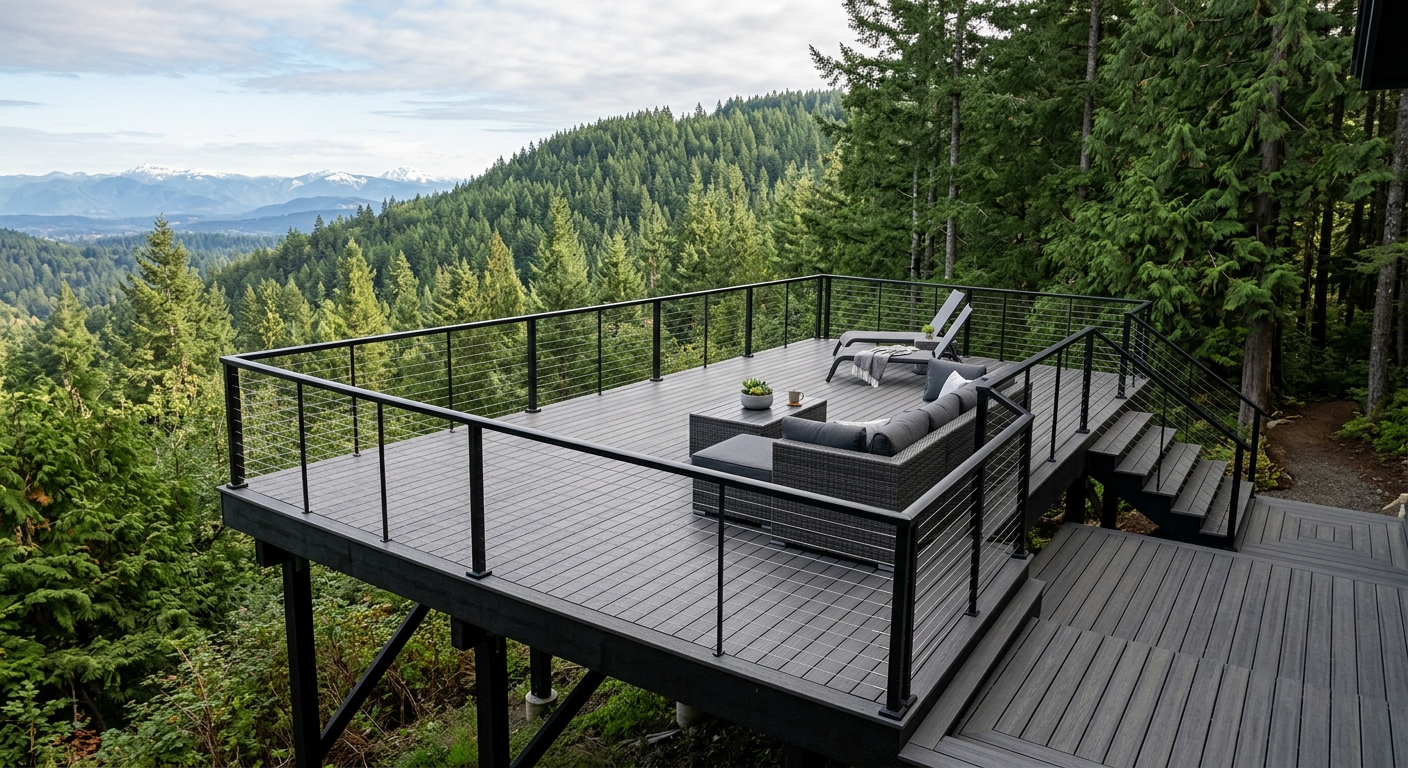
Composite decking has become the dominant choice for new deck construction in Shoreline and across North Seattle, and the reasons are straightforward: in a climate with significant moisture exposure and limited drying time in the shoulder seasons, composite boards simply outperform natural wood over a 15–25 year product lifespan when you account for the cost of avoided maintenance.
The major brands — Trex, TimberTech, Fiberon, and AZEK — all manufacture composite or PVC decking products with strong PNW performance characteristics. They differ in their specific formulations, warranties, aesthetics, and price points, which is why we've written a detailed comparison of Trex vs. Fiberon vs. TimberTech for Seattle homeowners.
| Brand | Warranty | Price Range (installed, per sq ft) | PNW Strength |
|---|---|---|---|
| Trex | 25-year fade/stain | $75–$110 | Widely available; good mold resistance |
| TimberTech | 30-year fade/stain, lifetime structural | $85–$120 | High-end aesthetics; excellent moisture resistance |
| Fiberon | 25–50 year depending on line | $75–$115 | Strong value; good color stability |
| AZEK | Lifetime limited | $90–$130 | PVC-based; maximum moisture resistance |
All of these products require far less maintenance than wood — typically just an annual cleaning with a deck wash product and a garden hose. No sealing, no staining, no sanding. For composite deck maintenance in the PNW, see our composite deck maintenance guide.
PVC Decking: Maximum Moisture Resistance
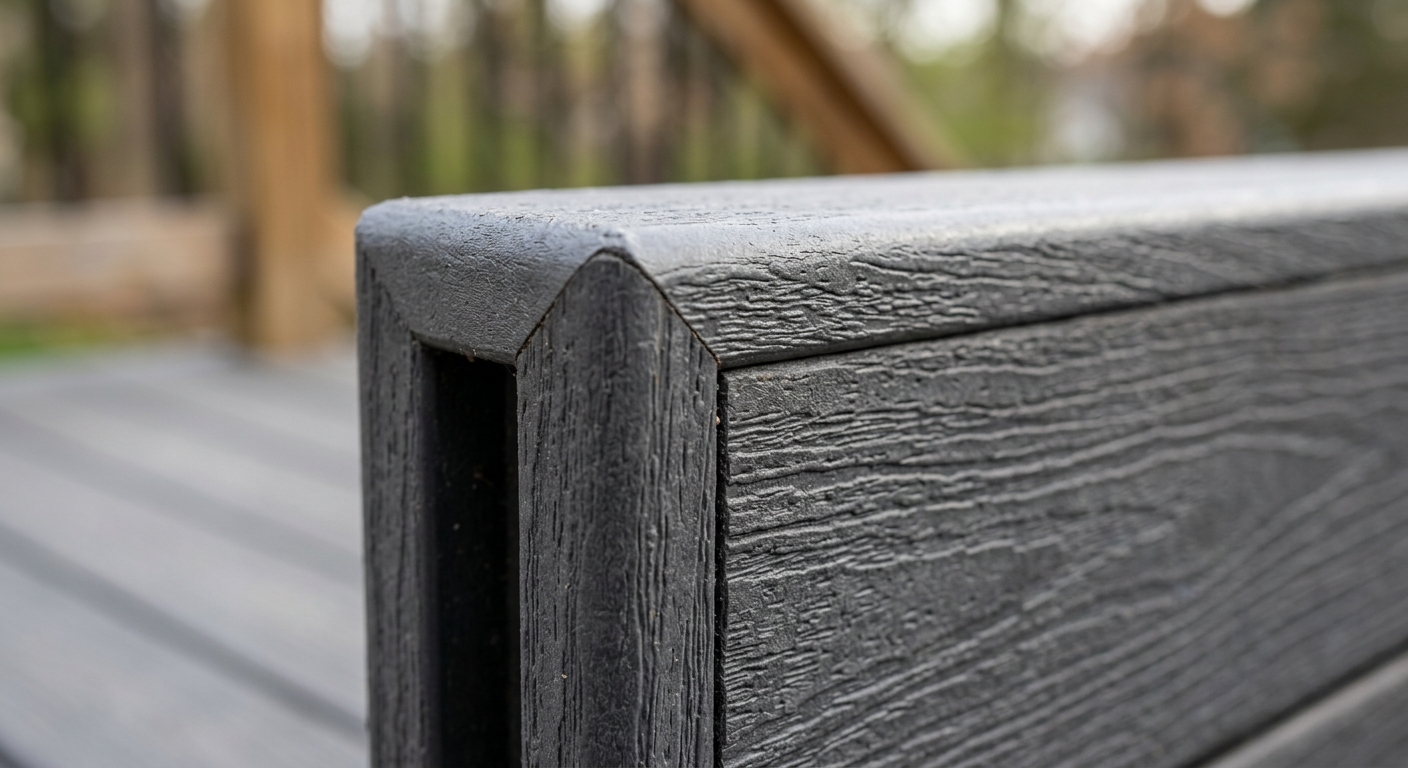
Pure PVC decking (like AZEK's full PVC line) contains no wood fiber at all, making it essentially impervious to moisture absorption, mold growth, and the freeze-thaw cycling that can cause composite products with higher wood fiber content to check over time. For waterfront-adjacent decks in Shoreline — near Lake Washington, Hamlin Lake, or Echo Lake — or for covered deck areas that see minimal drying sun, PVC decking is worth the premium. The installed cost of $90–$150 per square foot is the highest of any decking category, but the maintenance requirements are the lowest and the moisture performance is unmatched.
Raised vs. Ground-Level Decks on North Seattle's Sloped Lots
Shoreline's topography is one of the defining factors in deck design for the area, and it's worth addressing in detail because it affects cost, structural design, permit requirements, and what your deck can actually look like.
The Flat Lot Scenario: Central and East Shoreline
The central and eastern portions of Shoreline — neighborhoods like Paramount Park, Briarcrest, Innis Arden (the flatter sections), and areas around 5th Avenue NE — tend to have flatter lots where ground-level or moderately raised deck construction is straightforward. On a flat lot, a deck that sits 12 to 24 inches above grade is achievable with relatively simple footings and post configurations. These are the least expensive deck projects to build because the structural engineering is simpler, equipment access is easier, and the permit process is more straightforward.
For ground-level or low-rise decks on flat Shoreline lots, a 200 sq ft cedar deck might run $12,000 to $18,000 installed including permit, while a 200 sq ft composite deck might run $15,000 to $26,000. These are complete installed costs — material, labor, and permit fees all in.
The Sloped Lot Scenario: West Shoreline and Waterfront Properties
West Shoreline, particularly in the Richmond Beach neighborhood and on properties that descend toward Puget Sound, presents a very different structural challenge. Lots here can drop 15, 20, or even 30 feet from the house's main floor level to the natural grade below. A deck that exits through a sliding glass door from the main living area may need to be eight to twelve feet above the natural terrain — or more — to achieve a usable outdoor living space at the right elevation.
At these heights, deck construction becomes meaningfully more complex:
Deeper footings: Posts that are ten feet tall carry much higher horizontal loads from wind and seismic forces than posts that are two feet tall. The footings below them need to be larger and deeper to resist those forces, which in King County's frost depth context means footings that typically go 18 to 24 inches below grade at minimum.
Engineered drawings required: The City of Shoreline will typically require stamped engineering drawings for decks above certain heights, particularly on sloped lots where the footing conditions may be variable. This adds $1,500 to $4,000 to project costs depending on the engineering firm and the complexity of the site.
Structural steel or LVL beams: Very tall deck systems sometimes incorporate steel beam sections or laminated veneer lumber beams to achieve the necessary spans without post locations that are impractical on a slope.
Limited equipment access: Sloped lots in west Shoreline often have narrow side yard access, which means concrete for footings may need to be hand-mixed or pumped rather than delivered by a standard concrete truck. This adds labor cost.
Bracing requirements: Tall post assemblies require lateral bracing — either through an X-brace or knee-brace configuration — to resist the racking forces that wind and seismic events impose. This bracing needs to be designed and installed correctly to be effective.
The cost premium for a sloped-lot raised deck in Shoreline versus a flat-lot ground-level deck of the same square footage can easily be 40 to 70 percent. A 300 sq ft composite deck on a flat lot might cost $22,000 to $30,000; the same deck design on a steeply sloped west Shoreline lot might cost $32,000 to $45,000 or more.
Multi-Level Decks: The Solution for Significant Grade Changes
When a Shoreline lot drops sharply from the house, one architectural solution is a multi-level deck that steps down with the terrain rather than cantilevers above it. A multi-level design with two or three deck platforms connected by stairs can be both aesthetically appealing and structurally simpler than a single very-tall deck, because each platform can be at a more manageable height above its immediate terrain.
Multi-level decks do add cost because they include more structural posts, more framing, and more stair flights, but they distribute that cost across a larger total deck area. For homeowners with dramatic views — Puget Sound from west Shoreline properties, or Lake Washington from east-facing lots — a multi-level deck design can also be the best way to maximize view exposure from multiple elevations. See our custom curved and multi-level deck guide for design inspiration.
Tip
Shoreline-Specific Zoning, HOA Considerations, and Setbacks
Beyond the building permit, deck projects in Shoreline need to comply with the city's zoning code — which governs setbacks, lot coverage, and height restrictions — and in some neighborhoods, HOA covenants that may impose additional restrictions.
Setback Requirements in Shoreline
The City of Shoreline's zoning code requires that decks maintain minimum setbacks from property lines, just as the primary structure does. In most single-family residential zones in Shoreline (R-4, R-6, R-8), the rear yard setback is 20 feet and the side yard setback is 5 feet, though these vary by specific zone and lot configuration. A deck attached to the house inherits the primary structure's setback requirements.
There are some provisions that allow deck portions to encroach slightly into required setbacks in certain cases, but these provisions come with conditions (maximum height above grade, maximum intrusion distance) that need to be verified with the city for your specific property. Do not assume an encroachment allowance applies without confirming with the city's planning department.
For corner lots — which are common in Shoreline's grid neighborhoods — there may be additional street-side setback requirements that affect where a deck can be located relative to both street frontages.
Lot Coverage Limits
Shoreline's zoning code limits the total percentage of a lot that can be covered by impervious surfaces — buildings, driveways, patios, and decks. The specific limit varies by zone, but in most residential zones it runs from 50 to 65 percent of total lot area. If your property already has significant impervious coverage from your house footprint, driveway, and existing hardscaping, a new deck may push you toward or over the coverage limit, requiring either a smaller deck or removal of other impervious surfaces.
A licensed contractor will pull your parcel's coverage information as part of the pre-application review and flag any coverage concerns before you're committed to a design.
HOA Considerations in Shoreline
Shoreline has numerous neighborhoods with active homeowners associations, particularly in planned developments in the Paramount Park area, in some of the Innis Arden sections, and in newer subdivisions throughout the city. HOA covenants may impose restrictions on deck materials (prohibiting certain colors of composite decking, for example), railing styles (prohibiting chain link, requiring certain aesthetics), or deck dimensions and footprints.
Critically, HOA approval and city building permit approval are independent processes. A city permit does not preempt an HOA restriction, and HOA approval does not satisfy the city permit requirement. You need both. A local contractor who works in Shoreline regularly will know which neighborhoods have active HOAs and will remind you to initiate the HOA review process concurrently with the city permit application — not sequentially, which would add weeks to your timeline.
Height Restrictions
The City of Shoreline's zoning code limits the height of accessory structures. While a deck is typically not classified as an accessory structure, very tall deck systems with substantial overhead cover or roofing elements may approach the accessory structure height limits. Covered decks — pergolas, pavilions, or full roof structures over a deck — are treated differently than open decks and may require separate review.
How to Choose a Licensed Deck Builder in Shoreline, WA
The deck contractor market in Shoreline includes a range of options from large regional remodeling companies to small local specialty contractors. Choosing correctly matters — the quality of the permitting process, the quality of the structural design, and the quality of the finish work all vary significantly between contractors.
Verify Contractor Licensing and Insurance
In Washington State, all contractors performing construction work valued at $500 or more must be licensed with the Washington State Department of Labor and Industries (L&I). You can verify any contractor's license status at verify.lni.wa.gov. Licensing requires proof of insurance, bonding, and registration — it is not just a formality.
For deck construction specifically, verify that your contractor holds a General Contractor license (not a Specialty Contractor license, unless the scope is truly limited to a single trade). A General Contractor license is required to oversee work involving multiple trades, which a complex deck project typically involves — excavation, concrete, carpentry, and possibly electrical for lighting.
Verify that the contractor's insurance includes both General Liability coverage (for property damage and injury claims) and Workers' Compensation coverage for their employees. Ask for certificates of insurance naming you as additional insured for the duration of the project.
Experience Specifically in Shoreline
Ask directly: how many deck projects have you completed in Shoreline specifically? Not "North Seattle" or "King County" — Shoreline. A contractor with Shoreline-specific experience will be able to answer questions about permit timelines, common challenges they've encountered on Shoreline lots, and the review team's preferences and expectations. If a contractor is vague about Shoreline-specific experience, that's relevant information.
Ask for references from Shoreline homeowners — not just from Seattle or Kirkland. Call those references and specifically ask about how the contractor handled the permitting process and whether the project came in on time and on budget.
The Estimate and Contract
A legitimate deck contractor in Shoreline will provide a written estimate that itemizes: materials (with specific product names and specifications), labor, permit fees (actual estimated fees, not a guess), and any subcontractor costs (like concrete, electrical). An estimate that simply says "200 sq ft composite deck: $22,000" with no itemization is not a sufficient basis for signing a contract.
The contract itself should specify: start and substantial completion dates, payment schedule (never pay more than 30 to 40 percent upfront), change order procedures, permit responsibility (the contractor should pull the permit in their name, which is legally required in Washington for licensed contractors), and warranty terms for both materials and labor.
The National Association of the Remodeling Industry (NADRA) provides standards for deck construction that reputable contractors follow — asking a contractor whether they're familiar with NADRA standards is a reasonable screening question.
Red Flags to Watch For
- Requesting 50 percent or more upfront
- Offering to skip the permit to save time or money
- Unable to provide a contractor license number
- Unwilling to provide written references from Shoreline or King County homeowners
- Providing a written estimate with no material specifications
- Pressuring you to sign immediately or claiming the price is only good for 24–48 hours
Timeline: From Permit Application to First BBQ on Your New Deck
One of the most common sources of homeowner frustration with deck projects in Shoreline is timeline mismanagement — either the contractor underestimates how long the permit process will take, or the homeowner doesn't understand that construction can't start until the permit is issued. Here's a realistic timeline for a typical Shoreline deck project in 2026.
Phase 1: Design and Pre-Application (Weeks 1–3)
The process starts with a site visit from your contractor, during which they assess the lot, discuss design options, and identify any obvious permitting complexities. If your project is straightforward, they can move directly to permit preparation. If your project involves a sloped lot, waterfront adjacency, or other complexities, they may recommend a pre-application meeting with the city, which adds 2–4 weeks to the front end of the timeline but often saves time later.
During this phase, your contractor will finalize a design, prepare site plans and construction drawings, and compile the complete permit application package.
Phase 2: Permit Submission and Review (Weeks 3–8)
Once the application is submitted electronically to the City of Shoreline, the review process begins. For a standard residential deck, Shoreline's current review timeline is approximately 3–6 weeks from submission to permit issuance, assuming the application is complete. Incomplete applications — missing details on the site plan, incorrect calculations, insufficient structural information — go back to the applicant for correction and restart the review timeline from resubmission.
This is where a contractor who knows Shoreline's requirements submits a complete, correct application the first time and doesn't lose 2–4 weeks to a correction cycle.
Phase 3: Material Procurement (Weeks 6–10, overlapping with permit)
While the permit is in review, your contractor should be ordering materials. Composite decking products from major manufacturers currently have lead times of 2–6 weeks depending on product line and color. Cedar lumber can typically be sourced locally with shorter lead times. If your project includes specialty railings — cable railing hardware, custom glass panels — lead times can be 4–8 weeks for some products.
A good contractor will overlap material procurement with the permit review period so that materials arrive close to permit issuance — not two weeks after construction was supposed to start.
Phase 4: Construction (Weeks 10–14, typically)
Construction timelines for deck projects in Shoreline vary significantly by project complexity:
- Simple ground-level deck, 200–300 sq ft: 5–10 business days of construction
- Raised deck with stairs and railings, 300–400 sq ft: 2–3 weeks of construction
- Multi-level deck, engineered, with complex railing: 3–5 weeks of construction
These timelines include the footing inspection (typically scheduled 2–3 business days after request), the framing inspection, and the final inspection. Weather can affect construction timelines — concrete pours cannot happen in below-freezing temperatures, and some finish work is impractical in heavy rain. Shoreline's climate means that spring and early summer projects occasionally encounter wet weather delays.
Phase 5: Final Inspection and Closeout (Weeks 14–15)
After construction is complete, the contractor requests a final inspection from the city. The inspector verifies that the as-built deck matches the approved drawings, that all structural elements are properly installed, and that railings, stairs, and connections meet code requirements. If the final inspection passes, the permit is closed and the deck is cleared for use.
Total realistic timeline from initial contractor contact to final inspection: 12–16 weeks for a permit-required deck in Shoreline in 2026. Projects that trigger shoreline review, require engineering, or encounter permit corrections will run longer. Projects on flat lots with simple designs can occasionally move faster with an experienced contractor who knows Shoreline's system.
Tip
Real Shoreline Deck Projects: What We Typically Build in North Seattle
We want to ground this guide in specific, realistic project examples — not theoretical constructs but the types of projects that come through our books regularly from Shoreline homeowners.
The Paramount Park Backyard Refresh
Typical scenario: A homeowner in the Paramount Park neighborhood, near North 185th Street and Aurora Avenue N, has a modest flat-to-slightly-sloped backyard and an existing pressure-treated pine deck that's 15–20 years old and showing its age. The joists are soft in places, the boards are checked and splintering, and the railings wobble.
The right move in this scenario is typically a full replacement rather than a repair — at 20 years, pressure-treated pine in the PNW is often structurally marginal even where it appears cosmetically repairable, and you'll spend more trying to save it than starting fresh. We typically recommend composite decking for the replacement, sized to roughly match the original footprint (often 200–250 sq ft), with new pressure-treated or steel framing, and code-compliant railings. New stairs if the existing stairs are also in poor condition.
Estimated cost range in 2026: $18,000 to $28,000 for a 250 sq ft composite deck replacement with new railing and stairs, including permit. For more on deck additions specifically, see our deck addition guide for Seattle.
The Richmond Beach View Deck
Typical scenario: A homeowner in Richmond Beach — the western Shoreline neighborhood above the BNSF tracks and Puget Sound — has a main floor that is 8 to 14 feet above the sloped natural grade of their backyard. They want to add a deck that exits through the main floor's sliding glass doors and provides a usable outdoor space with a view of the sound.
This project triggers essentially every complexity factor we've discussed: raised deck requiring structural engineering, proximity to Puget Sound potentially triggering shoreline jurisdiction review, steep slope potentially triggering critical area review, and significant post and footing requirements. It is not a $15,000 project. A 300–400 sq ft raised deck on a Richmond Beach lot with cable railing (to preserve the view) and stairs down to the yard might realistically cost $35,000 to $55,000 installed in 2026, depending on the specific elevation, lot access, and whether shoreline review is required.
That said, these are some of the most spectacular decks we build — the views from west Shoreline properties are genuinely exceptional, and a well-designed deck on one of these lots is a significant quality-of-life improvement and a meaningful addition to the property's value. Research from the National Association of Realtors remodeling impact report consistently shows that decks provide strong recovery of construction cost at resale.
The Echo Lake Composite Deck and Patio Combo
Typical scenario: A homeowner near Echo Lake in central Shoreline wants to extend their usable outdoor living space with a deck off the back of the house and a patio-level transition down to a lower yard area. Their lot has moderate slope and is roughly 150–175 feet from Echo Lake's ordinary high water mark — close enough to warrant a shoreline jurisdiction check but potentially just outside the 200-foot trigger zone depending on the specific parcel.
This project often works well as a deck-and-patio combination — composite deck boards on the main framed structure, transitioning to permeable pavers or concrete patio at grade level. We have a detailed guide on deck and patio combo design for Seattle if you're considering this approach. With a 250 sq ft composite deck and a 200 sq ft patio transition, this type of project might run $32,000 to $48,000 depending on the patio material and any shoreline review requirements.
Calling The Seattle Decking Company About Your Shoreline Project
If you're a Shoreline homeowner who has made it through this guide and is ready to talk about a specific project, we're the right call. The Seattle Decking Company is based in Bothell at 22722 29th Drive SE — ten minutes from Shoreline — and we build decks across King County with specific regular work in Shoreline, Kenmore, Lake Forest Park, Mountlake Terrace, and surrounding North Seattle communities. We know the City of Shoreline's permitting process because we use it regularly. We know which Shoreline neighborhoods trigger shoreline jurisdiction review. We know how to build on sloped lots, waterfront lots, and flat lots with equal competence.
Our projects range from ground-level cedar refreshes to engineered waterfront multi-level composite decks, and we provide written, itemized estimates with material specifications. We pull permits in our name, we handle inspections, and we don't disappear after the final inspection check clears.
Call us at (425) 675-6259 to schedule a site visit, or reach out through our contact page. If you want to start doing your homework before we talk, our deck cost calculator for Seattle gives you a rough budget range based on your square footage and material preference. We look forward to building something worth spending time on.
Frequently Asked Questions
Do I need a permit to build a deck in Shoreline, WA?
How much does a deck cost in Shoreline, WA in 2026?
Is Shoreline part of King County for permitting purposes?
What is a Shoreline Substantial Development Permit and do I need one?
Which Shoreline neighborhoods are most likely to need a Shoreline Substantial Development Permit?
Cedar or composite — which is better for a Shoreline deck?
How long does the deck permitting process take in Shoreline?
How much do deck permits cost in Shoreline?
Do I need an HOA approval in addition to a city permit for a deck in Shoreline?
Why does my sloped Shoreline lot cost more to build a deck on?
Does a new deck add value to my Shoreline home?
What should I look for when hiring a deck builder in Shoreline?
Planning a deck in the Seattle area?
Get an onsite design review and a clear, itemized quote from a licensed local builder.
Request a Free Quote