
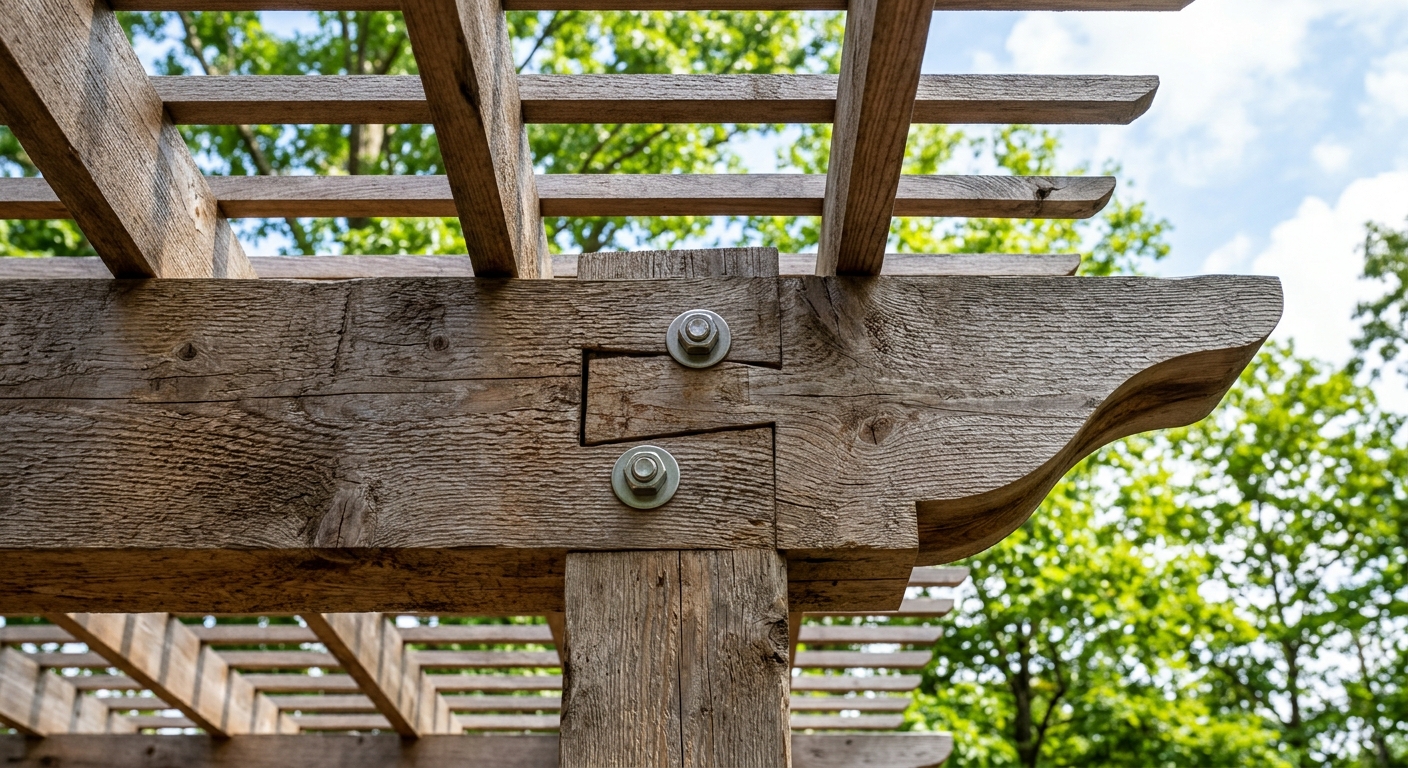
Bothell sits at an interesting intersection for deck builders: it is close enough to Seattle to carry the same rain-soaked climate and permitting complexity, but its terrain, lot sizes, and neighborhood character are genuinely their own. Norway Hill drops sharply toward the Sammamish River corridor. Canyon Park neighborhoods are loaded with tech workers who have done their research and want specific things. North Creek Valley lots are heavily treed, often with root systems that run deep under future footings and canopy that cuts light to almost nothing by midsummer. If you approach a Bothell deck project the same way you would a flat Bellevue lot or a Shoreline rambler, you will make expensive mistakes. This guide is written by people who have pulled footings out of Norway Hill clay, navigated setback conversations with Bothell's permit staff, and watched cedar turn gray by October on a forested North Creek lot. We are going to tell you what actually matters.
The deck market in the greater Seattle area has matured significantly over the past few years. Homeowners are better informed, material options have expanded, and the gap between a good contractor and a mediocre one shows faster than it used to. In Bothell specifically, we see a higher-than-average rate of homeowners who have done preliminary research before ever making a call. They know composite versus cedar basics, they have looked at permit thresholds, and they have a rough number in their head. What they are often missing is the Bothell-specific layer: how grade affects their specific lot, whether their HOA in Wyndham Hill has design standards, and why the tree canopy on their North Creek lot is going to be a deciding factor in material selection. That is what this guide adds to the conversation.
Why Bothell Decks Are Different: Norway Hill Grades, Canyon Park Lots, and Forested Terrain
There is a reason experienced deck builders treat Bothell as its own category. The city spans roughly 13 square miles of genuinely varied topography, and the deck design decisions that work in one neighborhood can be completely wrong in another. Understanding that geography before you pick a board or pull a permit is the foundation of a project that holds up.
Norway Hill: Steep Grades and the Elevated Deck Default
Norway Hill rises to the east of downtown Bothell, and the lots on its western slope face a consistent engineering challenge: they drop sharply away from the back of the house, often 10 to 20 feet or more across the depth of the yard. On a flat lot, a ground-level or low-profile deck is straightforward. On Norway Hill, the same deck footprint may require posts running 8, 10, or even 14 feet from grade to beam, depending on where you are on the slope and how far out from the house the deck extends.
That has direct cost implications. Longer post runs mean larger post sections (typically 6x6 or steel column) and deeper, wider footings. Bothell requires footings to extend below the frost depth, which in King County is typically 12 inches of frost protection, but footing diameter and depth are also determined by the load they carry. A tall post carrying a full deck plus snow load plus occupancy load on Norway Hill clay soil may require a 24-inch diameter footing 24 or more inches deep. Multiply that by six to eight footings on a 300-square-foot deck and you start to understand why elevated decks on Norway Hill carry the 15–30% premium over flat-lot projects that the pricing data reflects.
The structural framing on an elevated deck also changes character. You are not just spanning joists across a beam — you are managing lateral loads, potential sway under dynamic load, and in some cases the interaction between the deck structure and the house framing it attaches to. Norway Hill projects frequently require a formal engineering stamp, particularly if the deck height at any point exceeds 8 feet above grade. That engineering fee, typically $400–$900 for a residential deck, is not optional — it is the document that gets your permit approved and your project built correctly.
Important
Canyon Park: Informed Buyers, HOA Layers, and Spec-Driven Projects
Canyon Park is Bothell's tech corridor. The neighborhood around the Canyon Park business district and the residential streets north and east of SR-527 tend to house professionals who have spent time on composite manufacturer websites, watched YouTube comparisons of Trex versus TimberTech, and have a specific aesthetic in mind before the first contractor call. That is genuinely a pleasure to work with — but it also comes with a complexity layer.
Many Canyon Park neighborhoods have active HOAs with design review requirements. The Wyndham Hill community, for example, has architectural standards that govern exterior changes including deck additions. Country Village and adjacent subdivisions may have CC&Rs that specify materials, colors, or require pre-approval before permit application. The sequence matters: your contractor files with the city, but your HOA approval may need to come first — or at minimum simultaneously — or you risk building something that passes city inspection but fails HOA review.
The practical advice here is to pull your HOA documents before you finalize any design. The city permit is the legal minimum; the HOA CC&Rs are the private contractual minimum, and they can be stricter. A local Bothell contractor who has worked Canyon Park before will know which HOAs are active and which are effectively dormant — that local knowledge saves real time.
Canyon Park lots also tend to be relatively flat compared to Norway Hill, which simplifies structural engineering but brings its own micro-climate reality: the mature tree canopy in established Canyon Park neighborhoods creates persistent shade and significant debris load — cones, needles, catkins — that accelerates organic buildup on deck surfaces. We will talk more about what that means for material selection when we get to the cedar versus composite comparison.
North Creek Valley: Trees, Roots, Setbacks, and Working with What You Have
The North Creek Valley is Bothell's most ecologically constrained building environment. North Creek itself is a regulated waterway with associated critical area buffers. Lots along and near the creek may have 50-foot or 100-foot setback requirements from the ordinary high water mark, administered through Bothell's critical areas regulations. Before you plan a deck on a North Creek Valley property, you or your contractor needs to pull the property's critical area determination from the city — that is not a step you skip.
Beyond waterway setbacks, North Creek Valley lots are heavily forested. The trees are an asset aesthetically, but they create real complications for deck construction. Root systems from large Douglas firs and big-leaf maples can extend surprisingly far from the trunk — often 1.5 to 2 times the height of the tree. A footing location that looks clean on paper may hit a major root system 18 inches down. Responsible contractors will do a probe dig before committing to a footing layout, not just trust the plan.
The canopy on North Creek lots also means composite or PVC decking is almost always the right material choice. We will explain the full comparison in a dedicated section, but the short version is this: a heavily shaded cedar deck in North Creek Valley will need staining or sealing every 1–2 years, not every 3–4. The moisture retention under heavy canopy is extreme, and the organic debris from overhanging trees accelerates biological growth on natural wood surfaces. Composite holds up without that cycle. On a 400-square-foot deck, the cost of cedar maintenance over 10 years on a shaded North Creek lot routinely exceeds $3,000 — enough to close the entire upfront cost gap with composite.
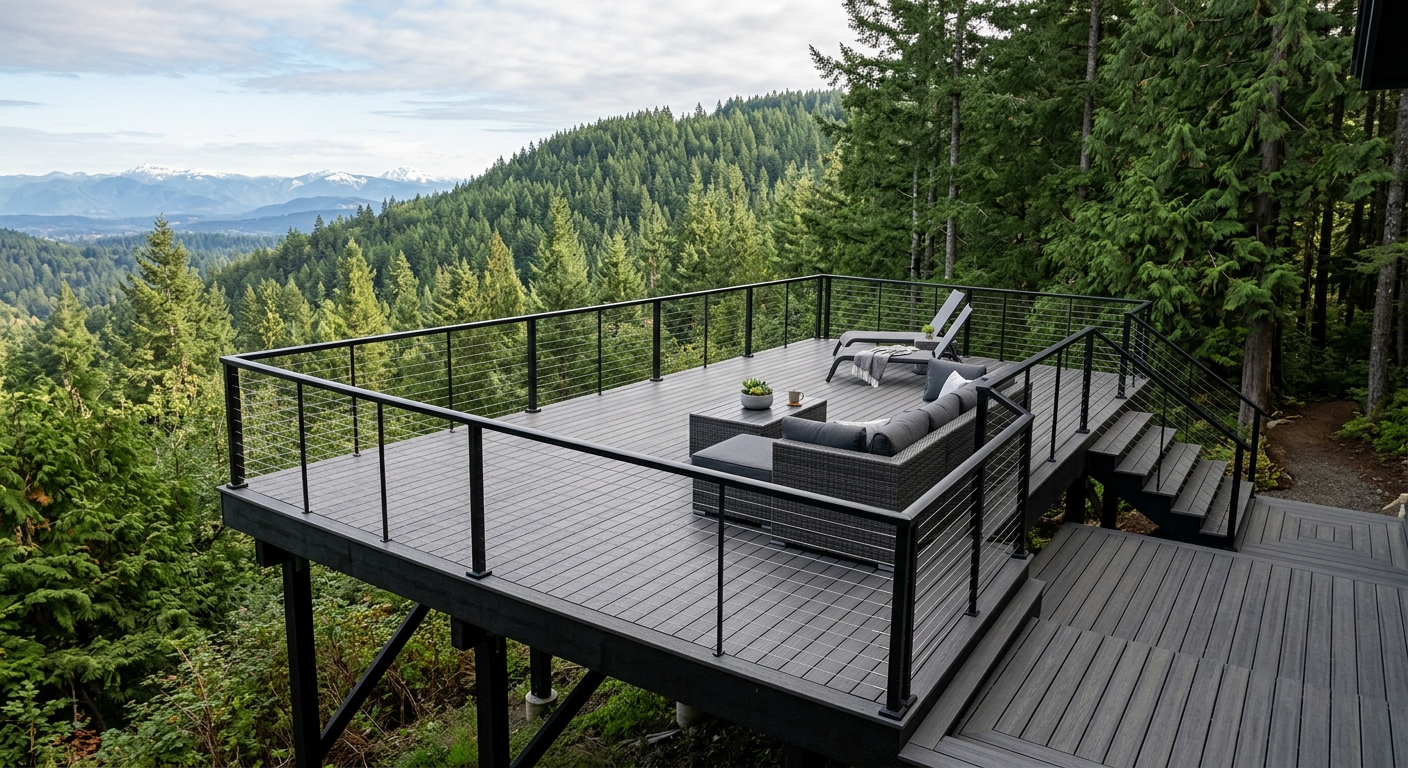
Composite decking in a heavily shaded PNW setting — the material choice that makes sense on North Creek Valley lots.
Bothell Deck Permit Requirements: When You Need One and How to Apply
Permits are the part of deck projects that homeowners most often get wrong — either by skipping them when they should not or by misunderstanding what triggers the requirement. Let us be direct about what Bothell actually requires.
The 30-Inch Rule: What It Means and What It Does Not
According to Bothell's own FAQ on residential deck permits, decks that are 30 inches or less above grade and accessory to single-family homes do not require a building permit. That is the threshold. A low-profile ground-level deck — say, 12 to 18 inches off the ground — typically falls under it. But there is a critical qualifier that homeowners often miss: "does not require a building permit" does not mean "does not need to meet any standards." Zoning requirements still apply. Setbacks from property lines, from critical areas, and from easements are enforced regardless of permit status. Building without a permit does not exempt your structure from those rules.
More practically: "no permit required" still means your deck must be built correctly. The MyBuildingPermit Tip Sheet for Basic Decks is explicit — all wood must be pressure-treated or naturally decay-resistant, and all fasteners must be stainless steel or hot-dipped galvanized. Those requirements exist whether you pull a permit or not. A contractor who tells you otherwise is either uninformed or cutting corners you will regret.
For any deck that exceeds 30 inches above grade at any point, a permit is required. On Norway Hill, that threshold can be crossed within the first few feet of deck extension from the house. If your lot drops away from your back door, measure carefully before assuming a permit is not needed.
Note
How to Apply: MyBuildingPermit.com and the Bothell Permit Process
All permit applications for Bothell deck projects are submitted through MyBuildingPermit.com, the regional online permitting portal shared by many King County jurisdictions. The process involves:
- Creating or logging into your MyBuildingPermit account
- Selecting Bothell as the jurisdiction
- Submitting a permit application with project description, site plan, and construction drawings
- Paying the permit fee, which is calculated based on project square footage and construction valuation
- Waiting for plan review, which for straightforward residential decks typically runs 4–6 weeks
For in-person questions, the Bothell Permit Center counter hours are Monday through Thursday 8 am to noon and 1 to 4 pm, and Friday 8 am to noon. Staff are also reachable by email at permits@bothellwa.gov or by phone at 425-806-6400. If you have a complex site condition — steep slope, critical area proximity, or an unusual structural configuration — a pre-application conference with Bothell's permit staff is worth the time before you finalize drawings.
For projects within the City of Seattle itself, the Seattle SDCI decks page provides parallel guidance, and King County's building permits portal covers unincorporated areas. But for Bothell city limits — which is where most of our projects are — MyBuildingPermit.com and the Bothell Permit Center are your contacts.
What the Permit Covers (and Why It Protects You)
A building permit for a deck does three things: it confirms your design meets structural code requirements, it establishes a record of the structure's legal existence, and it requires an inspection that verifies the actual build matches the approved plans. That inspection is not bureaucratic friction — it is the check that catches undersized beams, missing post-to-beam connections, or footings that were not dug to the required depth.
From a resale standpoint, an unpermitted deck addition is a liability disclosure issue in Washington state. Buyers' inspectors routinely flag structures that lack permit history, and title companies and lenders take notice. Building correctly and with a permit is not just about compliance — it is about protecting the value of your home.
Our detailed guide on King County deck permits covers the broader regional context if you want to understand how Bothell's requirements fit within the larger county framework.
Deck Material Showdown: Cedar vs. Composite in the Pacific Northwest Climate
No decision in a Bothell deck project has more long-term financial impact than the material choice. We have had this conversation hundreds of times, and we are going to give you the honest version — not the version that sells you whatever we have in inventory.
Cedar: The PNW Classic and Its Real Limitations in Bothell
Western red cedar has a legitimate claim to being the native decking material of the Pacific Northwest. It grows here, it looks right, it smells right, and when it is properly maintained it is a genuinely beautiful deck surface. We are not dismissing it. But in Bothell's specific microclimate — particularly on forested, north-facing, or heavily shaded lots — cedar's maintenance demands are often underestimated.
Cedar is naturally decay-resistant compared to, say, Southern yellow pine, but it is not maintenance-free. In a high-rainfall, high-shade environment like North Creek Valley or a Norway Hill lot with mature tree canopy, cedar will begin to gray and check within one to two seasons without sealing. Once moisture penetrates checked wood, decay follows — slowly at first, but accelerating. The typical maintenance schedule for cedar in the Seattle area is:
| Condition | Stain/Seal Frequency | Estimated Cost (400 sq ft deck) |
|---|---|---|
| Full sun, low debris | Every 3–4 years | $600–$900 per cycle |
| Partial shade, moderate debris | Every 2–3 years | $600–$900 per cycle |
| Heavy shade, high debris (typical North Creek) | Every 1–2 years | $600–$900 per cycle |
Over a 15-year ownership period, a cedar deck on a heavily shaded Bothell lot may require seven to ten maintenance cycles — $4,200 to $9,000 in maintenance alone. That is before any board replacement for isolated decay, fastener re-setting as wood expands and contracts, or refinishing after a missed cycle. Read our full analysis of cedar deck sealing in Seattle for the complete maintenance breakdown.
Cedar's current installed cost in the Bothell market runs $34–$39 per square foot. On a 400-square-foot deck, that is $13,600–$15,600 in initial construction cost.
Composite: The 10-Year Cost Reality in the PNW
Composite decking — the category includes Trex, Fiberon, TimberTech, and AZEK among others — is not just a low-maintenance alternative to cedar. In the specific conditions Bothell lots present, it is often the objectively better financial decision when you run the numbers over a 10-year horizon.
Trex is the category leader and for good reason: their capped composite boards — the Transcend and Enhance lines — resist moisture penetration, won't check or splinter, and carry a 25-year limited warranty. Fiberon competes closely with similar capped composite technology and has strong performance data in high-moisture environments. TimberTech and AZEK round out the premium tier, with AZEK's full PVC line offering the highest moisture resistance of any product category — relevant on a waterfront or very heavily shaded lot.
Composite installed cost in Bothell runs $40–$45 per square foot. On the same 400-square-foot deck, that is $16,000–$18,000 — roughly $2,400 to $2,400 more upfront than cedar. Over 10 years, composite's maintenance cost is essentially zero beyond occasional cleaning with soap and a garden hose. The gap closes by year five to seven for most Bothell lots, and composite comes out ahead in total cost of ownership on shaded or high-debris sites. We cover this comparison in depth in our composite vs. cedar decking Seattle guide.
Tip
PVC Decking: The High-End Option for Maximum Moisture Resistance
AZEK's full-PVC product line sits above composite on both price and moisture resistance. Unlike capped composite (which still has a wood-fiber core), PVC decking contains no organic material — there is simply nothing for moisture to interact with biologically. On a lot directly adjacent to North Creek, on a waterfront property on Lake Sammamish, or in any situation where standing water or constant moisture contact is likely, full PVC is worth the premium.
AZEK PVC installs at the higher end of the market — typically $48–$55 per square foot in the current Bothell market — but its durability profile on extreme-moisture sites justifies the cost for the right application. Our best decking materials Seattle 2026 guide compares all major categories with current pricing.
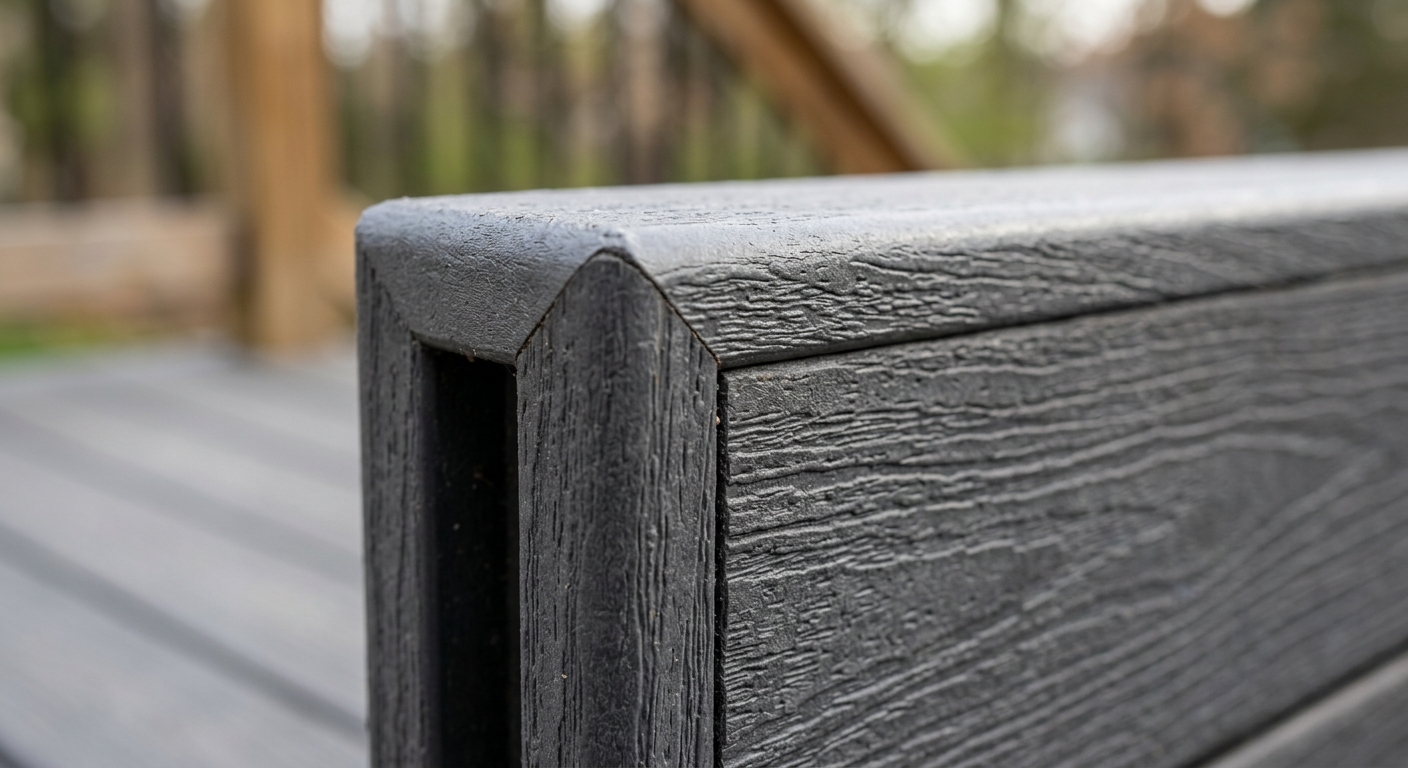
Modern capped composite decking replicates natural wood grain without cedar's maintenance demands — a critical advantage in Bothell's wet, forested microclimate.
2026 Deck Pricing Guide for Bothell: What to Budget by Material and Size
Let us put real numbers on the table. These are current Bothell-market figures based on our own project experience and regional data from sources including Redrra's 2025 deck cost analysis and Olympic Decks' 2026 cost guide. They reflect installed cost — materials plus labor, plus basic structural elements — but exclude engineering fees, HOA submissions, or special site conditions like extreme slope or critical area permitting.
Base Cost by Material (Bothell Market, 2026)
| Material | Installed Cost per Sq Ft | 200 sq ft Deck | 400 sq ft Deck | 600 sq ft Deck |
|---|---|---|---|---|
| Pressure-treated wood | $30–$45 | $6,000–$9,000 | $12,000–$18,000 | $18,000–$27,000 |
| Cedar | $34–$39 | $6,800–$7,800 | $13,600–$15,600 | $20,400–$23,400 |
| Entry composite (Trex Enhance, Fiberon Good Life) | $40–$45 | $8,000–$9,000 | $16,000–$18,000 | $24,000–$27,000 |
| Premium composite (Trex Transcend, TimberTech Terrain) | $45–$55 | $9,000–$11,000 | $18,000–$22,000 | $27,000–$33,000 |
| Full PVC (AZEK) | $48–$58 | $9,600–$11,600 | $19,200–$23,200 | $28,800–$34,800 |
These figures assume a reasonably straightforward flat or low-slope lot. Apply the following modifiers for Bothell-specific conditions:
| Site Condition | Cost Premium |
|---|---|
| Norway Hill steep slope (elevated posts 6–10 ft) | +15–20% |
| Very steep slope (posts 10+ ft, engineering required) | +25–35% |
| Engineering stamp required | +$400–$900 flat |
| Critical area permit (North Creek setbacks) | +$500–$2,000 |
| Multi-level deck design | +15–25% |
| Built-in features (bench seating, planters, pergola) | +$1,500–$5,000 |
Midpoint installed costs for a 400 sq ft deck in Bothell WA by primary decking material. Excludes site complexity premiums. Source: contractor market data, 2025–2026.
| Category | Value |
|---|---|
| Pressure-Treated | $15,000 |
| Cedar | $14,600 |
| Entry Composite | $17,000 |
| Premium Composite | $20,000 |
| Full PVC (AZEK) | $21,200 |
What Drives the Big Cost Variables in Bothell
Labor is not cheap in this market, and it should not be. Contractors in the greater Seattle area who are properly licensed, bonded, and insured — and who carry the experience to handle slope engineering, permit applications, and complex framing — charge accordingly. The research we found cites labor rates in the $25–$35 per hour range for Bothell deck builders, with better firms at the higher end. A contractor significantly under that range on labor warrants scrutiny: how are they cutting that cost?
Material pricing has been relatively stable in 2025–2026 after the volatility of 2021–2023, but composite and cedar prices remain meaningfully higher than pre-pandemic baselines. Composite board pricing in particular reflects both raw material costs and the premium performance characteristics that make it worthwhile on PNW lots.
Our deck cost Seattle 2025 article and the Seattle deck cost calculator page provide additional pricing context and tools if you want to model your specific project before reaching out to contractors.
Key insight
Engineering for Slope: Multi-Level and Elevated Deck Considerations on Norway Hill
Norway Hill is where the gap between a competent deck builder and an exceptional one becomes visible. The structural demands of elevated decks on steep lots require design decisions that go well beyond picking boards and driving screws.
Footing Design in Norway Hill Clay
The soils on Norway Hill are predominantly glacial till and clay, with clay content that varies significantly by location and depth. Clay soils have several properties that matter for deck engineering:
First, they are expansive — they swell when wet and contract when dry. In Seattle's climate, that means seasonal movement that can shift footings over time if they are not designed correctly. A footing that sits in or near the active frost/moisture zone without adequate depth and diameter will move, and the deck above it will show that movement in racking, squeaking, and eventually structural misalignment.
Second, clay soils have lower bearing capacity than granular soils. The same load that a 12-inch diameter footing handles easily in well-drained gravel may require an 18- or 24-inch footing in clay. Your structural engineer will specify footing dimensions based on the actual load calculation and a reasonable assumption about soil bearing capacity — and in the absence of a geotechnical report (which most residential projects do not commission), they will use conservative assumptions.
Third, Norway Hill's steep grade creates differential load conditions. The uphill footing and the downhill footing of the same deck beam are at very different heights, and the downhill footing carries more effective load from the long post run. Getting that geometry right requires someone who has actually worked on hillside lots — not just someone who builds flat decks.
Post Systems: Wood vs. Steel on Elevated Decks
For deck posts on Norway Hill projects, we increasingly recommend steel column systems for posts exceeding 8 feet in height. Here is why:
A 6x6 pressure-treated post at 12 feet carries its vertical load adequately, but wood at that height has more susceptibility to lateral movement (sway) than a steel column of equivalent capacity. On steep lots where the deck may be 10 to 14 feet off grade at the low end, lateral stiffness matters — both for structural performance and for the feeling of solidity underfoot. A deck that bounces or sways slightly is unsettling to users even if it is structurally adequate.
Steel columns — either exposed steel pipe columns with proper base and cap connections or engineered wood columns with engineered moment connections — provide better lateral performance at tall heights. They add cost, typically $200–$400 per column over standard wood framing, but on a six-post Norway Hill deck that is $1,200–$2,400 well spent.
Multi-Level Deck Design: Managing Grade Changes with Platform Levels
Rather than building a single elevated deck that sits 12 feet off the ground at the downhill end, many Norway Hill projects use a tiered, multi-level approach: an upper platform off the house at a manageable height, one or two intermediate platforms stepping down the slope, and potentially a lower-grade patio or landing. This approach:
- Reduces the maximum post height, simplifying structural requirements
- Creates visually interesting outdoor spaces that relate to the topography
- Allows the lower levels to be closer to grade — potentially under the 30-inch permit threshold
- Distributes foot traffic load across multiple levels
Multi-level decks do carry a cost premium — the research data suggests 15–25% over a single-level equivalent footprint. The additional cost comes from more framing members, more connections, more railings per linear foot of perimeter, and the stairs and transitions between levels. But for a Norway Hill lot, the multi-level approach often produces a better outdoor space than a single elevated platform ever could.
For more on creative deck design that works with Bothell's topography, our custom curved decks Seattle article covers designs that work particularly well on irregular hillside lots, and our deck addition Seattle guide addresses the project planning sequence from design through permit through construction.
Railing Systems for Elevated Bothell Decks
Elevated decks require code-compliant railings, and for Norway Hill elevated decks, railing selection matters both structurally and aesthetically. The standard residential railing height requirement is 36 inches for decks under 30 inches, and 42 inches for decks over 30 inches above grade — which is where most Norway Hill elevated decks land.
Cable railing is a popular choice for elevated decks on slopes because it preserves the view — and Norway Hill views, particularly west-facing toward the Sammamish River valley and Cascades, are often the reason someone bought the house in the first place. Cable railing installed correctly resists the lateral load requirements for 42-inch railing height without the visual weight of traditional wood or aluminum balusters. Our cable railing Seattle guide covers specifications, costs, and Bothell-specific installation considerations.
Glass panel railing is the other premium view-preserving option, though it comes with a significantly higher cost ($180–$280 per linear foot installed versus $85–$140 for cable) and requires tempered safety glass panels with proper structural framing. For the right project — a premium elevated deck on a Norway Hill lot with an exceptional western view — glass railing is sometimes the right answer.
For a full comparison of all railing options with Bothell-relevant cost data, see our deck railing options Seattle guide.
North Creek Valley Decks: Working Around Tree Canopy, Roots, and Setbacks
North Creek Valley represents one of the most ecologically sensitive and logistically complex deck-building environments in the Bothell area. The combination of regulated waterway setbacks, massive existing tree canopy, and root systems that challenge footing placement requires patience and experience.
Understanding Critical Area Setbacks Near North Creek
North Creek is classified as a Type F (fish-bearing) stream under Washington state regulations, and the City of Bothell's critical area regulations impose buffer requirements based on stream type and the characteristics of adjacent land. For single-family residential lots adjacent to North Creek, the standard buffer is typically 50 feet from the ordinary high water mark, though this can be modified based on site-specific conditions and mitigation planning.
What this means practically: if your lot backs up to North Creek or its associated wetland buffers, your buildable area for a new deck may be significantly constrained. The deck's footings, structure, and footprint must all fall outside the buffer. In some cases, this limits the deck to a modest footprint immediately adjacent to the house. In other cases, it rules out a rear deck entirely and redirects the project to a side-yard or front-yard structure.
Before any design work on a North Creek Valley property, we strongly recommend pulling your parcel's critical area determination from the City of Bothell's GIS mapping or by contacting the permit center directly. The critical area boundary is parcel-specific, not neighborhood-wide, and making design decisions without that information is how projects get redesigned or rejected mid-permit review.
Tree Root Systems: What's Really Underground
A 60-foot Douglas fir has a root system that can extend 60 to 90 feet horizontally, with major structural roots radiating out 20 to 30 feet in every direction. Those roots are not just horizontal — they interact with anything in the soil, including footing excavations. Hit a major root with a footing excavation and you have a problem: removing the root may destabilize the tree (creating a hazard and potential liability), but a footing that shares space with a live root is problematic as the root continues to grow and move.
Experienced builders on North Creek lots do several things to manage this:
First, they adjust footing layouts to work around root systems rather than through them. This sometimes means an off-grid footing layout that places footings between major roots — less aesthetically clean on paper, but far better for the trees and the footings.
Second, they may use helical piers (screw piles) rather than drilled concrete footings in root-heavy areas. Helical piers are installed by driving a steel screw pile into the ground — a process that cuts through smaller roots cleanly without excavating the large root-zone soil mass. They are more expensive than poured concrete piers ($300–$500 per pier versus $150–$250), but they are the right answer on a heavily rooted lot.
Third, they consult with an arborist if tree protection is a concern. On lots with significant specimen trees — and North Creek Valley has some exceptional Douglas firs and big-leaf maples — an arborist's pre-construction assessment can identify no-dig zones and guide the footing layout in a way that protects the tree canopy that makes the lot valuable in the first place.
Canopy, Debris, and the Material Choice Imperative
We mentioned this in the geography section, but it bears expanding here. North Creek Valley canopy is persistent and heavy. A deck under a mature Douglas fir canopy will receive:
- Needle drop throughout the year, with heavy deposits in fall
- Cone drop in late summer
- Catkin and pollen deposits from big-leaf maples in early spring
- Branch tips and small debris after any wind event
- Shade that keeps surface moisture high, slowing evaporation between rain events
For cedar decking in this environment, the consequence is a maintenance schedule that is genuinely demanding. Debris must be removed regularly to prevent organic material from sitting on the wood surface in moisture — the combination accelerates biological growth (algae, moss) and the surface degradation that triggers re-staining. Missed staining cycles in this environment lead to visible gray, surface checking, and early decay. A cedar deck on a North Creek Valley lot that is not maintained on an 18-month cycle will show wear within five years.
Composite handles this environment categorically better. Quality capped composite — Trex Transcend, TimberTech Terrain, Fiberon Paramount — has a moisture-impermeable cap layer that does not absorb debris or moisture. Cleaning is periodic washing, not annual chemical treatment. Algae and moss can still appear on composite in extreme shade, but they wipe off rather than requiring treatment that penetrates the wood.
This is why our standard recommendation for North Creek Valley lots is premium composite without hesitation, and why we walk through the 10-year cost math with every client before they make the final material call. Our composite deck maintenance Seattle guide explains the ongoing care composite does require — because it is not literally zero — and how it compares to wood maintenance in real terms.
Choosing the Right Bothell Deck Contractor: Questions to Ask Before Signing
The contractor you choose matters more than the composite brand you choose or the railing style you pick. A great contractor with the right local experience will steer you clear of costly mistakes. A mediocre contractor with the lowest bid will hand you a permit headache, a structural problem, or a maintenance issue that costs more to fix than you saved.
Licensing and Insurance: The Non-Negotiable Starting Point
Washington state requires all general contractors to be licensed with the Washington State Department of Labor and Industries. You can verify any contractor's license status, bonding, and insurance at lni.wa.gov/licensing-permits/contractors/verify-a-contractors-license. Do this for every contractor you consider — do not take their word for it.
The specific license class matters: a general contractor license (06) covers deck construction. Specialty contractor licenses may be appropriate for subcontracted work (electrical for deck lighting, for example), but your primary deck builder should hold a general contractor license in good standing.
Insurance requirements: general liability coverage of at least $1,000,000 per occurrence is standard for legitimate deck contractors in this market. Workers' compensation coverage for any employees is required by state law. Request certificates of insurance directly from the contractor's insurer — not just a document the contractor provides — and verify they are current.
Local Experience: The Questions That Reveal It
Licensing is the floor. Local experience is what separates contractors who can build a deck from contractors who can build the right deck for your Bothell lot. Ask:
Have you pulled permits with the City of Bothell? A contractor who has submitted through MyBuildingPermit.com before knows the process, knows what reviewers flag, and can accurately estimate permit timeline. A contractor who has not worked in Bothell specifically may run into avoidable delays.
Have you built on Norway Hill/North Creek/Canyon Park? The specific neighborhoods matter. Ask for references from clients in those areas and actually call them. Ask the references specifically about how the contractor handled slope, permit, and site challenges — not just whether the deck looks nice.
Can you show me a project with a similar grade condition to mine? Photos are fine but limited. References who will talk about their experience are more valuable. A contractor who has handled 10-foot post runs on steep slope should be able to walk you through how they approached footing design, post selection, and lateral bracing without prompting.
Who does your structural engineering? For any elevated deck project in Bothell, know upfront whether the contractor has an engineering relationship established or whether they expect you to find your own. Contractors who work Norway Hill regularly have engineer relationships. Those who do not may be less experienced with that terrain.
Red Flags That Should Stop You Cold
We have seen the same mistakes made by homeowners in a hurry. Protect yourself:
No written contract. Any legitimate contractor provides a detailed written contract specifying scope, materials (by brand and product line, not just "composite decking"), timeline, payment schedule, and warranty. A verbal agreement or a one-page proposal with no specifications is not a contract.
Requests for full payment upfront. Standard payment schedules in this market are roughly 30% at contract signing, 30% at material delivery, 30% at substantial completion, and 10% at final inspection and punch list. Requests for 50% or more upfront are a significant red flag.
No permit mention. If a contractor does not proactively discuss the permit process on a project that requires one, ask directly why. A contractor who suggests you skip the permit to save money is exposing you to real legal and financial liability. The NADRA deck association recommends always working with contractors who pull proper permits as a baseline quality indicator.
Inability to provide specific material specifications. If you ask "which Trex product line are you specifying?" and the answer is vague, that is a problem. A contractor who knows their materials will say "Trex Transcend, Island Mist color, with hidden fasteners and aluminum framing" or something equivalently specific.
The Value of a Local Contractor Versus a Regional Chain
In the deck construction business, local knowledge translates directly to project quality. A Bothell-based or Bothell-experienced contractor knows the permit process, knows the soil conditions on different parts of the hill, has probably worked near North Creek before, and has relationships with local suppliers that can matter for material lead times.
Regional franchise or chain operations may offer standardized processes and marketing polish, but they often lack the site-specific knowledge that makes Bothell projects go smoothly. The contractor who has seen Norway Hill clay heave a footing before will spec the footing correctly the first time. The contractor who has not will find out at inspection. That discovery is expensive.
The deck and patio combo Seattle projects we do — combining a deck structure with an adjacent patio, walkway, or outdoor living space — are particularly good examples of work where local site knowledge drives design quality. Getting those transitions right on a sloped Bothell lot requires knowing how grades behave in local soil conditions.
Real Project Examples: What Bothell Deck Projects Actually Look Like
No guide is complete without grounding in real project types. Here are four project profiles that represent what we commonly build in Bothell.
Project 1: Norway Hill Multi-Level Deck, 480 sq ft, Composite
A three-level composite deck on a west-facing Norway Hill lot with an 18-foot grade change across the back yard. Upper level off the kitchen sliding door at house level, 240 sq ft with cable railing and built-in seating. Intermediate level at 6 feet below, 180 sq ft with integrated stairs. Lower landing, 60 sq ft, at near-grade. Steel column posts on the two deepest footings (12 and 14 feet). Full engineering stamp. Trex Transcend decking in Gravel Path color, matte stainless cable railing. Total project cost: approximately $47,000. Permit timeline: 7 weeks for plan review plus engineering. The view from the upper level toward the Cascades: priceless for the homeowner.
Project 2: Canyon Park Cedar Deck Addition, 320 sq ft, HOA-Approved
A single-level cedar deck addition on a relatively flat Canyon Park lot, replacing an existing concrete slab. The homeowner specifically wanted natural cedar for aesthetic reasons and has a sunny south exposure that makes the maintenance commitment realistic. Clear vertical-grain western red cedar decking with hidden fasteners, white aluminum railing (HOA-specified color), and two built-in planter boxes. HOA approval required three weeks and one color revision on railing. City permit through MyBuildingPermit took five weeks. Total project cost: approximately $17,500. This is the situation where cedar makes sense — sunny, good maintenance commitment, specific aesthetic goal, and a homeowner who genuinely likes maintaining the deck.
Project 3: North Creek Valley AZEK PVC Deck, 260 sq ft, Critical Area Adjacent
A modest rear deck on a North Creek Valley property with a 75-foot setback from the creek. Available buildable area limited the deck to 260 square feet. Full PVC decking (AZEK Harvest Collection) was specified given the extreme moisture and shade conditions — literally nothing on the lot gets more than 2–3 hours of direct sun in summer. Helical pier footings on two of the four positions to avoid major root systems. Glass panel railing to maintain the wooded view. Total project cost: approximately $29,000 — high per-square-foot, reflecting the site complexity (critical area coordination, helical piers, glass railing, premium material) on a relatively small footprint. The deck has performed without any maintenance issues through three full wet seasons.
Project 4: Wyndham Hill Entry Deck Replacement, 180 sq ft, Fiberon Composite
A front entry deck replacement — the original pressure-treated structure had reached end of life after 22 years. HOA design review required matching the existing exterior trim color. Fiberon Paramount composite decking in Weathered Teak, aluminum railing in bronze. Straightforward single-level at 18 inches off grade (under permit threshold), but HOA approval still required. Total project cost: approximately $11,200. Completed in three weeks once material was in. This is a project type we do regularly — replacement decks on established Bothell homes where the original structure has aged out and the homeowner is upgrading to composite for the maintenance benefit.
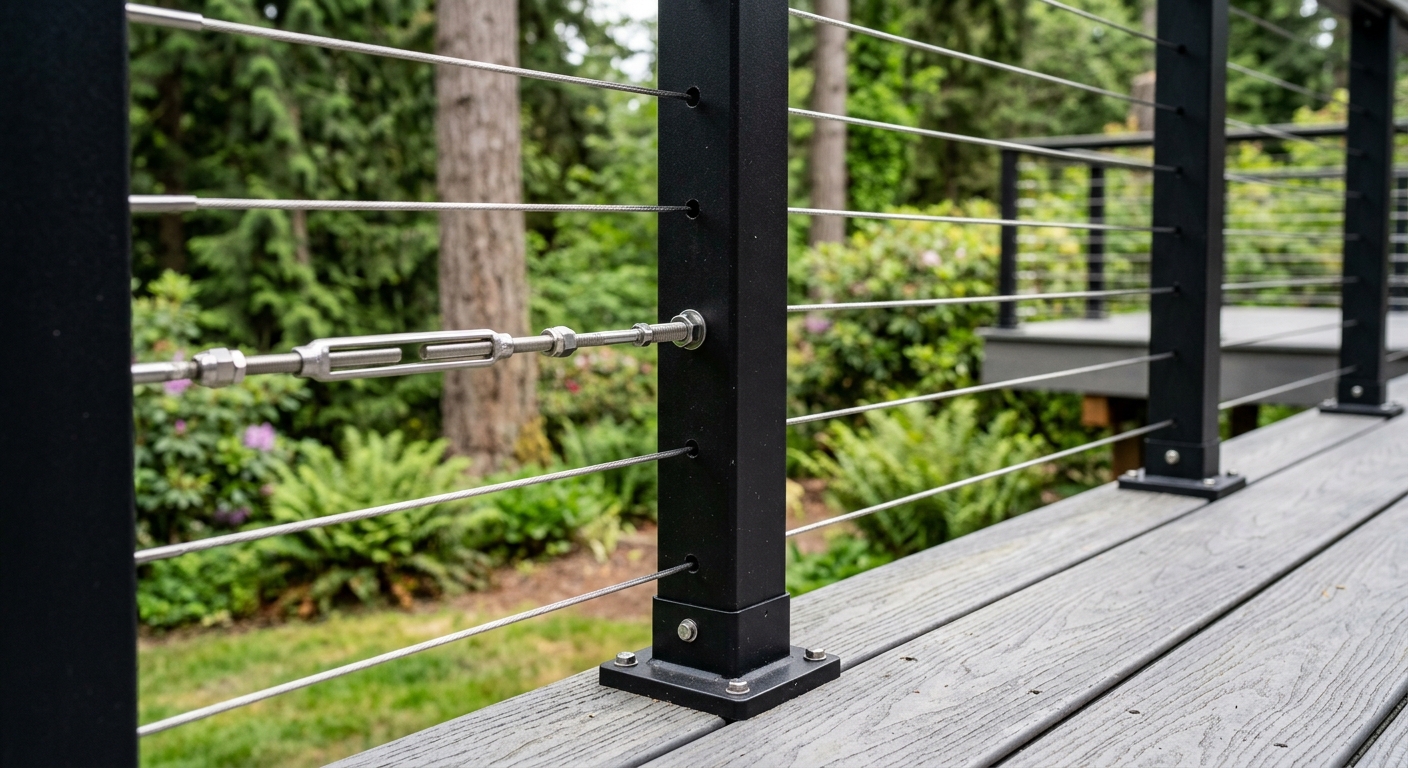
Cable railing on an elevated Bothell deck preserves the hillside view while meeting 42-inch height requirements for elevated structures.
The Resale Value Equation: What a Deck Adds to a Bothell Home
We should address this directly because it comes up in nearly every consultation. Will a deck add value to your Bothell home?
The National Association of Realtors remodeling impact report consistently places deck additions among the outdoor projects with the highest cost recovery — typically 65–80% at resale, depending on market conditions. In the Seattle metro market, which has maintained strong housing demand, the recovery rate has been at the high end of that range.
But recovery rate is not the whole story. For Bothell homeowners, the practical value of a deck has two components: the enjoyment value during ownership (which is 100% recovered because you lived with it), and the market value contribution at sale. A well-designed, well-maintained composite deck on a Norway Hill home contributes meaningfully to the home's appeal and supports the asking price. A deteriorated cedar deck with visible weathering, failing fasteners, and unclear maintenance history is a liability that savvy buyers' agents will use to justify a price reduction.
The maintenance-value connection is direct: composite decks in good condition hold their resale value contribution better than cedar decks that show their age. That is another argument for composite on Bothell's challenging lots — you preserve the investment more reliably over the ownership horizon.
The data also supports deck additions as a more reliable outdoor investment than many alternatives. Pools, outdoor kitchens, and elaborate hardscape all have meaningful maintenance costs and more polarizing buyer appeal. A well-built deck in the Seattle market has near-universal appeal and reliable value support.
Summary: Building the Right Deck for Your Bothell Lot
Bothell is not a generic deck market. Norway Hill's grades, North Creek Valley's ecological sensitivity, Canyon Park's tech-savvy HOA-aware homeowners, and the relentless PNW moisture that challenges everything you build outdoors — these factors together make Bothell deck projects require a level of site-specific thinking that generic contractors and generic pricing often miss.
The right answer for your project starts with the right questions: What is the grade on my lot? What is my setback from critical areas? Does my HOA have design review requirements? How much shade does my lot receive, and how realistic is a maintenance commitment to cedar? What is my 10-year total cost of ownership for each material option?
Those questions answered honestly point toward the right design, the right materials, and the right contractor. They also point toward a project that performs over its full life rather than one that looks good in the first summer and reveals problems by year three.
For a detailed cost estimate specific to your Bothell property and lot conditions, visit theseattledeckingcompany.com/deck-cost-seattle to use our project cost calculator, or call us directly at (425) 675-6259. Our office is at 22722 29th Drive SE, Bothell, WA 98021 — local to the neighborhoods we serve. You can reach us through the contact page to schedule an on-site consultation where we walk your lot, assess grade and site conditions, and give you a real number — not a range wide enough to be meaningless. Bothell deserves builders who know Bothell. That is what we are.
Frequently Asked Questions
Do I need a permit to build a deck in Bothell, WA?
How much does it cost to build a deck in Bothell in 2026?
Is composite or cedar decking better for Bothell's climate?
What wood must be used for deck construction in Bothell?
Does building a deck near North Creek in Bothell have special requirements?
How much extra does an elevated deck on Norway Hill cost?
Do I need HOA approval before building a deck in Canyon Park or Wyndham Hill?
How do I apply for a deck permit in Bothell?
What type of railing is required on an elevated deck in Bothell?
How long does a deck last in Bothell's climate?
Can I build a deck over a root system on a North Creek Valley lot?
Does a deck add value to a Bothell home?
Planning a deck in the Seattle area?
Get an onsite design review and a clear, itemized quote from a licensed local builder.
Request a Free Quote