
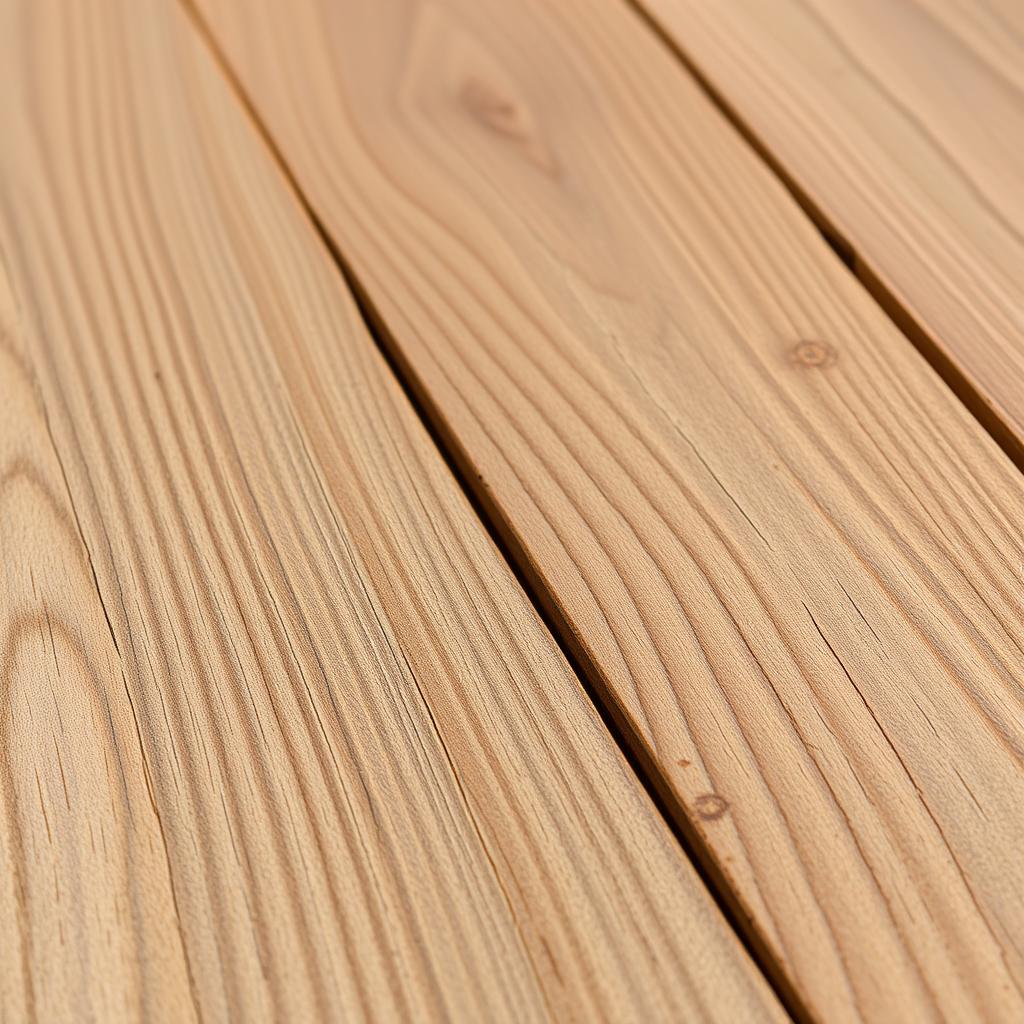
If you've lived in Seattle long enough, you know the ritual. Every spring, your cedar deck emerges from the wet season looking like it spent six months at the bottom of Puget Sound. There's the blackened grain where water pooled. The lifted boards along the south-facing edge where the sun dried things out unevenly. The green bloom of moss creeping in from the corners where a Douglas fir blocks the afternoon light. And then comes the weekend — or more accurately, the weekends — you spend sanding, washing, and restaining, only to start the whole process again before the rains return in October. That cycle is what drives more Seattle homeowners toward composite decking every single year, and the technology has reached a point in 2026 where the trade-off isn't "low maintenance versus good looks." It's "low maintenance and good looks versus expensive maintenance and good looks that fade fast."
The question we hear most often from homeowners in Bellevue, Kirkland, Issaquah, and the neighborhoods along Lake Washington isn't whether composite is worth it — most people have already concluded it is. The real question is: does it actually look like real wood? Because plenty of people tried the early-generation composite products in the early 2000s and walked away with a deck that looked like it was built from textured plastic milk jugs. The technology is genuinely different now. Trex's Transcend line, TimberTech's Legacy Collection, Fiberon's Symmetry series — these are products engineered with deep embossed grain patterns, variable coloring across each board, and multi-tonal surface textures that, at arm's length or when photographed, are genuinely difficult to distinguish from cedar or hardwood. At The Seattle Decking Company, we build composite decks every week, and we'll tell you plainly what we've seen hold up and what still falls short.
This article is a builder's honest guide to composite decking that looks like real wood, written specifically for Seattle and King County homeowners making this decision in 2026. We'll walk through which products deliver the most realistic wood appearance, how the capping technology works and why it matters in our climate, what these projects actually cost (with real numbers, not ballpark ranges that cover a $40,000 spread), and how to choose the right color and texture for your home's specific light conditions, siding, and surroundings.
Why Seattle's Climate Makes Composite Decking the Smart Choice
Seattle doesn't have the coldest winters, the hottest summers, or the most dramatic weather in the country. What it has is relentlessness. From October through April, the rain is almost continuous — not in dramatic storms, but in the persistent gray drizzle that keeps wood surfaces wet for days at a time. Average annual precipitation in Seattle proper is around 38 inches, but the east-side communities we serve — Bothell, Kenmore, Woodinville, Sammamish — often run wetter due to their position against the Cascade foothills. Wood that stays damp for extended periods doesn't just look bad; it actively decays, invites fungal growth, and becomes structurally compromised faster than most homeowners expect.
The Annual Maintenance Burden Nobody Talks About Honestly
When a contractor quotes you a cedar deck at a lower price point than composite, the material cost comparison is real. Cedar boards are genuinely less expensive per square foot than premium composite. What the quote doesn't include is what you'll spend every 2–3 years maintaining it. A proper cedar deck maintenance cycle in Seattle means pressure washing, allowing thorough drying time, applying a penetrating oil or semi-transparent stain, and dealing with any boards that cupped, cracked, or started to delaminate since the last round. Professional deck refinishing in King County runs $2–$5 per square foot for a basic wash and restain — call it $800–$2,500 for a 500 sq ft deck, every two to three years. Over a 25-year period, that's a real cost of $7,000–$15,000 in maintenance alone on top of the original build price, and that's if nothing goes structurally wrong.
Composite decking doesn't eliminate maintenance — we'll cover that later in this guide — but it reduces it dramatically. An annual wash with a garden hose and occasional cleaning with a composite-specific cleaner is the realistic maintenance picture for Trex Transcend or TimberTech Legacy in Seattle conditions. No sanding, no staining, no annual inspection for board failures. That changes the total cost of ownership calculation considerably, which is why composite decking now dominates the premium residential deck market across the greater Seattle area.
Note
Freeze-Thaw Cycles and the Moisture Problem
While Seattle doesn't experience the deep freezes of eastern Washington or the Midwest, the Puget Sound region does cycle through freeze-thaw conditions in winter, particularly at elevations above 400 feet in communities like Issaquah, Snoqualmie, and parts of Sammamish. Water that penetrates wood fibers, freezes, and expands causes micro-fractures that compound over time. Cedar manages this reasonably well when properly sealed, but any gap in coating coverage — a missed edge, a spot where the stain wore through — becomes an entry point for water that accelerates the degradation cycle.
Composite decking with full capping (more on that shortly) is largely impervious to this mechanism. The polymer shell prevents moisture from penetrating the wood fiber or PVC core, which means freeze-thaw cycles produce no internal expansion or fracturing. This is one of the concrete performance advantages of premium composite over wood in the PNW, not a marketing claim.
Moss, Algae, and the Shaded Deck Problem
A significant percentage of Seattle-area decks are either fully or partially shaded — by the house itself, by mature Douglas firs or cedars on the property, or by neighboring structures in the denser neighborhoods of Capitol Hill, Madison Park, or Madrona. Shaded decks stay wetter longer, and moisture on any organic surface eventually hosts moss and algae. Cedar, being genuinely organic, is particularly hospitable to biological growth. Composite decking resists moss and algae growth not because it's treated with biocides but because capped composite boards don't provide the porous organic substrate that moss needs to take root. You'll occasionally see surface algae on composite in very shaded, very wet conditions, but it wipes off cleanly rather than embedding itself into the fiber the way it does with wood.
How Realistic Does Composite Decking Actually Look in 2026?
This is the question that deserves an honest answer, and the honest answer is: it depends significantly on which product you choose and which color. The gap between entry-level composite and premium composite is not subtle. An entry-level product like Trex Select has limited color variation, a shallower embossed grain, and a surface texture that still reads as "plastic" in certain light conditions, particularly in bright afternoon sun when glare can reveal the manufactured nature of the surface. Premium products — Trex Transcend, TimberTech Legacy, Fiberon Symmetry — are genuinely different in their aesthetic realism.
What Makes a Composite Board Look Like Real Wood?
Three manufacturing variables determine how convincingly a composite board mimics natural wood grain:
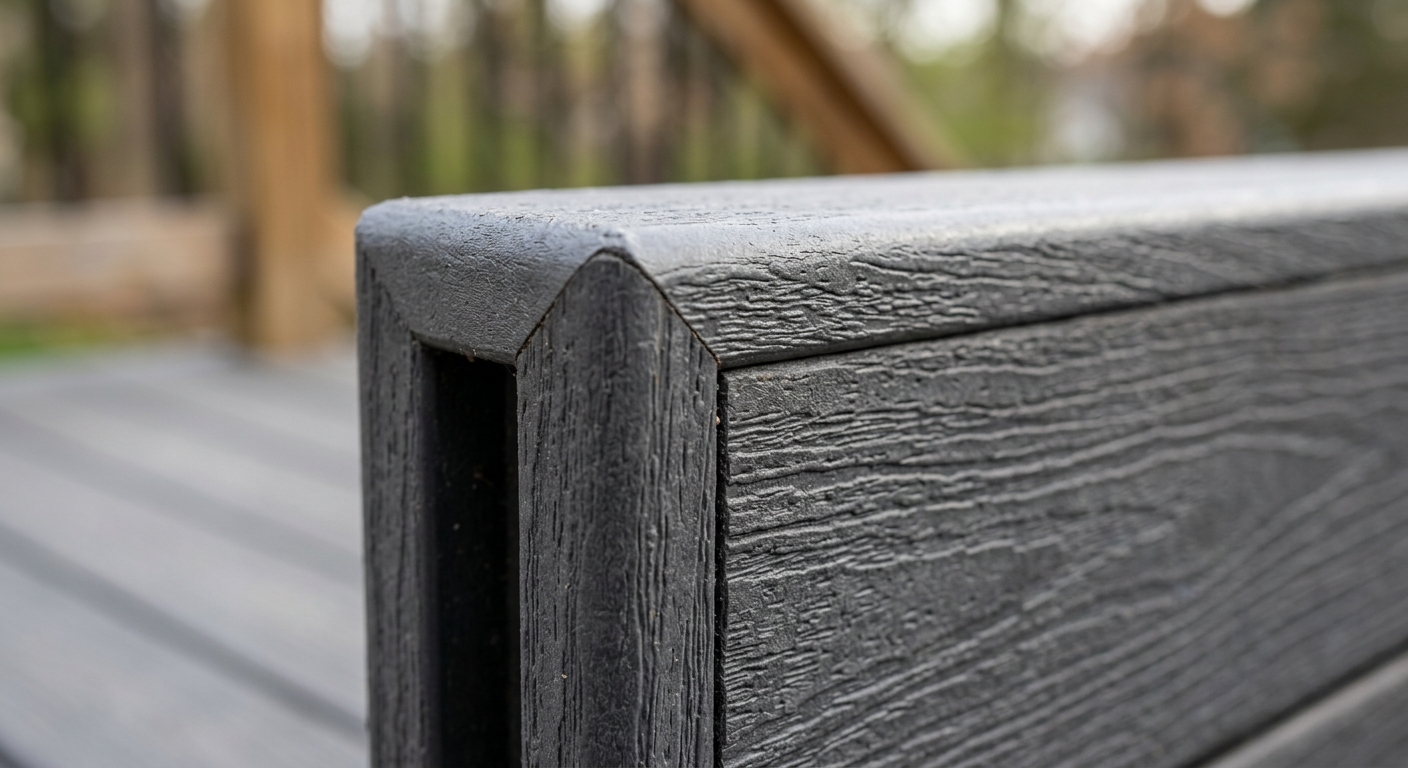
1. Grain Depth and Pattern Complexity Natural wood grain is three-dimensional. The grain doesn't just vary in color — it varies in depth, with softer early wood receding and harder late wood projecting slightly above the surface plane. Early composite products had shallow, repetitive embossing that read as stamped rather than grown. Modern premium lines use multi-pass embossing rollers that create variable depth profiles, including micro-texture variations within a single board that prevent the "repeating tile" effect where you can see the same grain pattern every 18 inches.
2. Color Variation Across and Along the Board Look closely at a piece of cedar or Douglas fir and you'll see that the color isn't uniform — there are lighter sapwood streaks, darker heartwood areas, knot shadows, and tonal shifts that run with the grain. Manufacturers like TimberTech and Fiberon now use multi-pass coloring processes that apply base tones and overlay tones separately before the polymer shell is applied, creating boards with genuine tonal variation from edge to center and from end to end. Trex's Transcend line does this well; their Spiced Rum and Tiki Torch colorways in particular have a warmth and variation that reads authentically as tropical hardwood at normal viewing distances.
3. The Surface Sheen Real wood has a matte, slightly diffuse surface that absorbs light rather than reflecting it. Early composite boards had a slight sheen that caught light and telegraphed their manufactured origin. Premium composite manufacturers now formulate their cap stock with matte surface finishes that absorb light the way wood does. When you walk out onto a Fiberon Symmetry deck in the morning shade that defines most Seattle summer mornings, you don't get the plastic glare that marked earlier generations.
Which Lines Deliver the Most Convincing Wood Look?
In our experience building decks across the Eastside, North Seattle, and the communities along the I-90 and SR-520 corridors, here's where the three dominant premium lines land on wood realism:
Trex Transcend is the most widely recognized product in the premium composite category and for good reason — it delivers excellent aesthetics, particularly in the warmer brown and reddish-brown tones that evoke tropical hardwood. The Spiced Rum, Tiki Torch, and Havana Gold colorways are particularly convincing. Where Transcend sometimes shows its manufactured origins is in cooler, gray tones under flat Pacific Northwest light — the Gravel Path colorway reads a bit more industrial than some homeowners expect. Transcend's grain depth is good, and the multi-tonal coloring is well executed.
TimberTech Legacy Collection may be the single most wood-realistic composite product currently available for Seattle homeowners. The Vintage Collection within Legacy mimics aged hardwood — English Walnut, Mahogany, Teak — with a level of tonal complexity that genuinely surprises people who haven't seen premium composite up close. The aged/weathered aesthetic that TimberTech executes in its Legacy line is particularly well suited to the Pacific Northwest architectural sensibility, where the rustic-modern look — warm wood tones, clean lines, natural materials — dominates new construction and remodels in communities like Woodinville and Redmond.
Fiberon Symmetry delivers strong wood realism in its mid-toned colorways, particularly Ipe, Hazelnut, and the Warm Sienna. Fiberon's grain profiles are deep and well-varied, and the matte cap finish is among the least "plasticky" of any composite on the market. Fiberon's performance story in Seattle-specific conditions is also strong — their four-sided capping and industry-leading warranty position makes them a particularly good choice for shaded or high-moisture applications.
Tip
Trex Transcend vs. TimberTech Legacy vs. Fiberon Symmetry: Side-by-Side Comparison
For Seattle homeowners who've narrowed the field to these three premium lines, here's a direct comparison across the variables that matter most in our climate and market.
| Feature | Trex Transcend | TimberTech Legacy | Fiberon Symmetry |
|---|---|---|---|
| Capping Type | Three-sided | Four-sided | Four-sided |
| Warranty (Fade/Stain) | 25 years | 30 years | 50 years |
| Warranty (Structural) | 25 years | 30 years | 25 years |
| Grain Realism | Very Good | Excellent | Very Good |
| Color Range | 16 colors | 12 colors | 14 colors |
| Material Cost (est.) | $30–$45/sq ft | $35–$50/sq ft | $28–$42/sq ft |
| PNW Climate Rating | Good | Excellent | Excellent |
| Moss/Algae Resistance | Good | Very Good | Very Good |
| Recycled Content | High (~95%) | Moderate | Moderate |
Warranty Language Matters More Than Marketing Claims
When you're comparing warranties across composite brands, read the fine print rather than the headline numbers. Trex's 25-year fade and stain warranty is legitimate, but it covers "excessive" fading as defined by specific delta-E color shift thresholds that are higher than most homeowners expect. TimberTech's 30-year warranty is more comprehensive in its coverage definitions. Fiberon's 50-year stain and fade warranty on their premium lines is genuinely exceptional and is backed by specific replacement guarantees that are more straightforward to execute than some competitors.
For the full brand comparison with installation cost analysis specific to Seattle, see our Trex vs. Fiberon vs. TimberTech breakdown for Seattle homeowners.
The Recycled Content Variable
Trex distinguishes itself from TimberTech and Fiberon in one significant way: recycled content. Trex Transcend boards are manufactured with approximately 95% recycled material by weight — primarily reclaimed wood scraps and reclaimed plastic film. For homeowners who prioritize environmental credentials, this is a real differentiator. TimberTech and Fiberon use recycled content as well but at lower percentages, and their PVC-based cap compositions differ from Trex's polyethylene approach in ways that affect both performance and environmental profile.
This isn't a marketing point we emphasize heavily with clients because the performance differences are more practically important, but if sustainability is a decision factor, Trex's manufacturing story is genuinely differentiated.
The Capping Difference: Why Four-Sided Boards Matter in the Pacific Northwest
Capping is the polymer shell applied to composite decking boards during manufacturing. It's what makes modern composite decking so much more durable and moisture-resistant than the original generation of composite products that were simply wood fiber and plastic mixed together with no protective shell. But not all capping is equal, and the difference between three-sided and four-sided capping is more meaningful in Seattle than it is in drier climates.
Three-Sided vs. Four-Sided: The Technical Difference
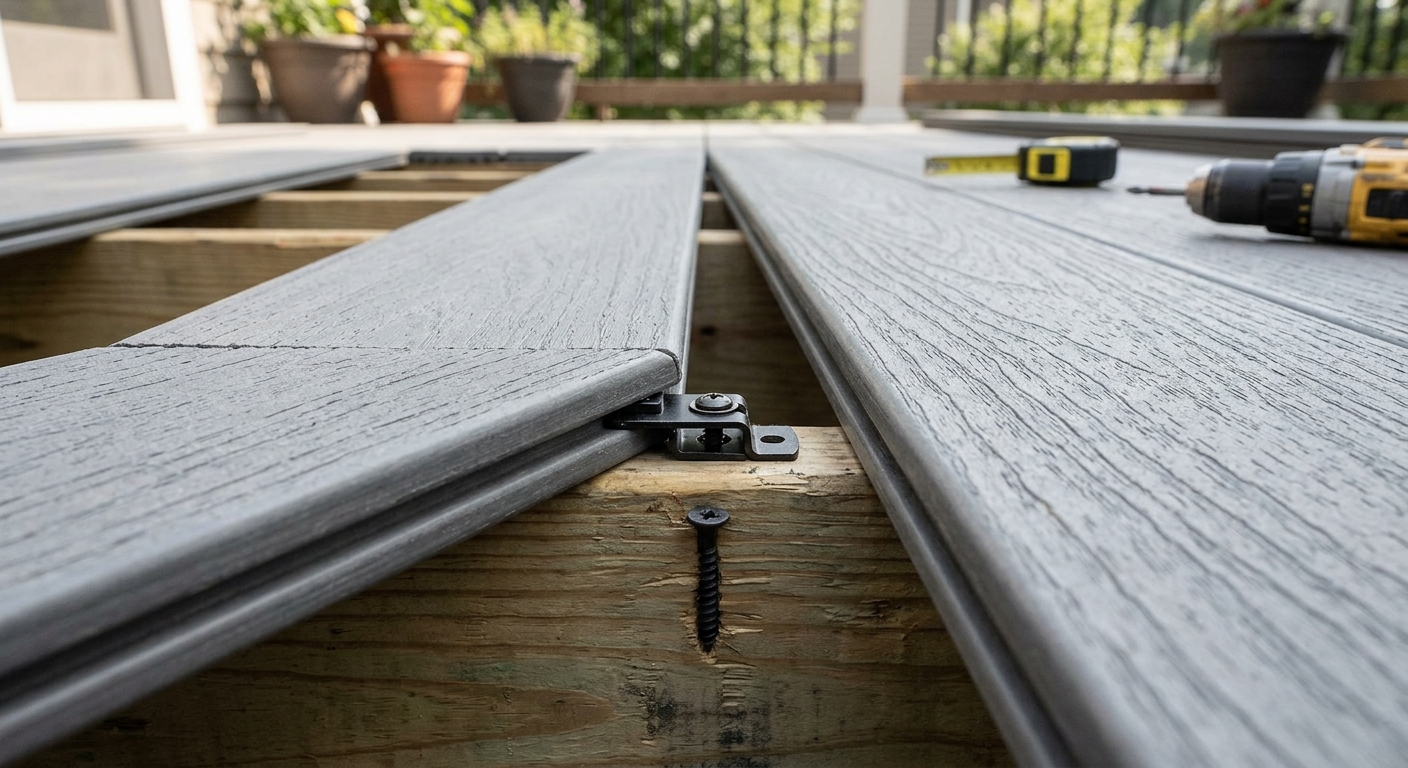
A three-sided capped composite board has a polymer shell on the top surface and both side edges, but leaves the underside of the board — the face that rests against the joists and is exposed to the air gap between the deck surface and the frame below — unprotected by the cap. A four-sided capped board has the polymer shell on all four surfaces, including the bottom.
In a dry climate, this distinction is relatively minor. The underside of a deck board in Phoenix or Denver doesn't see much moisture. In Seattle, the underside of every deck board is exposed to the humid air that circulates through the deck frame, to rain splash-back from the surface below the deck, and in some configurations to direct moisture contact. Over time, an uncapped underside allows moisture to penetrate the wood fiber or composite core at the bottom surface, which can lead to localized swelling, reduced structural integrity, and the accelerated degradation of the board's internal structure.
Key insight
What the Research Shows About Moisture Infiltration
The performance research from installers and independent reviewers comparing these products bears this out. Composite decking reviews and brand comparisons like those from Rocky Mountain Forest Products note that TimberTech's four-sided capping earns it the highest moisture resistance ratings among the major brands. DreamHomeWorks' comparison specifically identifies four-sided capping as a material advantage for moisture-heavy climates.
In our own experience building composite decks across King County and Snohomish County, we haven't seen widespread failures in Trex Transcend due to the three-sided cap — it's a premium product that performs well. But when a homeowner is specifically building an elevated deck, a shaded deck in a wet corner of the yard, or a deck over a crawl space that generates upward moisture, we recommend four-sided capped products as the more conservative choice for the long term.
Why This Affects Seattle Homes Specifically
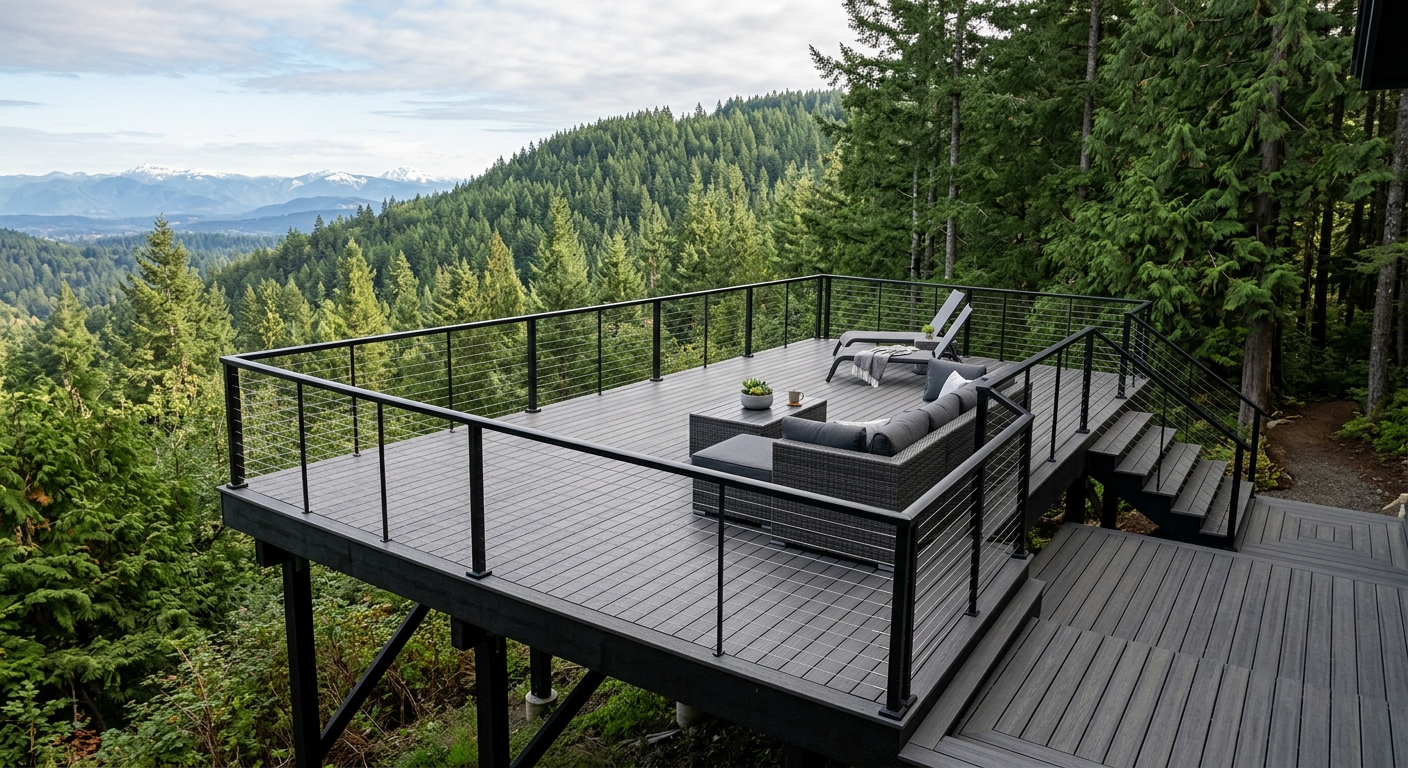
Many Seattle-area homes are built on hillside lots — particularly in neighborhoods like Magnolia, Queen Anne, West Seattle, and on the east side of Lake Sammamish — where decks are elevated 6–15 feet off the slope below. Elevated decks expose significantly more of the deck board underside to circulating moist air than grade-level decks do. For these applications, the four-sided capping advantage is most pronounced, and we consistently recommend TimberTech Legacy or Fiberon Symmetry over Trex Transcend specifically because of that exposure dynamic.
What Does Composite Decking Cost in Seattle? 2026 Price Breakdown
Let's be direct about numbers, because the range you'll find in online cost guides is frustratingly wide. "$80 to $180 per square foot installed" is accurate but not particularly useful if you're trying to budget a project. The variation within that range is driven by specific, knowable variables, and we can walk you through them.
Fully installed cost estimates for typical composite deck projects in King County, WA. Based on 2026 contractor pricing from The Seattle Decking Company and regional market data.
| Category | Value |
|---|---|
| Entry-Level Composite (300 sq ft) | $28,000 |
| Mid-Range Composite (400 sq ft) | $42,000 |
| Premium Composite (400 sq ft) | $55,000 |
| Premium w/ Elevated Frame (500 sq ft) | $65,000 |
What Drives the Price Variation
Material tier: The single biggest variable is which composite product you choose. Trex Select (the entry line) costs materially less than Trex Transcend. Fiberon Ipe (entry) costs less than Fiberon Symmetry. Within any brand, moving from entry to premium roughly doubles the material cost per square foot. For Seattle homeowners prioritizing wood realism, you're working in the premium tier, which means you're starting at the higher end of the material cost range.
Deck height and structural complexity: A grade-level deck — one that sits 12–18 inches off the ground — requires a simpler frame than an elevated deck that's 6 feet off a hillside. Elevated decks need larger dimensional framing lumber, more complex post and beam work, potentially engineered beam specifications, and more labor time. The structural frame, not the decking boards, is often the biggest cost variable on complex elevated projects.
Permit fees and engineering: Most deck projects in King County over 200 square feet, or any deck over 30 inches above grade, require a building permit. King County's building permit office processes permits for unincorporated county areas; Seattle projects go through the Seattle Department of Construction and Inspections (SDCI). Permit fees typically run $500–$1,500 for residential deck projects depending on valuation, and elevated or complex decks may require a licensed engineer's structural stamp at an additional cost of $500–$1,500. We handle permit applications for all our King County projects — it's not optional, and it's not something to try to skip. See our King County deck permit guide for the full permit process breakdown.
Railing selection: Railing is where project costs can spike unexpectedly. Basic aluminum rail with composite top cap might add $80–$120 per linear foot installed. Cable railing — a popular choice in Seattle for the unobstructed view it preserves — typically runs $150–$200 per linear foot installed due to the tensioning hardware and stainless cable material cost. Glass panel railing is the premium option at $200–$350 per linear foot. A 400 sq ft deck with 60 linear feet of perimeter railing can see $5,000–$20,000 in railing cost variation depending on the system chosen. See our Seattle deck railing options guide and our cable railing Seattle guide for full breakdowns.
| Project Size | Entry Composite | Premium Composite | Premium + Elevated Frame |
|---|---|---|---|
| 200 sq ft | $18,000–$24,000 | $24,000–$32,000 | $30,000–$40,000 |
| 300 sq ft | $24,000–$34,000 | $34,000–$45,000 | $42,000–$55,000 |
| 400 sq ft | $30,000–$42,000 | $42,000–$58,000 | $52,000–$68,000 |
| 500 sq ft | $38,000–$52,000 | $52,000–$70,000 | $62,000–$80,000 |
Estimates include materials, labor, permit fees, and standard railing. Does not include stairs, lighting, or built-in features.
The Trex Price Increase Context
Trex raised prices 7.5–15% for 2025, citing raw material costs and inflation. If you're comparing a quote you received in 2023 or early 2024 to current bids, you'll see a noticeable jump in Trex material costs that isn't the contractor's margin — it's a real market change. TimberTech and Fiberon have also seen price increases, but Trex's adjustments were among the more significant in the composite category. Budget for current 2026 pricing, and verify material costs when comparing quotes from contractors who bid the same job at different prices.
Return on Investment in the Seattle Market
The National Association of Realtors' Remodeling Impact Report consistently shows deck additions and replacements as among the highest-ROI exterior home improvements. In the Seattle market specifically, where outdoor living space is valued highly due to the Pacific Northwest lifestyle culture, a well-built composite deck on a home in Redmond, Bellevue, or the Eastside communities typically recovers 65–80% of its installed cost in home value. For a home being prepped for sale, a new composite deck — particularly one with clean lines, premium materials, and permitted construction — is a meaningful selling point that can reduce time on market and support asking price.
For a detailed 2026 cost breakdown with specific material and labor line items, see our Seattle deck cost guide for 2025 and our deck cost estimator page.
Installation Tips for Seattle's Freeze-Thaw and Wet Conditions
Composite decking isn't a DIY product for most homeowners, but understanding how it should be installed helps you evaluate contractor quality and make better decisions about specification. There are several installation variables that are specifically important for Seattle's climate.
Thermal Expansion Management
Composite decking expands and contracts along its length (not its width, as wood does) in response to temperature changes. This is a fundamentally different expansion axis than what most people expect, and it requires specific handling during installation. TimberTech's installation guidelines specify that boards should be cut to final length immediately before installation rather than pre-cut in advance, because board temperature at the time of cutting affects the installation gap calculations. In Seattle's climate, where board temperatures on a south-facing deck can swing 40–50 degrees Fahrenheit between a December morning and a July afternoon, using incorrect gap spacing can result in boards that buckle in summer or gaps that open unattractively in winter.
Experienced composite installers account for this by:
- Storing boards in ambient conditions for at least 24 hours before installation
- Measuring board temperature and adjusting end-gap specifications accordingly
- Using manufacturer-specified gapping tools rather than eyeballing spacing
- Cutting boards as close to installation time as possible
This is one of the areas where experienced composite installers earn their premium over general carpenters who occasionally do decks — the details of composite installation are specific and consequential.
Hidden Fastener Systems and Seattle Moisture
Most premium composite decking is installed with hidden fastener systems — plastic or stainless clips that engage channels in the board edges and attach to the joist below, leaving no visible fastener on the deck surface. Hidden fasteners serve both aesthetic and functional purposes: they eliminate the screw holes that can become moisture entry points in face-screwed installations, and they produce the clean, seamless look that most homeowners in 2026 expect from a premium composite deck.
In Seattle's wet climate, the choice of hidden fastener material matters. Plastic clip systems are adequate for most applications, but stainless steel fasteners are the better choice for any elevated or high-moisture environment. Stainless won't corrode or stain the composite boards with rust streaks, which can occur with non-stainless hardware in persistently wet conditions.
Important
Subframe Specification for Seattle Decks
The composite decking boards are only as durable as the subframe beneath them, and the subframe specification for Seattle projects deserves careful attention. Options include:
Pressure-treated lumber: The standard choice for deck framing in the Pacific Northwest. ACQ (Alkaline Copper Quaternary) treated lumber is appropriate for ground contact and above-ground applications, but note that ACQ treatment is corrosive to standard hardware — any hardware used with ACQ lumber must be hot-dipped galvanized or stainless steel. Many composite board warranty issues we've seen in the field trace back to non-compatible hardware used with ACQ-treated frames, causing corrosion that damages the boards above.
Steel framing: Gaining adoption for premium elevated deck projects in Seattle, steel subframes (aluminum or galvanized steel joists) provide exceptional durability, won't rot or warp, and are dimensionally stable in ways that lumber isn't. The cost premium over pressure-treated lumber is significant — roughly 30–50% more for the frame — but for an elevated deck where subframe replacement would require full decking teardown, the longevity argument is compelling.
Composite or aluminum joists: Products like AZEK's and other manufacturers' composite joist systems are now available and appropriate for above-grade applications. For full composite builds where the goal is completely eliminating organic material from the deck structure, composite joists are the logical extension of that commitment.
Drainage Design and Air Circulation
One of the structural design details that distinguishes a well-built Seattle deck from a mediocre one is attention to drainage and air circulation beneath the deck surface. Board spacing (typically 3/16" for most hidden fastener systems) allows rain to drain through the deck field, but water also needs to escape the frame cavity below. Decks without adequate drainage slope or frame-level drainage pathways can retain standing water on the ledger board and end joist — exactly the areas most vulnerable to rot in wood-framed decks.
For premium composite builds, we design frame drainage slope and ensure adequate ventilation openings at the perimeter so that air can circulate through the deck cavity and drive out moisture after rain. This adds no material cost and minimal labor, but it's the kind of detail that separates thoughtful deck builders from contractors who simply frame a flat box and cover it with boards.
How to Choose the Right Color and Grain Pattern for a Natural Wood Look
Choosing the right composite color for a Seattle home is less intuitive than it might seem, and it's an area where homeowners commonly make decisions they later regret. The primary variables are the home's siding and trim colors, the natural light conditions of the specific deck location, and the homeowner's aesthetic preference for warm versus cool wood tones.
Understanding How Pacific Northwest Light Affects Color Perception
Seattle's flat, diffuse light — the overcast sky that characterizes roughly 200 days per year — desaturates color. Warm tones (browns, reds, golden tones) that look richly warm in a manufacturer's showroom under warm white lighting often appear slightly muddier or more muted on a finished Seattle deck under an overcast sky. Cool tones (grays, weathered silvers, ash tones) conversely can look quite clean and contemporary in diffuse light, which is why the weathered-wood gray aesthetic has become extremely popular in the Pacific Northwest in recent years.
The practical implication: request full-sized (not sample chip) board samples from your contractor and view them on your actual deck location at different times of day before committing. A 12-inch board sample held up against your house siding in the morning light of your specific deck location will tell you more about color selection than any amount of online research.
Matching Composite Color to Common Seattle Home Styles
The Craftsman and Bungalow homes of Wallingford, Green Lake, Capitol Hill, and Madrona typically have warm paint schemes — cream, sage, taupe, warm gray — that pair beautifully with warm wood-tone composites. Trex Transcend in Spiced Rum or Tiki Torch, or TimberTech Legacy in English Walnut or Mahogany, work well against these traditional color palettes without looking incongruous with the architectural era.
The contemporary gray-and-white modern homes that dominate new construction in Kirkland, Bellevue, and Sammamish call for a different approach. Trex Transcend in Island Mist or Gravel Path, or Fiberon Symmetry in Ipe or Warm Sienna, work with the cooler contemporary palette. The weathered-gray aesthetic is particularly strong here — it reads as intentional and sophisticated rather than weathered and old.
Pacific Northwest rustic-modern homes — the style that blends warm wood tones with black steel, exposed structure, and natural stone — typically want a composite that evokes aged hardwood. TimberTech Legacy's Vintage Collection is almost purpose-built for this aesthetic. The aged walnut and aged teak colorways in this line have a depth and tonal complexity that plays beautifully against the black window frames and horizontal cedar siding that define this architectural moment in the Seattle area.
Color and UV Fading Considerations
Even capped composite doesn't hold color perfectly forever. All composite decking fades to some degree over time, and the direction of fade matters: warm browns fade toward lighter, more golden tones, while some darker colors can develop a slight chalky appearance over years. Manufacturers design their colorways with some degree of graceful fading in mind — the Trex "weathered" lines, for example, start with a lighter, more weathered tone that represents where warmer boards will eventually settle, so the installed color remains consistent with the long-term appearance.
UV exposure is the primary driver of fade, which means south-facing decks in Seattle see more fade over time than north-facing decks in shade. For south-facing installations with full sun exposure (relatively rare in Seattle but not uncommon on the Eastside and in Mercer Island), factor this into color selection. Mid-range tones fade less dramatically than very dark colors, which can show early fading before the board surface stabilizes.
Mixing Colors and Grain Patterns
A trend we've built many times in the past two years is the use of two composite colors or two composite products on a single deck — a field color and a contrasting picture-frame border, for example, or different color tones for the deck field versus the stairs. This approach is genuinely effective at elevating the aesthetics of a composite deck beyond what a single-color field produces. It also breaks up the visual expanse of a larger deck and creates a design intentionality that reads as custom rather than tract.
For homeowners considering this approach, keep a few practical rules in mind. Mixing composite products from different manufacturers within the same deck creates warranty complications — most manufacturers' warranties apply only when their products are used with their own subframe components or compatible hardware. Mixing colorways from within the same brand's product line is much cleaner both practically and aesthetically. A Fiberon Symmetry deck in Ipe with a Hazelnut border, for example, stays within the same line, uses compatible fasteners, and gets covered under the same warranty.
For inspiration and design options on custom composite deck designs, see our custom curved decks page and our best decking materials for Seattle 2026 guide.
Maintenance Guide: Keeping Your Composite Deck Beautiful in Seattle Weather
One of the selling points of composite decking is lower maintenance, but "lower maintenance" doesn't mean "no maintenance." In Seattle's specific climate, composite decks have specific maintenance needs that, if addressed regularly, keep them looking new for decades. If ignored, Seattle's wet conditions can cause cosmetic issues that, while not structural, reduce the deck's aesthetic quality and eventually void warranty coverage.
Annual Cleaning Schedule for Seattle Composite Decks
The most important maintenance task for Seattle composite decks is keeping the gap channels between boards clear of organic debris. Seattle's combination of deciduous street trees (maples, alders, cherries) and coniferous trees (cedars, Douglas firs) means decks are subject to both leaf drop in fall and needle/cone drop throughout the year. When organic debris accumulates in board gaps and stays wet, it creates exactly the moist, organic environment that moss and algae need to colonize.
Fall (October–November): The most critical cleaning window. After the deciduous leaves drop, clear debris from board gaps with a stiff bristle brush or purpose-made composite deck brush. Blow or rake leaves off the deck surface before they can mat and hold moisture against the boards. A basic leaf blower does this effectively without risk of surface damage.
Late winter/early spring (February–March): After the wet season's peak, inspect the deck for moss or algae growth. Any biological surface growth should be addressed before it can root more firmly. A diluted solution of composite deck cleaner (avoid bleach — it can affect cap stock color and is prohibited by most manufacturer warranties) applied with a scrub brush and rinsed thoroughly handles surface algae effectively.
Summer: Seattle summers are dry enough that composites need less attention during the June–September window. This is a good time to inspect railings, hardware, and the visible portions of the frame for any issues that need addressing before the wet season returns.
Tip
The Moss Prevention Strategy
Prevention is far more effective than remediation when it comes to moss on Seattle composite decks. The key prevention strategies are:
Maximize light penetration to the deck surface. Moss can't establish in areas with regular sunlight. If your deck is heavily shaded, consider whether any overhanging branches can be trimmed without harming tree health — even partial light improvement makes a meaningful difference in biological growth rates.
Ensure water drains off the deck surface quickly. Standing water, even for a few hours, creates conditions for algae and moss growth. Check that board gaps are clear and that the deck frame has adequate drainage slope (minimum 1/8" per foot drop away from the house).
Apply a composite-compatible moss inhibitor after deep cleaning. Products like Defy Wood Cleaner or composite-specific deck cleaners with preventive agents can reduce re-growth rates when applied after thorough cleaning. This is particularly useful for decks under heavy tree canopy where light management alone isn't sufficient.
What Composite Decks Cannot Recover From
It's worth being honest about the limits of composite maintenance. Composite decking can recover from surface staining, moss growth, and most discoloration with appropriate cleaning. What it cannot recover from:
Physical surface damage from sharp impacts. Unlike wood, which can be sanded back, deep scratches or gouges in composite cap stock are essentially permanent. Moving heavy furniture, dropping tools, or dragging grills across the deck surface can create marks that won't clean away. Use furniture pads and exercise care with heavy objects.
Severe heat damage. Composite decking is not designed for direct contact with heat sources. A portable grill placed directly on composite boards can cause permanent surface marking or melting. Always use a grill pad or grill station with adequate thermal separation.
Persistent oil staining from uncleaned spills. Most stains clean off composite decking easily, but cooking oil or grease left to cure into the cap surface over weeks or months can create permanent discoloration in some formulations. Clean grill drips promptly.
For cedar deck owners who are comparing maintenance requirements before making a composite upgrade decision, our cedar deck sealing guide for Seattle covers what the cedar maintenance commitment actually looks like in practice.
NADRA Standards, Local Permits, and Why Permitted Work Matters
We've touched on permits above in the cost section, but this topic deserves its own treatment because we regularly encounter homeowners who have received bids from contractors who suggested skipping the permit, or who have existing unpermitted decks they're trying to upgrade or repair.
The North American Deck and Railing Association (NADRA) establishes professional standards for deck construction that align with and often exceed code minimums. NADRA member builders commit to building to code and pulling permits. We are NADRA members, and we pull permits for every deck project we build in King County.
Why Permits Protect You, Not Just the County
The cynical view of building permits is that they're a government revenue mechanism that adds cost and time to projects. The practical reality is that permits protect homeowners in ways that directly affect their financial interest:
Resale disclosure: In Washington State, unpermitted structures must be disclosed in real estate transactions. An unpermitted deck discovered during a buyer's home inspection can derail a sale, reduce the accepted offer price to account for permit remediation costs (which often include a penalty fee plus the standard permit cost), or create liability for misrepresentation if the seller didn't know about the lack of permit.
Homeowner's insurance: Damage originating from an unpermitted structure may not be covered by standard homeowner's insurance. A deck that fails structurally — causing injury or property damage — may result in a coverage denial if the deck was unpermitted.
Structural verification: The permit inspection process exists because decks, particularly elevated decks, carry significant life safety implications. The King County building code requirements for ledger connections, post anchoring, and railing height exist because deck collapses injure and kill people every year. Inspection catches errors before they're buried under decking boards.
The King County Permit Process for Decks
For projects in unincorporated King County, permits are processed through King County's Department of Local Services, Building Safety and Inspection Division. Projects within Seattle city limits go through the Seattle Department of Construction and Inspections. Other incorporated cities within King County (Bellevue, Kirkland, Redmond, Bothell, Issaquah, etc.) each have their own permit offices, though most follow the Washington State Building Code with local amendments.
For most residential deck projects, the permit process involves:
- Submitting a permit application with site plan and construction drawings
- Plan review (typically 2–6 weeks for over-the-counter review or up to 6–8 weeks for more complex projects requiring full plan review)
- Permit issuance
- Construction with required inspections (footing, framing, and final)
We manage this entire process for our clients. The permit fee for a typical $40,000 deck project in King County runs approximately $500–$900. The timeline impact is real — you need to factor permit review time into project scheduling, which is why we start permit applications before construction begins rather than treating permits as an afterthought.
Putting It All Together: How to Choose the Right Composite for Your Seattle Home
By this point in the guide, you have the information to make a well-grounded decision. Here's how to synthesize it into a practical choice framework.
Decision Framework: Which Product for Which Situation
If your primary priority is wood realism and budget is less constrained: TimberTech Legacy Vintage Collection. The aged hardwood aesthetic in this line is the most convincing natural-wood appearance available in composite, and the four-sided capping gives it the best moisture credentials for Seattle. It's the product we most often specify for clients who ask us to build something that looks genuinely like wood.
If you want the best balance of aesthetics, performance, and value for a Seattle deck: Fiberon Symmetry. Four-sided capping, 50-year fade/stain warranty, deep grain profiles, and installed costs that often come in slightly below comparable TimberTech. The Ipe and Warm Sienna colorways are excellent. This is often our recommendation for clients who want a premium result without paying the absolute top of the market.
If brand recognition matters and you want the most widely available product with the deepest contractor support network: Trex Transcend. The three-sided capping is the one legitimate technical knock for Seattle applications, but Trex has the widest contractor network, the most available installer expertise, and the strongest brand ecosystem of accessories (fascia, trim, railing systems) for a fully integrated Trex build. For grade-level decks or decks in moderate-moisture environments, Transcend performs excellently.
If sustainability and recycled content are priorities: Trex, at approximately 95% recycled content, is the clear choice. TimberTech and Fiberon use recycled materials but at significantly lower percentages.
The Questions to Ask Any Contractor Bidding Your Project
Before accepting a composite deck bid, ask:
- Which specific composite product line are you bidding (not just "Trex" — which line within Trex)?
- Is the installation using hidden fasteners or face screws, and why?
- What is the proposed subframe material and treatment specification?
- Will you be pulling the King County/Seattle building permit, and is the permit fee included in the bid?
- Can you provide references to completed composite decks I can visit and inspect?
- What is the warranty on your labor/installation separate from the material warranty?
A contractor who can't answer these questions specifically is not someone you want building a $40,000–$65,000 deck. The questions are standard professional practice, not gotchas.
Combining Composite Decking with Other Outdoor Living Elements
A standalone composite deck surface is rarely the full picture of a successful outdoor living project. The most impactful deck upgrades we build combine composite decking with complementary elements that extend the usability and aesthetic of the space:
Deck lighting: Low-voltage deck lighting integrated into railing posts, stair risers, and deck fascia extends the functional evening hours of a Seattle deck and creates a genuinely beautiful nighttime aesthetic. For a city where the summer evenings are long and spectacular, deck lighting is a high-value addition. See our deck lighting guide for examples.
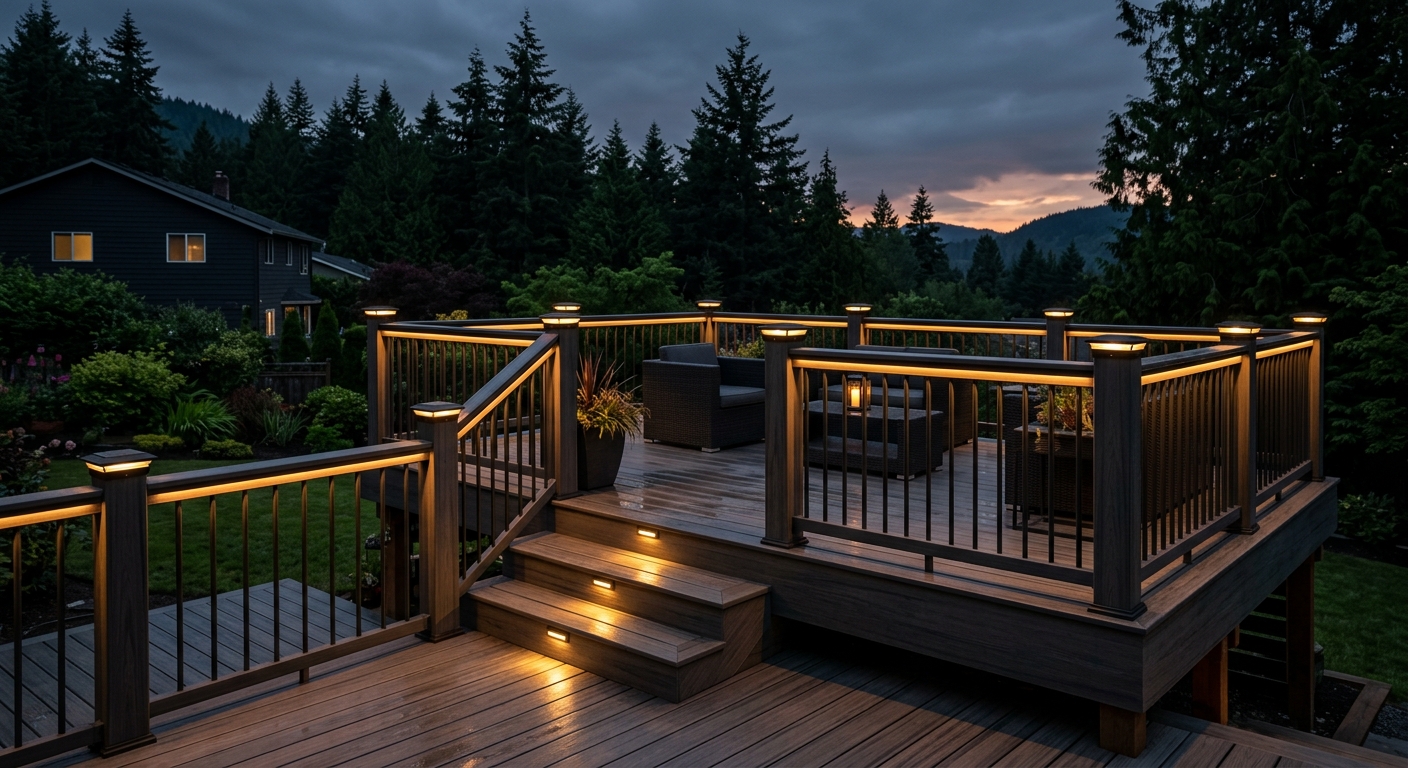
Deck and patio combinations: Many Seattle lots benefit from combining an upper composite deck with a lower concrete paver patio, creating multi-level outdoor living zones at different elevations. This approach is particularly effective on hillside lots where the deck serves as a transition zone between the main floor of the house and the yard below. See our deck and patio combo guide for Seattle.
Deck additions: If you're extending an existing deck or adding a deck to a home that doesn't have one, the design and permit considerations differ from a simple replacement project. See our deck addition guide for Seattle homes for the full process breakdown.
The Bottom Line on Composite Decking That Looks Like Real Wood
In 2026, the technology has genuinely caught up with the marketing promise. Trex Transcend, TimberTech Legacy, and Fiberon Symmetry all produce decks that, at normal viewing distances and in the flat light that characterizes most Seattle days, are genuinely difficult to distinguish from the real hardwood they emulate. The grain profiles are deep, the color variation is sophisticated, and the matte cap finishes have eliminated most of the "plasticky" appearance that defined earlier composite generations.
The case for composite over cedar in Seattle is now compelling on both aesthetic and practical grounds. The maintenance burden reduction is real and quantifiable. The 25–30 year product lifespan dramatically exceeds what cedar achieves in our climate without intensive upkeep. And the design options — in color, texture, grain depth, railing integration, and accessory coordination — are broader than what's available in natural wood.
The capping difference matters for Seattle applications specifically. If you're building an elevated deck, a shaded deck, or any deck where moisture exposure is elevated, we recommend a four-sided capped product — TimberTech Legacy or Fiberon Symmetry — over Trex Transcend for the additional protection it provides on the board underside. It's not that Trex fails in Seattle conditions; it's that the four-sided products offer a more conservative specification for a climate that will test moisture resistance year after year for three decades.
And pull the permit. Every time, without exception. It protects your investment, your family, and your home's resale value. The two to three weeks of permit review time is worth far more than it costs.
Ready to Build? Let's Talk About Your Composite Deck
At The Seattle Decking Company, we build composite decks across King County and the greater Seattle area — from Kirkland and Bellevue on the Eastside to Bothell and Woodinville in the north, Issaquah and Sammamish in the east, and throughout the Seattle neighborhoods. We specify, permit, and install composite decking from Trex, TimberTech, and Fiberon, and we'll give you an honest recommendation on which product and which line is right for your specific lot, home, and budget — not just whatever we happen to have a dealer relationship with.
Our office is at 22722 29th Drive SE, Bothell, WA 98021. Call us at (425) 675-6259 to schedule an on-site consultation, or reach us through our contact page. We typically schedule initial consultations within one to two weeks and provide detailed written proposals within five business days of the site visit. We'd be glad to show you completed composite decks in your area so you can see how these products look in Pacific Northwest light before you commit.
Frequently Asked Questions
Does composite decking really look like real wood, or does it still look like plastic?
What is four-sided capping and why does it matter in Seattle?
How much does composite decking cost in Seattle in 2026?
Do I need a permit for a composite deck in Seattle or King County?
Which composite decking brand is best for Seattle's climate?
How long does composite decking last in Seattle compared to cedar?
How do I clean moss and algae off my composite deck in Seattle?
Can composite decking be installed over an existing deck frame?
What colors of composite decking work best with Seattle homes?
Does composite decking get hot in Seattle summers?
How does composite decking handle the freeze-thaw cycles we get in the Seattle foothills?
What's the difference between Trex Select, Trex Enhance, and Trex Transcend?
Planning a deck in the Seattle area?
Get an onsite design review and a clear, itemized quote from a licensed local builder.
Request a Free Quote