
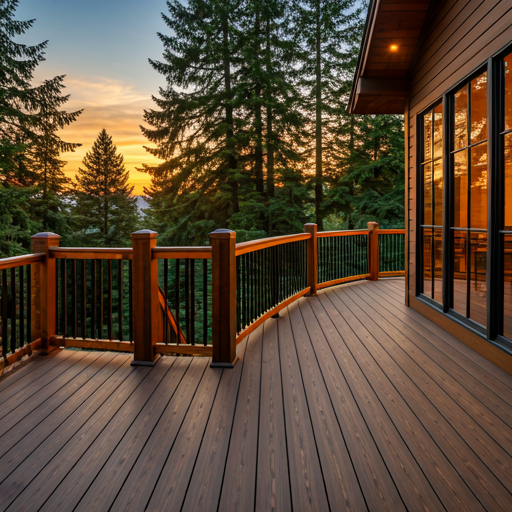
If you live in Auburn, Washington and you've been putting off that deck project, you're not alone. South King County homeowners have watched lumber prices spike, labor markets tighten, and permit timelines stretch out over the past few years — and a lot of people just decided to wait. But the math has shifted. Material costs have stabilized on the composite side, local contractors have capacity again, and the return on a well-built deck in this market is as strong as it's been in a decade. More importantly, after a run of wet winters and gray springs, people want to actually use their yards. Auburn's climate gives you a genuine outdoor season from May through October, and a properly built deck is how you capture it.
What makes Auburn different from building a deck in Bellevue or Shoreline or Renton is the land itself. If you've driven through Lea Hill or West Hill, you already know what we're talking about — the terrain here doesn't flatten out and behave. Grade changes are common, sometimes dramatic, and they change the structural requirements for a deck in ways that a flat-lot estimate from a generic contractor won't account for. Footings go deeper. Joists span differently. Engineer stamps get required. The permit process has its own specific requirements through the City of Auburn's building department, separate from King County's unincorporated rules, and the material choices that perform best in this climate aren't always the ones that look cheapest on a quote sheet.
This guide is written for Auburn homeowners who want honest answers — not a sales pitch. We'll walk you through the permit process, the real cost ranges for 2025, how the terrain in Auburn's various neighborhoods affects structural design, what materials hold up best in Western Washington's rainfall, and how to evaluate contractors before you sign anything.
Why Auburn Homeowners Are Investing in Decks Right Now
The question of timing comes up with almost every homeowner we talk to. Is now a good time to build? The honest answer is: it depends on what you're optimizing for. If you're trying to time the absolute bottom of material costs, that's a difficult game to play. If you're asking whether the conditions in Auburn specifically make a deck a reasonable investment today, the answer is yes — for several interconnected reasons.
The Outdoor Living Shift Is Permanent
The last several years changed how people think about their properties. Homeowners who spent more time at home discovered that a covered or open deck is not a luxury — it's functional square footage. In Auburn, where the average home sits on a lot that often has real usable outdoor space, a deck connects the interior of the home to the yard in a way that adds actual daily utility, not just curb appeal. Families are cooking outside, working outside, hosting outside. A well-designed deck is the platform that makes all of that possible.
Return on Investment Holds in King County
The National Association of Realtors' Remodeling Impact Report consistently ranks deck additions among the outdoor projects with the strongest cost recovery at resale. In competitive markets like South King County, where buyers are actively comparing properties, a quality deck in good condition is a meaningful differentiator. Buyers who are weighing two similar homes will respond to usable outdoor space, and appraisers in this market recognize decks as contributing to livable value in a way that a storage shed or overgrown backyard does not.
What this means practically: a deck built to code, with quality materials, by a licensed contractor is not just spending money on your enjoyment — it's an asset that transfers with the home. That changes the calculus for homeowners who might otherwise hesitate at a $15,000 or $18,000 project cost.
Auburn's Climate Gives You a Real Outdoor Season
People from out of the region sometimes assume that Western Washington is too rainy to justify outdoor living investment. The reality is more nuanced. Auburn receives roughly 43 inches of annual precipitation, which is comparable to Atlanta or Washington D.C. — but Auburn's rainfall is concentrated in fall and winter. The May through October window is genuinely usable, with July and August averaging fewer than two inches of rain each. A deck built with appropriate materials and, if desired, a pergola or overhead structure, extends your comfortable outdoor season significantly.
The caveat is that the wet season is genuinely wet — and persistent moisture is the enemy of untreated wood. Material selection in Auburn is not an aesthetic preference alone; it's a functional decision that determines how much time and money you spend maintaining your deck over the next decade.
Composite Material Stabilization
Through 2021 and 2022, composite decking prices spiked along with everything else in the building materials market. Those spikes have largely normalized. Trex, TimberTech, and Fiberon composite products are at more predictable price points than they were two to three years ago, and contractors have more stable supply chains to quote against. If you were waiting for composite pricing to come back down before pulling the trigger on a project, the window is more favorable now than it was at the peak.
Auburn Deck Permit Requirements: What the City of Auburn Requires
Before any deck project starts in Auburn, you need to understand what requires a permit and what doesn't. Getting this wrong — either by skipping a permit you needed or delaying a project while waiting for one you didn't — costs real time and money. The rules here are set by the City of Auburn, not King County, because Auburn is an incorporated city with its own building department.
Important
When a Permit Is Required in Auburn
The trigger thresholds in Auburn align with standard Washington State building code provisions:
- Attached decks: Any deck attached to the home's structure requires a building permit, regardless of height or square footage. Attachment means ledger-bolted to the rim joist or band board of the house.
- Elevated decks: Any freestanding or attached deck where the deck surface is more than 30 inches above existing grade at any point requires a permit.
- Freestanding low decks: Detached decks under 30 inches in height and under 200 square feet may be exempt from a building permit, but they must still comply with setback requirements from property lines, easements, and structures.
The key word in that last point is "may." Auburn's specific zoning overlays can complicate the exemption. Before you assume your low freestanding deck qualifies as exempt, verify with the City of Auburn Building Services and Permitting department.
How to Contact Auburn's Permit Center
The City of Auburn Building Services and Permitting office handles deck permit applications, inspections, and code questions. You can reach them at:
- Phone: 253-931-3090
- Email: [email protected]
- Website: auburnwa.gov/city_hall/community_development/building_services___permitting
Permit fees for a standard residential deck in Auburn typically run $250–$400, though this can increase if the project triggers plan review requirements or requires an engineer's stamp for elevated or complex structural designs.
For projects in unincorporated King County areas adjacent to Auburn, the relevant authority shifts to King County's Department of Local Services. You can find King County's permit information at kingcounty.gov. If you're not certain whether your parcel falls within Auburn's city limits or unincorporated King County, your contractor should be able to confirm based on your address, or you can check through the King County parcel viewer online.
What the Permit Process Looks Like
For a standard deck permit in Auburn, you'll typically submit:
- A site plan showing the deck's location on the property, dimensions, and distance from property lines
- Construction drawings showing framing, beam sizing, joist layout, ledger connection details, and footing specifications
- Specifications for materials, including decking, framing lumber grade, hardware, and railing systems
Review times vary depending on workload at the permit center, but expect two to six weeks for a standard residential deck permit. Some contractors offer expedited plan preparation that can compress the timeline, and experienced local builders know how to submit clean drawings that don't bounce back for corrections.
Note
Setbacks and HOA Considerations
Auburn's residential zoning establishes minimum setbacks for structures from property lines. These vary by zoning district, but a common residential setback is 5 feet from side and rear property lines for accessory structures. Decks attached to the home may be governed by the same setbacks as the principal structure in some zones.
If your Auburn home is within a Homeowners Association, you have an additional layer of requirements on top of the city's. Many HOAs in Auburn's newer subdivisions — particularly in the Lakeland Hills, Verdana, and Auburn Valley areas — have architectural review requirements that govern deck size, color, railing style, and material type. HOA approval is typically required before permit submission, so factor that timeline in as well. Your contractor should ask about HOA status during the initial site assessment.
For more detail on the King County permit process that governs adjacent unincorporated areas, see our deck permit King County guide.
Deck Material Options for South King County's Climate
Material selection is where a lot of Auburn homeowners get led astray — either by a contractor pushing whatever they have in stock, or by online research that doesn't account for the specific demands of Western Washington's climate. Here's what actually performs in Auburn's conditions.
The Climate Factor in Auburn
Auburn sits in the Puget Sound lowlands, which means a climate characterized by frequent overcast, significant fall and winter rainfall, and moderate temperatures year-round. Freeze-thaw cycles occur but are less severe than in inland or higher-elevation locations. The predominant threat to deck materials here is sustained moisture — wood that stays wet doesn't dry out the way it does in drier climates, and that creates ideal conditions for rot, mold, and structural degradation.
This is why material selection in the Pacific Northwest is not just a preference conversation. It's a performance conversation.
Pressure-Treated Pine
Pressure-treated lumber is the baseline for structural framing on virtually every deck, regardless of what decking surface you choose. The treatment process — typically using copper azole or similar preservative — protects the structural members (posts, beams, joists) from moisture and rot. When we talk about a "pressure-treated deck," we usually mean a deck where the surface decking boards are also pressure-treated pine, not just the frame.
Pros: Lowest upfront material cost; widely available; strong structural properties. Cons: Requires cleaning, sanding, and sealing every 2–3 years to prevent weathering and checking (surface cracking); can develop a grayish, weathered appearance if not maintained; splinters over time; not ideal for homeowners who want low-maintenance.
In Auburn's wet climate, a pressure-treated deck that isn't sealed will show visible weathering within 18 months. This isn't a catastrophe, but it means the $8,500–$10,000 you spent on a 12x16 deck will look tired and require significant maintenance investment within a few years of installation.
Western Red Cedar
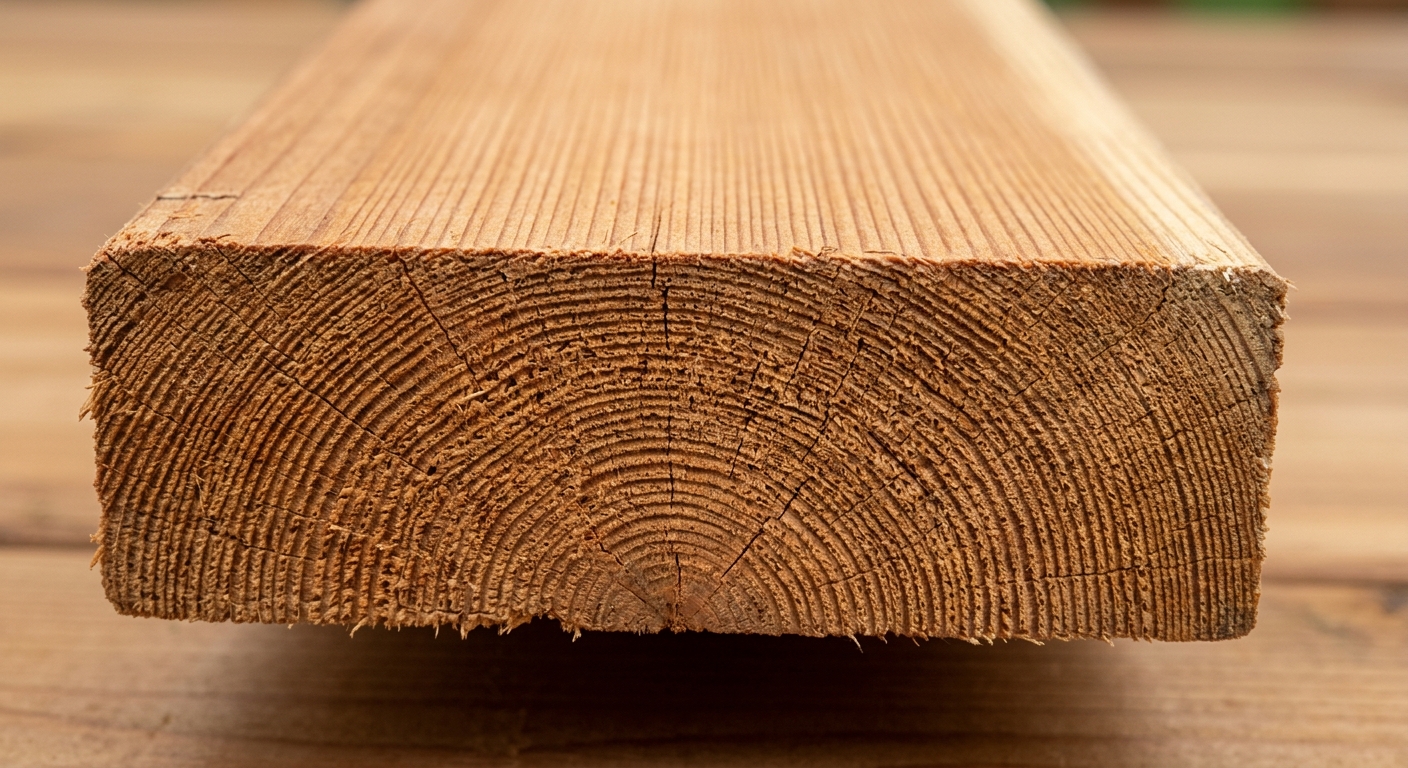
Cedar is the traditional choice in the Pacific Northwest, and for good reason. It's a naturally rot-resistant wood with beautiful grain character, it's locally sourced, and it weathers gracefully when properly maintained. A cedar deck carries more natural resistance to moisture than pressure-treated pine.
Pros: Natural beauty and grain; locally relevant material; good natural rot resistance; pleasant to walk on barefoot (doesn't absorb heat the way composite can in direct sun). Cons: Still requires regular sealing and refinishing — every 2–3 years in PNW conditions; subject to checking, splitting, and graying without maintenance; costs more than pressure-treated upfront; premium clear cedar grades are increasingly expensive.
Installed cedar deck pricing in Auburn runs $60–$90 per square foot, depending on grade and project complexity. For a detailed look at how cedar compares to composite in this climate, see our composite vs. cedar decking Seattle guide.
Composite Decking
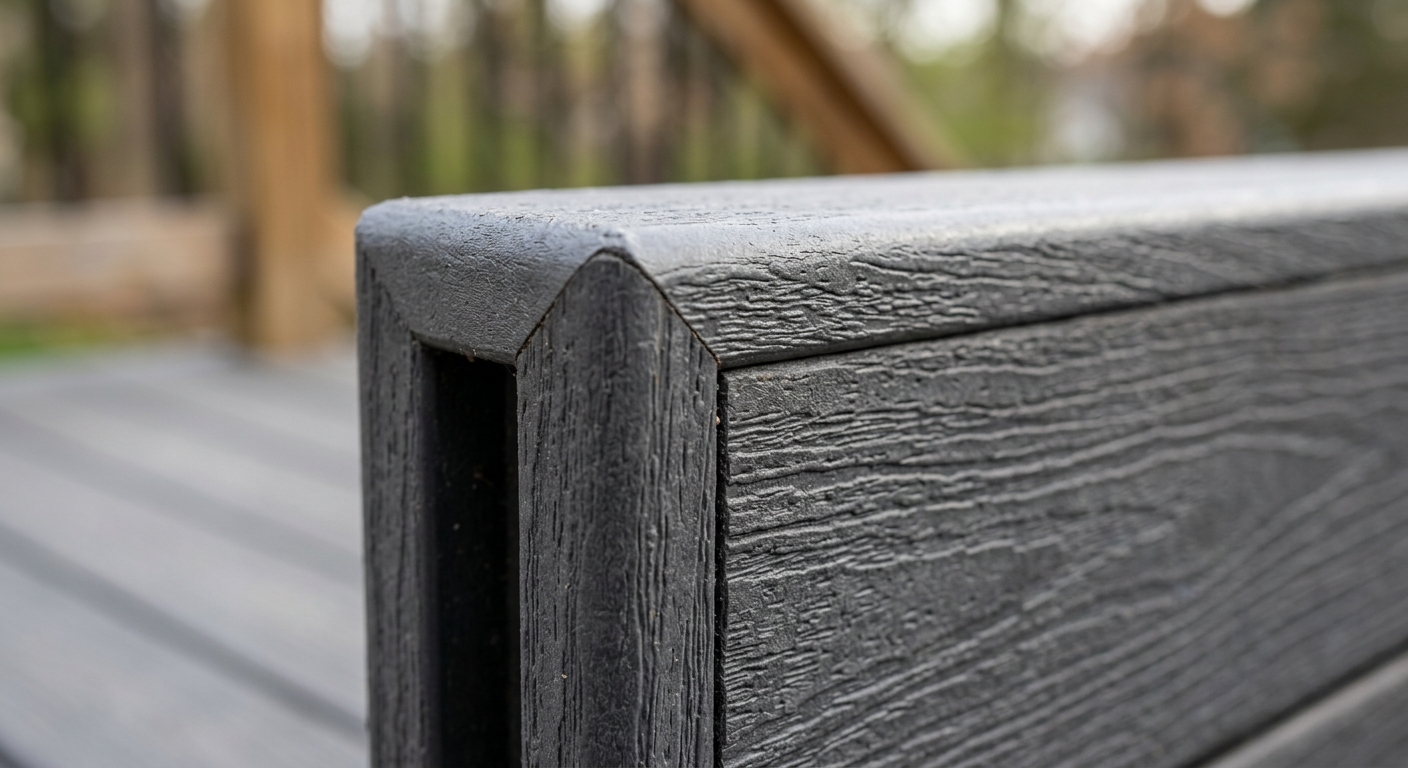
Composite decking — products from Trex, TimberTech, Fiberon, and AZEK — has become the dominant choice for new deck surfaces in South King County, and the reason is simple: it was designed to perform in exactly the conditions Auburn homeowners deal with. Composite boards are engineered from a blend of wood fiber and polymer materials (the specific formulation varies by product line), and the result is a surface that resists moisture absorption, does not rot, does not splinter, and does not require annual sealing.
Pros: Low maintenance (typically just occasional cleaning with a hose and mild soap); consistent appearance over time; wide range of colors and textures including realistic wood grain looks; capped composite products (where a polymer shell wraps the entire board) offer enhanced stain and fade resistance. Cons: Higher upfront cost than wood; can feel slightly different underfoot than natural wood; lower-end uncapped products can still absorb some moisture; color variation between early production runs and replacement boards years later.
Installed composite deck pricing in Auburn runs $75–$130 per square foot depending on the product line selected and project complexity. Trex Enhance, for example, is an entry-level composite with solid performance; Trex Transcend is the premium capped composite line with enhanced fade and stain resistance. TimberTech's AZEK line is a full PVC product (no wood fiber content) and is the premium choice for maximum moisture resistance.
For a detailed comparison of the major composite brands available in the Seattle market, see our Trex vs. Fiberon vs. TimberTech Seattle comparison.
PVC Decking
Full PVC decking products like TimberTech AZEK contain no wood fiber at all, making them the most moisture-resistant surface decking option available. They're particularly well-suited for applications where moisture exposure is extreme — decks over water, decks on north-facing aspects that don't get full sun drying, or areas with persistent shade.
Pros: Maximum moisture and mold resistance; lightest weight; no rot or insect vulnerability; available in wide range of profiles. Cons: Highest upfront cost ($90–$150 per square foot installed); can expand and contract more than composite with temperature changes (requires attention to proper gapping and fastener selection); some products have been revised for improved rigidity.
Ipe and Tropical Hardwoods
Ipe (Brazilian walnut) is the premium natural wood option and carries genuinely impressive durability credentials — with proper maintenance, an ipe deck can last 40+ years. The tradeoff is cost ($110–$180 per square foot installed) and the sustainability questions around tropical hardwood sourcing. Ipe also requires annual oiling, not optional in this climate.
For most Auburn homeowners, ipe is a specialty choice for specific applications rather than the default recommendation.
| Material | Installed Cost (per sq ft) | Maintenance Cycle | Lifespan (with maintenance) |
|---|---|---|---|
| Pressure-Treated Pine | $45–$70 | Every 2–3 years | 15–25 years |
| Western Red Cedar | $60–$90 | Every 2–3 years | 20–30 years |
| Composite (Trex/Fiberon/TimberTech) | $75–$130 | Annual cleaning only | 25–35 years |
| Full PVC (AZEK) | $90–$150 | Annual cleaning only | 30+ years |
| Ipe Hardwood | $110–$180 | Annual oiling | 30–40+ years |
For a comprehensive look at the best materials for the PNW climate specifically, see our best decking materials Seattle 2026 guide.
How Much Does a Deck Cost in Auburn, WA? 2025 Price Breakdown
Cost is the question every homeowner asks first, and the honest answer is that there's no single number that applies to all decks. The range is real and it's wide. Here's how to think about it.
The Cost Range Baseline
According to available data on King County deck construction, the average range for deck construction runs from approximately $2,870 at the absolute low end (for small, simple, ground-level structures) to $16,076 for standard custom builds, with full custom projects easily reaching $20,000 or more depending on materials, size, and structural complexity. The variation is driven by a handful of key factors: square footage, material choice, site conditions, structural complexity, and railing systems.
Washington State labor costs run approximately 1.28 times the national average, which means that even if materials were equal, you'd pay more for skilled labor here than in most other parts of the country. This is not unique to Auburn — it's a statewide reality driven by cost of living and the competitive construction labor market in the greater Seattle metro. The practical implication: don't try to cheap out on labor by hiring an unlicensed or out-of-area contractor who doesn't understand local code requirements and won't be around for warranty issues.
Typical Project Costs in Auburn
Small ground-level deck (10x12, pressure-treated): $5,500–$8,000 This is a basic attached or freestanding low deck, standard joisting, simple rectangular form, no railing required if under 30 inches, minimal site prep.
Standard 12x16 deck (pressure-treated, with railing): $8,500–$10,000 This is the most commonly quoted "typical" project for flat or near-flat lots in Auburn. It assumes ledger attachment to the house, standard post and beam framing, pressure-treated decking surface, basic treated wood railing system, and one set of stairs.
Standard 12x16 deck (composite, with railing): $12,000–$16,000 Same footprint but upgraded to mid-range composite decking (Trex Enhance or Fiberon Paramount), composite-friendly hidden fasteners, and aluminum or composite railing system.
Premium 16x20 composite deck with cable railing: $18,000–$25,000+ Larger footprint, premium composite decking (Trex Transcend or TimberTech Legacy), cable railing system, stairs with composite treads, possible structural engineering for slope or elevation, permit and inspection included.
Elevated deck on sloped lot (Lea Hill or West Hill): $15,000–$30,000+ Significant grade changes require longer posts, deeper footings (sometimes requiring helical piers or engineered footing designs), additional bracing, extended stair runs, and sometimes engineer-stamped drawings. The structural costs alone on a high-elevation hillside deck in Auburn can add $3,000–$8,000 over a comparable flat-lot project.
Estimated installed costs for common Auburn deck configurations. Elevated and hillside lots add significant structural costs. Source: The Seattle Decking Company field data and South King County market pricing.
| Category | Value |
|---|---|
| Small Ground-Level PT (10x12) | $6,750 |
| Standard PT Deck (12x16) | $9,250 |
| Standard Composite (12x16) | $14,000 |
| Premium Composite + Cable Rail (16x20) | $21,500 |
| Elevated Hillside Deck | $22,500 |
Breaking Down Where the Money Goes
Understanding where project costs are allocated helps you make smarter decisions about where to invest and where to save.
Framing and structure (posts, beams, joists, ledger): Typically 25–35% of total project cost. This is where you should not compromise. The structural frame determines the deck's safety and longevity.
Decking surface boards: Typically 20–30% of total cost. This is where material choice has the biggest impact on the cost difference between a pressure-treated and composite project.
Railing system: Typically 15–25% of total cost, and one of the most variable line items. A basic pressure-treated wood railing is at the low end; cable or glass panel systems are at the high end.
Footings and concrete: Typically 8–15% of total cost. Increases significantly on sloped lots requiring deeper or engineered footings.
Stairs: Typically $1,500–$4,000 per flight depending on height, material, and configuration.
Permit and plan prep: Typically $400–$1,500 including permit fee and any engineering or plan preparation.
Tip
For additional detail on what drives deck costs in the Seattle metro area, including how to read a contractor's quote, see our deck cost Seattle guide and our deck addition Seattle overview.
Site Challenges Unique to Auburn: Slopes, Soil, and Setbacks
This is the section that most generic "deck cost guide" articles skip over, and it's the section that matters most for Auburn homeowners. The geography here is not uniform. Auburn's residential neighborhoods sit across multiple distinct terrain types, and the difference between a flat-lot project and a hillside project is not a matter of a few hundred dollars — it can be tens of thousands.
Lea Hill: Grade Changes and Extended Post Heights
Lea Hill is one of Auburn's most established residential neighborhoods, sitting on the elevated terrain northeast of downtown Auburn. If you've looked at homes on Lea Hill, you know the lots — many of them have significant grade changes from front to back or side to side, and rear yards that slope away from the house at angles ranging from gentle to dramatic.
For deck construction on Lea Hill lots, the grade change creates a situation where the deck posts on the downhill side of the structure may need to be considerably taller than the posts on the uphill side. Extended post heights require bracing, larger post dimensions (often 6x6 instead of 4x4), and sometimes lateral bracing systems or knee braces to prevent sway. All of this adds structural complexity and cost.
When the deck surface is more than 8 feet above grade on the downhill side, you're also in territory where some inspectors will require a structural engineer's stamp on the framing plan. Engineer review adds $500–$2,000 to the project depending on complexity, but it's non-negotiable where required, and for good reason — elevated decks without proper engineering are the ones that fail.
West Hill: Varied Soil Conditions and Footing Depth
Auburn's West Hill runs along the western side of the Green River Valley and has its own set of conditions. Soil composition in parts of West Hill includes areas with fill soils, particularly on lots where grading work was done to create level building pads. Fill soils can have lower bearing capacity than undisturbed native soil, which affects how footings are designed.
In worst-case scenarios on fill soils, standard concrete tube footings (Sonotube forms) may not provide adequate bearing for the deck loads, and helical piers or engineered footings that extend to native soil or bedrock are required. Helical piers are drilled into the ground by specialized equipment and can extend 10–15 feet or more. They're reliable but they're also not cheap — expect $400–$800 or more per pier location.
The right contractor will ask about the history of your lot — whether it was graded, filled, or altered — before committing to a standard footing design. A contractor who doesn't ask those questions is either very experienced and making assumptions (risky) or isn't thinking carefully about the site (more risky).
Auburn Valley and the Green River Corridor
Homes closer to the Green River corridor and Auburn's valley floor sit on alluvial soils — the deposits left by the river over centuries. These soils can include sandy, silty, or gravelly layers with variable bearing capacity. In some areas near the river, high water tables during wet season can affect footing design and require attention to drainage around deck posts.
The Auburn Valley also includes older established neighborhoods where existing homes may have been built without today's structural requirements, and where a new deck addition needs to be carefully integrated into an existing structure that itself may need assessment before a ledger can be attached.
HOA Zones: Lakeland Hills, Verdana, Auburn Valley Communities
A significant portion of Auburn's newer residential development — particularly in the Lakeland Hills planned community and the Verdana area near the White River — is governed by HOAs with architectural review requirements. These HOAs vary in their specific requirements, but commonly regulate:
- Deck size relative to lot coverage limits
- Material types (some HOAs prohibit certain composite colors or require wood-look products)
- Railing height and style
- Color palettes for decking, railing, and fascia
- Sight line restrictions from neighboring properties
Getting architectural review approval before submitting for a city permit is the correct sequence. HOA approval processes can take 30–60 days for standard residential requests. If you or your contractor submits for a permit before HOA approval and the HOA requires changes, you may need to revise and resubmit both.
Key insight
Setbacks and Critical Areas
Auburn's zoning code establishes setbacks for structures from property lines, and these apply to decks. In most standard residential zones, the setback from side and rear property lines is 5 feet. Corner lots have additional considerations for the street-side setback.
Beyond standard setbacks, Auburn has designated critical areas — including the Green River and its buffers, wetlands, and steep slope areas — where additional restrictions apply. If your property is near any of these features, your deck project may trigger critical area review requirements, which can add time and cost to permitting. A local contractor familiar with Auburn's geography will recognize when a site is near a critical area and will flag this early in the process.
Choosing the Right Deck Builder in Auburn, WA
There's no shortage of contractors willing to build a deck in South King County. The challenge is identifying who among them has the experience, licensing, local knowledge, and operational stability to deliver a quality project on your specific Auburn property. Here's a practical framework.
Licensing and Insurance: The Baseline
In Washington State, any contractor performing residential construction work must hold a valid Washington State contractor's license. This is not optional and it's not a technicality — an unlicensed contractor cannot legally pull permits in their name, which means you'd be forced into a homeowner permit with all the liability that entails.
Before any contractor comes out for a quote, verify their license at the Washington State Department of Labor and Industries contractor lookup. You're looking for:
- An active license status
- A license in good standing (no suspensions or disciplinary actions)
- General liability insurance of at least $1 million per occurrence
- Workers' compensation coverage for their employees
The L&I lookup takes 30 seconds. Do it before you meet with anyone.
What to Ask During the Initial Estimate
When a contractor comes to your site for an estimate, the quality of their questions tells you more than their price. A knowledgeable deck builder in Auburn should ask:
- What's the soil condition and lot history? Were there any grading changes? Any fill brought in?
- What's the slope? They should be measuring or visually assessing grade change across the proposed deck footprint.
- Is there an HOA? And have you received any preliminary guidance from them?
- What's your intended use? Hot tub capable? Heavy planters? These affect load calculations.
- What's your timeline? And do you understand the permit lead time?
If a contractor gives you a price in the first 10 minutes of a visit without asking substantive questions about the site and your goals, that's a red flag.
Local Knowledge Matters
A contractor who primarily works in King County and specifically in Auburn and South King County will understand permit timelines at Auburn's building department, will have established relationships with local inspectors, will know which suppliers serve this area reliably, and will have seen the soil and slope conditions that are common to Lea Hill, West Hill, and the Auburn Valley. That local knowledge is not a soft benefit — it translates to projects that don't get surprised by site conditions, permit requirements, or material availability issues.
Contractors who travel from distant parts of the metro and treat South King County as just another service area often underestimate the nuances. They may not know that a particular Auburn neighborhood requires specific footing depths, or that a certain HOA has a 45-day architectural review cycle, or that the Auburn permit center has specific drawing format requirements. Local experience closes those gaps.
Written Bid: What to Look For
A professional deck contractor will provide a written bid that specifies:
- Total project cost (not just "starts at")
- Materials specified by product name and grade (not just "composite decking")
- Scope of work including permit application, inspections, and cleanup
- Payment schedule tied to project milestones (not large upfront deposits)
- Start date and estimated completion timeline
- Warranty terms for both materials and labor
Be cautious of bids that are vague on materials ("quality composite decking"), require large deposits (more than 10–20% upfront is a red flag), or have no written warranty.
The National Association of Decking and Railing Professionals
NADRA (the North American Deck and Railing Association) represents professional deck contractors and provides certification programs and consumer resources. While NADRA membership is not a guarantee of quality on its own, a contractor who participates in professional associations tends to be more engaged with industry standards and best practices than one who doesn't. It's a signal worth noting in your evaluation.
For specific questions about railings — a major cost variable and a major safety requirement — see our deck railing options Seattle guide and our cable railing Seattle guide.
Composite vs. Wood Decks: Which Is Better for Auburn's Wet Climate?
This is the most common material decision Auburn homeowners face, and it deserves a thorough answer. The short version: composite outperforms wood in Auburn's climate on every maintenance metric, but wood remains viable if you're committed to the maintenance regimen and you value natural material characteristics. Here's the long version.
How Auburn's Climate Stresses Wood Decks
The Pacific Northwest's moisture pattern is what separates it from most other regions. It's not that it rains hard — it's that wood stays wet for extended periods without the drying cycles that allow naturally rot-resistant woods to fully recover. In a climate with hot, dry summers, a cedar deck gets thoroughly dried out for months. In Auburn, the reprieve is shorter, and west or north-facing decks may never fully dry even in summer.
The result: untreated or unsealed wood decks in Auburn develop surface checks (small cracks along the grain) faster than in drier climates. Water infiltrates those checks, accelerates the wet-dry stress cycle, and promotes microbial growth. Even naturally rot-resistant cedar requires more frequent attention in Auburn than it would in, say, Central Washington.
A properly maintained cedar deck — cleaned, sanded, and sealed every two years — will last 25–30 years in Auburn. But the maintenance cost adds up. At $2–$5 per square foot for a professional deck cleaning and sealing, a 300 square foot cedar deck costs $600–$1,500 to maintain every two years. Over a 20-year lifespan, that's $6,000–$15,000 in maintenance spending on top of the initial installation cost.
How Composite Handles Auburn's Conditions
Capped composite products from Trex, TimberTech, and Fiberon are engineered to address exactly the moisture conditions Auburn homeowners deal with. The polymer shell that encapsulates capped composite boards prevents moisture from being absorbed into the wood fiber core, which eliminates the primary mechanism of rot and the secondary mechanisms of checking and splintering.
In practice, a capped composite deck in Auburn requires annual cleaning (hosing off debris, occasional washing with a composite-safe cleaner) and nothing else. No sealing, no sanding, no refinishing. The annual maintenance cost on a 300 square foot composite deck is essentially the cost of your time and a bottle of composite cleaner. Over 20 years, that's a fraction of the wood maintenance cost.
The total cost of ownership calculation — upfront installation plus maintenance over the deck's lifespan — often makes composite the better financial decision even though the upfront cost is higher, particularly in Auburn's wet climate. For more on this comparison, see our composite deck maintenance Seattle guide.
The Aesthetics Argument
Some homeowners choose cedar or wood specifically because they want the genuine character of natural wood — the grain variation, the warmth, the ability to change the stain color over time. That's a legitimate preference and composite can't fully replicate it, even though the best composite products today are significantly better at simulating wood grain than products from a decade ago.
If you're choosing cedar because you love natural wood and you're committed to maintaining it properly, that's a sound decision. If you're choosing cedar primarily because it's cheaper upfront and you're hoping the maintenance won't be as demanding as everyone says — that's the scenario where homeowners end up with deteriorating decks within five years.
Railing Systems: A Note on Material Matching
One consideration that often comes up: do you need to match your railing material to your decking? The answer is no. It's common and often cost-effective to pair a composite deck surface with aluminum framing for the railing posts and rails, with either wood or composite balusters, or to specify cable railing (stainless steel cables in aluminum or stainless posts) regardless of decking material. Mixing materials at the railing is normal and can produce visually distinctive results.
For cedar decks, a natural wood railing painted or stained to match is traditional. For composite decks, composite railing, aluminum railing, and cable railing are all appropriate and widely used in Auburn projects. Glass panel railings are a premium option that works well on elevated decks where maintaining a view line matters.
| Decision Factor | Composite Wins | Cedar Wins |
|---|---|---|
| Long-term maintenance cost | Yes | |
| Upfront installation cost | Yes | |
| Moisture and rot resistance | Yes | |
| Natural wood character | Yes | |
| 20-year total cost of ownership | Yes (usually) | |
| Refinishing/stain flexibility | Yes | |
| Environmental consideration (local sourcing) | Yes | |
| Performance in wet, shaded conditions | Yes |
Railing Options for Auburn Decks
Railings are required on any deck surface more than 30 inches above grade under Washington State residential building code, and they represent one of the most visible design elements of any deck. They're also one of the most variable line items in a deck budget. Here's how the options break down for Auburn homeowners.
Code Requirements
Washington State residential code (IRC) requires guardrails on deck surfaces more than 30 inches above grade. The minimum railing height is 36 inches for decks less than 30 inches above the required egress height, and 42 inches for decks elevated to greater heights. Balusters (vertical infill members) must be spaced no more than 4 inches apart — the "4-inch sphere" rule that prevents small children from passing through or getting their heads trapped.
All railing systems must be designed to withstand a 200-pound concentrated lateral load at the top rail and a 50-pound per linear foot uniform load. This affects post size, post spacing, and attachment method. Undersized or improperly attached railing posts are one of the most common deck deficiencies found in inspection.
Pressure-Treated Wood Railing
The baseline option. Pressure-treated 4x4 posts, 2x4 rails top and bottom, and 2x2 balusters in the same pressure-treated material. Can be painted or stained. Cost-effective and widely used.
Installed cost: $50–$100 per linear foot Considerations: Requires same maintenance cycle as the deck; balusters can develop checking and splitting over time; paint or stain needs periodic renewal.
Composite Railing
Major composite brands offer matching or complementary railing systems — Trex Transcend railing, TimberTech RadianceRail, Fiberon railing systems. These typically use aluminum post sleeves with composite cap rails and composite or aluminum balusters.
Installed cost: $80–$140 per linear foot Considerations: Very low maintenance; color-matches composite decking; some systems have limited design flexibility; aluminum post cores require proper drainage cap installation to prevent water accumulation.
Aluminum Railing
Powder-coated aluminum railing systems are lightweight, extremely durable, and require virtually no maintenance. They're a popular choice on composite decks where the homeowner wants a clean, modern look without the cost of cable or glass.
Installed cost: $70–$120 per linear foot Considerations: Can feel industrial rather than warm; color selection limited to powder coat palette; very durable in wet conditions.
Cable Railing
Horizontal stainless steel cables tensioned between metal posts have become one of the most popular premium railing choices in the Seattle metro, and Auburn is no exception. Cable railing preserves view lines — particularly valuable on elevated hillside lots in Lea Hill or West Hill — and has a clean, contemporary look that pairs well with composite decking.
Installed cost: $100–$200 per linear foot Considerations: Cables require periodic tension checks (typically annually); the horizontal cable orientation means that the post spacing must be tighter (typically 3–4 feet) to maintain cable deflection within code limits; some inspectors scrutinize cable railing more carefully than balusters.
For more on cable railing in the Seattle area, see our cable railing Seattle guide.
Glass Panel Railing
Frameless or semi-frameless glass panel railings are the premium visual option, providing unobstructed views and a high-end appearance. Common on elevated decks where the homeowner wants to preserve a view of the Green River valley, the Cascades, or neighboring landscapes.
Installed cost: $150–$250 per linear foot Considerations: Requires regular cleaning (fingerprints, water spots); tempered safety glass panels; more complex installation; premium cost.
Questions to Ask Before Hiring a Deck Contractor in South King County
Hiring a contractor is a consequential decision. Here are the questions that separate good contractors from great ones — and help you avoid the ones who will cause headaches.
Before the First Meeting
Are you licensed and insured in Washington State? This is not optional. Verify their L&I license number independently at the Department of Labor and Industries website. Ask for their general liability insurance certificate naming you as an additional insured for the duration of the project.
Do you pull your own permits? The answer should be yes. A licensed contractor permits the work in their name. If they suggest you pull the permit yourself, ask specifically why and consider it a yellow flag.
Do you have references from projects in Auburn or South King County? Recent local references allow you to verify that the contractor knows local permit processes, local site conditions, and local inspectors. Ask for references from hillside projects if your lot has significant grade change.
During the Estimate Visit
What site conditions are you noting? A good contractor will observe and note: slope/grade across the footprint, existing site drainage, soil type observations, proximity to property lines, HOA status, and the condition of the house structure where the ledger will attach.
What are your footing specifications and why? They should be able to explain their footing depth and diameter based on your specific soil conditions and post loads, not just cite a generic standard.
What framing lumber grade are you specifying? Deck framing should be specified in writing — either #2 or better Douglas fir or Southern Yellow Pine, or treated lumber meeting the relevant AWPA standards. "Standard lumber" is not an adequate specification.
Who does the work — your own crew or subcontractors? Either can be fine, but you should know. If subcontractors perform work, the general contractor is responsible for their work and they should be covered under the GC's insurance.
Before Signing the Contract
What is the payment schedule? A reasonable schedule might be: 10–20% deposit at contract signing, 30–40% at framing completion, 30–40% at decking and railing completion, and the final 10–20% at final inspection and punch list completion. Be very cautious of any contractor asking for 50% or more upfront.
What does the warranty cover and for how long? A quality deck contractor should stand behind their work. A minimum two-year labor warranty is reasonable; some contractors offer longer. Understand that material warranties are between you and the manufacturer, not the contractor, but the contractor should be helping you register your materials for warranty purposes.
What happens if the permit takes longer than expected? Know how a permit delay affects the project schedule and whether there are any contractual implications.
Tip
For a broader look at the deck-building process and what to expect from start to finish in the Seattle area, see our deck and patio combo Seattle guide and our custom curved decks Seattle page if you're considering a non-rectangular design.
Working With a South King County Builder: Why Local Experience Matters
The deck-building market in the greater Seattle area includes contractors ranging from large regional companies to two-person crews working out of trucks. Both can produce quality work, but in a market like Auburn — with its specific permit requirements, terrain variability, and HOA complexities — local experience is a genuine competitive advantage, not just a marketing claim.
Permit Familiarity Saves Time and Money
Every jurisdiction has its own quirks — drawing formats they prefer, specific inspection sequences they require, staff in the permit office who are more or less helpful for particular questions. A contractor who has permitted dozens of decks through Auburn's building department knows what submittals look like when they're approved on the first review versus when they come back with corrections. That knowledge reduces permit timeline risk, which in a project where weather windows matter is real value.
Similarly, a contractor who has worked with King County's Department of Local Services for projects in unincorporated areas adjacent to Auburn knows the differences in process between the two jurisdictions. If your property sits on a parcel that's technically in unincorporated King County rather than within Auburn's city limits, a contractor who assumes Auburn permit rules apply will make mistakes.
Material Supplier Relationships
Local contractors who work regularly in South King County have established relationships with regional suppliers — the lumber yards in Renton, Auburn, and Tukwila that stock the specific grades and treated lumber specifications needed for deck projects. Those relationships matter when there's a lead time issue on a specific composite product, or when a framing member needs to be sourced quickly to keep a project on schedule. A contractor working from a distant part of the metro who has to source everything through their home-base suppliers may face logistics challenges that a local builder avoids.
Warranty and Long-Term Relationship
This is perhaps the most practical argument for choosing a contractor with genuine local roots: when you need them post-project, they're here. Warranty issues — a post that shifts slightly, a railing bracket that needs adjustment, a decking board that develops an issue — are best resolved by a contractor who can send someone out within a week, not one who puts you on a schedule three months out or doesn't return calls after the final check is cashed.
The Seattle Decking Company builds decks in Auburn, Renton, Burien, Kent, Federal Way, and throughout South King County. Our team understands the grade conditions on Lea Hill, the soil questions that come up in West Hill projects, the HOA timelines in Lakeland Hills, and the permit process at Auburn's building services department. When we give you a quote, it reflects real knowledge of what your project will actually require — not a template estimate generated from square footage and a price book.
Reach us at (425) 675-6259 or visit our contact page to schedule a site visit and estimate.
Real Project Examples: What Auburn Decks Actually Look Like
To ground the cost and material discussions in reality, here are descriptions of project types that are representative of what we see in Auburn — not hypotheticals, but the categories of projects that come up repeatedly in South King County.
The Lea Hill Hillside Replacement
A common scenario: an Auburn homeowner on Lea Hill has a 15-year-old pressure-treated deck that was built when the home was constructed, and it's at the end of its useful life. The original deck was basic — standard joisting, simple rail, nothing special. The replacement project involves removing the original deck (demo cost: $500–$1,500 depending on size), assessing the ledger connection to the house for any rot or structural compromise, potentially replacing the ledger and its flashing, and building a new elevated deck on the existing footprint with updated footings and framing.
On Lea Hill's slopes, the replacement project often reveals that the original footings were underdimensioned. New code-compliant footings are required, and on a sloped lot they may need to go deeper than the originals to reach undisturbed bearing soil. Budget: $14,000–$22,000 for a 200–300 square foot elevated composite deck replacement on a standard Lea Hill lot.
The Lakeland Hills New Build
A newer home in Lakeland Hills has a back door that exits to a concrete stoop with no deck connection to the yard. The homeowners want to add an 16x20 composite deck with cable railing to connect the living areas to the lower yard. The lot has modest slope — perhaps a 3-foot grade change across the deck footprint. HOA approval is required and takes 45 days. Permit is applied for simultaneously after HOA approval is in hand.
Structural design is straightforward with modest grade change. Mid-range composite, aluminum cable railing posts, stainless cables, one landing stair run. Budget: $18,000–$24,000.
The Auburn Valley Cedar Refresh
An older home in Auburn's valley neighborhoods has a cedar deck that hasn't been sealed in five or six years. The homeowners want to understand whether repair or replacement is the right move. Assessment reveals: surface boards are weathered and checking but structurally sound with proper cleaning and sanding; the frame is solid; one post has some surface checking but is not compromised structurally; the ledger flashing is marginal and should be replaced.
Recommendation: refurbish rather than replace. Strip and sand the surface, replace the flashing, treat and seal the frame members, apply new cedar finish. Budget: $2,500–$4,500 for a 200 square foot cedar deck refurbishment. Total life extension: 8–10 years before replacement becomes the right call. For more on cedar maintenance, see our cedar deck sealing Seattle guide.
Deck Lighting, Accessories, and Finishing Details
A deck is not just boards and railings. The finishing details — lighting, built-in features, and functional additions — determine whether your deck becomes a space you use every day or one you rarely venture onto after the novelty wears off.
Deck Lighting Options
Outdoor deck lighting in Auburn has become more sophisticated and less expensive simultaneously. LED technology has made integrated lighting practical and energy-efficient. Common options include:
- Post cap lights: Low-voltage LED caps that sit on railing posts, providing ambient light around the deck perimeter.
- Stair riser lights: Recessed or surface-mounted LED strips in stair risers, improving safety and visual appeal at night.
- Under-rail lights: LED strips mounted on the underside of top rails, washing light downward onto the deck surface.
- Deck board lighting: Recessed LED fixtures installed flush in the decking surface between boards, creating a dramatic effect on elevated decks.
- String lighting: Not structural but highly functional — weatherproof string lights on pergola rafters or overhead structures are one of the most cost-effective ways to make a deck usable into the evening.
Integrated deck lighting adds $500–$2,500 to a project depending on the system selected and the number of fixtures. It's worth including in your initial project planning rather than adding retroactively, because running low-voltage wiring is much simpler before decking boards are installed.
Built-In Features
For decks that will serve as genuine outdoor living spaces, built-in features add function and permanence:
- Built-in bench seating: Framed and finished benches integrated into the deck perimeter eliminate the need for moveable furniture and add a clean, custom look. Add $1,500–$3,500 depending on linear footage.
- Planters: Built-in planter boxes at deck corners or along the railing line. Usually constructed from composite or cedar to match the deck.
- Hot tub platform: If a hot tub is in your plans — now or eventually — designing the deck to accommodate one requires reinforced framing (hot tubs fully loaded weigh 80–100+ pounds per square foot, well above standard deck design loads of 40–50 pounds per square foot). This structural upgrade should be specified at the design stage, not retrofitted.
For decks incorporating patio elements at grade level, see our deck and patio combo Seattle guide for ideas on combining elevated deck space with adjacent hardscaped patio areas.
Putting It All Together: Your Auburn Deck Project Timeline
Understanding the timeline from first call to first barbecue helps set realistic expectations and allows you to plan around Auburn's weather patterns.
Typical Project Timeline
Initial consultation and site visit: 1–2 weeks from first contact to estimate meeting. Bid review and contractor selection: 1–3 weeks depending on how many bids you get. Design and plan preparation: 1–3 weeks, longer if HOA review is required (add 30–45 days for HOA). Permit submission and review: 2–6 weeks at Auburn's building department for standard residential decks. Material ordering: 1–4 weeks depending on product and current supply chain. Specialty composite colors or custom-length cable railing systems may have longer lead times. Construction: 5–15 business days for most decks, weather dependent. Complex elevated decks with structural engineering requirements may take longer. Final inspection: Typically scheduled within a week of requesting it through Auburn's building department. Total timeline from first call to final inspection: 10–20 weeks for a standard project, which means a spring deck project requires a late-winter start.
The practical implication for Auburn homeowners: if you want a deck to enjoy in summer, you need to start the process in February or March. If you're calling in June hoping to have something built by July 4th, the math usually doesn't work unless the contractor has open capacity, the permit process moves quickly, and the project is straightforward.
Note
How The Seattle Decking Company Approaches Auburn Projects
We're a deck building company based in Bothell (22722 29th Drive SE, Bothell, WA 98021) serving the full South King County market including Auburn, Renton, Kent, Burien, Federal Way, and the communities in between. Our team includes experienced carpenters who have built on the hillside lots of Lea Hill, the newer subdivisions of Lakeland Hills, and the older established neighborhoods of Auburn's valley floor.
We handle the complete project: site assessment, design, permit application and management, material ordering, construction, final inspection coordination, and post-project follow-up. We use licensed subcontractors when specialty work (electrical for lighting systems, concrete for engineered footings) is required, and those subcontractors are vetted and covered under our insurance.
Our preferred materials are composite and cedar, because those are what perform in Western Washington's climate. We'll install pressure-treated decks for homeowners who want the lower upfront cost and understand the maintenance commitment. We won't push you toward a material that doesn't serve your situation. If a project calls for cedar, we'll specify the right grade of cedar. If composite is the better fit, we'll help you select the right product line for your budget and use case.
We believe that the best way to earn a homeowner's trust is to give them accurate information upfront — about real costs, real timelines, real permit requirements, and real site challenges — so that the project delivers what was promised. In Auburn's market, that means accounting for the slope, the soil, the HOA timeline, and the permit process before we quote a number.
Ready to Build Your Auburn Deck? Start Here.
If you're an Auburn homeowner ready to move from thinking about a deck to actually building one, the next step is a site visit. There's no substitute for having an experienced contractor walk your property, assess the slope and soil conditions, understand your goals, and put together a complete and accurate project estimate.
Call The Seattle Decking Company at (425) 675-6259 to schedule your site visit and estimate. We serve Auburn and all of South King County, and we're familiar with the specific permit requirements, terrain challenges, and HOA processes that Auburn homeowners navigate. You can also reach us online at theseattledeckingcompany.com/contact.
There's no pressure, no obligation, and no vague "starting at" estimates. You'll leave the conversation with a clear picture of what your project will actually cost, how long it will take, and what the right material choices are for your specific site and budget.
Auburn's outdoor season is real. Let's make sure you're out on your deck for it.
Frequently Asked Questions
Do I need a permit to build a deck in Auburn, WA?
How much does a deck cost in Auburn, WA in 2025?
What is the best decking material for Auburn's wet climate?
How do I contact Auburn's permit office for a deck permit?
Does my Auburn HOA have to approve a deck before I apply for a permit?
How does a sloped lot in Auburn affect deck cost?
How long does it take to build a deck in Auburn?
What railings are required on an Auburn deck?
Should I repair or replace my existing wood deck in Auburn?
What questions should I ask a deck contractor before hiring them in Auburn?
Is composite decking worth the extra cost over pressure-treated in Auburn?
Can The Seattle Decking Company build my deck in Auburn?
Planning a deck in the Seattle area?
Get an onsite design review and a clear, itemized quote from a licensed local builder.
Request a Free Quote