
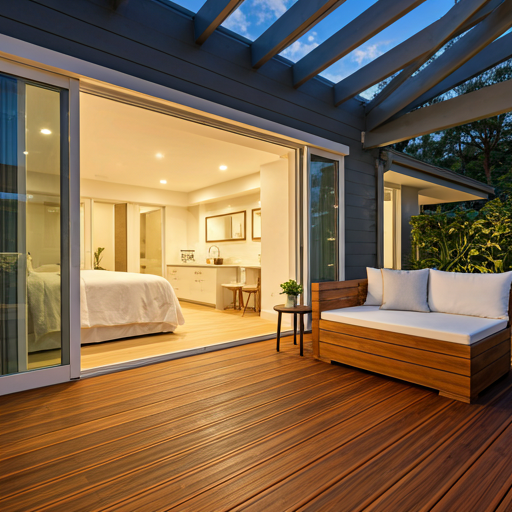
Most homeowners calling us about Woodinville deck projects have already done some homework. They've seen what decks cost in Bellevue or Kirkland, they've gotten a quote or two, and they're trying to figure out why the numbers keep coming back higher than they expected. The honest answer is that Woodinville is genuinely different — not just in a marketing-copy sense, but in ways that actually affect how a deck gets designed, permitted, built, and priced. Large wooded lots with steep grades, multiple potential permitting jurisdictions, chronic shade and moisture that chew through the wrong materials, and post heights that climb well above what you'd see on a typical suburban lot — all of that adds up fast. When we say a Woodinville deck project typically runs $38,000 to $70,000, we're not padding the number. That's what honest scoping looks like on a property that represents the real character of this area.
What makes Woodinville distinct from most King County suburbs is the combination of lot size, canopy cover, and terrain. Properties in Hollywood Hill, Bear Creek, and the wine country corridor east of downtown Woodinville regularly run one to five acres, with mature Douglas fir, red cedar, and big-leaf maple standing 60 to 100 feet tall over the house. Those trees create conditions that would kill a standard pressure-treated deck in eight to twelve years — and that's if maintenance stays on schedule, which it rarely does on a shaded, always-damp structure. At the same time, many Woodinville parcels straddle jurisdictional lines in ways that catch homeowners completely off guard. A mailing address that says "Woodinville, WA 98072" might actually require permits through the City of Woodinville, unincorporated King County, or unincorporated Snohomish County — and each of those pathways has different fees, different forms, different review timelines, and different inspectors. Getting that wrong before you break ground is expensive. Getting it wrong after is much worse.
This guide is written by the crew at The Seattle Decking Company, based in Bothell at 22722 29th Drive SE — we're 10 minutes from most Woodinville addresses and we've built enough decks out here to have strong opinions about what works, what doesn't, and what the permit process actually looks like on the ground. We're not going to sell you on anything. We're going to tell you what we'd tell a neighbor.
Why Woodinville Decks Cost More: Wooded Lots, Slope, and Dual-Jurisdiction Permitting
Let's start with the number that brings most people to this article: why does a deck in Woodinville cost so much more than what they read about in a national pricing guide, and more than what friends in other suburbs paid? The answer isn't one thing — it's a compounding set of site conditions that are characteristic of this area and don't show up in generic cost calculators.
Terrain Is the First Multiplier
Woodinville's topography is shaped by the Sammamish River valley to the west and the Cascade foothills rising to the east. The result is that a large portion of residential lots — particularly in Hollywood Hill and the Bear Creek corridor — sit on grades ranging from 15% to over 40%. When a house sits on a sloped lot and you want a deck off the main living level, you're not just building a platform — you're building a structure that might be 6 feet above grade on one side and 14 feet above grade on the other. That changes everything: post sizes, beam spans, footing depth and diameter, the amount of concrete you're pouring, the bracing requirements, and the inspection checkpoints along the way.
A ground-level deck — what the industry calls an "on-grade" or "low-profile" deck — has relatively simple structural requirements. Posts are short, footings are shallow, and the whole thing goes up quickly. A deck on a sloped Woodinville lot where the low end is eight or ten feet in the air requires engineering-level thinking even when it doesn't technically require a stamped structural plan. Footings need to go below frost line (12 inches minimum per IRC 2021 standards adopted by Washington State, though Snohomish County inspectors often want deeper in clay soils), posts need to be sized for actual load, and the lateral bracing has to account for the fact that wind and seismic loads act differently on a tall, narrow structure than on a low platform. That complexity adds labor hours, adds material cost, and often adds the time of a structural engineer if the deck is large or unconventional.
Second-story decks — walking out from an upper-floor bedroom or a walkout daylight basement that's actually the main living level on the uphill side of the house — carry a 25–50% cost premium over a comparably sized ground-level deck. On a $40,000 ground-level project, the elevated version of the same deck could reasonably come in at $50,000 to $60,000. That's not padding. That's the real cost of the additional structure required to make it safe and code-compliant.
Drainage Engineering Is Not Optional
On large wooded lots, drainage is a genuine engineering problem, not an afterthought. Mature tree root systems redirect water in unpredictable ways. Compacted soils under canopy cover can't absorb rainfall at the same rate as open lawn. And the Pacific Northwest delivers rain in sustained, slow events — not the brief downpours that dry up fast in drier climates. A deck built without proper drainage consideration will trap water against the ledger board (the board that attaches the deck to the house), wick moisture up into framing members, and create the conditions for rot and mold within a few years.
Responsible deck building on a Woodinville wooded lot involves thinking about where water goes when it comes off the deck surface, off the roof above, and out of the ground around the footings. That sometimes means adding French drains or rock sumps near footings, building a slight pitch into the deck surface, specifying composite materials that don't absorb moisture (more on that below), and detailing the ledger connection with proper flashing and air gaps that let the wall behind it dry out. None of that is exotic — it's just good building practice — but it takes time and materials, and it costs money.
The Dual-Jurisdiction Problem
Here's where Woodinville gets truly unusual compared to most Seattle suburbs: your mailing address tells you almost nothing about which permit office you need to contact. The City of Woodinville is a relatively compact incorporated area centered on downtown Woodinville and the SR-202 corridor. But huge swaths of land that carry a "Woodinville, WA" mailing address are actually in unincorporated King County or unincorporated Snohomish County — and those are three completely separate permitting systems.
The City of Woodinville's own FAQ makes this explicit: not all Woodinville mailing addresses are within the city limits. Properties may fall under unincorporated Snohomish County or King County, each with different permit requirements and processes.
What does that mean practically? If your property is in unincorporated King County, you submit permits through King County's Department of Local Services, Permitting Division. If you're in the City of Woodinville proper, you go through Woodinville's community development department. If you're north and east of the city limits into Snohomish County, you work through Snohomish County Planning and Development Services. The forms are different, the fees are different, the review timelines are different, and the inspectors have different priorities.
The consequences of getting this wrong range from annoying to catastrophic. Non-compliance fines in Snohomish County run $500 to $5,000 per violation — and that "per violation" language matters, because an unpermitted deck might generate multiple violations simultaneously (no permit, no footing inspection, no framing inspection, wrong setback). Beyond fines, unpermitted decks routinely kill home sales. When a buyer's inspector finds a structure that has no permit history, the lender often requires either retroactive permitting (expensive and slow) or removal before closing. We've seen deals fall apart over exactly this issue.
Important
For more detail on the King County permitting process, see our complete guide at /blog/deck-permit-king-county-guide. For cost context including permit fees, see our Seattle deck cost guide.
Hollywood Hill, Bear Creek, and Wine Country: How Neighborhood Changes What You Build
Woodinville is not one thing. The character of your property — and therefore the character of your deck project — varies significantly depending on which part of Woodinville you're in. Contractors who work here regularly understand these differences; contractors who don't work here regularly don't, and it shows up in their designs and their bids.
Hollywood Hill
Hollywood Hill is the elevated plateau and ridge system that rises to the east of downtown Woodinville, roughly between NE 195th Street and the Snohomish County line. It's one of the most characteristic Woodinville landscapes: large private lots, often 1–5 acres, with mature conifer and deciduous forest canopy, long private driveways, and houses positioned to take in views of the Sammamish Valley, the Cascade foothills, or Puget Sound in the distance.
Decks on Hollywood Hill almost always involve slope. The ridgeline properties have dramatic drop-offs that put decks 10 to 20 feet in the air off the main living level. Post heights in that range require significant structural engineering — 6x6 posts minimum, often 6x8 or engineered steel columns for the tallest runs, with diagonal knee-bracing or moment-frame connections to handle lateral loads. The footings at these heights need to be substantial: 18-inch diameter concrete piers, placed 24 to 36 inches deep in some soils, are not unusual.
The canopy cover on Hollywood Hill is also significant. Many properties have 60–80% shade coverage across the deck site. This is the environment that kills cedar decks — not dramatically, but slowly and relentlessly, through moss accumulation, mildew growth, and moisture that never fully dries out. Composite is not just preferable here; it's the professional recommendation. We'll go into the material comparison in detail below, but on Hollywood Hill, the conversation should start with composite and work from there.
Hollywood Hill parcels often straddle the King County / Snohomish County line, which brings the dual-jurisdiction permitting issue front and center. We've worked on Hollywood Hill properties where the deck footprint was technically in two different jurisdictions — a situation that requires careful coordination and, occasionally, permits from both offices.
Bear Creek
Bear Creek is the residential area west and south of downtown Woodinville, flanking the Bear Creek tributary of the Sammamish River. The terrain here is somewhat more moderate than Hollywood Hill — rolling rather than steeply sloped — and lot sizes range from half-acre suburban parcels to multi-acre rural properties. The creek corridor itself creates its own constraints: properties near Bear Creek often have critical area buffers (wetland buffers, stream buffers) that restrict how close you can build to the water.
On Bear Creek properties, the conversation about deck design often involves setbacks and buffer zones early. King County's critical areas ordinance establishes minimum buffer distances from streams and wetlands — typically 50 to 100 feet depending on the classification — and a deck inside that buffer may trigger additional review, mitigation requirements, or simply a "no" from the permit office. Any contractor working in the Bear Creek area who doesn't proactively ask about critical area designations before designing anything is not doing their job.
Drainage is also a pronounced concern in the Bear Creek watershed. The soils here have been shaped by the stream corridor and include areas of hydric soils and high water tables. Footing design in these conditions sometimes requires geotechnical input to ensure bearing capacity is adequate, and deck drainage design needs to direct runoff away from the critical area buffers.
Wine Country Corridor
The wine country corridor — roughly SR-202 east of downtown Woodinville, through the Chateau Ste. Michelle and DeLille Cellars area and into the agricultural valleys beyond — has a somewhat different character. Here you find a mix of agricultural land, vineyard-adjacent residential properties, and rural estates. Lots are large, canopy is sometimes sparser in the cleared agricultural areas but dense again in the forested pockets, and the overall aesthetic tends toward indoor-outdoor living that embraces the rural landscape.
Decks in this area often incorporate covered elements — pergolas, solid roof systems, or fully covered outdoor rooms — because the rural aesthetic and the scale of the properties support that kind of investment. A vineyard-view deck with a pergola and string lighting above is a natural fit for this corridor. The wine country corridor also has some of the most dramatic view opportunities in the Woodinville area, which means deck placement and railing design take on extra importance: you want to maximize the sightline while meeting code requirements for railing height (42 inches minimum for decks 30 inches or more above grade per current IRC standards).
Tip
Material Guide for Shaded Wooded Lots: Composite vs. Cedar vs. Hardwood
This is the section where we're going to give you an honest answer rather than a balanced-sounding non-answer. In Woodinville's shade and moisture conditions, not all materials perform equally. Some work well. Some work poorly. And some choices that look appealing in a showroom will cause you real problems within a decade.
Why Shade and Moisture Change the Material Equation
The Pacific Northwest's reputation for rain is well-earned, but the issue for decking isn't just the rainfall total — it's the pattern. Seattle and the eastern suburbs get roughly 38–40 inches of rainfall annually, but that precipitation falls predominantly in sustained, low-intensity events from October through April. A deck under tree canopy in Woodinville may stay wet for days or weeks at a stretch during the rainy season. Surface moisture that would evaporate in hours in a sunnier climate sits and penetrates into wood fibers for extended periods.
Under those conditions, wood decking — even quality wood decking with regular maintenance — faces accelerated biological attack. Moss and algae colonize surfaces quickly, creating a green slick that requires annual cleaning at minimum. Mildew penetrates surface coatings and stains wood gray-black. Moisture cycling (wet then dry then wet again) opens checking (surface cracks) in natural wood that allow deeper penetration on the next wet cycle. The result is a service life that's shorter than what the material can achieve in better conditions, and a maintenance burden that's higher.
Composite Decking: The Right Answer for Most Woodinville Lots
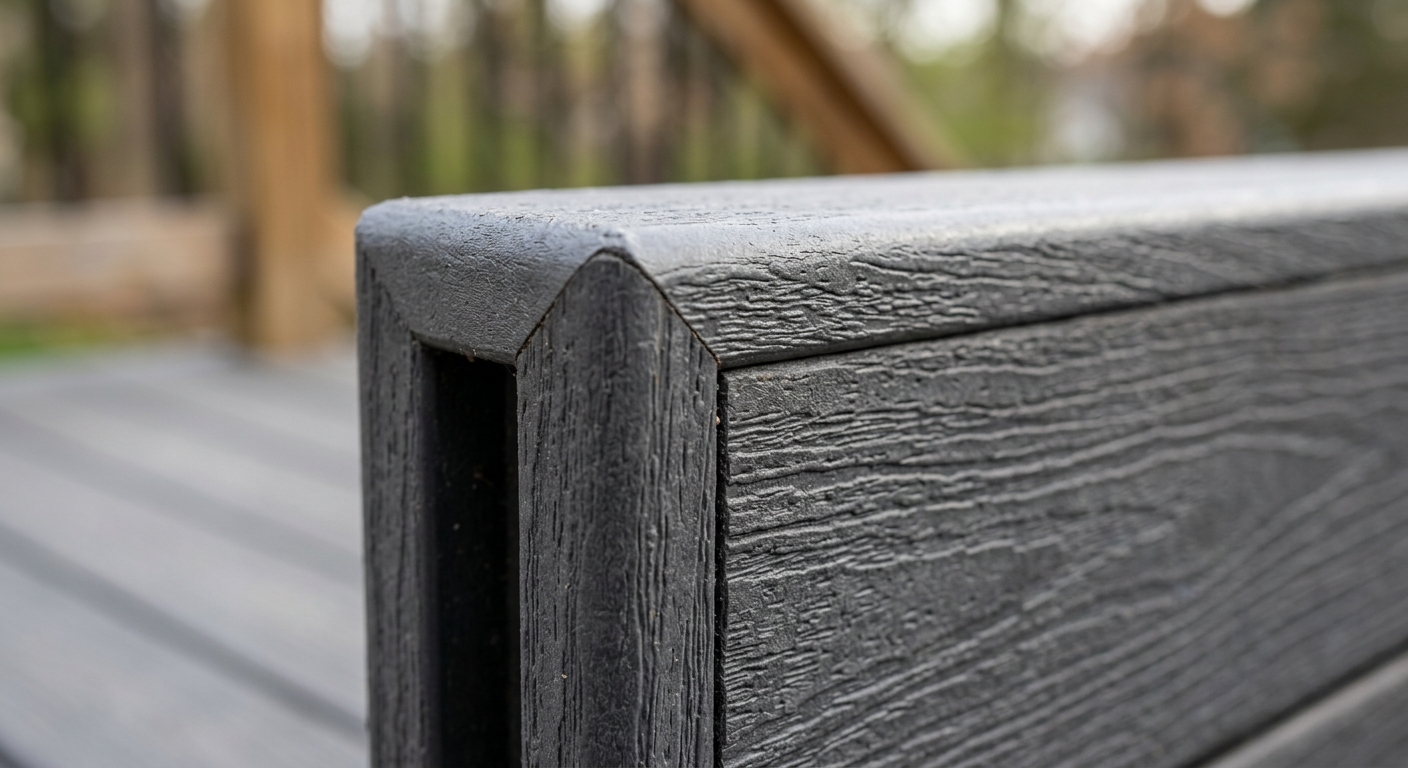
Composite decking — materials from manufacturers like Trex, TimberTech, Fiberon, and AZEK — has genuinely earned its dominance in the Pacific Northwest market. These materials are engineered specifically to resist the problems that plague natural wood in high-moisture, low-sun environments. The key properties:
Moisture resistance: Quality composite decking is either capped with a polymer shell (capped composite) or made from cellular PVC (like AZEK), which means the surface doesn't absorb water. Moisture that lands on a capped composite board runs off rather than penetrating. This is the single most important property for Woodinville conditions.
Mold and mildew resistance: The polymer cap on composite boards resists the biological growth that discolors and degrades natural wood. Some products include antimicrobial additives. In practice, composite boards in shaded, wet environments stay cleaner between maintenance cycles than wood boards do.
Dimensional stability: Composite boards don't check, split, or warp the way natural wood does. They expand and contract thermally, which is why proper installation spacing is important, but they don't develop the surface defects that trap moisture and accelerate wood degradation.
Low maintenance: A composite deck in Woodinville conditions typically needs an annual wash with a garden hose and occasional treatment with a composite-approved cleaner for any mold spots. Compare that to a cedar deck that needs resealing every 1–3 years, staining every 3–5 years, and still deteriorates on a compressed timeline under chronic shade.
For a detailed comparison of specific composite brands for Seattle-area conditions, see our article on Trex vs. Fiberon vs. TimberTech for Seattle homeowners, and our broader best decking materials guide for 2026.
Cedar: Honest Assessment for Wooded Lots
Western Red Cedar is a beautiful material and it's deeply embedded in Pacific Northwest building culture. We build cedar decks and we're good at it. But we're also honest with clients about what cedar can and can't do in Woodinville conditions.
The case for cedar on a Woodinville lot is primarily aesthetic: the grain, the smell, the warmth of natural wood, and the way it fits into a forested setting are real advantages that composite can't fully replicate. For a client who values the look of natural wood and is committed to maintaining it, cedar can work — but "committed to maintaining it" is doing a lot of work in that sentence.
Under chronic shade and moisture, cedar's natural tannins and oils — which give it durability compared to other wood species — still get overwhelmed by the conditions. Moss establishes faster. Surfaces need cleaning more frequently. Resealing timelines compress from the 2–3 year schedule you'd follow in a sunnier location to sometimes annually. And even with excellent maintenance, the service life of a cedar deck under Hollywood Hill canopy conditions is realistically 15–20 years before you're looking at a significant rebuild, compared to 25–30 years for a quality composite system.
We've had frank conversations with clients who asked about cedar for shaded Woodinville lots. Our honest position, informed by what we've seen in the field: if the property is more than 50% shaded and the deck will be under tree canopy, composite is the smarter long-term investment even though the upfront cost is higher. For cedar on a Woodinville property where conditions allow it, see our guidance on cedar deck sealing for Seattle conditions.
Note
Ipe and Premium Hardwoods
Ipe (Brazilian Walnut) and similar tropical hardwoods are extraordinarily durable and genuinely beautiful. They're also $110–$180 per square foot installed, they require specialized fastening systems, they need periodic oiling to maintain their appearance, and their sourcing sustainability is a legitimate concern that many Woodinville homeowners care about. We install ipe when clients specifically request it and understand what they're signing up for. For most Woodinville projects, composite delivers better value and comparable longevity without the sourcing concerns.
AZEK PVC: The Premium Option for Maximum Moisture Resistance
AZEK is a cellular PVC product, not a wood-composite — there's no wood fiber in it at all. This makes it the most moisture-resistant option in the market and particularly well-suited to the most challenging Woodinville conditions: north-facing decks under dense canopy cover where moisture accumulation is severe. AZEK is priced at the top of the composite range and runs somewhat softer underfoot than capped wood-composite products, which some homeowners notice and some don't. For the right site conditions, it's worth the premium.
| Material | Installed Cost (per sq ft) | Typical Service Life (PNW shaded) | Annual Maintenance | Moisture Resistance |
|---|---|---|---|---|
| Pressure-Treated Pine | $45–$70 | 10–15 years | High | Low |
| Western Red Cedar | $60–$90 | 15–20 years | High | Moderate |
| Trex / TimberTech Composite | $75–$120 | 25–30 years | Low | High |
| AZEK PVC | $90–$130 | 30+ years | Very Low | Very High |
| Ipe Hardwood | $110–$180 | 25–35 years | Moderate | High |
For a comprehensive side-by-side comparison of cedar and composite for Seattle-area conditions, see composite vs. cedar decking in Seattle.
Permitting in Woodinville: Navigating City, King County, and Snohomish County Rules
We've touched on the jurisdiction complexity above. Now let's go deeper, because this is the area where well-intentioned homeowners — and inexperienced contractors — make expensive mistakes.
Step Zero: Confirm Your Jurisdiction
Before any design work, before any contractor conversations about design specifics, confirm which jurisdiction owns your parcel. The tools to do this:
- King County Parcel Viewer (GIS online): Search by address, and the parcel data will show you jurisdiction.
- Snohomish County eSNO online portal: Similar lookup available at county.snohomish.wa.us.
- City of Woodinville Community Development: Call them directly at (425) 489-2752 — they'll tell you quickly whether your address is within city limits.
The City of Woodinville's own FAQ page explicitly states that not all Woodinville mailing addresses are within city limits, and that properties may be subject to either King County or Snohomish County jurisdiction instead. This is not a technicality — it affects every step of your project.
Permitting Through the City of Woodinville
If your property is within Woodinville city limits, deck permits are processed through the City of Woodinville Community Development Department. The city uses an online permit portal for applications. Requirements for a deck permit typically include:
- Site plan showing property lines, existing structures, and proposed deck footprint with dimensions
- Construction drawings showing framing plan, footing schedule, beam and post sizing, stair details, and railing details
- Setback compliance documentation (typically 5-foot side setbacks and 10–20 foot rear setbacks for accessory structures in residential zones)
- Project valuation for fee calculation
Review timelines in Woodinville for over-the-counter or standard residential deck permits typically run 2–4 weeks. Fee schedules are based on project valuation and can add $500–$1,500 to a typical deck project. The city generally follows the International Residential Code (IRC) 2021 as adopted by Washington State, with local amendments.
Permitting Through King County
For properties in unincorporated King County (many Hollywood Hill and Bear Creek properties), the permit pathway is through King County's Department of Local Services, Permitting Division. King County has moved substantially toward online permit submission, which works well for straightforward residential projects.
King County's requirements for deck permits are similar in scope to the city's — site plan, construction drawings, setback compliance — but King County has additional critical area review processes that can extend timelines. If your property has any mapped critical areas (wetlands, streams, steep slopes), the permit application will trigger a critical area review that runs in parallel with the building review and can add 2–8 weeks to the timeline.
Permit fees in King County are based on a fee schedule that considers project valuation, and a typical deck permit runs $800–$2,000 in fees, plus inspection fees for each required inspection.
Key insight
Permitting Through Snohomish County
For properties in unincorporated Snohomish County (portions of Hollywood Hill, areas north of the city limits), deck permits go through Snohomish County Planning and Development Services (PDS). Snohomish County has a clear trigger for when permits are required: any deck more than 30 inches above grade, any deck attached to the home, or any deck serving as a required exit landing requires a permit. This covers the vast majority of Woodinville deck projects.
Snohomish County follows the IRC 2021 with Washington State amendments, requiring footings at least 12 inches below grade (though local soil conditions often call for deeper footings in practice). The county's online permit portal is called eSNO and handles residential permit applications.
The enforcement posture in Snohomish County is worth noting. Non-compliance fines run $500 to $5,000 per violation, and the county has authority to issue stop-work orders and require removal of unpermitted structures. These aren't hypothetical consequences — they happen, and they generate complications at home sale time that can derail transactions even years after the original work was done.
For a complete walkthrough of the King County deck permit process, see our detailed guide at /blog/deck-permit-king-county-guide. The Seattle SDCI decks page also provides useful context on how the permitting framework works in the broader Seattle area.
HOA Considerations in Woodinville
Several Woodinville-area subdivisions have active HOAs with architectural review requirements that layer on top of — not instead of — governmental permitting. HOA review is typically required before permit application in these neighborhoods, and HOA requirements can be more restrictive than code: specifying particular materials, colors, railing styles, or deck heights that exceed minimum code requirements.
If your property has an HOA, contact the architectural review committee early in the design process. We've had projects where the HOA review added 4–6 weeks to the pre-construction timeline, and projects where HOA requirements drove material selections or design changes that affected both aesthetics and budget. Understanding those constraints early prevents expensive redesigns.
Structural Considerations: Second-Story Decks, Hillside Footings, and Drainage on Large Lots
Woodinville's wooded hillside lots demand structural thinking that goes well beyond what a standard suburban deck project requires. Here we go deeper on the specific technical challenges.
Second-Story and Elevated Deck Engineering
The most common deck scenario on Woodinville hillside properties involves walking out from the main living level of the house — which, on a sloped lot, may be 8 to 16 feet above the downhill grade. The result is what's properly called an elevated deck or second-story deck, and it carries real structural implications.
The primary structural challenge is lateral stability. A deck platform at height, attached to the house on one side and supported by tall posts on the other, experiences significant lateral forces from wind loading and seismic activity. The Pacific Northwest is earthquake country — the Cascadia Subduction Zone makes seismic design a genuine engineering consideration, not just a code formality. Lateral stability on a tall deck is achieved through:
- Knee bracing: Diagonal braces between posts and beams at 45-degree angles, transferring lateral loads into the structural system.
- Moment connections: Engineered connections between posts and footings that resist rotation rather than just vertical load.
- X-bracing or V-bracing: Full cross-bracing systems between post pairs on long decks.
Which approach is required depends on the deck height, the span, the attachment to the house, and the local seismic zone requirements. For most Woodinville elevated decks, the contractor's experience with these systems matters enormously — it's not something you can improvise in the field.
The 25–50% cost premium for elevated decks over ground-level decks is driven primarily by this structural work: deeper footings, larger concrete pours, heavier timber sizing, engineered connections, and the additional labor to work at height safely. On a project where the ground-level version would cost $40,000, the elevated version realistically lands at $50,000–$60,000.
Footing Design on Hillside and Wooded Lots
Footings — the concrete piers or pad foundations that transfer the deck's load into the ground — are where good deck construction starts. On Woodinville's wooded lots, footing design involves several site-specific challenges:
Tree roots: Large conifers and deciduous trees create root systems that extend well beyond the drip line. Footing locations need to be chosen to avoid major roots where possible, and where roots must be cut, the impact on tree health needs to be considered. Root intrusion into footing excavations can also create long-term problems if roots continue growing against concrete.
Soil variability: Woodinville's soils range from well-drained sandy glacial outwash to dense clay and organic material near stream corridors. Clay soils are problematic for footings because they expand when wet and contract when dry — repeated cycling can destabilize footings that aren't designed for the movement. In clay soils, footings typically need to go deeper and be larger in diameter than the IRC minimums.
Frost depth: While the Seattle area doesn't experience the severe frost depths of colder climates, Washington State's adoption of IRC 2021 requires footings at least 12 inches below grade. In practice, responsible contractors in Woodinville typically target 18–24 inches in clay soils to ensure footings bear on stable material below the zone of seasonal moisture variation.
Soil bearing capacity: The structural load from a deck has to transfer through the footing into soil that can actually carry it. When soil conditions are uncertain — as they frequently are on large wooded lots with complex soil histories — a geotechnical investigation (soil test) can identify bearing capacity and inform footing design. For large or complex decks, this investment is often worthwhile.
Ledger Attachment to the House
The ledger board — the horizontal member that attaches the deck frame to the house structure — is one of the most critical and most frequently problematic elements in deck construction. Ledger failure is a leading cause of deck collapses, and it's also the most common source of long-term water infiltration into the house wall.
Proper ledger installation on a Pacific Northwest house, where rain is persistent and walls need to dry, requires:
- Flashing: A continuous metal flashing system that directs water away from the ledger-to-wall interface.
- Air gap: The ledger should not be pressed flat against the exterior cladding. Standoff hardware (or a code-approved connector) maintains a gap that allows the wall to dry.
- Through-bolting into structure: The ledger must be bolted into the structural framing of the house — rim joist or floor framing — not just into exterior cladding. The connection sizing (bolt diameter and spacing) is specified by code based on deck loads.
- Proper siding integration: Where the ledger meets existing siding, the siding must be removed or cut back and properly integrated with the flashing system to prevent water bypass.
We see more long-term problems trace back to inadequate ledger flashing than to any other single construction detail. On Woodinville's wooded properties where rain is constant and moisture exposure is high, this detail is not optional.
Covers, Pergolas, and Year-Round Usability in the Pacific Northwest
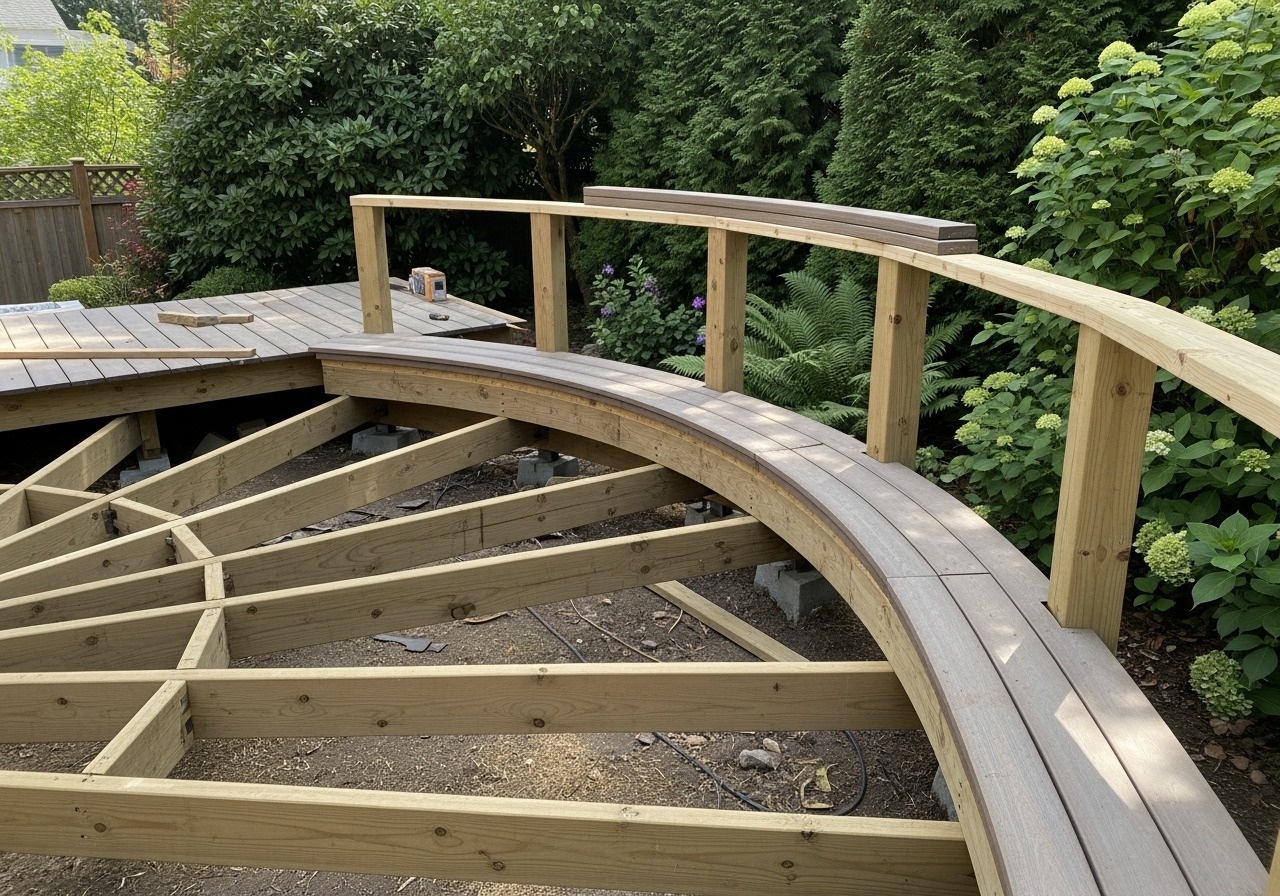
One of the most common questions we hear from Woodinville homeowners is whether to add a cover to the deck. The honest answer: if you want to use the deck from October through April — which is most of the year — some form of overhead coverage is worth serious consideration.
The Pacific Northwest Outdoor Living Reality
The Seattle area averages roughly 150 rainy days per year, and the rainy season runs October through April with relative consistency. An uncovered deck in Woodinville is essentially a summer-only amenity — functional from late May through September, and wet and uninviting the rest of the time. For homeowners investing $40,000 to $70,000 in a deck, limiting that use to four months feels like underutilization.
Covered deck structures change that equation significantly. Even a simple pergola with a retractable shade canopy extends the comfortable use season by several weeks on either end of summer. A solid-roof covered deck — whether a standing seam metal roof, translucent polycarbonate panels, or a fully finished ceiling structure — turns the deck into a genuine four-season outdoor room that remains usable through most of the rainy season.
The value proposition for covered structures is particularly strong in Woodinville because the large lots and wooded settings create a demand for outdoor space that connects to the landscape — not just a patio furniture staging area, but a real living space that captures the environment. Covered outdoor rooms with heaters, lighting, and weatherproof finishes fulfill that demand far better than an exposed platform does.
Pergola Options
Pergolas in the Pacific Northwest fall into several categories:
Traditional open-top pergola: Posts and beams with a lattice or rafter top structure that provides partial shade but no rain protection. Better than nothing for extending the season marginally, but not a serious wet-weather solution.
Louvered pergola systems: Motorized louver systems (brands like Ekena Millwork, Vergola, or custom fabrication) that allow the roof to open fully in good weather and close to shed rain during wet periods. These are growing in popularity in the Woodinville market and represent a meaningful quality-of-life improvement for homeowners who want flexibility. Cost runs $15,000–$35,000 for a quality motorized louvered pergola, depending on size.
Fixed-roof covered patio: A permanent roof structure — matching the house roofline or with a complementary pitch — that provides complete overhead protection. This is the most effective solution for year-round usability and the most expensive, typically adding $15,000–$40,000 to the deck project depending on size, roof material, and whether the structure is attached to the house or freestanding.
For more detail on deck and covered patio combinations, see our article on deck and patio combos for Seattle homes.
Deck Lighting for Year-Round Use
Lighting design matters more on a covered or shaded Woodinville deck than it does on a sunny suburban patio. Under tree canopy and under a pergola or roof, the deck surface stays significantly darker than open-sky conditions, and evening use — which is most of the use on a covered structure — requires thoughtful lighting that makes the space feel inviting rather than dim and gloomy.
Effective deck lighting on a Woodinville covered deck typically involves:
- Recessed soffit lights: For covered sections, LED puck lights or recessed downlights in the ceiling provide general illumination.
- Post cap lights: On pergola posts or freestanding post columns, cap-mounted LED fixtures add ambient light and define the space.
- Step lighting: Integrated LED step lights on every stair tread improve safety and add visual interest.
- String lighting: For pergola and covered structures, weatherproof string lights add warmth and atmosphere that's particularly appealing in the darker months.
- Pathway lighting: For large-lot properties with long walks from the deck to other outdoor areas, low-voltage pathway lighting ties the outdoor spaces together.
Electrical work on deck lighting requires permitting in most jurisdictions and should be performed by a licensed electrician or a contractor who pulls electrical permits. This is not a DIY task on a permitted project.
For detailed railing and cable railing options that integrate well with Woodinville deck designs, see /blog/cable-railing-seattle and /blog/deck-railing-options-seattle.
2026 Pricing Breakdown: What a $38K–$70K Woodinville Deck Actually Buys You
Let's talk money in concrete terms. The $38,000–$70,000 range we cite for Woodinville deck projects is not a hedge — it reflects the real variability in project scope, site complexity, and material selection. Here's what that range actually looks like in practice.
Installed costs for typical Woodinville wooded-lot deck projects. Elevated and covered projects reflect hillside and dual-jurisdiction complexity.
| Category | Value |
|---|---|
| Entry-Level Composite (400 sq ft, ground-level) | $38,000 |
| Mid-Range Composite (500 sq ft, elevated) | $52,000 |
| Premium Composite + Pergola (600 sq ft, elevated) | $68,000 |
| Cedar + Cover (500 sq ft, elevated, wooded lot) | $55,000 |
| AZEK PVC Premium (500 sq ft, elevated) | $65,000 |
Entry-Level: $38,000–$45,000
At the lower end of the Woodinville range, you're typically looking at a 300–450 square foot ground-level or modestly elevated composite deck (Trex Select or TimberTech Terrain series), standard aluminum or wood-composite railing, one stair flight, and basic site work. This level of project assumes:
- Relatively mild slope (less than 10% grade difference across the deck footprint)
- Post heights under 6 feet at the lowest point
- No critical area buffers or special soil conditions
- Standard permit process without extended review
- No covered elements or complex lighting
Even at the entry level in Woodinville, the combination of PNW labor rates (15–25% above national averages), permit costs ($500–$2,000), and site prep for wooded lots (root management, drainage) pushes total costs above what national pricing guides suggest.
Mid-Range: $45,000–$58,000
The mid-range covers what most Woodinville homeowners in Hollywood Hill and Bear Creek end up building: a 400–550 square foot elevated deck (6–12 feet of post height on the low side), mid-tier composite decking (Trex Transcend, TimberTech Legacy, or Fiberon Paramount), cable or glass railing for view preservation, two stair flights (front and back, or main stair and a secondary access), and standard lighting (post cap and step lights). This tier typically also includes:
- Engineered footings appropriate for the slope and soil conditions
- Knee-bracing or moment-frame lateral stability system
- Ledger installation with proper flashing
- Permit fees and inspections for two to four inspection stops
The mid-range is where you get a genuinely high-quality deck that performs well for 25+ years with minimal maintenance. It's a real investment, and on a Woodinville property the ROI is solid — the NAR Remodeling Impact Report shows consistent 60–70% cost recovery on deck additions at resale, and in Woodinville's high-value residential market, outdoor living features command real buyer attention.
Premium: $58,000–$70,000+
The upper end of the range reflects projects with one or more of the following premium elements:
- Larger deck footprint (600+ square feet)
- Significant elevation (12–18+ feet of post height)
- Premium composite or AZEK PVC decking
- Cable or glass railing with custom posts
- Covered structure (pergola or solid roof)
- Built-in elements (outdoor kitchen rough-in, integrated seating, fire pit surround)
- Complex site work (significant grading, French drains, custom footing engineering)
- Dual-jurisdiction permitting complications
Projects in this range are often signature outdoor living spaces that become a genuine feature of the property — the kind of investment that is central to how the house is marketed and perceived when it sells.
Key insight
Line-Item Cost Breakdown
Understanding where the money goes helps evaluate bids and avoid being misled by incomplete quotes:
| Cost Category | Typical Range | Notes |
|---|---|---|
| Decking material (composite) | $10–$18 per sq ft materials | Grade and brand dependent |
| Framing lumber / steel | $8–$15 per sq ft | Higher for elevated decks |
| Concrete and footings | $3,000–$8,000 per project | Soil and depth dependent |
| Railing system | $100–$250 per linear foot | Cable/glass at upper end |
| Stair flight | $1,500–$4,000 per flight | Height and width dependent |
| Ledger and attachment hardware | $500–$1,500 per project | Included in good bids |
| Lighting and electrical | $1,500–$5,000 per project | Per design complexity |
| Permit fees | $500–$2,000 per project | Jurisdiction dependent |
| Labor (installation) | $35–$60 per sq ft | PNW market rates |
| Site preparation and drainage | $1,000–$5,000 per project | Wooded lot premium |
For a complete cost discussion and updated 2025 pricing, see our article at /blog/deck-cost-seattle-2025 or our Seattle deck cost landing page.
Covers, Pergolas, and Year-Round Usability — A Closer Look at What Woodinville Homeowners Actually Build
We touched on covers above, but this deserves its own deeper treatment because it's the decision that most significantly affects total project cost and long-term satisfaction for Woodinville homeowners. The data from our own project history and from the broader PNW contractor community points clearly: Woodinville homeowners who add covered elements to their deck projects report higher satisfaction than those who don't, and they use their outdoor spaces far more over the course of a year.
The rainy season reality is simply different here than most of North America. When a homeowner in Phoenix or Nashville reads about "outdoor living," they're thinking about hot summer afternoons and mild evenings. When a Woodinville homeowner reads about outdoor living, the honest scenario includes October through April — seven months of variable weather that ranges from light drizzle to sustained rain. An uncovered deck handles the light drizzle; it doesn't handle sustained rain. A covered structure handles both.
What Pergolas and Covers Add to Total Project Cost
Adding a covered element to a Woodinville deck project typically adds $12,000–$40,000 to total project cost, depending on structure type and size:
- Simple open pergola (pressure-treated or composite-clad): $8,000–$15,000 added to deck project
- Louvered aluminum pergola system: $15,000–$30,000 added
- Polycarbonate panel pergola (translucent, good light transmission): $10,000–$20,000 added
- Full solid-roof attached patio cover (metal or cedar): $20,000–$40,000 added
When combined with a composite deck in the mid-range price tier, a covered deck project in Woodinville can readily reach $65,000–$90,000 — above our cited range, but entirely representative of what quality outdoor living looks like at this level of complexity in this market.
The question to ask isn't "can I afford the cover?" but "what will I actually use?" A $45,000 uncovered deck that sits empty from October to May delivers less value than a $65,000 covered deck that gets used 10 months a year.
Integration with Existing Landscaping
On large Woodinville lots, deck design doesn't happen in isolation from the broader landscaping. A well-designed project thinks about how the deck connects to the rest of the property — existing pathways, garden beds, lawn areas, the tree line, and any water features or retaining walls. On a one-acre wooded lot, a deck that floats as an isolated platform without connection to the broader landscape feels incomplete. A deck that anchors a series of outdoor spaces — deck above, connected stair down to a patio area, a pathway winding to a fire pit in a clearing — transforms the property.
We regularly work with landscape designers in the Woodinville area on larger projects to ensure the deck design integrates with rather than competes against the existing landscape. The additional design investment is modest compared to the construction cost, and the outcome is substantially better.
How to Vet and Hire a Deck Builder in Woodinville: Licensing, References, and Red Flags
Hiring a contractor in the greater Seattle area involves some due diligence that's worth spelling out, because the outdoor construction market includes a wide range of competence and ethical standards. Woodinville's specific conditions — jurisdiction complexity, site challenges, material requirements — make contractor selection particularly consequential.
Mandatory Licensing and Insurance
Washington State requires contractors to be registered with the Washington State Department of Labor & Industries (L&I). A contractor working in Washington must have:
- Active contractor registration with L&I (searchable at lni.wa.gov). This is a minimum baseline, not a quality indicator — it just means they're legal.
- Current general liability insurance: Minimum $50,000 for residential work; reputable contractors carry $1,000,000 or more.
- Workers' compensation coverage for any employees on the jobsite. Ask for proof. If a worker is injured on your property and the contractor doesn't have workers' comp, your homeowner's insurance may be on the hook.
Verifying these credentials takes less than 10 minutes and is not optional. Any contractor who resists providing this documentation should be dismissed immediately from consideration.
Experience With Woodinville-Specific Conditions
Beyond basic licensing, the relevant experience for a Woodinville deck builder involves:
- Prior work in the specific jurisdiction your property is in: City of Woodinville, King County unincorporated, or Snohomish County. Permit navigation is experience-dependent.
- Elevated deck experience: Ask specifically about their largest or most challenging elevated deck. Review photos. Talk to the reference.
- Critical area and slope experience: Have they worked on lots with King County or Snohomish County critical area buffers? How did they handle it?
- Composite material expertise: Do they have specific training and experience with the composite brands they're proposing? Have they attended manufacturer training programs? NADRA (National Association of Deck and Railing Association) members often have formal training credentials.
What to Look for in a Bid
A legitimate, detailed bid for a Woodinville deck project should include:
- Specific material specifications by brand, product line, and color
- Footing schedule with specified depth, diameter, and concrete PSI
- Beam and post sizing schedule
- Fastener and hardware specifications
- Permit fees included in the total (not "TBD" or excluded)
- Payment schedule tied to project milestones, not arbitrary calendar dates
- Timeline with specific start and completion milestones
- Warranty information for both materials and labor
Bids that are vague on any of these elements are not comparable to bids that are specific. "Cedar decking" is not a specification. "2x6 Knotty Western Red Cedar #2 and better, kiln-dried, treated cut ends" is a specification. The difference in quality and price between these two descriptions can be substantial.
Important
Red Flags to Watch For
Based on what we see in the market:
- No physical address or local presence: A contractor with a cell phone and a Google listing but no local office or verifiable project history is not a safe choice for a $50,000 project.
- Pressure to sign quickly: Legitimate builders have schedules that allow a customer to take reasonable time to evaluate proposals.
- Large upfront payment demand: A 10–20% deposit to schedule is reasonable. Demanding 50% or more upfront before work begins is not.
- Reluctance to pull permits: Any contractor who suggests that "we don't need a permit for this" for an attached, elevated deck in Woodinville is either uninformed or deliberately steering you toward unpermitted work. Either way, walk away.
- No references in Woodinville specifically: General Seattle references are useful but not sufficient. Ask for references from projects in Woodinville or the immediate area — similar site conditions, similar jurisdictional experience.
Why Local Experience Matters in Woodinville
We're The Seattle Decking Company, headquartered in Bothell — 10 minutes from most Woodinville addresses. We say this not as a self-promotion but because geographic proximity genuinely matters for this kind of work. A contractor who regularly works in Woodinville knows the permit offices and the inspectors. They know which King County inspectors are thorough and which Snohomish County requirements are most strictly enforced. They've built on Hollywood Hill slopes and dealt with Bear Creek drainage challenges. They've navigated the City of Woodinville's architectural review for HOA-governed subdivisions.
That institutional knowledge can't be faked and can't be acquired in a hurry. It's built over dozens of projects in the area, and it shows up in timelines, in fewer surprises, in permit approvals that go smoothly, and in finished projects that work correctly for the site conditions. When you're investing $50,000 or more in a deck on a wooded hillside lot with complex permitting, the difference between a contractor who knows this market and one who doesn't is not trivial.
For more guidance on the custom deck addition process and what to expect when engaging a contractor, see /blog/deck-addition-seattle. For custom and curved deck designs, see /blog/custom-curved-decks-seattle.
Composite Deck Maintenance for Woodinville's Wooded Lots: What You Actually Need to Do
One of the selling points of composite decking is low maintenance. That claim is accurate, but "low maintenance" is not "no maintenance," and on a Woodinville lot with heavy canopy cover, the maintenance needs of composite decking are worth understanding clearly before you commit.
Annual Maintenance Requirements
On a composite deck under tree canopy in Woodinville, annual maintenance typically involves:
Spring cleaning (March–April): A thorough wash with a garden hose (low pressure — no pressure washer on most composite products, as the surface can be damaged). Clear accumulated debris — leaves, needles, seed pods — from between boards and around post bases. These organic materials trap moisture and can support mold growth even on composite surfaces if left long-term.
Mold and mildew treatment (as needed, typically once or twice annually): Even capped composite boards can develop surface mold in heavily shaded, moist conditions. Composite-approved cleaners (products specifically formulated for composite decking, not bleach-based household cleaners) remove mold without damaging the cap layer. Most composite manufacturers specify which cleaning products are approved under warranty.
Hardware inspection: Check visible fastener heads, post base hardware, and railing connections annually. PNW salt air and moisture can accelerate corrosion on lower-grade hardware. Quality stainless or hot-dip galvanized hardware corrodes more slowly but should still be inspected.
Drainage inspection: Check that debris hasn't blocked drainage gaps between boards or at the low end of the deck. Water should drain freely; standing water between boards indicates a blockage.
What You Don't Have to Do
With composite decking, you don't sand, stain, seal, or paint — ever. You don't treat the boards with penetrating oil. You don't worry about checking, splitting, or warping developing in the surface. The board color will weather and stabilize over the first year, typically mellowing slightly from the manufactured color, and then remain stable for decades. The maintenance burden compared to cedar is genuinely different — not just marginally different, but fundamentally different.
For full composite maintenance guidance specific to Seattle-area conditions, see /blog/composite-deck-maintenance-seattle.
The Woodinville Outdoor Living Investment: Resale Value and Long-Term ROI
We've mentioned ROI numbers above, but they deserve a fuller treatment because they're often misunderstood. The 60–70% cost recovery figure from the NAR Remodeling Impact Report is frequently cited, and it sounds discouraging — you spend $60,000 and only get $42,000 back? But that framing misses the point of what a deck investment actually does.
How Deck ROI Actually Works
A deck — particularly a covered, high-quality deck on a wooded Woodinville lot — doesn't just add recoverable value at resale. It does several things simultaneously:
It changes how you live in the house while you own it. A family that invests $55,000 in a covered composite deck in Woodinville and then lives in the house for 10 years has 10 years of increased outdoor living capacity. The ROI calculation that only looks at resale value ignores the value of that use.
It changes buyer appeal. In Woodinville's residential market — where buyers are often coming from Seattle or the Eastside, looking for larger lots and more nature, and expecting high-quality finishes — a well-designed outdoor living space isn't just an amenity; it's an expectation. Properties without outdoor living features sit longer and attract fewer competitive offers in this market than comparable properties with quality outdoor spaces.
It prevents the decay problem. On a wooded Woodinville lot, the back of the house without a deck is often a slope with informal paths, erosion risk, and wasted space. A properly designed deck with drainage and structural support stabilizes that space and prevents problems that would otherwise develop.
It maintains value over time. A quality composite deck properly installed in 2026 will look essentially the same in 2041 with minimal maintenance investment. A wood deck installed in 2026 will require $3,000–$8,000 in maintenance investment over that same 15-year period and will still show more wear. The lifecycle cost comparison favors composite even if the upfront cost is higher.
Woodinville Market Context
Woodinville home values are strong and have remained relatively stable through recent market corrections. The median home price in Woodinville runs $800,000–$1,200,000 depending on lot size, condition, and location within the area. At those price points, a $50,000–$70,000 deck represents 5–8% of home value — a meaningful but not disproportionate investment in a property-improving feature.
Buyers in this price range have expectations about outdoor spaces. They're comparing your property to others in the market, and in Woodinville, a wooded lot without a quality outdoor living space is leaving capability on the table. The deck isn't just a "nice to have" at this price point — it's part of what makes the property competitive.
Getting Started: Next Steps for Woodinville Homeowners
If you've read this far, you're probably either in the early planning stages of a Woodinville deck project or you're trying to make sense of quotes and information you've already received. Either way, here's the practical next-steps sequence we recommend:
Step 1: Confirm your jurisdiction. Use the King County Parcel Viewer, the Snohomish County eSNO portal, or a direct call to the City of Woodinville to confirm which permit office governs your property. Write it down. Tell every contractor you talk to before they start designing anything.
Step 2: Walk the site with a builder before committing to a design. Woodinville lots have conditions that aren't visible in photos or descriptions — grade transitions, soil character, tree root locations, drainage patterns, view corridors that only reveal themselves from the right position. A site visit before design is essential.
Step 3: Get three detailed bids from local contractors. Detailed means fully specified — materials, footings, fasteners, permits, timeline. Comparing vague bids is impossible. If a contractor won't give you specifics, they're either not organized enough to manage a complex project or they're leaving room to substitute materials and add change orders.
Step 4: Verify licensing and insurance. Non-negotiable, as described above.
Step 5: Plan for the permit timeline. In Woodinville's jurisdictions, budget 2–8 weeks for permit review. A contractor who says "we'll start in two weeks" on a project that hasn't been permitted either isn't planning to pull permits (a serious problem) or is being unrealistic about the timeline.
Ready to Talk About Your Woodinville Deck Project?
The Seattle Decking Company builds decks throughout the Woodinville area — Hollywood Hill, Bear Creek, the wine country corridor, and the surrounding unincorporated King County and Snohomish County neighborhoods. We know the permit offices, we know the site conditions, and we've built enough decks on these wooded hillside lots to know what works and what doesn't. We're not going to sell you something that won't hold up. We're going to help you figure out what makes sense for your specific property, your specific budget, and your specific goals for outdoor living.
If you're ready to start that conversation, call us at (425) 675-6259 or reach out through our contact page. We offer on-site consultations throughout the Woodinville area and are happy to visit your property and give you an honest assessment before any money changes hands. Our office is at 22722 29th Drive SE, Bothell, WA 98021 — close enough to Woodinville that we know your neighborhood, far enough away from the marketing noise that we tell you what we actually think.
Frequently Asked Questions
Do I need a permit to build a deck in Woodinville, WA?
How do I find out which jurisdiction my Woodinville property is in?
Why is my Woodinville deck quote so much higher than national averages I've read about?
Is cedar or composite decking better for a wooded Woodinville lot?
How much does a second-story or elevated deck cost in Woodinville?
How long does the permit process take for a deck in Woodinville?
Should I add a pergola or cover to my Woodinville deck?
What composite decking brand is best for Woodinville's shaded, wet conditions?
What should I look for when hiring a deck contractor in Woodinville?
How much will a Woodinville deck add to my home's resale value?
Can a Woodinville deck be built near a stream or wetland on my property?
Does The Seattle Decking Company work in Woodinville, WA?
Planning a deck in the Seattle area?
Get an onsite design review and a clear, itemized quote from a licensed local builder.
Request a Free Quote